


Here at Knife Informer we’ve brought together our EDC folding knife recommendations, from affordable pocket tools to premium favorites. For most people, the right choice comes down to a comfortable grip, manageable pocket weight and a blade suited to everyday cutting.
For a compact all-rounder, our overall pick is the Mini Griptilian 556-S30V: its shorter blade and secure grip suit everyday cutting without a full-size handle. Choose the Bel Air if you prefer a slim aluminum handle, deep carry and MagnaCut steel. The Bugout is the lighter choice, provided you are comfortable with its more flexible Grivory handle.
Remember, your EDC is not intended to be the ‘master-of-all-trades’. There will always be a better knife for specific tasks like slicing tomatoes, carving tent pegs from a fallen branch, or skinning a deer, but most of us want a single “do-everything” knife that stays with us throughout the day and is good enough for almost anything. It needs to be dependable, comfortable to carry, and perform well in various situations.
Our Top Picks
- Overall pick: Mini Griptilian 556-S30V
- Value flipper: Steel Will Cutjack Mini
- Budget pick: Ontario RAT II
- Manual MagnaCut pick: Kershaw Bel Air 6105
- Lightweight pick: Benchmade Bugout 535
- Splurge pick: Benchmade 940-1
- Front-flipper pick: Kizer Feist
Don't feel you have to drop a king's ransom on your every day carry knife. If you're a knife enthusiast or someone who just has to have the very best, then it's fine to spend more, but for the average Joe, there are plenty of excellent choices in the lower price brackets. Remember, the most valuable knife is always the one you’re carrying when the need arises.
Our EDC folding knife recommendations
The following reviews cover different sizes, materials and budgets. For manufacturing background, see where popular folding knives are made.
Value-oriented designs

The RAT 2 is one of our favorite budget blades for its combination of performance, fit and useful features. It's small and lightweight with an impressive blade that's been heat-treated to perfection.

The handle is tough yet comfortable and the whole thing feels incredibly well balanced in use. The deployment is slick and it locks up with reliable certainty each and every time thanks to the full stainless steel liners. With a choice of handle colors and blade variations, Ontario Knife Company has elevated the RAT 2 into the epitome of a 'do-everything' knife to suit everybody's tastes. Check out our full review of the Rat 2.
| PROS | CONS |
|---|---|
|
|

For a compact budget folder, I find myself recommending the oddly named Steel Will Cutjack Mini to a whole lot of people who ask me what the best cheap knife is. I reviewed it a while back and still stand by my mostly slack-jawed amazement at how great of a knife they make out of such simple materials at such a low cost. You don’t normally become so enamored with a value-priced product, but the Mini Cutjack is just that good. There was also an up-level version that features G10 scales over stainless liners, a slick ball-bearing pivot, and high-end M390 steel. That Italian-made version is separate from the D2/FRN Mini recommended here.

It strikes a lot of the important points for a great knife. You have a choice in sizes: a 3” “Mini” or a 3.5” regular version. They’re both quite light: 3.7 ounces for full sized and an even 3 ounces for the small. Construction is molded and textured FRN with contoured edges on top of skeletonized stainless steel liners for strength. It uses a flipper with phosphor bronze washers for deployment – which is quite good – and the drop point blade uses D2 steel for strong edge retention. It also has a pronounced forward finger choil for a better grip. You should absolutely get one.
| PROS | CONS |
|---|---|
|
|

Version and buying note: The photo and review describe the lighter 1555G10 version. The 1555G10 is discontinued. The linked Cryo 1555TI has stainless-steel handles and weighs 4.1 oz; it is a heavier alternative, not the reviewed configuration.
The original Kershaw Cryo has been a popular low-priced EDC option for many years now. While it was a good looking knife it had some shortcomings in being a little too heavy and not grippy enough. Well, Kershaw listened and introduced the Cryo G-10 which is both grippier and lighter! Like the Spyderco Tenacious (see below) it uses 8Cr13MoV, an affordable Chinese made stainless steel in the same affordable category as AUS-8; heat treatment affects hardness and performance. The stonewash blade is only two and three-quarter inches long, and the knife weighs in at about 3.7 ounces.
Overall, the Cryo G-10 is solid and sturdy with its well-performing frame-lock and oozes plenty of cool. Without a doubt, it's a nice-looking knife. With the inclusion of the SpeedSafe fast deployment technology and pocket clip this sure is one of the best EDC pocket knife for the money. A great choice for those on a budget.
| PROS | CONS |
|---|---|
|
|

We're big fans of Spyderco here at Knife Informer, and the Tenacious is a terrific little performer at the lower end of the budget scale. It carries 8Cr13MoV steel like the Kershaw Cryo but has a very different look and feel. The blade is leaf-shaped and immensely sharp right out of the box, as we tend to expect from Spyderco these days. I did a video review of this bad boy to show you it up close and personal. Ergonomics are top-notch, and they almost feel like an extension of your hand as you slice through the day's tasks. We also like the four-way pocket clip that can be installed up or down on either side.
| PROS | CONS |
|---|---|
|
|
Version and buying note: This review discusses the carbon-fiber/D2 and G-10/D2 versions. The linked buying option is the original 5311 with 8Cr13MoV steel and stainless-steel handles, weighing 4.2 oz. It does not share the lighter versions’ materials or weight.
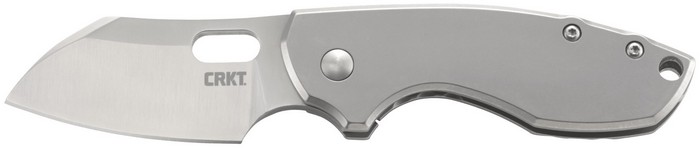
Columbia River Knife & Tool (or CRKT) are the masters of producing exciting designs and making them affordable without feeling cheap. They had a bona-fide hit on their hands with the Jesper Voxnaes designed Pilar (which was named after Ernest Hemingway’s beloved fishing boat), and they expanded the Pilar lineup with a slightly larger model (disappointingly not named the Pilarge) as well as models with better materials than the standard stainless handles and 8Cr13MoV steel. The larger Pilar has a 2.62” blade and adds a flipper tab for deployment but still uses Teflon washers like the standard model.
The carbon fiber/D2 version is pretty compelling. The same things everyone loves about the Pilar are still there; the compact size (2.4” blade and 5.9” overall), the deep forward choil for a full grip, and the funky sheepsfoot blade shape. It still oozes character from every corner, but now it’s lighter (weighing 3.1 ounces versus the standard version’s chunky 4.2), better looking, and holds an edge longer. Those lighter variants were attractive budget options. The G10/D2 versions offered another lighter configuration.
Read our full review of the Pilar.
| PROS | CONS |
|---|---|
|
|

Ruike isn’t a household name in the knife industry, but the P801 deserves a look. They’re a division of Fenix lights and they make a series of affordable knives – including the P801, which is one of the most impressive knives in terms of value for money on the market. They also produce a series of very interesting Swiss Army style multitools under their own name as well as for Boker – we reviewed the Trekker LD51 here.
At the affordable end of the range, the P801 offers a utilitarian 3.5” drop point in Sandvik 14c28n steel – originally developed in conjunction with Kershaw to be the best-performing stainless steel that’s fine-blankable. It also has a stout stainless framelock build and uses ball bearings for the pivot to make the flipper deployment smooth and fast. There’s a pair of thumb studs if you prefer that for deployment, and a deep carry pocket clip as well. Splashes of blue anodization on the thumb studs, pocket clip and pivot collars give it a little visual spice too. That is a useful feature set in an affordable folder. It doesn’t look like a space age art project, but it’s handsome in a simple way and it’s tough enough to do some real work.
| PROS | CONS |
|---|---|
|
|
Versatile everyday folders
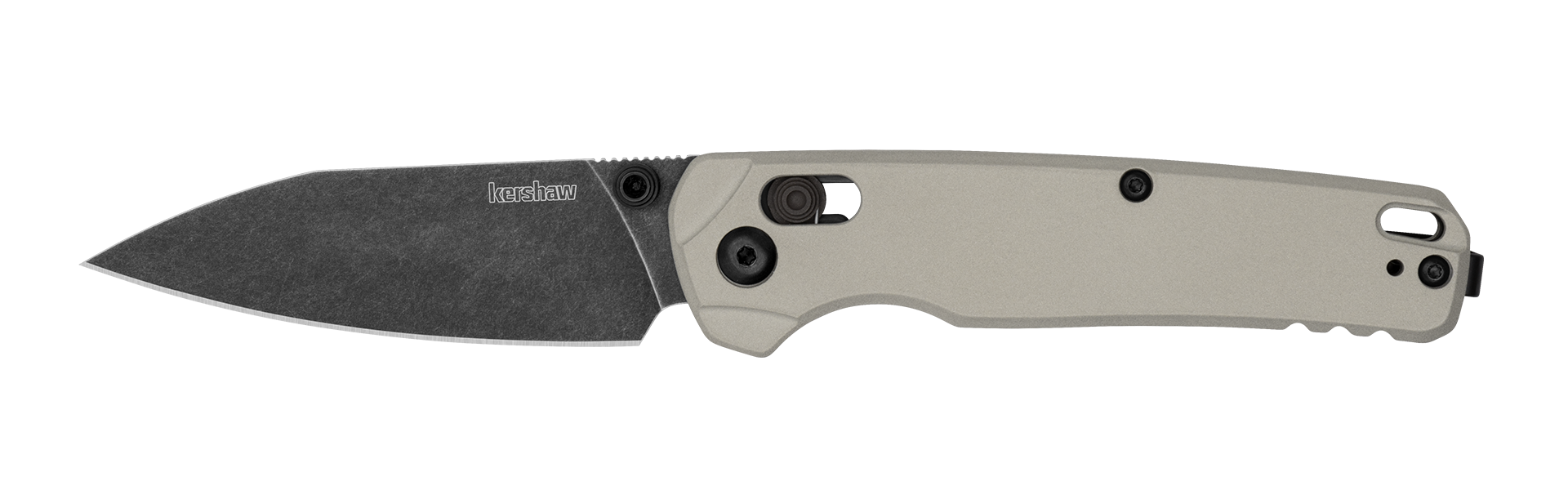
For a manual folder with a metal handle, the Bel Air 6105 earns its place alongside the lighter Bugout. In Wayne Walter’s Bel Air review, he praised the slim, comfortable grip, very deep pocket clip and thin slicing blade.
The aluminum handle, manual thumb-stud opening and DuraLock give it a different appeal from an assisted Blur. Compared with the S30V/Grivory Bugout 535’s current listed 1.85 ounces, the Bel Air adds about an ounce; choose it because you want that metal handle, not because it wins the weight contest. The Mini Griptilian 556-S30V is shorter when closed at 3.87 inches.
Wayne found no useful place to choke forward onto the blade. His comparison with the Hogue Deka used a 20CV knife with aftermarket scales, so it should not be read as a test against the stock MagnaCut/polymer Deka.
| PROS | CONS |
|---|---|
|
|

The Mini Griptilian 556-S30V remains our compact all-round pick. Its 2.91-inch drop-point blade and 3.87-inch closed length make a useful starting point if the full-size Griptilian feels like too much knife. The current model pairs S30V with black Grivory and an AXIS lock; the earlier Griptilian review covers 154CM, while the 556-1 review covers the separate G-10/20CV upgrade.
Choose the Mini for compact proportions and straightforward thumb-stud opening. The Bugout saves nearly an ounce and offers more blade length; the Bel Air brings a metal handle. If a fuller grip matters more than pocket size, the larger 551 below is the more natural alternative.
| PROS | CONS |
|---|---|
|
|

Version and buying note: The specifications above describe the earlier 154CM Griptilian 551. The separate 556-1 review covers the 20CV Mini. The linked 551-S30V uses S30V and Grivory; Benchmade lists its weight at 3.88 oz. Our overall Mini Griptilian pick is the smaller 556-S30V. The 551 and 556 have different blade and handle dimensions.
Benchmade is a respected manufacturer of high quality, dependable and all-around some of the best EDC pocket knives based in Oregon, USA. The Griptilian is a long-running all-round EDC design. The Griptilian with patented Axis lock has won the hearts of knife enthusiasts since it's original release several years back. Make no mistake, this is a top-quality knife that excels in almost every department with a price that now places it above the entry-level options.
The standard Griptilian (model 551) with its 3.45" blade is not a small knife but still small enough to qualify as an EDC and offers a substantial grip without being unusually bulky. The 154CM stainless steel blade is impeccable and the Noryl GTX (think fancy plastic) handle performs very nicely and offers superb strength to weight ratio. If the standard Griptilian feels a little on the large side, you’re in luck as Benchmade also offers a Mini Griptilian (model 556) which is about half an inch shorter, is lighter and easier to pocket. To spoil you for choice, Benchmade also produced a higher spec version of the Griptilian so check that out too if you have more to spend. Either way, the Griptilian is a firm contender for the best EDC knife dollar for dollar.
| PROS | CONS |
|---|---|
|
|

The Manix 2 is an outstanding knife in a class of its own, which puts it into the best EDC pocket knife territory. Served up in premium S30V stainless steel in the reviewed version, it offers a useful combination of wear resistance and corrosion resistance. At close to five ounces it's a little bit heavy for an EDC but for those looking for something more meaty this is a real workhorse. Let me just say what it loses in the weight category it more than makes up for in its capabilities. The Manix 2 is built like a tank and more durable than most any EDC folding knife we know.
Spyderco decided on a ball bearing lock for the Manix 2 which leads to a super solid lock-up - always confirm full lock engagement and keep fingers clear of the blade path. The handle uses Spyderco's textured G-10 material and the overall ergonomics are supremely tuned for optimum control. This may not be the EDC for your average Joe but if you're looking for something with a little more 'oomph' and tough enough to laugh in the face of the meanest of tasks then the Manix 2 is for you. Here's my full review on the Manix 2.
| PROS | CONS |
|---|---|
|
|

The Delica is an all round classic and has stood the test of time for two decades now. The key here is all about the design - it's simple and unintimidating but effective. The size is just about spot on. Small and light enough not to be a burden to carry, yet the blade is long enough to get the job done. Look, the Delica is never going to win any beauty contests, or awards for innovative features - it carries few bells and whistles but the reason it sells so well year after year is that it's pretty darned effective as an EDC. Read more in my full review here.
| PROS | CONS |
|---|---|
|
|
Why it is not a current Top Pick: Matt reported one liner-lock failure after heavy use while cutting wood with his olive-handled 14C28N Blur. That experience keeps it out of our current Top Picks; it does not establish how a different version performs.

Version and buying note: The linked Amazon option is the olive-handled 1670OLBLK with 14C28N steel; the BladeHQ option is the S30V version. Finishes and prices differ. Both are assisted-opening Blurs.
The Kershaw Blur remains an assisted-opening option to consider alongside the original review’s important reservation. Sure, it's beefy but to some that's a plus point. The blade is just under three and a half inches and the S30V configuration weighs 3.9 ounces. The Blur has appeared in several steels over its production history; the linked base option uses 14C28N. It also comes in the higher-end S30V steel variant which is naturally more expensive but worth it if you have the dosh. Here's a link to my detailed review.
Like the Cryo the Blur comes with SpeedSafe for fast opening and uses a liner-lock mechanism. The blur is American made and has the grippy aluminum handle described above. It also comes in a number of varieties such as a black blade, partial serration and tactical models. Beautiful knife for the money.
| PROS | CONS |
|---|---|
|
|

Version and buying note: The linked C903A has a D2 blade and black G-10 handles with carbon-fiber overlays.
Civivi is the “budget” line of WE Knives, a Chinese manufacturer that is the OEM for several other product lines including many of the Massdrop/Ferrum Forge collaborations like the Gent. They’re incredibly good at screwing knives together, and now they’re bringing that to the affordable realm with the Civivi value line. They added a model to the lineup that’s been designed by Elijah Isham called the Anthropos. This is the first time Isham has collaborated to make an affordable knife, and it’s a real looker – even if it’s not as futuristic as MC Escher-esque designs like the Pleroma or the Kizer Minitherium.
G-10 scales with carbon-fiber overlays over steel liners make the Anthropos seem more expensive than it really is, and the blade is unusually utilitarian for an Isham design: a full flat ground drop point in D2 steel, measuring 3.25” long. The knife features a ball bearing pivot for smooth satisfying deployment and an effective liner lock mechanism. An ambidextrous deep carry pocket clip for tip up carry is a nice touch too. The Anthropos was offered in either black, brown or blue highlights peeking out from under the carbon fiber scales.
| PROS | CONS |
|---|---|
|
|

Version and buying note: The photo, specifications and firsthand review describe the original 7777, with 14C28N steel, a flipper and a sub-frame lock. The available 6777 is a different configuration: MagnaCut steel, thumb studs and a DuraLock crossbar lock. The 7777 observations below describe the earlier flipper, not the 6777’s different lock and opening action.
The Kershaw 7777 Bareknuckle is another knife we’ve reviewed that seems like an absolute home-run for the money. The 7777 gave you a lot of the flavor that Zero Tolerance buyers are so addicted to without such a heavy hit on the wallet. It doesn’t use all the expensive materials that a ZT does, but it shares a lot of the same design chops and quality.

It’s based on the versatile Natrix design but stretched out and slimmed down to make it more pocketable. It features KVT caged ball bearings in the pivot, an incredibly stiff detent, and a modified 3.5” drop point in Sandvik 14c28n steel with a nice stonewash finish. The party trick is the sleek sub-frame lock nested inside the anodized aluminum handles, which make the 3.4 ounce weight even more remarkable. A unique deep carry pocket clip is slightly recessed from the surface of the handle to prevent hot spots, and there’s also an oversized decorative pivot on the show side and a unique floating backspacer design to give the Bareknuckle some visual pop. It’s pretty but it’s definitely ready to work, and it carries great as well.
| PROS | CONS |
|---|---|
|
|
Premium everyday folders

Version and buying note: Our review and photograph describe the earlier S30V version. The linked G-10 versions use S45VN. Amazon and BladeHQ finishes differ; check the selected listing.
Since 2010, a single knife has captured the attention of knife enthusiasts worldwide and still today represents an iconic design that everyone loves to talk about - the Spyderco Paramilitary 2. Perhaps one of the few 'must-have' knives that every collector considers an obligatory purchase. Check out my detailed review here.
It's no secret that Spyderco produces great pocket knives and this is one of their finest. Prices and available finishes vary, so compare the current PM2 offer with the particular 940 version you are considering. Still, the value for money is excellent as the Paramilitary 2 checks all the boxes you want as a capable premium everyday folder.
It has everything to make us happy, premium S30V steel in our reviewed version, G-10 handle, unparalleled ergonomics and US-made. We rarely see blades so sharp out of the factory like this before. Hair popping sharp. The Paramilitary 2 features a compression lock which boggles many but works amazingly well. Never a hint of blade play. Supreme ergonomics as we expect from Spyderco and the overall fit and finish is excellent. Unlike many other premium pocket knives, this pocket knife is made for real world use for those who really value a good knife that delivers in the field.
| PROS | CONS |
|---|---|
|
|

Version and buying note: The specifications above are for the 940-1. The original 940 discussed below uses S30V; our splurge pick and current buying links are for the 940-1 with S90V and carbon-fiber handles.
Dangerously close to perfection, the Benchmade 940 Osborne puts most others to shame. It's ridiculously lightweight yet constructed with tremendous rigidity and design genius that only Warren Osborne could provide. The S30V stainless steel blade is given the Benchmade special treatment to bring the most out of it and holds it's edge for a crazy long time. Everything about this knife reeks of quality, perfection and beauty. Read my full review here.

How on earth this knife does not even hit 3.0 ounces is beyond me...you literally forget it's in your pocket most of the time. Classy yet talented the 940 Osborne is a capable everyday cutting tool. What's more, Benchmade treated us to a suped-up version of the 940 in the 940-1, with a glorious S90V steel blade and carbon fiber handle. Compare its current price with the standard 940 before deciding whether the lighter handle and different steel are worth it to you.
| PROS | CONS |
|---|---|
|
|

Version and buying note: The standard S30V/G-10 Shaman is a premium, substantial folder. The separately linked CruWear review covers a different steel and Micarta handle.
The Spyderco Shaman is what happens if you combined the genetics of the Paramilitary 2 and the Native 5, with maybe a dash of the Manix for good measure. It is a substantial premium folder, with the utility and fit and finish to make it worth considering if you prefer a larger grip.

The blade shape is like a Native on steroids, an almost full flat ground (with a small flat at the spine) leaf shaped drop point measuring 3.58”. CPM S30V steel with a stonewash finish is great for a working knife. From the PM2 it takes the textured G10 scales – but here, they’re contoured towards the edges for a comfortable grip. It also uses the beloved compression lock, giving it a high fidget factor as well as safe and secure one handed opening and closing. It also features a four position clip and a lanyard hole for different carrying options. A limited-edition Blade HQ sprint run used natural jade green scales and CPM M4 steel. Moreover, we reviewed the CruWear version as well. Different sprint runs use different steels; check the exact version rather than treating every Shaman as the same specification.
| PROS | CONS |
|---|---|
|
|

Version and buying note: The photo and specifications above describe the original M390, full-flat-ground Nimbus. The available Nimbus V3 has S90V steel and a Scandi grind, a meaningful change in cutting geometry. The original full-flat grind and the V3’s Scandi grind suit different cutting tasks.
GiantMouse is the collaboration brand between Jesper Voxnaes and Jens Anso, producing unique and charismatic designs at approachable prices through an OEM in Italy. While some of their flagship models are fairly pricey, the ACE line brings the cost down by using G10 handle scales rather than machined titanium. The Nimbus is probably the most successful design (along with the curvaceous Biblio and the Clyde), offering a beautiful design with real utility and remarkable materials for the money.
Blade steel on the Nimbus is Bohler-Uddeholm M390, a wear-resistant stainless steel; edge retention should not be confused with resistance to chipping. The blade is a full flat ground 3” drop point with an oblong thumb hole opener for deployment. The Nimbus also uses a deep carry wire clip like Spyderco, which can be configured for tip up left or right hand carry with a single screw. With a 4 ounce weight and an overall length of 7.25” inches, the Nimbus is in that just-right sweet spot for EDC knives – not too big, not too small, and always ready to get things done.
| PROS | CONS |
|---|---|
|
|

Benchmade had an instant hit on their hands the moment the Bugout dropped. It’s not hard to see why – it offers real knife size and performance with half the weight of many rivals. Literally, it weighs under two ounces (1.85 ounces) and offers a 3.24” drop point blade in CPM S30V. It achieves that weight through a shrunken and lightened axis lock bar and ultra-thin Grivory handle scales. It’s designed with weight-conscious hikers in mind for whom every gram counts, but it’s also a fantastic EDC option due to the light weight and super thin profile. It comes with a deep carry clip as well. Some people don’t like the flex of the handles, but they say the same about the lightweight Manix 2, and I’ve never seen one break.

Benchmade also introduced a companion to the Bugout, called the Bailout. It uses similarly thin Grivory handles but trades the drop point S30V blade for an impact-resistant CPM 3V blade with a cerakote finish and a tanto profile. If you’re not familiar, 3V is a tool steel that Crucible says is even tougher than Cru-Wear or M4, but it’s not stainless (thus the coating.) Bailout configurations have changed over time, so compare the exact model rather than assuming a fixed price difference from the Bugout.
See Matt’s full Bugout review for his food and cardboard cutting observations.
| PROS | CONS |
|---|---|
|
|

Version and buying note: The linked Ki3499A5 has black titanium handles and a black S35VN blade, unlike the stonewashed finish described below. Blade HQ still lists this discontinued Ki3499A5 in stock. The newer Feist 3 uses a different blade and materials and is not the knife reviewed below. This remains a modern front-flipper choice, not a traditional slipjoint.
The Kizer Feist is another knife we loved when we reviewed it. Designed by Justin Lundquist, the Feist combines the size and shape of a traditional pocket knife with the materials and construction techniques of a modern folding knife. It’s a compact modern front flipper as well. The super simple handle shape and clean, basic drop point blade let all the details do the talking – like the rounded spine, smooth contoured handles, and useful sculpted titanium pocket clip.
The handles are full titanium with a bolt-in lockbar stabilizer insert, and the knife rides on a ball bearing pivot for smooth deployment. Stonewashed CPM S35VN steel is par for the course at this price and holds an edge very well. It’s just-right sized with a 2.8” blade and weighing in at 2.7 ounces. A joy to carry and use for every little task you come across. There’s also the option of the Feist W variant, which has a reverse tanto blade shape (also 2.8” long) and a series of holes milled into the show side scale for decoration. Hardware, finish and price vary by production version; check the exact listing.
| PROS | CONS |
|---|---|
|
|

Version and buying note: Both buying links target the pictured gray-aluminum/yellow-Ultem configuration with a black S35VN blade. Amazon labels this FLY-1312 option “Gunmetal Ultem–Black DLC”; other Arcade colors, inlays and blade finishes are different configurations.
Flytanium built its reputation producing premium aftermarket scales, but with the Arcade, the brand moves into full-production knives—bringing with it a focus on customization, premium materials, and tight tolerances. Developed in collaboration with Demko Knives, the Arcade features a fully licensed Shark Lock, giving it exceptional strength and fast deployment in a mid-sized EDC package.
The 3.20-inch CPM S35VN blade offers a solid balance of edge retention, toughness, and corrosion resistance. The drop point shape with a flat grind makes it well-suited for slicing, piercing, and precision tasks. The black finish helps reduce glare and adds an extra layer of corrosion resistance.
The standout feature of the Arcade is its Shark Lock mechanism, which provides a rock-solid lockup with effortless one-handed operation. It uses a thumb stud and ball-bearing pivot for opening; confirm full lock engagement before cutting.
The handle is built from lightweight gray aluminum with yellow Ultem inserts, keeping the weight down to just 3.40 ounces while offering durability and a unique aesthetic. The tip-up pocket clip allows for easy right-handed carry, so left-handed buyers should confirm the clip configuration before ordering.
The Flytanium Arcade is a high-performance, modular EDC knife with a distinctive spine-mounted lock. With its premium blade steel, smooth action, and customizable construction, it's a compelling option for knife enthusiasts looking for something unique yet practical.
| PROS | CONS |
|---|---|
|
|
When money's no object...

Version and buying note: The specifications and photo describe the earlier S35VN drop-point Large Inkosi. The linked version is a Large Inkosi Tanto with MagnaCut. Steel and blade shape differ; the S35VN drop-point impressions below belong to the earlier knife.
There comes a time in every man's life when you say to hell with the cost, I just want the very best. Thus, I present to you the Chris Reeve Large Inkosi. Over the years the Chris Reeve brand has become the very symbol of manufacturing perfection with a price tag to match. Sure, the Sebenza model has been the company's lifeblood and still today commands all the attention but in our opinion the Inkosi is the new chief. Yes, Inkosi means Chief in Zulu so you know what we did there. With its wide hollow ground S35VN blade, perforated phosphor bronze washers, ceramic lock bar interface and strengthened pivot, the Inkosi checks all the boxes. At its premium price what you're really getting is the best that American small-shop manufacturing has to offer, with insanely tight tolerances and quality control. Sure it'll cut things, but you don't buy this knife to open your Amazon boxes. You buy it to admire, cherish and eventually pass down to your grand kids.
| PROS | CONS |
|---|---|
|
|

Version and buying note: The specifications and review describe the M390 harpoon-bladed Wayfarer 247H. The linked Blade HQ example (item 189561) instead has an S90V Wharncliffe blade and a stonewashed titanium handle with drilled holes. Its steel, blade shape and handle treatment differ from the reviewed knife; the original M390 dimensions and impressions do not describe this individual build.
Olamic Cutlery’s mantra is “never the same”, and the midtech variant of the Wayfarer – called the 247 – makes good on this promise. With a range of blade shapes, finishes, handle treatments and other options, all Wayfarers are unique in their own way. Olamic’s website gives you a choice between a Build Your Own where you pick every detail, or a Maker’s Choice where you give them a design direction and a color scheme to work with – and let their creative talent work its magic.

But they’re also all useful. The 247 is the only model that Olamic produces somewhat en masse, with some initial parts pre-machined in Italy but the rest of the knife hand finished in California like the other knives. The line has included blade shapes – drop point, tanto, “sheepscliffe”, and harpoon – depending on your preference. The reviewed Wayfarer 247 variants flip on caged ball bearings with a ceramic detent ball, and use a hardened stainless lockbar/overtravel stop insert. The M390 versions discussed here have roughly 3.5-inch blades made from Bohler M390 and the knives weigh about 5 ounces, putting them on the larger side of an ideal EDC blade. The selling point is the mixture of unique and exotic builds with actual day to day utility, at a premium price. Worth it if you have the money, for sure!
| PROS | CONS |
|---|---|
|
|
Which EDC knife fits your day?
Start with the Mini Griptilian for compact all-round use. Choose the Bugout when pocket weight matters most, or the Bel Air when you prefer a metal handle and deep carry. The budget pair splits another way: the RAT II is easy to sharpen, while the Cutjack Mini adds a flipper and forward choil.
| Knife and version | Blade and operation | Choose it for | Skip it if |
|---|---|---|---|
| Mini Griptilian 556-S30V | 2.91 in; manual thumb studs / AXIS | A compact all-rounder with a shorter handle than the Bugout. Current S30V/Grivory; the original reviews cover earlier steels. | You want metal handles or the lowest pocket weight. |
| Steel Will Cutjack Mini | 3 in; manual flipper / liner lock | A useful forward choil and comfortable grip on a budget. Linked black C22M-1BK is D2/FRN; Matt reviewed the olive C22M-1OD. | You expect effortless flipping straight from the box or often leave a blade wet. |
| Ontario RAT II | 3 in; manual thumb studs / liner lock | Easy resharpening and a comfortable everyday grip. Choose the plain AUS-8/nylon 8860, not a different steel variant. | You want the longest possible intervals between sharpening. |
| Kershaw Bel Air 6105 | 3.1 in; manual thumb studs / DuraLock | A slim aluminum handle, deep carry and MagnaCut. Wayne liked its thin slicing blade and smooth action. | You want a forward finger choil or Bugout-level lightness. |
| Benchmade Bugout 535 | 3.24 in; manual thumb studs / AXIS | Minimum pocket weight: the S30V/Grivory 535 is listed at 1.85 oz. Other handle materials change that advantage. | Flexible polymer handles bother you; consider the aluminum Bel Air instead. |
| Benchmade 940-1 | 3.4 in; manual thumb studs / AXIS | A slim carbon-fiber handle and S90V for a premium carry. Matt’s full 940 review covers the earlier S30V/aluminum model. | You mainly need an inexpensive package opener, or want a blade under 3 inches. |
| Kizer Feist | 2.8 in; manual front flipper / frame lock | Compact light-duty carry with a distinctive opening action. Linked Ki3499A5 is black titanium/S35VN, not the stonewashed review finish or new Feist 3. | You wear gloves, need left-hand clip placement or do prolonged heavy cutting. |
Blade lengths in the comparison apply to the named buying configurations. The Feist Ki3499A5 is discontinued but still listed in stock at Blade HQ; its newer Feist 3 successor is a different design.
How to choose an EDC knife
There is no single best EDC knife for everyone. These are the characteristics I look for when choosing one:
Size/Weight
 First off, since you're going to be carrying your EDC knife almost every single day you want it to be reasonably small and light. Forget about fixed blade knives and focus on pocket or folding knives for your EDC. Sure, there are bigger and better performers out there but an EDC is not always about having the best performance, it's about practicality. For most everyday carry, our preference is a blade around 3.5 inches or shorter and weight around 4.5 ounces or less. Some larger and collector-focused choices above deliberately exceed that preference; choose them only if the extra bulk suits your needs. The sweet spot for me is typically 3-inch blade, 4-inch handle, 7-inch total and weighing 3.5 oz.
Materials
We're talking about the blade and the handle. The blade steel needs a suitable balance of edge retention, resistance to chipping, corrosion resistance and ease of sharpening. You won't want to be sharpening your EDC every week. Now we can't all afford premium steels like S90V, Elmax or M390 but these days it doesn't cost much to get an excellent all-round steel like S30V. Alternatively, a good reasonably affordable choice is something like 154CM or VG-10 on the higher end or even taking it a notch down with 440C, AUS-8 or 14C28N. Stick in this range and you'll do well. For the handle we would recommend the ever popular G-10 that is super tough or perhaps Zytel which is a bit grippier. Either of these will feel great in your hand which is key for an EDC.
Features
In terms of features and functionality it's important to compromise. Sure, a 15-function multitool will serve your every need but at the expense of it feeling like a brick in your pocket. In general a single blade will cater for 90% of your needs but a partially serrated blade adds additional functionality for those times when needed. A sharp tipped blade is also recommended as we are regularly presented with tasks that call for a sharp point. You should also look for knives with a pocket clip which allows you to keep the knife handy at all times. I tend to prefer pocket clips that keep the knife tip facing upwards as they allow for swifter deployment.
Quality
Again, let me stress that you're not looking for the world's best pocket knife here but it's important that your EDC knife be of sufficient quality to perform time and time again. Country of manufacture is one part of a knife’s background, not a guarantee of quality. Look for sound construction, a comfortable grip and a lock that engages correctly; our manufacturing guide explains where brands produce their knives. More importantly, you should ensure the knife has a robust lockup mechanism - the last thing you want is for your EDC to close up accidentally which can cause injury.
Price range
No golden rule here but we tend to find that the price of admission starts at $25 to fulfill the basic requirements listed above. There are many decent choices in the under $50 range as you can see from our picks above. As you move into the higher priced categories you'll start to see the quality and durability of materials increase. Higher price does not automatically mean less maintenance: wear-resistant steels may need more effort to sharpen, and every folding knife still needs appropriate cleaning and care. A well-maintained budget knife can be the better fit for your use. Don't feel you need to splash out more than $200 on your first EDC pocket knife. Start low and work your way up as you begin to get a feel for what's important to you in a knife.
So why do we call it EDC anyway?
 For the uninitiated it's worth reflecting a little on what exactly EDC means. EDC stands for "everyday carry" (or "every day carry knife") and refers to things that you carry with you all of the time. These are items that are either essential to your normal daily routine or things that you would not want to be without in an emergency situation. There is no standard list of EDC items as each of us value certain items a little differently depending on our personal situation.
However, there are a number of items that are fairly common among most of us these days and include things like a cell phone, keys, a watch and ID cards. An increasing number of us are also choosing to carry items that prepare us for a variety of unforeseen situations ranging from the somewhat boring to life threatening. Such items include things like a flashlight, writing implements, first aid kits and of course the trusty pocket knife! This is what we mean by best EDC knife of all time.
Some people take the EDC concept very seriously indeed and these "EDCers" are well prepared for most any type of emergency or survival situation that comes their way. Others simply choose to carry those items needed for their job or to provide peace of mind. While we don't think everyone should necessarily become a walking survival store we do agree it is important to carry a pocket knife at all times (where permitted of course) and hence we do highly recommend you pick out an EDC knife.
You've read through our recommendations of the best EDC pocket knives so what are you waiting for? Go ahead and treat yourself.
