


A knife's blade shape is the outline of the blade from the side, and it decides what the knife is good at: piercing, slicing, chopping or careful, controlled cuts. Below are the main blade shapes you'll find on knives today, each shown on a real knife in real hands, with an outline so you can see the classic shape at a glance and one knife I'd recommend for most of them. Each main shape below is shown on a real knife, using partner footage or a knife I've reviewed.
How We Earn Your Trust
Hands-On Experience
The clips are real footage from Wayne's Sharp World and Advanced Knife Bro, credited on each one. How We Test →
Facts You Can Check
Every knife named here was checked against the maker's or a major retailer's listing for its blade style.
How We Make Money
We earn a commission when you buy through our links. Commissions do not decide what we recommend. How We Make Money →
Every Knife Blade Shape at a Glance
- Drop PointSpine curves gently down to a strong tip. The all-rounder.
- Clip PointSpine cut away near the tip for a thinner, sharper point.
- TantoTwo straight edges meet at an angle. Very strong tip, no belly.
- Reverse TantoThe spine angles down to a low, sharp tip.
- SheepsfootStraight edge, rounded spine, little or no point.
- WharncliffeStraight edge, spine slopes down to a sharp point.
- Spear PointSymmetrical, with the tip on the centerline.
- DaggerA spear point sharpened on both edges.
- HarpoonA dip in the spine before the tip.
- HawkbillEdge curves in like a claw.
- KarambitA hooked blade with a finger ring.
- BowieA big clip point, often with a swedge.
- CleaverTall and square, made for push cuts and food.
- SpeyStraight edge that curves up to a short, blunt tip.
- LeafSpine and edge curve evenly to a centered tip.
- Persian and Trailing PointEdge sweeps up so the tip sits above the spine.
Drop Point
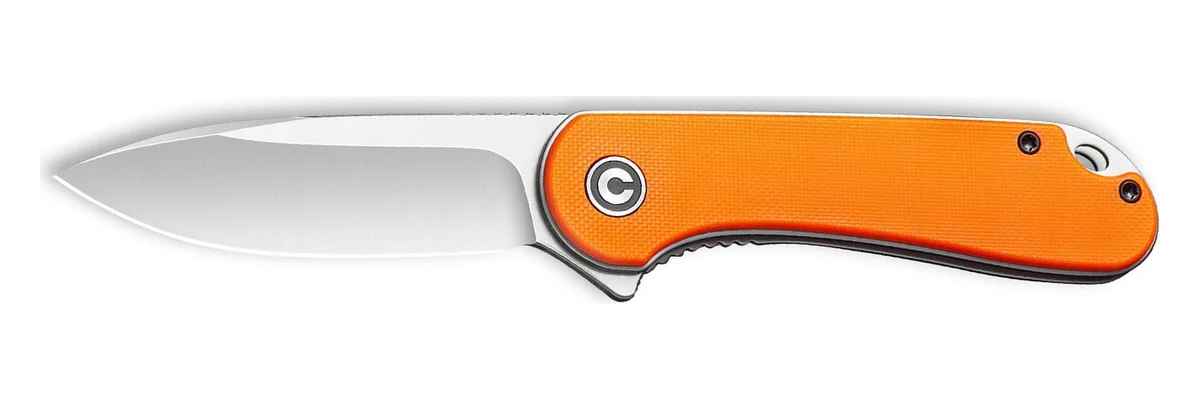
A drop point blade has a spine that curves gently down to the tip, so the point sits a little below the top of the blade with a long, curved belly behind it.
If you only own one knife, it's probably a drop point, and I think that's the right call. The lowered tip is thick and strong, it's easy to control, and the belly gives you plenty of edge for slicing. That mix is why it's one of the most common shapes on pocket knives and hunting knives.
The classic drop point outline. Illustration: KnifeInformer
The trade-off is a tip that isn't as fine as a clip point or a wharncliffe, so it's not the best for really detailed work. For almost everything else, it's the shape to beat.
What We Like
- +Everyday carry and general cutting
- +Hunting and skinning, thanks to the belly
- +A strong tip that resists snapping
Good to Know
- Not ideal for fine, detailed tip work
- Not ideal for piercing, next to a clip point
Knives we've reviewed with this shape: Artisan Cutlery Tradition, CIVIVI Elementum, Cold Steel AD-10
Drop Point Knives We Recommend
Clip Point
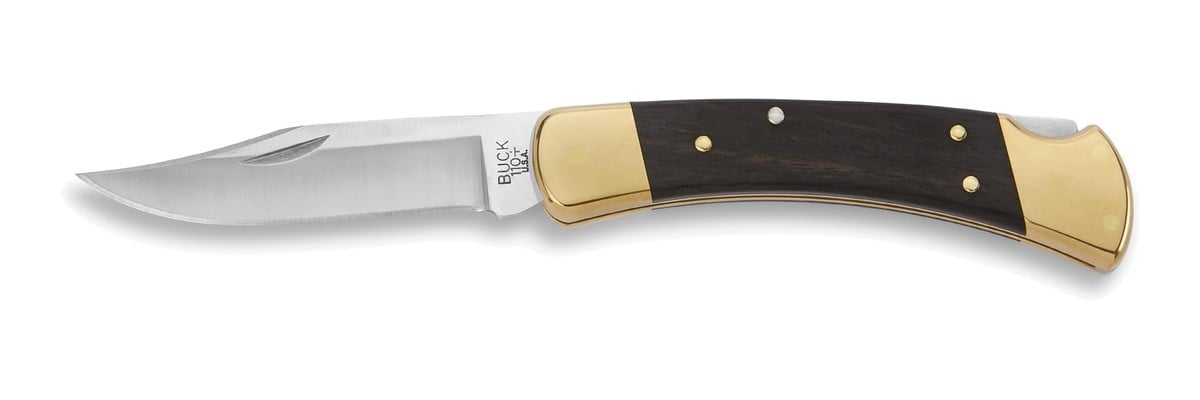
A clip point blade has the front of the spine cut away, straight or slightly curved, which drops the tip lower and makes it thinner and sharper than a drop point.
The clipped section gives you a fine, controllable point for piercing and detail work, and you still get a good belly for slicing. It's the shape on the Buck 110 and most traditional lockbacks and slipjoints, and hunters love it.
The classic clip point outline. Illustration: KnifeInformer
Because the tip is thinner, it's weaker than a drop point. Lots of clip points add a swedge, a bevel ground along the clip, which thins the tip even more for better piercing.
What We Like
- +Piercing and fine tip work
- +Hunting, especially detail cuts
- +General slicing
Good to Know
- Not ideal for prying or twisting at the tip
- Not ideal for rough work where the tip could snap
Knives we've reviewed with this shape: Zero Tolerance 0512, Buck 110, Demko AD20.5 (clip point version)
Clip Point Knives We Recommend
Tanto
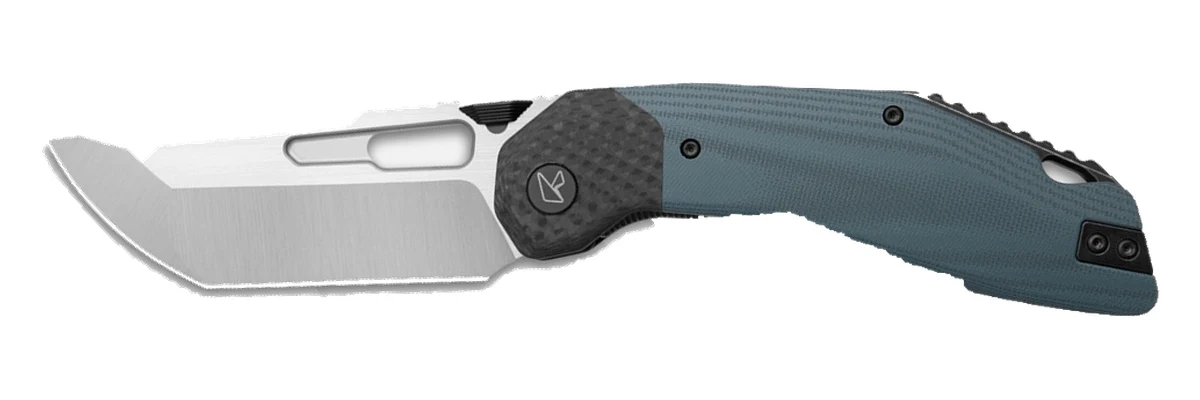
A tanto blade has two straight edges that meet at an angle near the front, giving you a strong, angular tip instead of a curved belly.
The modern "American" tanto takes its look from the Japanese tanto, and Cold Steel is the company most linked with putting it on production knives. All that steel behind the point makes it very strong for stabbing and pushing cuts, which is why it's popular on tactical folders.
The classic tanto outline. Illustration: KnifeInformer
The Yakuza in the clip is a modified tanto, with a slimmer, more pointed front than the classic shape. The trade-off is the belly. A classic tanto has almost none, so long slicing strokes are harder work than on a drop point. Sharpening takes more care too, because you do the two edges separately and keep the corner where they meet crisp.
What We Like
- +A very strong tip
- +Push cuts and piercing tough material
- +Tactical and hard-use knives
Good to Know
- Not ideal for slicing and food prep
- Not ideal for quick sharpening
Knives we've reviewed with this shape: Ketuo Yakuza
Tanto Knives We Recommend
Reverse Tanto
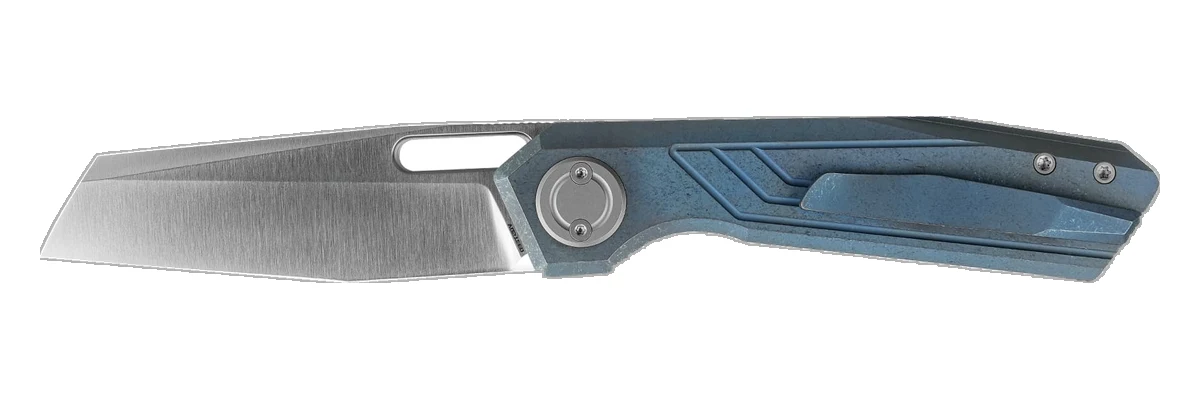
A reverse tanto flips the tanto's angle onto the spine: the top of the blade angles down to the tip, and the edge stays straight or gently curved.
You get a sharp, slightly lowered tip and a long, mostly straight edge. It's a modern shape that shows up all over flippers and gentleman's folders because it looks sleek and still works hard.
The classic reverse tanto outline. Illustration: KnifeInformer
In use, it's closer to a wharncliffe than a true tanto: good at box-cutting and precise slicing, with a tip that's easy to place.
What We Like
- +Opening boxes and packages
- +Precise cuts with the tip
- +Everyday carry
Good to Know
- Not ideal for long slicing strokes that need belly
- Not ideal for skinning
Knives we've reviewed with this shape: Vosteed Xeno
Reverse Tanto Knives We Recommend
Sheepsfoot
A sheepsfoot blade has a straight edge and a spine that curves or drops down to meet it, so there's little or no sharp point to stick into anything.
The sheepsfoot is all about control. The straight edge can meet a cutting board along its length if the handle sits high enough, and the rounded front makes it hard to stab yourself or whatever you're cutting by accident. Rescue knives often use it so they can cut a seatbelt without poking the person wearing it.
The classic sheepsfoot outline. Illustration: KnifeInformer
The clip shows a traditional one, the MAM Operário 2043 Sheepsfoot from Portugal. Modern sheepsfoot folders like the Vosteed Kroc below keep the straight edge but add a bit more tip, so they can still pierce a little.
What We Like
- +Controlled slicing and whittling
- +Food prep on a board
- +Rescue work and cutting close to skin
Good to Know
- Not ideal for piercing
- Not ideal for detail work with the tip
Knives we've reviewed with this shape: Vosteed Kroc 329
Sheepsfoot Knives We Recommend
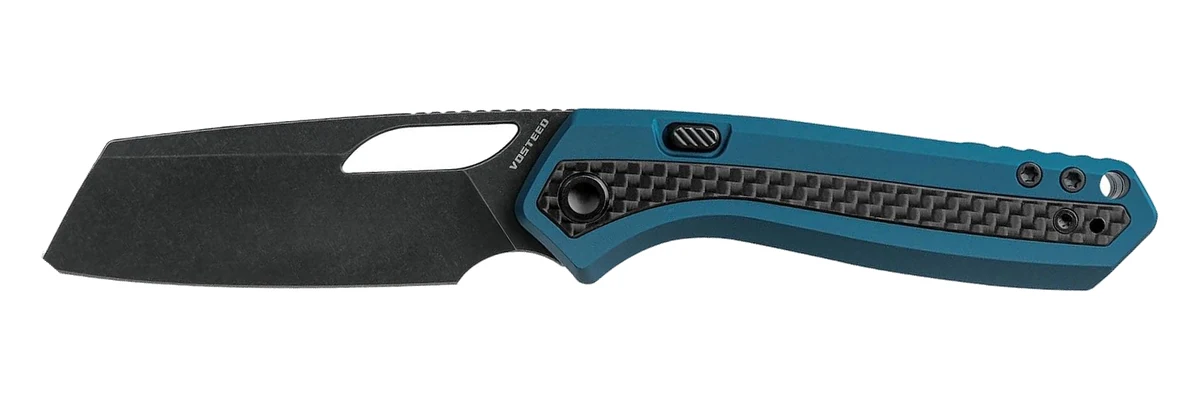
Wharncliffe
A wharncliffe blade has a straight edge, with the spine angling down gradually along its length to a fine, sharp point.
It looks a lot like a sheepsfoot, but the tip is sharp, not rounded. That makes it great for box-cutting and precise work, since the point sits right on the edge line where you can see it and place it.
The classic wharncliffe outline. Illustration: KnifeInformer
The Collusion in the clip is a modern take: the spine runs flat most of the way, then angles down steeply to the tip. Like the sheepsfoot, there's no belly, so it doesn't slice big stuff as smoothly and it's no skinner. The fine tip is also more fragile than a drop point. Wharncliffes are a knife enthusiast favorite, and once you've used one for breaking down boxes, it's easy to see why.
What We Like
- +Box-cutting and breaking down cardboard
- +Precision cuts with the tip
- +Whittling
Good to Know
- Not ideal for skinning and slicing big food
- Not ideal for prying at the tip
Knives we've reviewed with this shape: Jack Wolf Collusion, CIVIVI Guile, Kansept Kosame
Wharncliffe Knives We Recommend
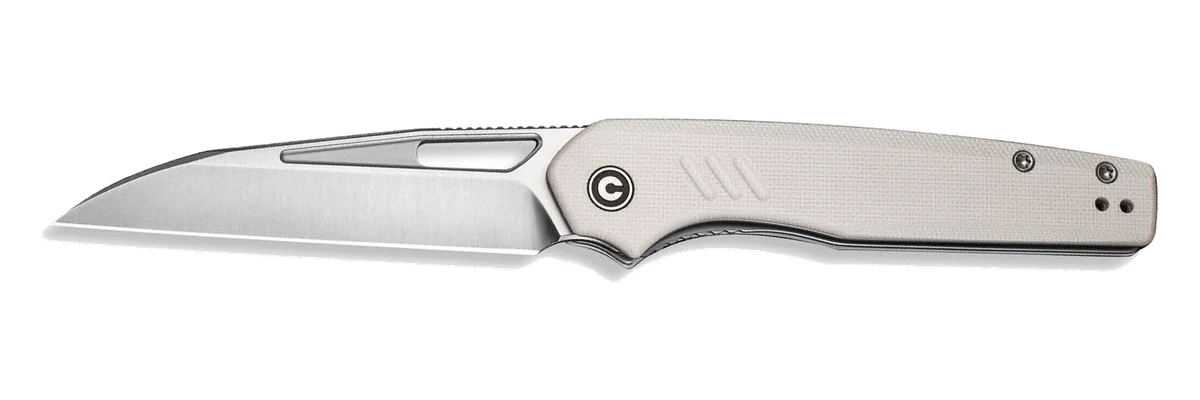
Spear Point
A spear point blade is symmetrical: the spine and the edge rise and fall evenly to a tip that sits right on the blade's centerline.
A centered tip pierces straight and stays strong, because there's steel above and below it. Kershaw calls the Launch 22 in the clip a spear point with a "bayonet-inspired" look (Kershaw).
The classic spear point outline. Illustration: KnifeInformer
On most pocket knives only the bottom is sharpened. If both sides are sharp, it's a dagger, which is next. Spear points have less belly than a drop point, so they slice a little less well.
What We Like
- +Piercing in a straight line
- +A strong, centered tip
- +Tactical folders
Good to Know
- Not ideal for long slicing cuts
- Not ideal for skinning
Knives we've reviewed with this shape: Kershaw Launch 22, WE Inmate, Bestech Ququ
Spear Point Knives We Recommend
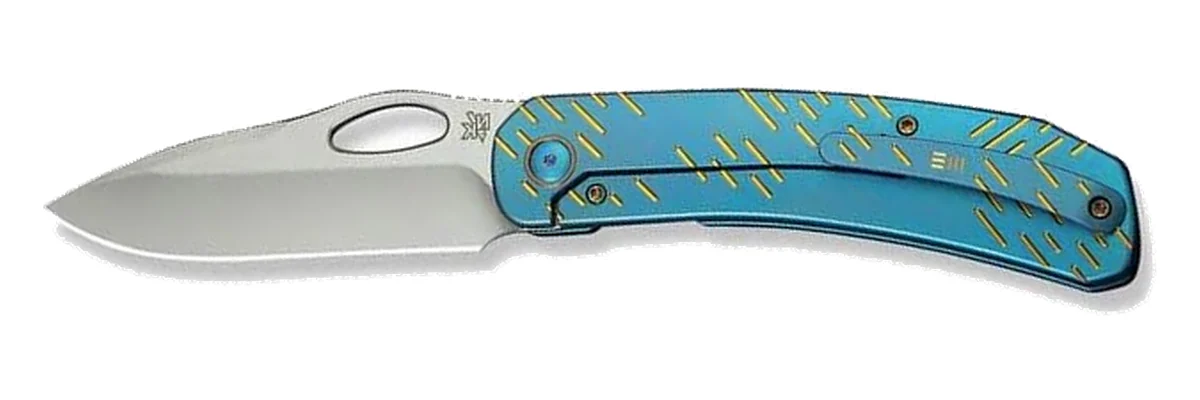
Dagger (Double-Edged)
A dagger is a spear point sharpened on both edges, usually with a needle-like tip on the centerline.
A dagger is built for piercing, and two edges mean it cuts on the way in and the way out. It's also a shape that some knife laws single out.
The classic dagger outline. Illustration: KnifeInformer
A single-edge dagger, like the Bestech Ququ further down, keeps the needle tip but leaves the top unsharpened, so you can put your thumb on the spine.
Before you buy one, check the laws where you live and where you travel. Some US states and cities restrict double-edged blades. Our state knife laws guide has the details. The Exo-M in the clip is also a gravity knife, which some places restrict on its own. That's why I'm not recommending a specific dagger to buy here.
What We Like
- +Piercing
- +Collectors and display
Good to Know
- Not ideal for everyday utility cutting
- Not ideal for carrying where double edges are restricted
Knives we've reviewed with this shape: Bestech Ququ (single-edge, sold as a spear point)
Harpoon
A harpoon blade is a drop or clip point with a barb-like dip in the spine near the tip, so the spine rises again before it reaches the point.
The dip in the spine looks like the barb on a harpoon, which is where the name comes from. It's a spine feature, and on some knives it's ground as a swedge while on others it's just a design touch. The cutting edge underneath is usually a normal curved edge with a decent belly.
The classic harpoon outline. Illustration: KnifeInformer
Today it's mostly a style choice. In use, it behaves like a clip point.
What We Like
- +Piercing
- +General cutting with a fine tip
Good to Know
- Not ideal for heavy prying
- Not ideal for a plain, simple spine
Knives we've reviewed with this shape: Piratech Slippy Tsunami, Kizer Mini Harpoon
Harpoon Knives We Recommend
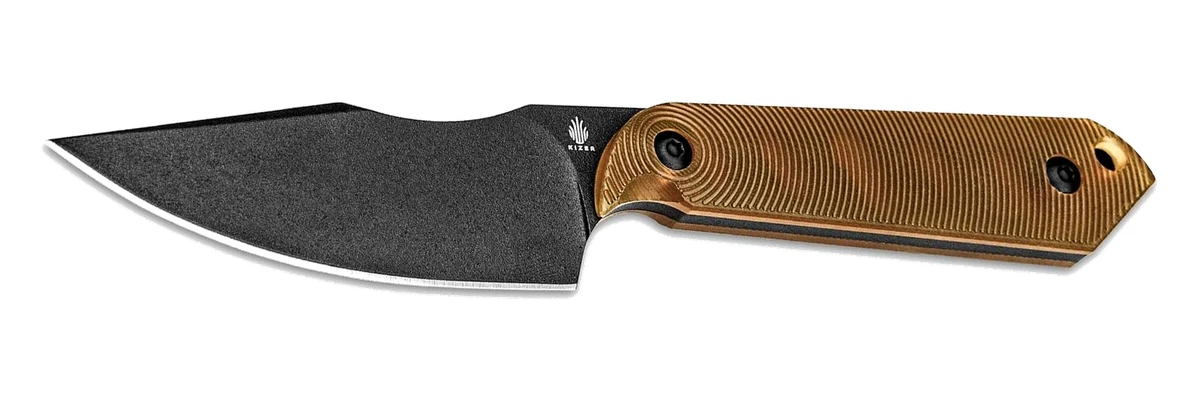
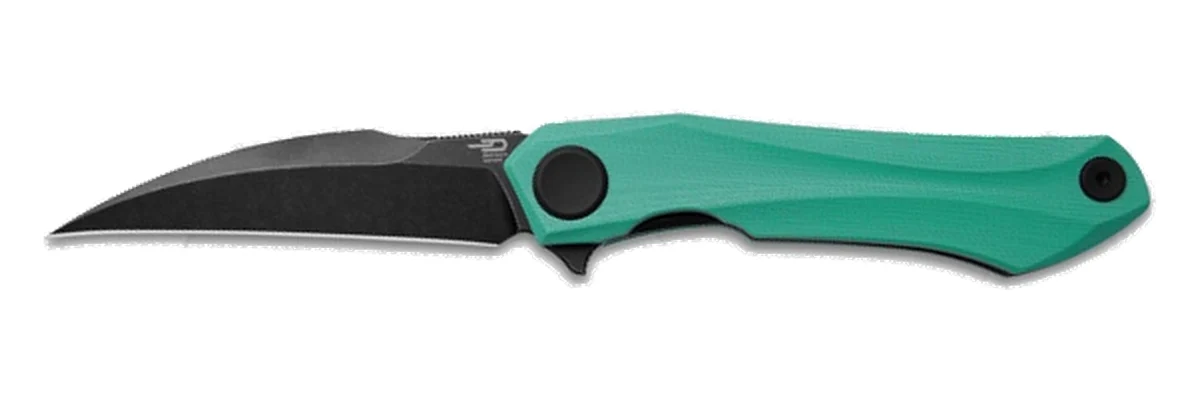
Hawkbill
A hawkbill has an edge that curves down and in like a claw, with the tip pointing toward the cutting edge rather than straight ahead.
Because the edge is concave, anything you pull against it gets trapped and cut. That makes it great for rope, cord, carpet and linoleum, and for pruning branches toward you. It's a poor choice for push cuts and stabbing, since the edge faces back toward you and the tip points down.
The classic hawkbill outline. Illustration: KnifeInformer
Hawkbills are hard to sharpen because a flat stone can't reach into the curve. A rod or a small round stone works best.
What We Like
- +Cutting rope, cord and straps
- +Pull cuts like carpet and pruning
Good to Know
- Not ideal for push cuts and piercing
- Not ideal for quick sharpening
- Not ideal for food prep
Knives we've reviewed with this shape: Bestech Ivy
Hawkbill Knives We Recommend
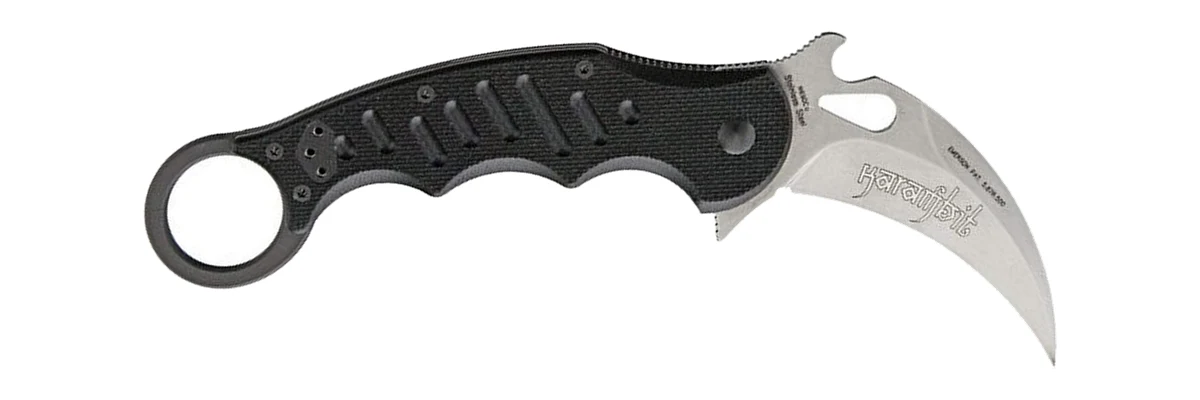
Karambit
A karambit is a strongly hooked, claw-shaped blade with a finger ring at the end of the handle.
The karambit comes from Southeast Asia, where it started as a farm tool before it became a fighting knife. The ring keeps the knife locked to your finger, and the deep curve cuts the same way a hawkbill does, by pulling.
The classic karambit outline. Illustration: KnifeInformer
Today it's mostly carried as a tactical or collector knife. As a utility blade it's awkward, and like any hooked edge it takes a rod to sharpen.
What We Like
- +A secure, ringed grip
- +Pull cuts
- +Collectors
Good to Know
- Not ideal for everyday utility cutting
- Not ideal for quick sharpening
Knives we've reviewed with this shape: Fox Karambit
Karambit Knives We Recommend
Bowie
A Bowie is a large clip point blade, usually with a long clip and often a swedge along the top.
The Bowie is named after Jim Bowie, the American frontiersman who carried a big fighting knife in the 1820s. The classic version is a large fixed blade with a crossguard, but the shape is just as easy to spot on a folder like the Pyrite Bowie.
The classic Bowie outline. Illustration: KnifeInformer
In use, it's a clip point: a fine tip for piercing, a good belly for slicing, and plenty of blade for chopping on the big fixed blades.
What We Like
- +Camp and outdoor chores (fixed blades)
- +Piercing and slicing
- +Classic looks
Good to Know
- Not ideal for small, discreet carry
- Not ideal for heavy prying at the tip
Bowie Knives We Recommend
Cleaver
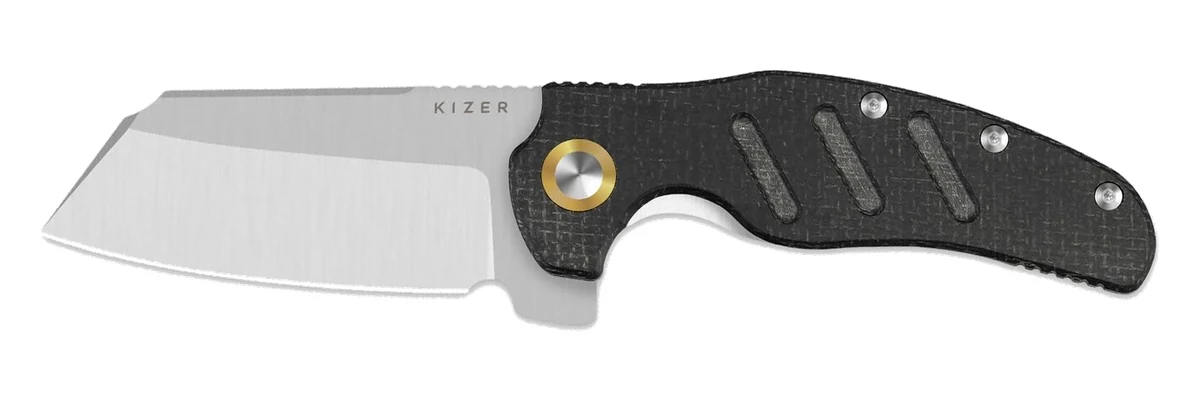
A cleaver blade is tall and roughly rectangular, with a straight or slightly curved edge and a front that drops square or at a steep angle.
The height can give you knuckle clearance on a cutting board, depending on how the handle sits. It also puts a lot of steel behind push cuts, which is why pocket cleavers have caught on for food prep and everyday utility. The Kizer Sheepdog in the clip is a Chris Conaway design.
The classic cleaver outline. Illustration: KnifeInformer
The tip is usually blunt or low, so it's not a piercer. Some makers list cleavers as sheepsfoot blades, because they work the same way.
What We Like
- +Food prep and slicing on a board
- +Push cuts
- +A blade that's easy to control
Good to Know
- Not ideal for piercing
- Not ideal for small, slim pockets
Knives we've reviewed with this shape: Kizer Sheepdog XL
Cleaver Knives We Recommend
Spey
A spey blade has a mostly straight edge that curves up sharply near the front to meet a short, dropped spine, which gives you a blunt, rounded tip.
The spey blade was originally used for spaying and castrating livestock, which is where the name comes from. You see it as the second blade on stockman pocket knives. Because the tip is blunt and the edge is long, it's a controlled slicer that's hard to stick into anything by accident.
The classic spey outline. Illustration: KnifeInformer
Modern knives like the CIVIVI Yonder use a spey as the main blade. The Yonder's tip is more pointed than a classic spey, so it pierces better but loses a little of that safety. Either way, it makes a great everyday cutter.
What We Like
- +Controlled slicing
- +Skinning without nicking the hide
- +Everyday carry
Good to Know
- Not ideal for piercing
- Not ideal for fine tip work
Knives we've reviewed with this shape: CIVIVI Yonder
Spey Knives We Recommend
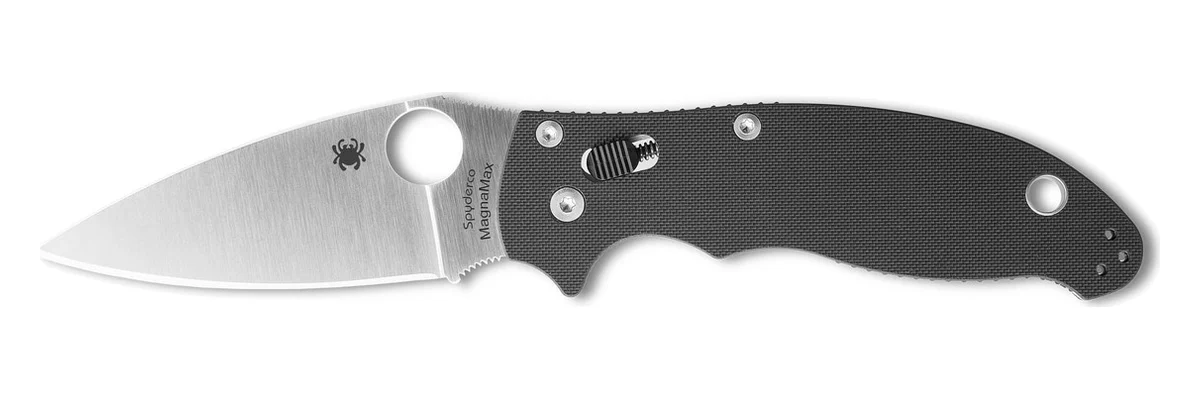
Leaf
A leaf blade is shaped like a leaf: the spine and the edge both curve evenly toward a centered tip, with the blade widest toward the handle and tapering gently to the point.
Spyderco made this shape famous, usually with its round thumb hole near the spine. The wide middle gives you a lot of belly for slicing, and the tip sits high enough to pierce well.
The classic leaf outline. Illustration: KnifeInformer
In use, it's close to a drop point, with a bit more belly.
What We Like
- +Everyday slicing
- +General utility
- +Food prep
Good to Know
- Not ideal for very fine detail work
- Not ideal for prying
Knives we've reviewed with this shape: Spyderco Autonomy 2, Spyderco Manix 2
Leaf Blade Knives We Recommend
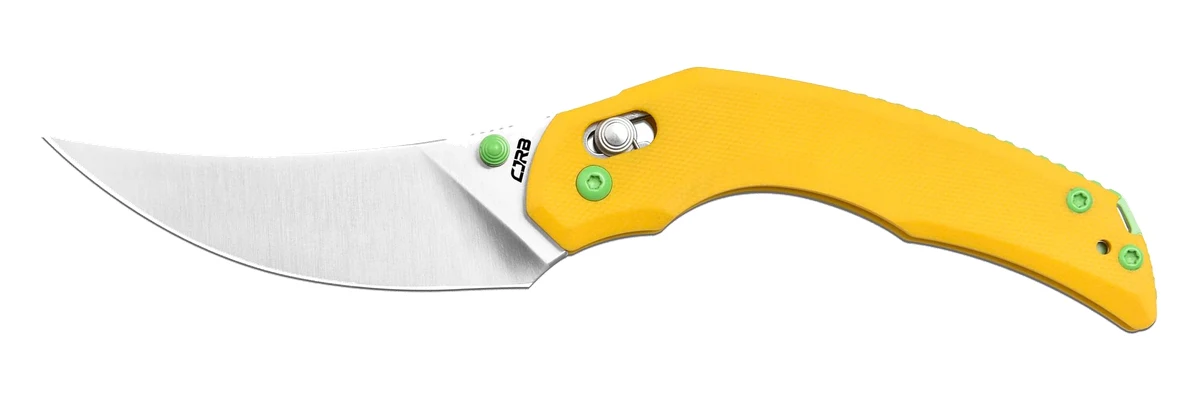
Persian and Trailing Point
A Persian blade sweeps up toward the tip, so the point sits higher than the spine, with a long, deep belly underneath.
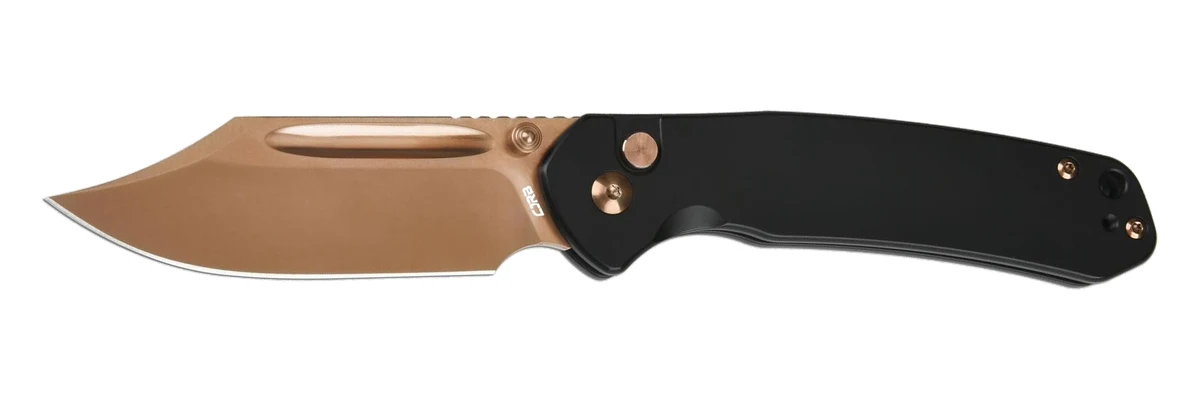
The Persian style comes from the curved swords and daggers of Persia. A trailing point blade works the same way: the spine curves upward so the tip "trails" above it, and makers use the two names almost interchangeably. CJRB lists the Nanner as a Persian blade, and designer Dusty Rhodes describes it as an upswept blade with a usable tip (CJRB).
The classic Persian and trailing point outline. Illustration: KnifeInformer
All that belly makes it a great slicer and skinner. The raised tip is thin and fragile, though, so don't use it to pierce hard material or pry.
What We Like
- +Slicing and skinning
- +Long, sweeping cuts
- +Caping and detail skinning
Good to Know
- Not ideal for piercing hard material
- Not ideal for rough, hard use
Knives we've reviewed with this shape: CJRB Nanner
Persian Blade Knives We Recommend
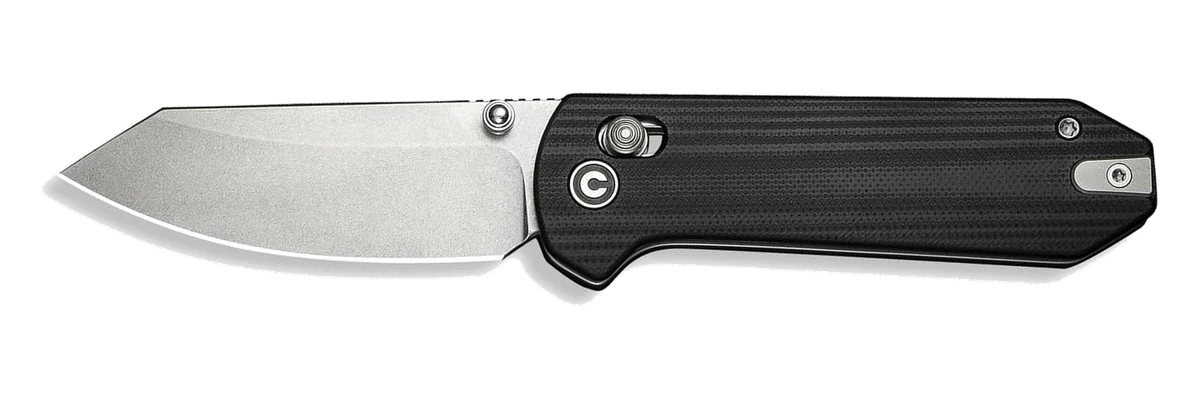
Other Blade Shapes You Might Meet
These are less common, or they're a feature on a blade more than a shape of their own. The recurve is shown below, and I've described the rest in words.
- Straight back: the spine runs dead straight to the tip, and the edge curves up to meet it. Think of some butcher and utility knives. It's good for chopping and lets you press down on the spine.
- Recurve: the edge curves in, then out again, in a slight S. It slices aggressively because material gets pulled into the inward curve, like a mild hawkbill, but it's harder to sharpen.
- Kukri: the national knife of Nepal, angled forward with a deep inward curve. It's a heavy chopper, closer to a machete than a pocket knife.
- Needle point: a long, thin dagger made only for piercing. Think of an Italian stiletto.
- Ulu: a crescent-shaped blade with the handle in the middle, from the Inuit. You rock it to chop and slice.
- Kiridashi: a small Japanese utility knife, usually chisel-ground with an angled tip, for carving and marking.
- Nessmuk: a short bushcraft blade with a deep, upswept belly and a hump in the spine, made for skinning and camp chores.
- Pen and coping blades: small second blades on traditional slipjoints. A pen blade is a small spear or clip point, and a coping blade has a short, angled tip for fine work.
- Gut hook: a small, sharpened hook in the spine of a hunting knife. You slide it under the hide to open an animal without cutting into it.
- Modified shapes: makers keep inventing new ones. Andrew Demko's Shark Foot on the Demko AD20.5 is a good example: a tall, straight edge with a strong, dropped tip that works like a cross between a wharncliffe and a sheepsfoot.
Knife Blade Shapes Compared
The main shapes side by side. "Tip strength" is how well the point resists snapping. "Slicing" is a rough guide based on the outline. Blade thickness, grind and edge angle matter just as much.
| Shape | Tip Strength | Piercing | Slicing | Best For |
|---|---|---|---|---|
| Drop Point | Strong | Good | Good | Everyday carry, hunting |
| Clip Point | Medium | Very good | Good | Piercing, hunting |
| Tanto | Very strong | Good | Fair | Tactical, push cuts |
| Reverse Tanto | Medium | Good | Good | Boxes, everyday carry |
| Sheepsfoot | Strong (blunt) | Poor | Very good | Food, rescue, whittling |
| Wharncliffe | Fine, fragile | Good | Good | Boxes, precision |
| Spear Point | Strong | Very good | Fair | Piercing |
| Dagger | Medium | Excellent | Fair | Piercing, collectors |
| Harpoon | Medium | Very good | Good | General use, style |
| Hawkbill | Medium | Poor | Pull cuts only | Rope, cord, pruning |
| Karambit | Medium | Fair | Pull cuts only | Collectors, tactical |
| Bowie | Medium | Very good | Good | Outdoors, piercing and slicing |
| Cleaver | Strong (blunt) | Poor | Very good | Food prep, utility |
| Spey | Strong (blunt) | Poor | Very good | Slicing, skinning |
| Leaf | Medium | Good | Very good | Everyday carry |
| Persian | Fragile | Fair | Excellent | Slicing, skinning |
Blade Shapes Head to Head
Drop Point vs Clip Point
Both have a belly and a lowered tip. The drop point's spine curves down gently, so the tip is thicker and stronger. The clip point's spine is cut away, so the tip is thinner and sharper. Get a drop point if you want toughness, and a clip point if you pierce or do detail work a lot.
Tanto vs Drop Point
The tanto has the stronger tip but almost no belly, so it isn't as good for long slicing strokes and takes more care to sharpen. The drop point does nearly everything well. For most people the drop point is the better pick. The tanto makes sense if your work is mostly stabbing or push cuts into tough material.
Tanto vs Reverse Tanto
On a tanto, the angle is on the edge side, so the tip is high and very strong. On a reverse tanto, the angle is on the spine side, so the tip is lower and sharper and the edge stays long and straight. The tanto is for hard pushing and piercing. The reverse tanto is the better everyday cutter.
Sheepsfoot vs Wharncliffe
Both have a straight edge. The sheepsfoot's spine curves down at the end to make a blunt, safe tip. The wharncliffe's spine slopes down the whole way to a sharp point. Choose a sheepsfoot if you don't want a point, and a wharncliffe if you want one for precise work.
Sheepsfoot vs Cleaver
They work the same way: a straight edge and a dropped front with little or no point. The cleaver is just taller and squarer, which usually gives you more knuckle clearance on a board. Modern blades blur the line, which is why the Kizer Sheepdog, a cleaver by any other name, is sold as a sheepsfoot.
Hawkbill vs Karambit
Both have a concave edge that cuts by pulling. A hawkbill is a work tool, used for rope, carpet and pruning. A karambit hooks harder and adds a finger ring, which makes it a tactical and collector knife more than a utility blade.
Spear Point vs Dagger
Both have the tip on the centerline. A spear point is usually sharpened on one edge only, while a dagger is sharpened on both. That makes the dagger the better piercer and the spear point the better everyday tool. Some places restrict double-edged blades, so check your local laws.
Which Blade Shape Is Right for You?
If you're not sure, get a drop point. It does almost everything well. Otherwise, start with what you'll use the knife for.
- Everyday carry: drop point, leaf, spey or reverse tanto. All slice well and have a usable tip. See our best EDC knives.
- Opening boxes and packages: wharncliffe, reverse tanto or sheepsfoot. The straight edge and easy-to-place tip make clean cuts.
- Food prep: sheepsfoot, cleaver or a thin, flat-ground drop point.
- Hunting and skinning: drop point, Persian or trailing point, or a clip point for detail work.
- Camping and bushcraft: a drop point fixed blade with a scandi, flat or convex grind. See our best survival knives.
- Rope, cord and straps: a hawkbill, or any serrated edge.
- Hard use: tanto, drop point or spear point, with a sabre grind and thick stock.
- Collectors: daggers, karambits, Persians and modern shapes like the Shark Foot.
Where You Live
Blade shape can matter legally. Some places restrict double-edged blades, daggers and stilettos, or limit blade length. Check our state knife laws guide before you buy or carry.
Blade Grinds in 60 Seconds
The shape is what you see from the side. The grind is how the blade thins from the spine down to the edge, which is what you'd see if you cut it in half. Two knives with the same shape can cut very differently because of the grind.

- Hollow: very thin behind the edge, so it slices very well, but the edge is more delicate.
- Full flat and high flat: the best all-rounders for a pocket knife.
- Sabre: a thick, strong spine for hard use, at the cost of some slicing.
- Scandi: one wide bevel. Great for wood and easy to sharpen.
- Convex: curved and very tough. Built for chopping.
- Chisel: ground on one side only.
Each grind is shown on a real knife, with matchups and FAQs, in our full guide to knife blade grinds.
Parts of a Knife Blade
The words you'll see in blade descriptions, from the tip back to the handle.
- Tip and point: the front of the blade. The point is the very end, and the tip is the first inch or so behind it.
- Edge: the sharpened part.
- Belly: the curved part of the edge that rises toward the tip. More belly helps with sweeping slices and skinning.
- Spine: the top of the blade, opposite the edge. It's usually the thickest part.
- Swedge: a bevel along the spine near the tip, usually unsharpened.
- Grind and grind line: the ground-down sides of the blade, and the line where the grind starts.
- Plunge line: where the grind ends at the back of the blade.
- Choil: the unsharpened notch between the edge and the handle.
- Ricasso: the flat, unground section of blade just in front of the handle.
- Fuller: a groove along the blade that cuts weight. It's not a "blood groove."
- Jimping: small notches on the spine that give your thumb grip.
Knife Blade Shape FAQs
What are the main types of knife blade shapes?
The most common blade shapes are drop point, clip point, tanto, reverse tanto, sheepsfoot, wharncliffe, spear point, dagger, harpoon, hawkbill, karambit, Bowie, cleaver, spey, leaf and Persian. The drop point is the most common on pocket knives today.
What is the most common knife blade shape?
The drop point is one of the most common, and maybe the most common, on pocket knives and hunting knives, because it does almost everything well.
What is the most versatile blade shape?
The drop point. It has a strong tip, a good belly for slicing and it's easy to control, so it handles everyday carry, outdoor chores and hunting well. A leaf blade comes close.
What is the strongest blade shape?
The tanto has the strongest tip, because there's so much steel behind the point. Thick drop points and spear points are also very strong. Blade thickness and grind matter as much as the shape.
What is the best blade shape for everyday carry?
A drop point for most people. Wharncliffe and reverse tanto blades are great if you open lots of boxes, and a spey or sheepsfoot is a good pick if you want a blade that's hard to poke yourself with.
What is the best blade shape for hunting and skinning?
A drop point for most hunters. It has a strong tip and a big belly for skinning. Clip point, Persian and spey blades are good alternatives, especially for detail work or skinning without nicking the hide.
What is the best blade shape for food prep?
A sheepsfoot or cleaver. The straight edge can meet the cutting board along its length, and a tall blade can give your knuckles clearance. A thin, flat-ground drop point works well too.
What is the best blade shape for whittling?
A sheepsfoot or wharncliffe. The straight edge and controllable tip are easy to work with, and a scandi grind bites into wood well.
What is the difference between a sheepsfoot and a wharncliffe?
Both have a straight edge. A sheepsfoot's spine curves down at the end to make a blunt tip, and a wharncliffe's spine slopes down gradually to a sharp point.
What is the difference between a tanto and a reverse tanto?
On a tanto, the angle that forms the tip is on the edge side, so the tip is high and very strong. On a reverse tanto, the angle is on the spine, so the tip is lower and sharper and the edge stays long and straight.
Is a karambit the same as a hawkbill?
Not quite. Both have a concave, claw-like edge, but a karambit hooks more sharply and has a finger ring at the end of the handle. A hawkbill is a work tool, and a karambit is mostly a tactical or collector knife.
What is a modified blade shape?
It's a maker's own twist on a classic shape. Demko's Shark Foot, for example, mixes a wharncliffe and a sheepsfoot. Many modern knives are modified versions of the classic shapes on this page.
Is a tanto blade good for everyday use?
It works, but it isn't the best choice. It has a very strong tip, but with little belly it's less suited to long slicing strokes and takes more care to sharpen than a drop point.
What is the difference between a blade shape and a blade grind?
The shape is the outline you see from the side, such as a drop point or tanto. The grind is how the blade thins from the spine to the edge, such as hollow, flat or convex. Our blade grinds guide covers every grind.
Are double-edged knives legal?
It depends where you are. Some US states and cities restrict double-edged blades or daggers, and the rules can differ for owning and carrying. Check our state knife laws guide for your area.
Next, see how the blade thins to its edge in our guide to knife blade grinds, how it stays open in our guide to knife lock types, or what it's made of in our knife steel comparison.
Still Not Sure?
Take our 60-second quiz and get matched with the right knife.

