

I've been a multitool fan since the late eighties, even though folding knives get most of my attention. Sometimes a knife simply isn't enough: you need to grip a nut, turn a screw or trim a wire, and a compact set of real tools makes all the difference.
The Leatherman Wave Plus is still my starting point for most buyers. But the best multitool depends on what you actually carry and use. The Skeletool cuts pocket weight, the Surge puts larger tools ahead of portability, and the ARC makes one-handed access its main attraction. Victorinox and Gerber also offer genuinely different approaches worth considering.
Here are eight picks with distinct strengths, followed by a comparison and the key considerations that matter more than the biggest advertised tool count.
Top Picks
- Best Overall: Leatherman Wave Plus
- Best Premium: Leatherman ARC
- Best Heavy-Duty: Leatherman Surge
- Best Lightweight: Leatherman Skeletool
- Best Traditional Value: Leatherman Rebar
- Best Leatherman Alternative: Victorinox SwissTool Spirit X
- Best for Screwdriving: Gerber Center-Drive Plus
- Best Camping Features: Leatherman Signal
Our Picks for the Best Multitools
Best Overall: Leatherman Wave Plus
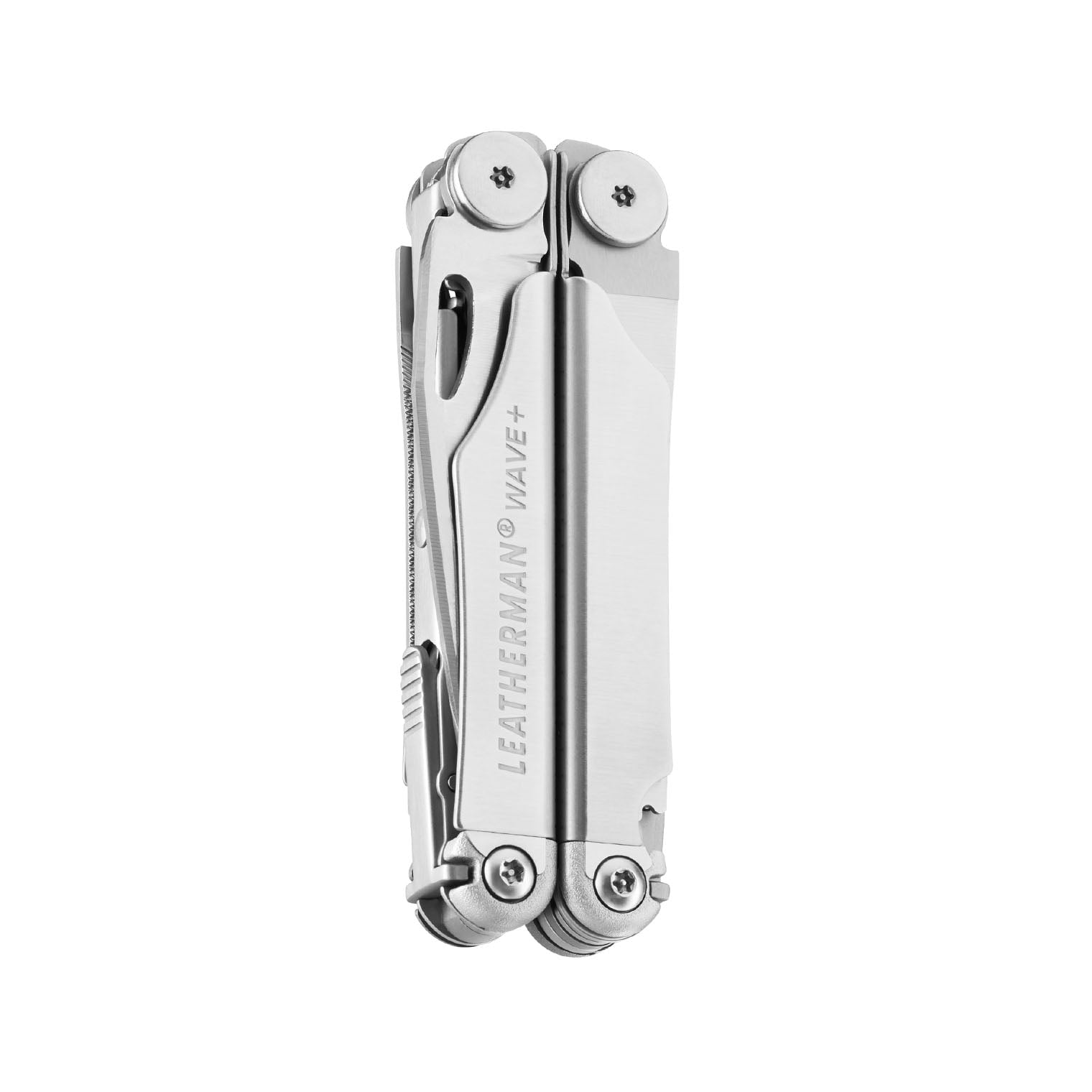
The Wave Plus remains my starting point for most people. It fits a useful spread of tools into a manageable package: separate plain and serrated knives, scissors, a saw, files, and both a large bit driver and a tiny eyeglass driver. You don't have to choose between household jobs and occasional outdoor repairs.
This is the Wave Plus with replaceable wire cutters, not the original Wave or the 2004 New Wave. The outside blades open without unfolding the pliers; the smaller implements live inside the handles. Everything other than the plier head locks, but the pliers aren't spring-loaded.
The balance between features, size and cost is still the main attraction. The small scissors and basic 420HC blades are the compromises—not poor choices, just places where spending more buys something tangible. A pocket clip is an accessory rather than something to assume is in the box.
What about the Wave Alpha? Its MagnaCut blade, textured G10 scales and much larger outside-accessible scissors make it a meaningful upgrade if cutting is your priority. It costs more than the Plus, has no separate serrated blade, and is thicker. The ARC below is the more comprehensive one-handed option; neither makes a working Wave Plus obsolete.
| PROS | CONS |
|---|---|
|
|
Best Premium: Leatherman ARC
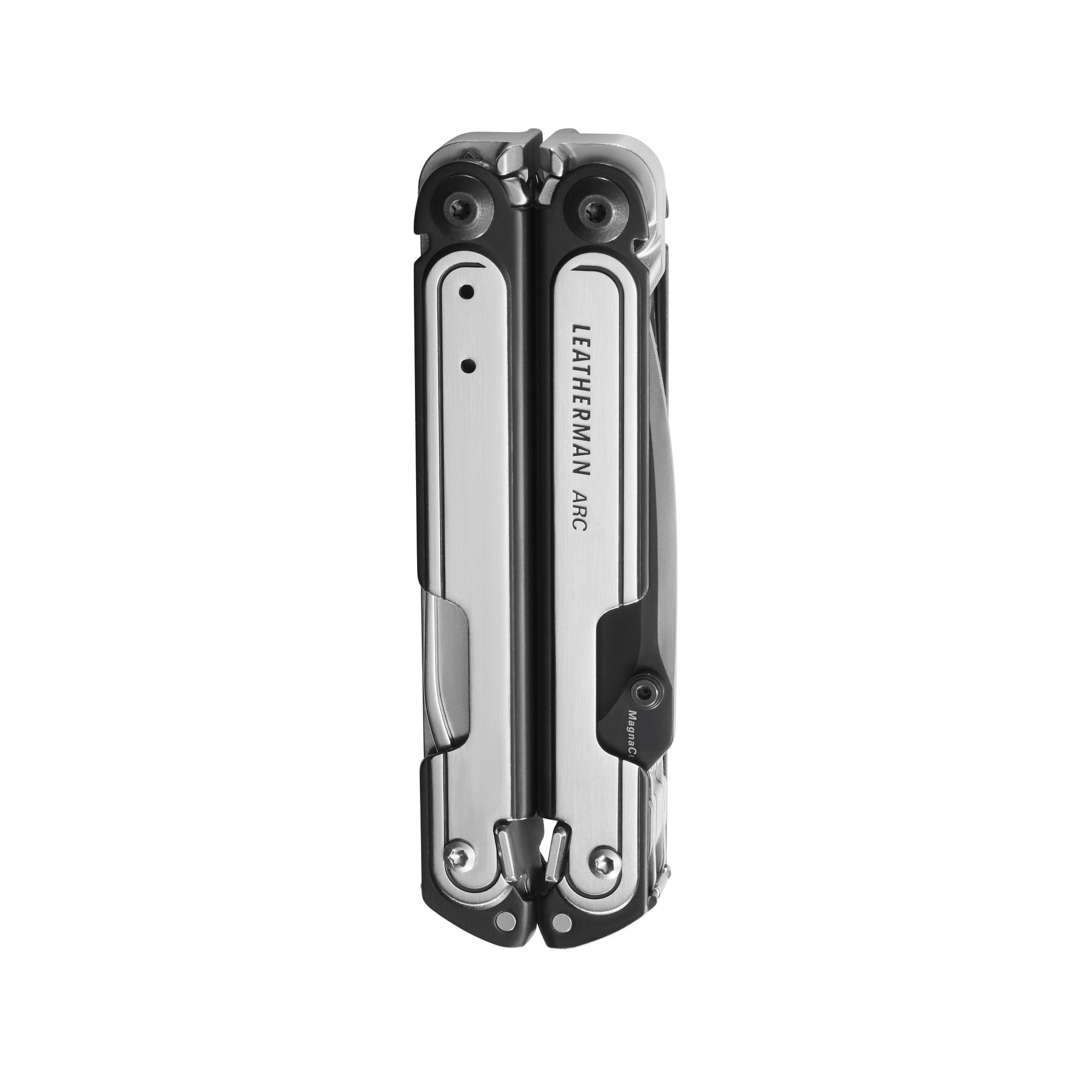
The ARC earns its premium slot through access, not simply through a bigger tool count. Its FREE-platform mechanism lets you open the pliers and reach the outside tools one-handed. The MagnaCut main blade, substantial scissors, awl and two bit-driver sizes make this a well-equipped everyday toolkit.
In Advanced Knife Bro's ARC review, the easier deployment and upgraded blade were the standout improvements over the Wave. He also found the Wave's rounded handles more comfortable when squeezing hard. That is a useful reminder: convenient opening and comfortable prolonged plier use aren't the same thing.
This is the standard silver-and-black ARC, not a limited-edition finish. The pliers aren't spring-loaded, and the tool weighs virtually the same as the Wave Plus. Buy it for the blade and one-handed access—not to save weight. Current manufacturer packaging lists the sheath and accessories separately, so older review bundles aren't a promise of what every listing includes.
| PROS | CONS |
|---|---|
|
|
Best Heavy-Duty: Leatherman Surge
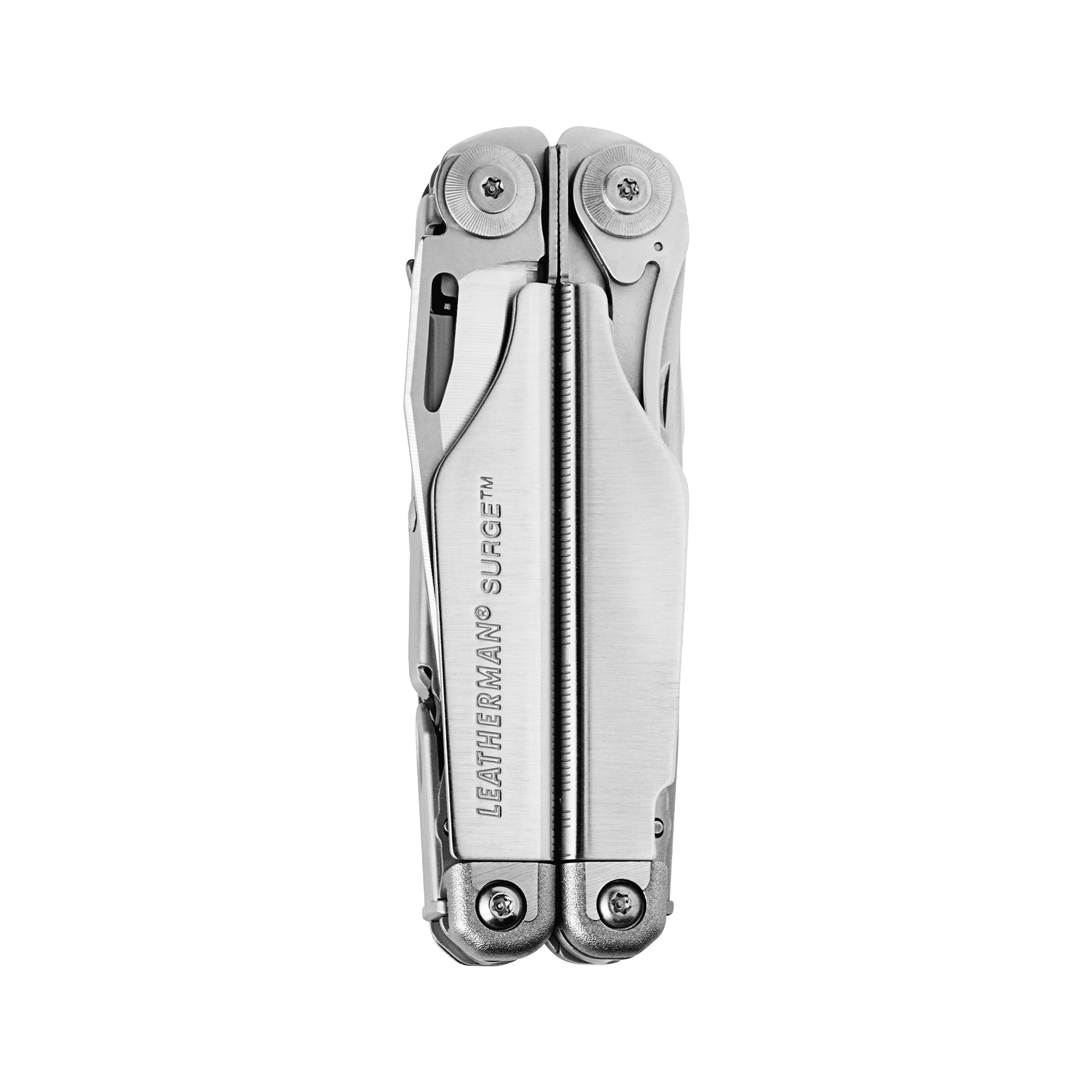
The Surge is the big-tool choice: larger pliers, substantial spring-action scissors, an awl and a blade exchanger that lets you swap between the saw and file. That last detail matters. You don't get an independent saw and file simultaneously ready to unfold as you do on a Wave Plus.
I do like the Surge a lot, but mine is typically kept in my bag. At 12.5 ounces it gives up too much portability to be my default pocket tool. For a work bag or belt setup, that weight is easier to justify; for shorts and a quick trip out, it usually isn't.
The Surge gives you separate plain and serrated knives and a large bit driver, but no tiny eyeglass driver. Its size is the reason to choose it, not evidence that smaller tools can't do useful work. If you mostly need a screwdriver and occasional pliers, the lighter picks make more sense.
| PROS | CONS |
|---|---|
|
|
Best Lightweight: Leatherman Skeletool
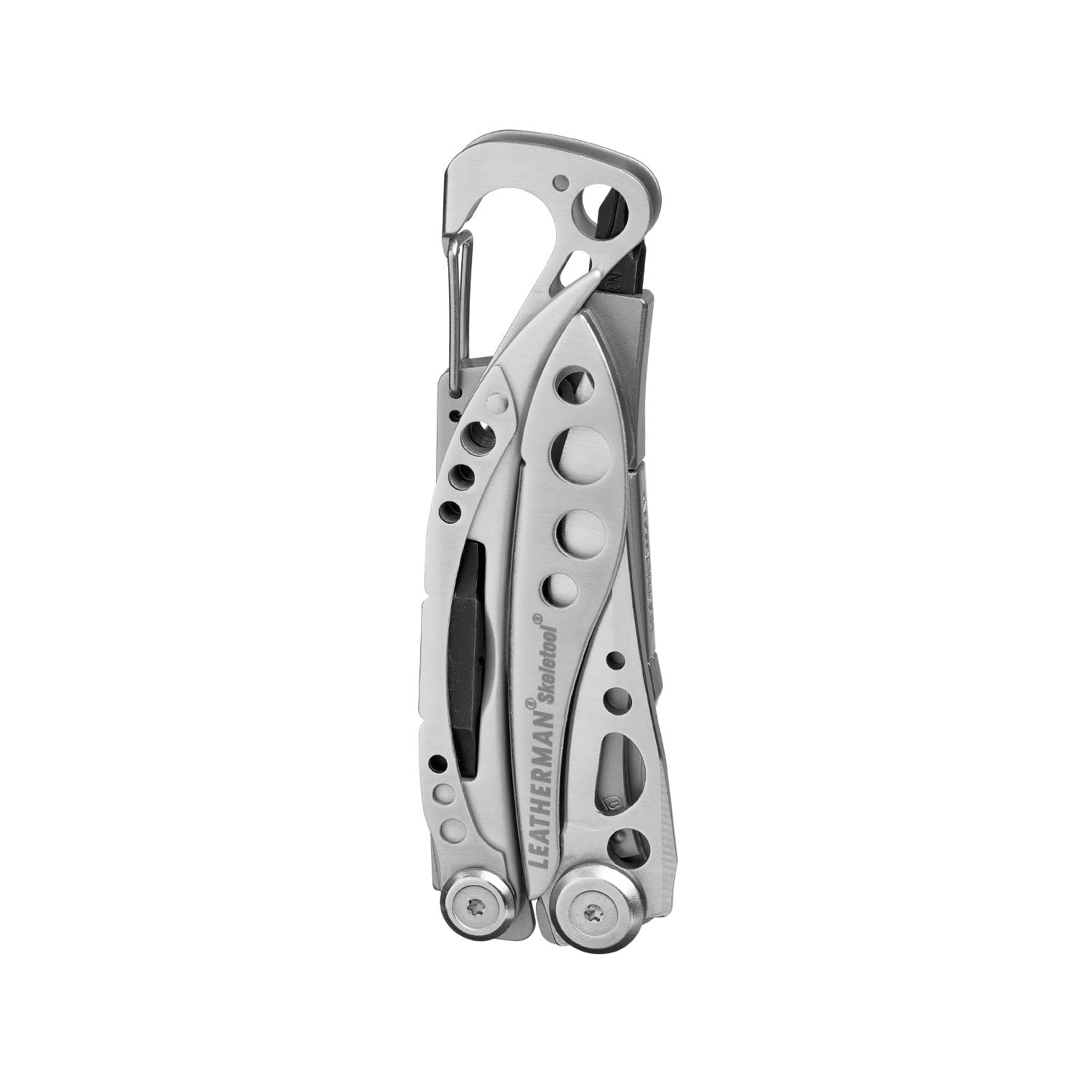
Portability is the reason the Skeletool stays on this list. At five ounces it gives you the essentials—pliers, a knife, a bit driver and a carabiner that doubles as a bottle opener—without pretending to be a toolbox. The pocket clip is included, and you can open the blade with the handles closed.
You have to be honest about the omissions: no scissors, saw or file, and no replaceable cutter inserts. The short combination blade divides its cutting edge between plain and serrated sections. That can be useful for mixed jobs, but isn't everyone's preferred everyday knife.
Skeletool or Skeletool CX? The regular model is the lower-cost choice and suits buyers who want serrations. The CX trades that combo edge for a plain 154CM blade at the same weight. Its current price premium is much smaller than when I first ranked the regular Skeletool above it; if you prefer a plain edge, the CX is worth the extra rather than an extravagant upgrade.
For a closer look, James Mackintosh's Skeletool CX review explains both the excellent pocket utility and the uncomfortable handles during extended plier use. The pictured and linked main pick here is the regular 420HC Skeletool, not that reviewed CX. Neither is a sensible keychain tool just because it has a carabiner.
| PROS | CONS |
|---|---|
|
|
Best Traditional Value: Leatherman Rebar
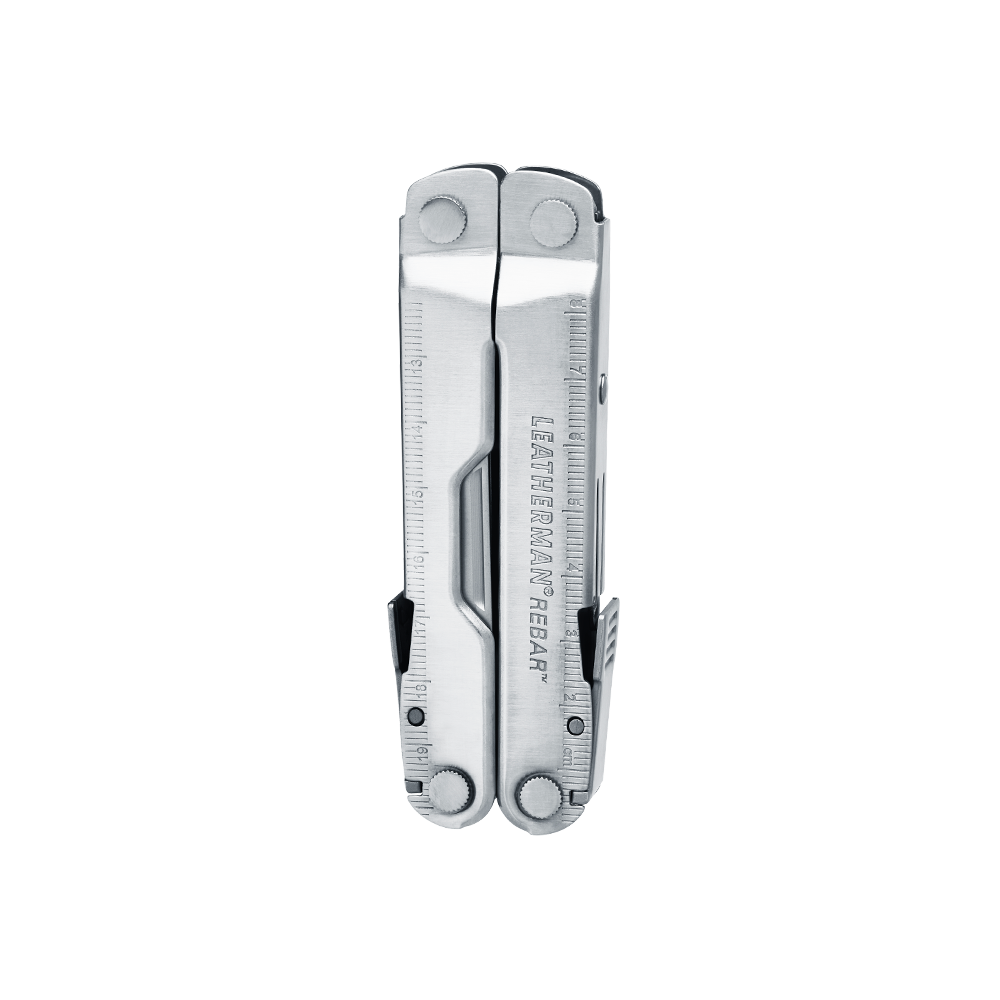
The Rebar keeps the traditional Leatherman layout: unfold the handles for the pliers, then reach inside for the other tools. There is no outside-opening knife to flick out quickly, but the compact frame packs separate blades, a saw, a file, an awl and dedicated screwdrivers.
In my experience the Rebar's plier tips meet tightly, and I particularly like its can opener. The 420HC blades sharpen readily, though I wouldn't expect the edge retention of the premium blades above. It is an understated, functional design rather than a showpiece.
For value, the significant trade is not a missing luxury finish: it is the lack of scissors and an interchangeable bit driver. If those are daily necessities, spend more on the Wave Plus. If you prefer dedicated drivers and a lighter, simpler tool, the Rebar still earns its place. Plan a pouch or bag-carry setup rather than assuming it comes with a pocket clip.
| PROS | CONS |
|---|---|
|
|
Best Leatherman Alternative: Victorinox SwissTool Spirit X
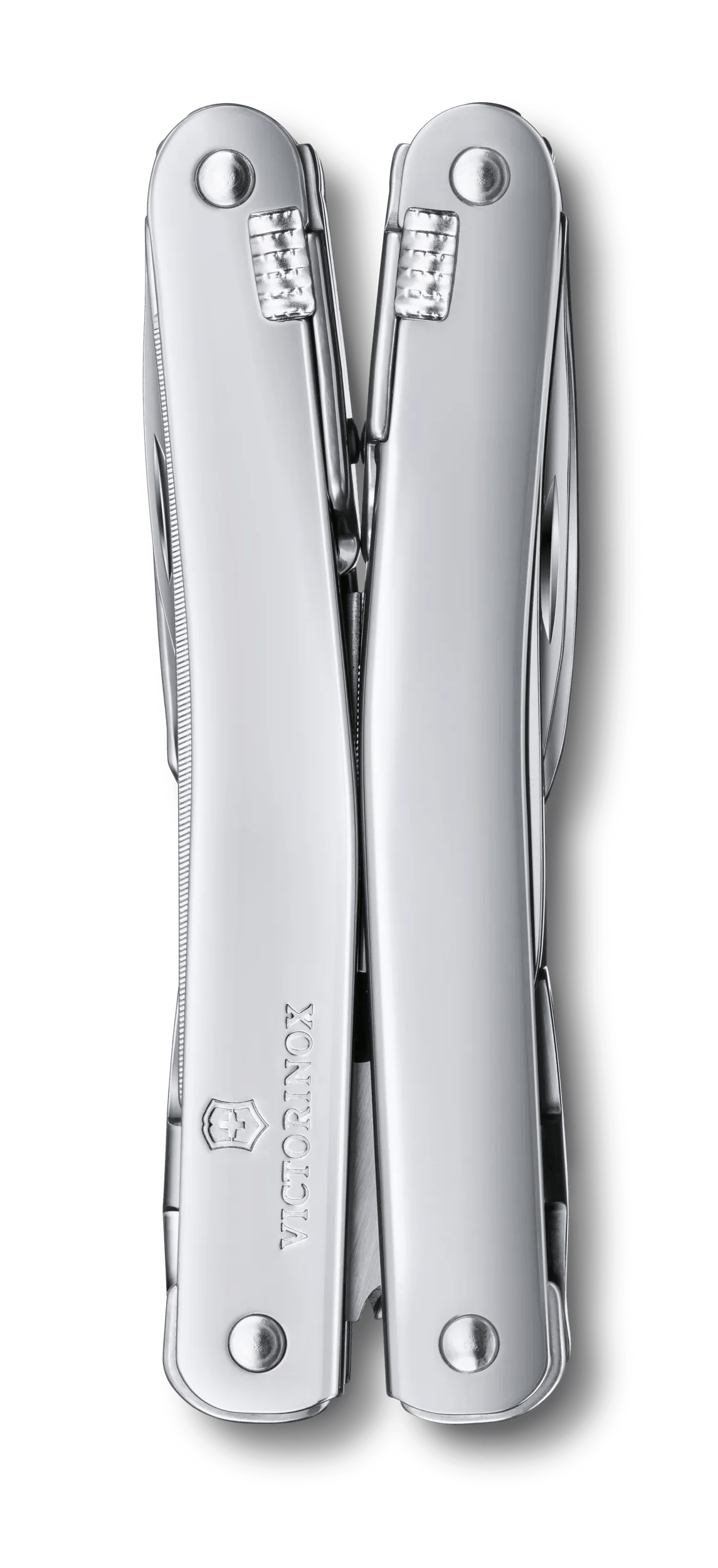
The Spirit X is the alternative to look at when you want a full toolset without buying another Leatherman. Its curved steel handles contain a plain blade, scissors, wood saw, metal saw/file, dedicated screwdrivers and an unusually useful collection of scraping and wire-working functions.
At 7.4 ounces it sits between the Rebar and Wave Plus. The implements are accessible with the pliers folded away, but this is still a two-handed, nail-nick design—not the one-handed Spirit MX. The exact model here is 3.0224.L, supplied with a leather pouch.
The choice is mostly about layout. The Spirit X gives you scissors without the Wave's weight, but it doesn't include the Wave's interchangeable bit driver or eyeglass driver. Its wire cutters are integral rather than replaceable inserts. If standard Phillips and flat screws cover your needs, those compromises may be easy to live with; if you regularly swap Torx and hex bits, start elsewhere.
| PROS | CONS |
|---|---|
|
|
Best for Screwdriving: Gerber Center-Drive Plus

The Center-Drive Plus solves a specific annoyance: turning a screwdriver that sits off to one side of a multitool. Its long driver curves toward the center axis and accepts ordinary quarter-inch hex bits, so you aren't limited to proprietary flat bits. Add one-thumb sliding, spring-loaded pliers and the appeal for repeated repairs is obvious.
In our Center-Drive Plus review, the centered driver was the standout feature. The reviewed tool also had meaningful faults: awkward access to the secondary tools and play in the extended plier head. More importantly, the reviewer found that his thumb could press the plastic tool-lock release while operating the scissors, allowing the assembly to fold downward during cutting. The file also suffered from unintended unlocking in the review. If scissors or filing are regular jobs for you, choose the Wave Plus, Surge or Spirit X instead; the excellent driver does not erase those drawbacks.

The Plus adds scissors and uses a partly serrated main blade; don't confuse it with the standard Center-Drive's tool layout. The leather sheath suits its 9.5-ounce weight and 4.7-inch closed length. This is the specialist choice for someone who will actually use the driver, not the best pocket multitool for everyone.
| PROS | CONS |
|---|---|
|
|
Best Camping Features: Leatherman Signal
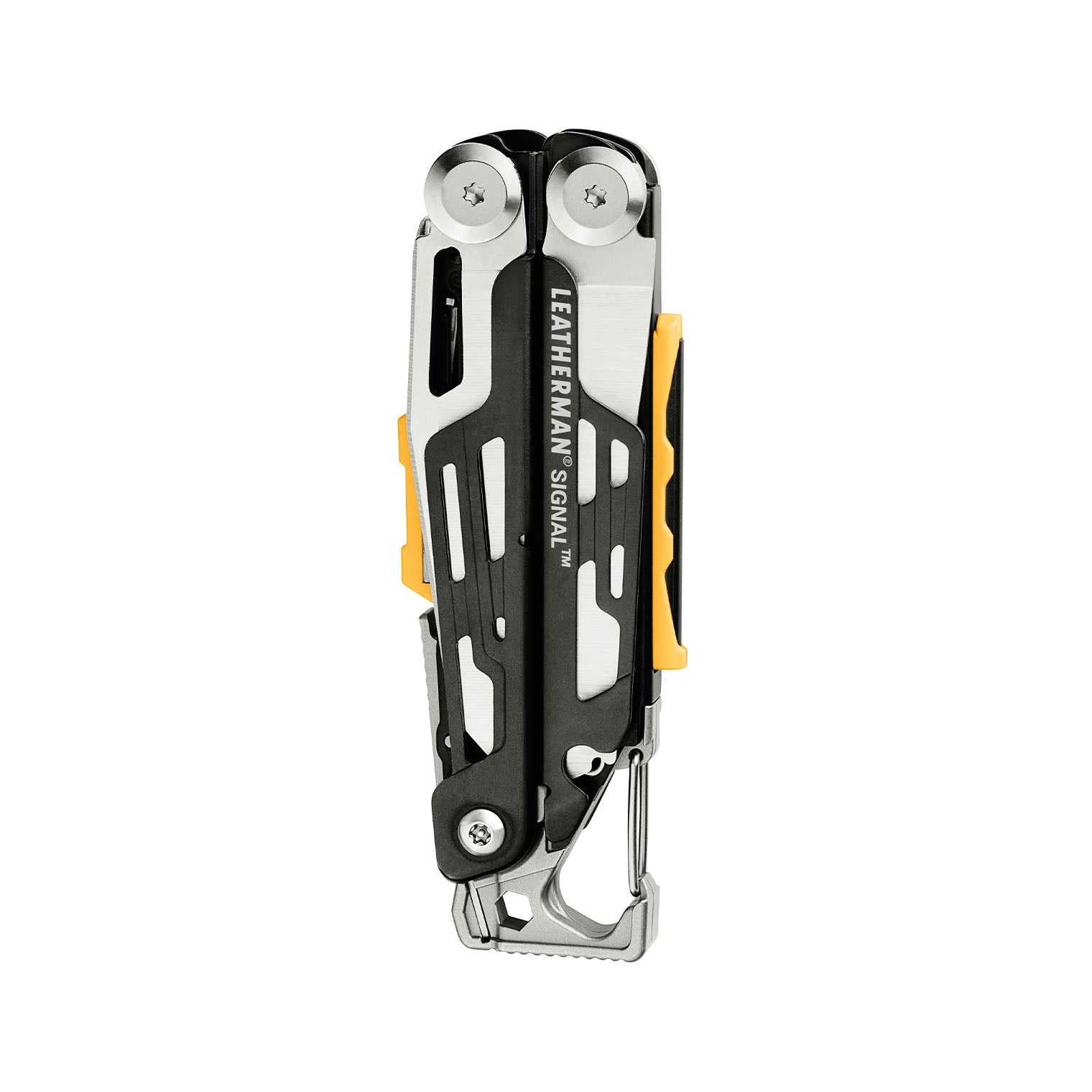
The Signal uses its space differently from the workshop-oriented picks. Alongside the pliers, saw and bit driver, you get a hammering surface, a ferro rod, a whistle and a diamond-coated sharpener. Those are actual reasons for an outdoors-focused buyer to choose it—not simply another paint scheme on a Wave.
I like the carry options: a pocket clip and a carabiner let you keep it accessible without committing to a belt pouch. The whistle and fire-starter can be cumbersome to deploy until you get used to them, though, and the compact ferro rod is better treated as a backup than your only fire-starting equipment.
The main compromise is scissors: there aren't any. The combo blade also gives you less uninterrupted plain edge than a dedicated plain knife. For general household repairs, the Wave Plus is the more rounded toolkit; for someone who specifically wants the outdoor extras, the Signal has a clear purpose.
| PROS | CONS |
|---|---|
|
|
Compare the Multitools
Start with carry weight and the job you need most. Function counts are not standardized: several brands count the gripping and cutting functions of one plier head separately.
| Multitool | Closed / weight | Best reason to choose it | Key tradeoff |
|---|---|---|---|
| Leatherman Wave Plus | 4.0 in / 8.5 oz | Balanced scissors, saw, files and bit drivers | The balanced all-rounder; smaller scissors and more basic blade steel than the premium options. |
| Leatherman ARC | 4.25 in / 8.6 oz | One-handed access and MagnaCut blade | Premium blade and one-handed access; expensive and still a full-weight multitool. |
| Leatherman Surge | 4.5 in / 12.5 oz | Large pliers, scissors and blade exchanger | More substantial working tools, bought with considerable pocket weight. |
| Leatherman Skeletool | 4.0 in / 5.0 oz | Essential tools at five ounces | The essentials at five ounces; choose CX instead if a plain 154CM blade matters more than the lowest price. |
| Leatherman Rebar | 4.0 in / 6.65 oz | Lighter traditional toolkit with replaceable cutters | Traditional, lighter and less expensive; trades quick access and scissors for simplicity. |
| Victorinox SwissTool Spirit X | 4.1 in / 7.4 oz | Full toolset with scissors and outside access | A complete traditional toolset with scissors; no one-handed blade or interchangeable bits. |
| Gerber Center-Drive Plus | 4.7 in / 9.5 oz | Centered standard quarter-inch hex-bit driver | The strongest screwdriving rationale, with bulk and documented secondary-tool compromises. |
| Leatherman Signal | 4.5 in / 7.5 oz | Saw, hammer surface and outdoor backup tools | Outdoor extras instead of a general workshop toolset; no scissors. |
Key Considerations: How to Choose a Multitool
Choose the tools you need, not the biggest number
Write down your three most common jobs. A Skeletool can be the right answer for screws, packaging and occasional gripping despite its modest seven-function count. Scissors, a saw, a file or an awl each change the recommendation. The Wave Plus includes all but the awl; the Rebar trades scissors for a more traditional toolset; the Signal uses space for outdoor extras.
Decide where the weight will live
Five ounces on a pocket clip and twelve-and-a-half ounces in a belt pouch are very different propositions. Include the sheath, spare bits and any adapter in your carry plan. Closed length is useful for checking pocket fit, but thickness and the shape of the folded tool matter too. A powerful multitool left at home is less useful than a simpler one you actually carry.
Look at access, locks and plier design
Outside-accessible doesn't automatically mean one-handed. The Spirit X lets you reach tools without opening the pliers, but its blade still needs two hands; the ARC is designed for one-handed access throughout. Spring-loaded pliers, such as the Gerber's, reopen after a squeeze. Most Leatherman pliers here don't.
Check which implements lock and where your grip sits relative to the release. A locking knife isn't a promise that every implement locks, and no lock makes a folding tool a substitute for a dedicated pry bar. Replaceable wire cutters are valuable if cutting wire is a regular job; they don't make every gauge or hardened material appropriate.
Match the driver to your screws
The Wave Plus, ARC, Surge, Skeletool and Signal use Leatherman's flat-bit system for their large drivers. The Gerber Center-Drive Plus accepts standard quarter-inch hex bits directly. The Rebar and base Spirit X favor dedicated screwdrivers. Check the included bit shapes and whether an extension is needed for recessed fasteners—more bits won't help if the driver cannot reach the screw.
Choose the blade and scissors deliberately
A plain blade gives you one continuous edge for controlled cuts and straightforward sharpening. A combo edge adds serrations but divides an already short blade. Separate plain and serrated knives, as on the Wave Plus, Rebar and Surge, avoid that split.
420HC is a practical, readily maintained multitool steel. The CX's 154CM and the ARC or Wave Alpha's MagnaCut give you reasons to spend more, but steel isn't the whole cutting experience: geometry, edge condition and handle comfort matter. Our knife steel guide explains the tradeoffs. For frequent scissor use, don't treat the Wave's small internal pair and the Surge or Alpha's larger scissors as interchangeable.
Budget for the complete setup
The relative price badges run from $ for the lower-cost picks here through $$$ for the premium ARC; they aren't a claim that every product within a tier costs the same. Compare the tool plus any clip, pouch and bits you need. Some retailers sell bundles while current manufacturer versions may list a sheath separately. Don't pay for accessories you won't use—or assume an old review's bundle is still included.
Keep a useful tool working
Clean dirt out of the pivots, dry the tool after wet use and follow the maker's lubrication instructions. Stainless steel still needs care. Check tool engagement, cutter damage and alignment rather than forcing a stiff or damaged implement. For extended repetitive work, proper standalone pliers, scissors or screwdrivers usually offer better comfort.
Which Multitool Should You Buy?
For a first full-size multitool, I'd start with the Wave Plus. Choose the Skeletool for lighter pocket carry, the Surge for a bag or belt toolkit, or the ARC when one-handed access and its premium blade justify the cost. The Rebar and Spirit X suit buyers who prefer a traditional layout; the Signal is for people who will use its outdoor extras. The Center-Drive Plus is the specialist screwdriver option, with the scissor and file limitations above firmly in mind.
If you need something genuinely small enough for your keys, see our keychain multitool guide. For a knife-first tool rather than full-size pliers, our Swiss Army knife guide is the better place to start.
