


We independently evaluate all recommended products and services. Any products or services put forward appear in no particular order. If you click on links we provide, we may receive compensation.
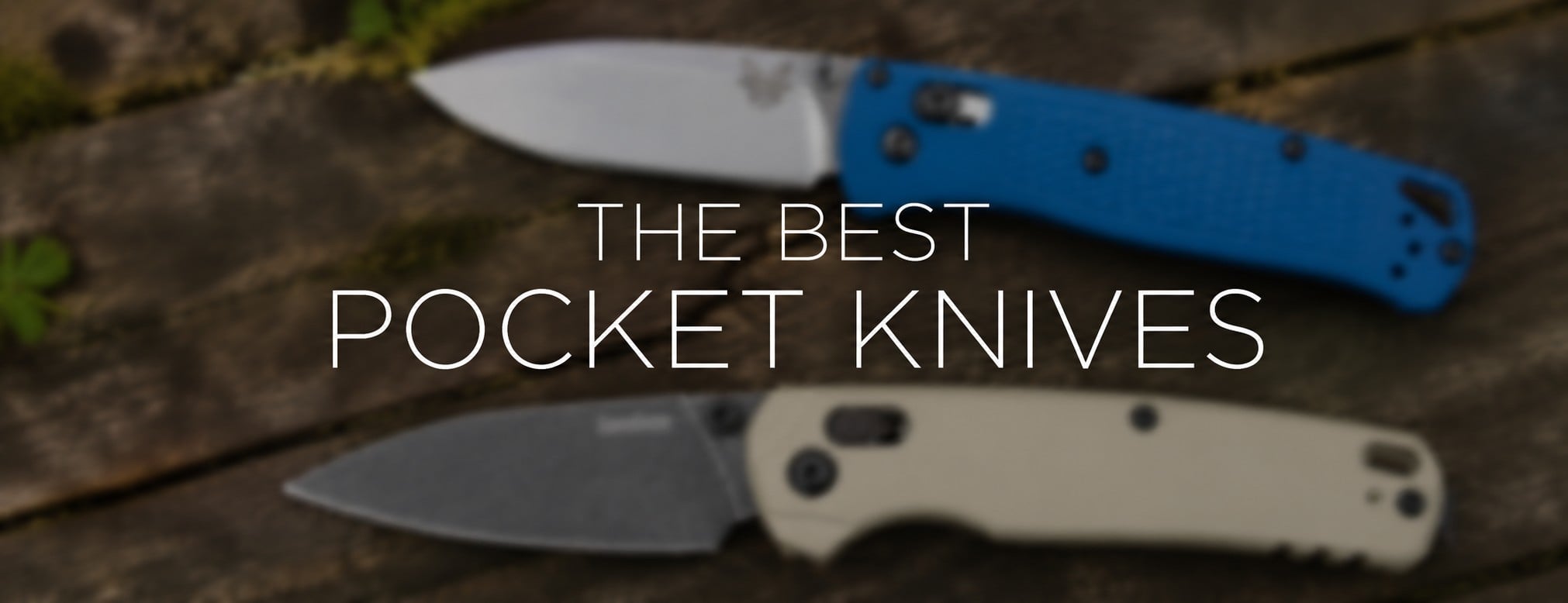
Shopping for a pocket knife should be fun. But between the blade steels, lock types and endless variations, it’s easy to spend more time comparing than choosing. Whether this is your first folder or the next addition to your collection, let’s find one you’ll enjoy carrying.
The Kershaw Bel Air is my pick for most people, with a useful blade, solid aluminum handle and manageable weight. There’s plenty to like elsewhere, too: a featherweight Bugout, a small-pocket Baby Banter or a Pyrite-Light that leaves more money in your wallet. These ten picks give you different reasons to reach for them, and I’ll explain both the appeal and the compromises.
Below, you’ll find my recommendations, a side-by-side comparison and practical advice on choosing.
Top Picks
- Best Overall: Kershaw Bel Air
- Runner-Up: Hogue Deka MagnaCut
- Best Value: CIVIVI Yonder
- Best Budget: CJRB Pyrite-Light
- Best Lightweight: Benchmade Bugout
- Best Small Pocket Knife: CIVIVI Baby Banter
- Best for Work: Spyderco PM2 Salt
- Best Swiss Army Knife: Victorinox Pioneer X
- Best for Large Hands: Vosteed Raccoon 2.0 TLL
- Best Edge-Retention Pick: Spyderco Manix 2 MagnaMax
Our Picks for the Best Pocket Knives
Best Overall: Kershaw Bel Air 6105
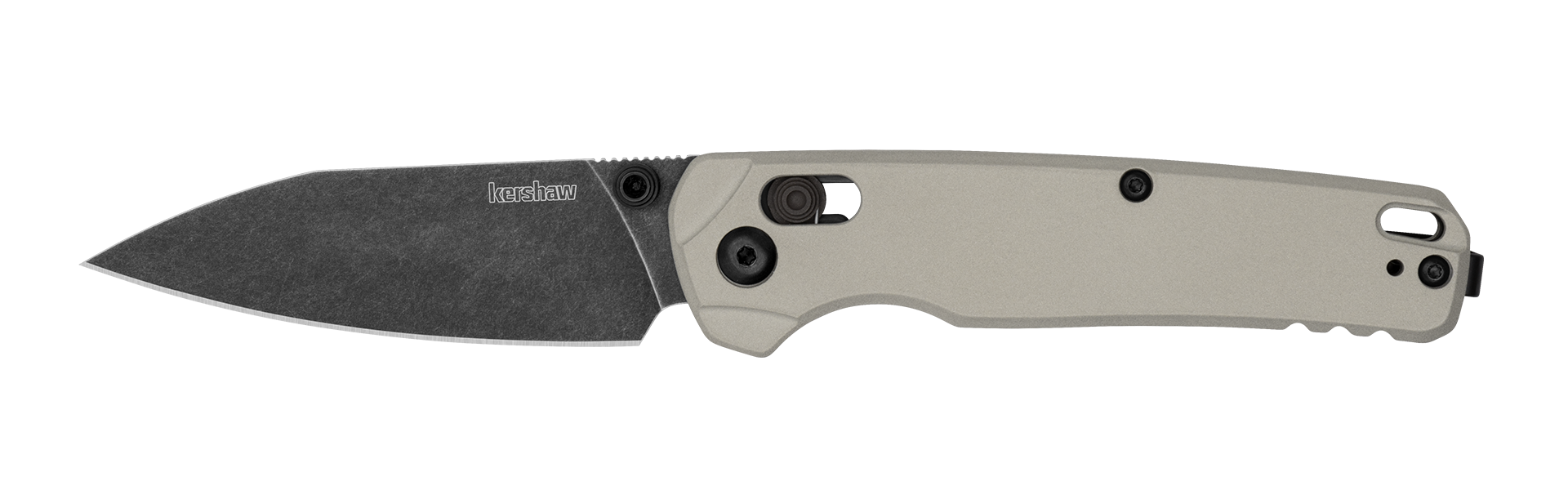
The Bel Air gets the everyday folding knife equation right: enough blade for useful work, a handle that feels substantial without becoming a pocket brick, and controls that accommodate either hand. Its thin MagnaCut blade and aluminum scales make a particularly well-balanced combination. You get a rigid handle without the weight penalty of many metal-handled folders, while the reversible deep-carry clip keeps the package discreet. This is my first recommendation for someone who wants one good pocket knife and intends to use it.
The reverse-tanto profile gives you a useful point for controlled cuts, while MagnaCut balances edge retention, toughness and corrosion resistance. The Deka saves 0.8 ounces, a meaningful difference in a lightweight folder. For everyday carry, I’d still take the Bel Air’s more rigid handle.
The smooth aluminum is its clearest compromise. A textured G10 handle offers more purchase when your grip is compromised, and sand or grit around the crossbar and bearings needs attention. Choose the PM2 Salt for a larger, traction-focused working grip. Choose the Deka if saving weight matters more than handle rigidity; otherwise, the Bel Air is the more rounded purchase.
| PROS | CONS |
|---|---|
|
|
Runner-Up: Hogue Deka 24379
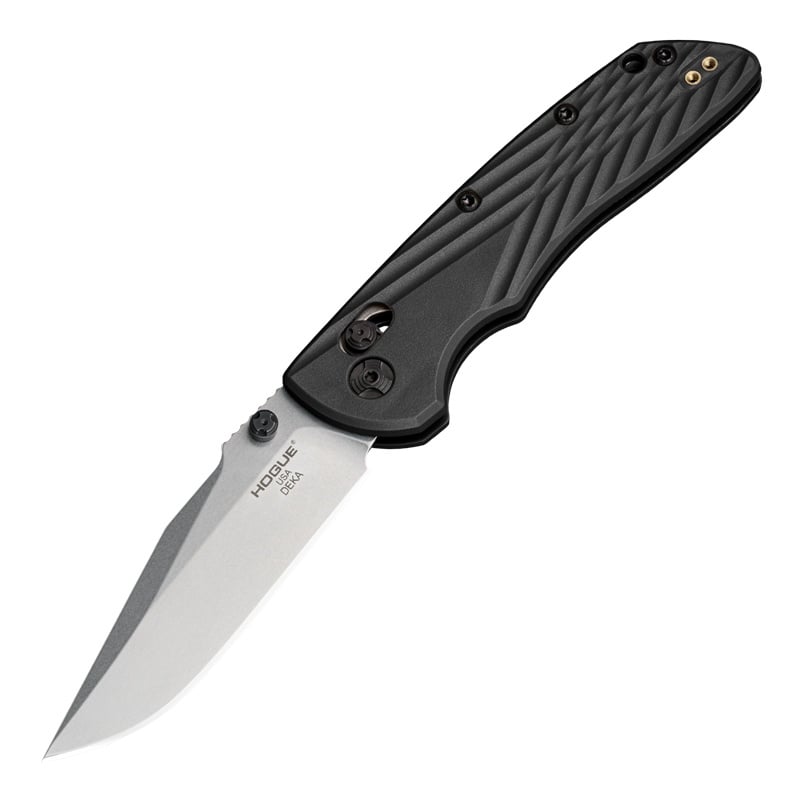
The MagnaCut Deka is my first alternative to the Bel Air if your ideal pocket knife is the one you barely notice carrying. This black-polymer, clip-point version combines a useful length of blade with remarkably little weight. Its ABLE crossbar lock and reversible deep-carry clip also make it an accessible choice for either hand. You give up the Bel Air’s solid aluminum feel, but gain a genuinely lighter everyday package.
At 2.1 ounces with a 3.25-inch blade, the Deka makes a persuasive case for keeping things light. I would buy this version for that balance, and think carefully before adding heavier aftermarket scales: they change both the price and the reason to choose it. The clip-point blade also has a partial-height grind, so MagnaCut alone does not tell you how it will cut. Blade geometry matters alongside steel, especially when you are pushing through thicker material.
I keep the Deka in the runner-up position because its low weight is a more specific advantage than the Bel Air’s rounded combination of blade, handle and carry size. If weight is your priority, that order can easily reverse. The Bugout trims a little more weight and has a different handle shape, but I would choose the Deka for value.
| PROS | CONS |
|---|---|
|
|
Best Value: CIVIVI Yonder C23073-1
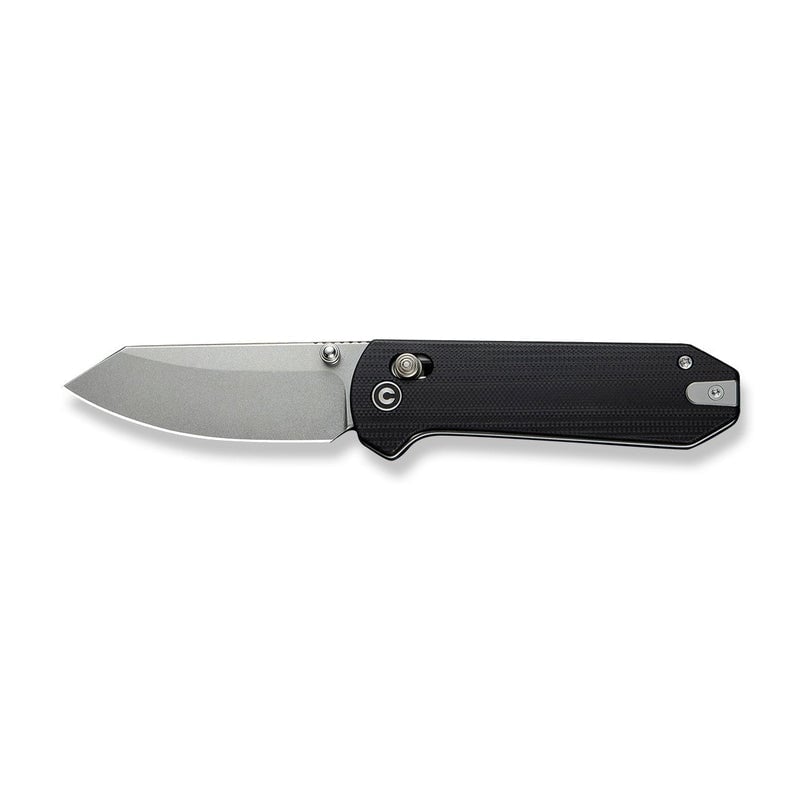
The Yonder is where I would start if you want a compact everyday knife at a sensible price. The black-G10 C23073-1 gives you a thin, flat-ground 14C28N blade, crossbar operation and a reversible clip in a compact package. Those choices matter more for opening packages, trimming material and preparing a quick snack than an exotic steel name. It is an especially sensible first good knife.
Its strongest feature is the combination of cutting geometry and pocket size. The blade is thin enough to make sense for slicing, while the modest closed length avoids dedicating half a pocket to a tool you use for a few minutes a day. You also get straightforward one-handed thumb-stud opening and a crossbar release accessible from either side. This is a more complete everyday package than simply choosing whichever knife offers the most expensive-sounding steel for the money.
At 3.74 inches closed, the Yonder is compact, but that measurement alone won’t tell you how well it fits your hand. Check where the controls and clip contact your grip during longer cutting sessions. The steel is approachable to maintain, but needs more regular attention than the edge-retention specialists. Pick the Raccoon if you want more handle length; pick the Yonder if compact carry and sensible ownership costs come first.
| PROS | CONS |
|---|---|
|
|
Best Budget: CJRB Pyrite-Light J1945-BBU
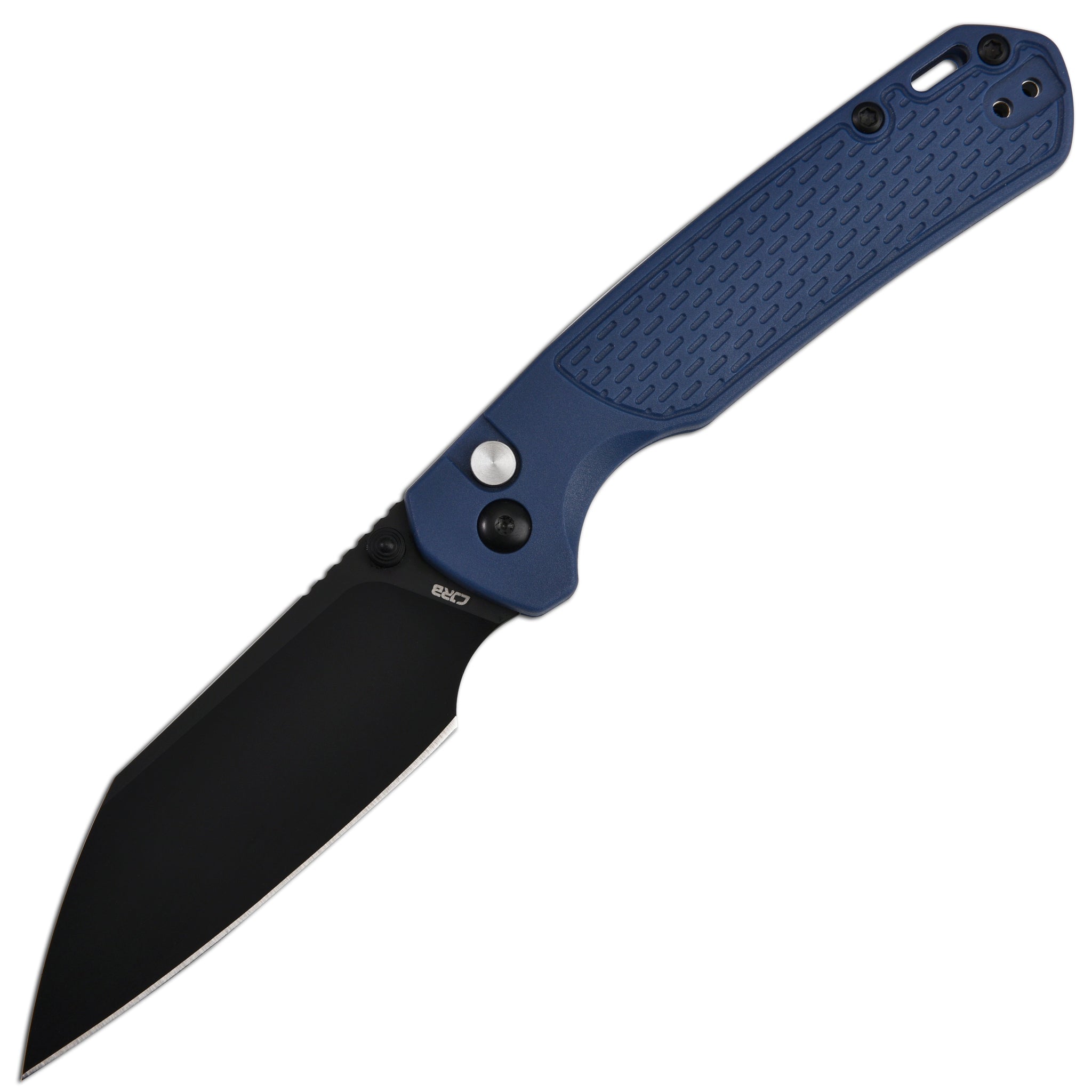
The Pyrite-Light makes the case for spending less unusually easy. It puts a useful-sized blade, a button lock and lightweight FRN handles into a genuinely inexpensive package. For someone who needs a knife for deliveries, household cutting and occasional carry, that is a better starting point than paying for premium finishes or collecting features they will rarely use. I recommend the standard Pyrite-Light here, rather than the heavier steel-handled Pyrite or the larger Light Large.
The appeal is straightforward: you get a 3.34-inch blade in a 2.82-ounce knife, with a button-operated lock release. That is a useful amount of knife for the money. I would weigh size against savings, though. At 7.6 inches open, the Pyrite-Light is appreciably longer than the 6.62-inch Yonder, so the cheaper option is not the more compact one.
I would buy the Pyrite-Light for everyday jobs when keeping the price down matters most, especially if replacing a lost knife would hurt. I would spend more on the Yonder for its smaller overall package and crossbar controls, rather than simply to move up a price bracket.
| PROS | CONS |
|---|---|
|
|
Best Lightweight: Benchmade Bugout 535
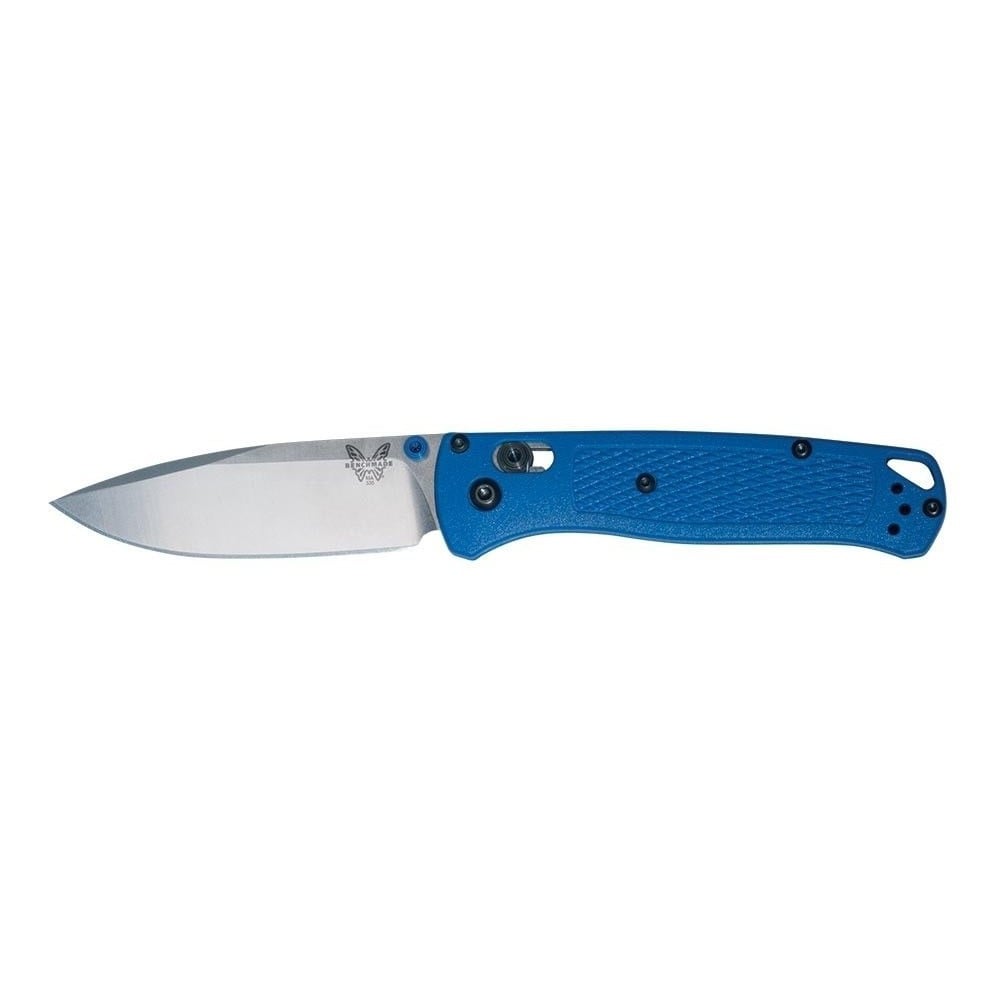
The standard Bugout’s appeal is easy to understand: a useful blade in an exceptionally light, slim package. If you carry in light shorts, dislike a knife pulling at your pocket, or count every fraction of an ounce, that light, slim design can be worth paying for. I recommend the original combination of S30V blade, Grivory handle and AXIS lock here; heavier upgraded versions change the calculation.
My Bugout review explains why low weight does not have to mean a token cutting tool. The knife sliced apples cleanly and worked through double-wall cardboard, with its thin grind helping it pass through material. I was less impressed by the handle under pressure: the inner scale edges became uncomfortable when squeezed harder. That makes the Bugout an excellent choice for frequent short tasks, with less appeal for sustained forceful gripping.
Price is the difficult part. You are paying heavily for a very light overall design, and the scales still flex. Buyers expecting premium solidity may find that combination frustrating. The Deka gets close in weight while offering MagnaCut at a lower price, so it is the value-oriented alternative. Choose the Bugout because its carry profile and handle shape suit you, rather than assuming a higher price buys a better knife for every job.
| PROS | CONS |
|---|---|
|
|
Best Small Pocket Knife: CIVIVI Baby Banter C19068S-1

The original Baby Banter is my small-pocket-knife pick because it gets the proportions right: 3.12 inches closed, about two ounces, and enough grip to do more than open the occasional envelope. Its forward finger choil is the important part. Choke up and your index finger sits close to the cutting edge, giving this tiny folder a more useful working grip than its handle length suggests.
The 2.34-inch Nitro-V blade combines thin stock with a flat grind for packaging and light everyday slicing. In our Baby Banter review, Wayne Walter praised its slicing and the way the choil helps form a secure grip. He also found that the small size took some adjustment when opening it, and would have preferred more contoured scales. The recessed deep-carry clip keeps the closed knife tucked away without adding much bulk.
The choil also takes away potential cutting edge, so this is not the choice for long slicing strokes or large food. Dual thumb studs and a reversible clip accommodate either side of the pocket, but the liner-lock release still favors right-handed use.
The aluminum Baby Banter 2 adds an ambidextrous crossbar lock, but is thicker, longer closed and heavier at 2.32 ounces without gaining blade length. Choose it if that lock is worth the extra bulk and cost. The Dragonfly 2 is the alternative for minimum weight. For the balance of compact size, useful grip and price, I would buy the original Baby Banter.
| PROS | CONS |
|---|---|
|
|
See more small pocket knives if minimum size is your priority.
Best for Work: Spyderco Para Military 2 Salt
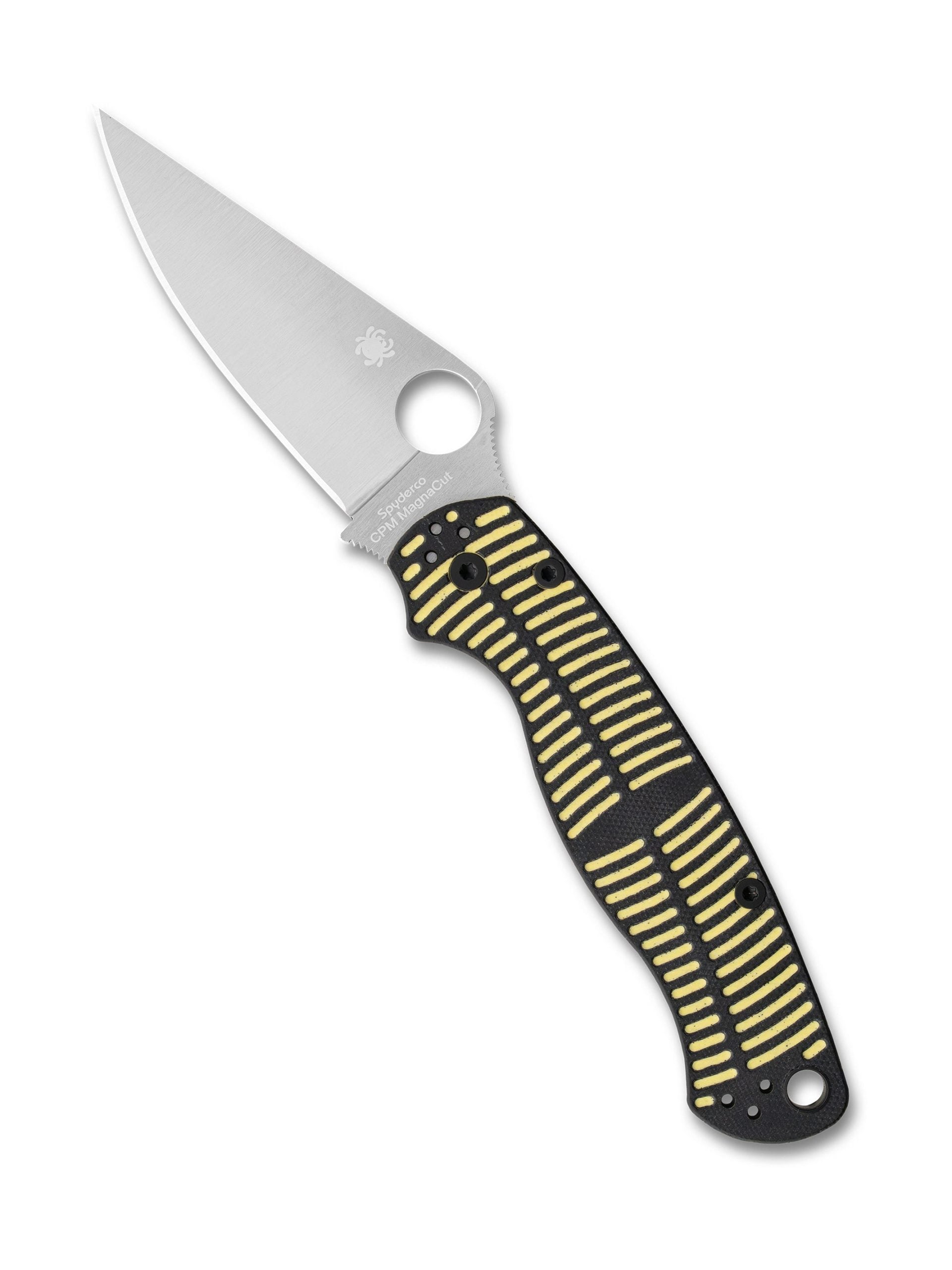
I recommend the PM2 Salt when your pocket knife spends more time in your hand than on your desk. Its roomy handle, pronounced thumb ramp and forward finger choil give you distinct grip positions for controlled cutting. The yellow-and-black G10 version adds a deeply machined texture, while the full-flat-ground MagnaCut blade combines useful reach with a fine, controllable point. The case for spending more is grip, control and corrosion-conscious construction, rather than brute strength.
The Salt treatment goes beyond swapping the blade steel. Spyderco specifies corrosion-resistant materials for the liners, clip and hardware as well, making this a more purposeful choice for damp work than an ordinary folder with a stainless blade. My original S30V PM2 review supports the underlying design’s comfortable thumb-ramp-and-choil grip; this Salt model has different steel and handle texturing. Its four-position clip offers carry choices, although the Compression Lock is less naturally symmetrical to operate than a crossbar lock.
The trade-off is obvious in your pocket: this is a broad, relatively long folder. The forward choil also occupies space that could otherwise be sharpened edge. Its narrow point is useful for precise cuts, but should never be mistaken for a pry tip. Choose the Raccoon for a less expensive full-hand everyday knife; buy the PM2 Salt when its traction, grip options and corrosion-resistant construction address the work you actually do.
| PROS | CONS |
|---|---|
|
|
Best Swiss Army Knife: Victorinox Pioneer X Alox
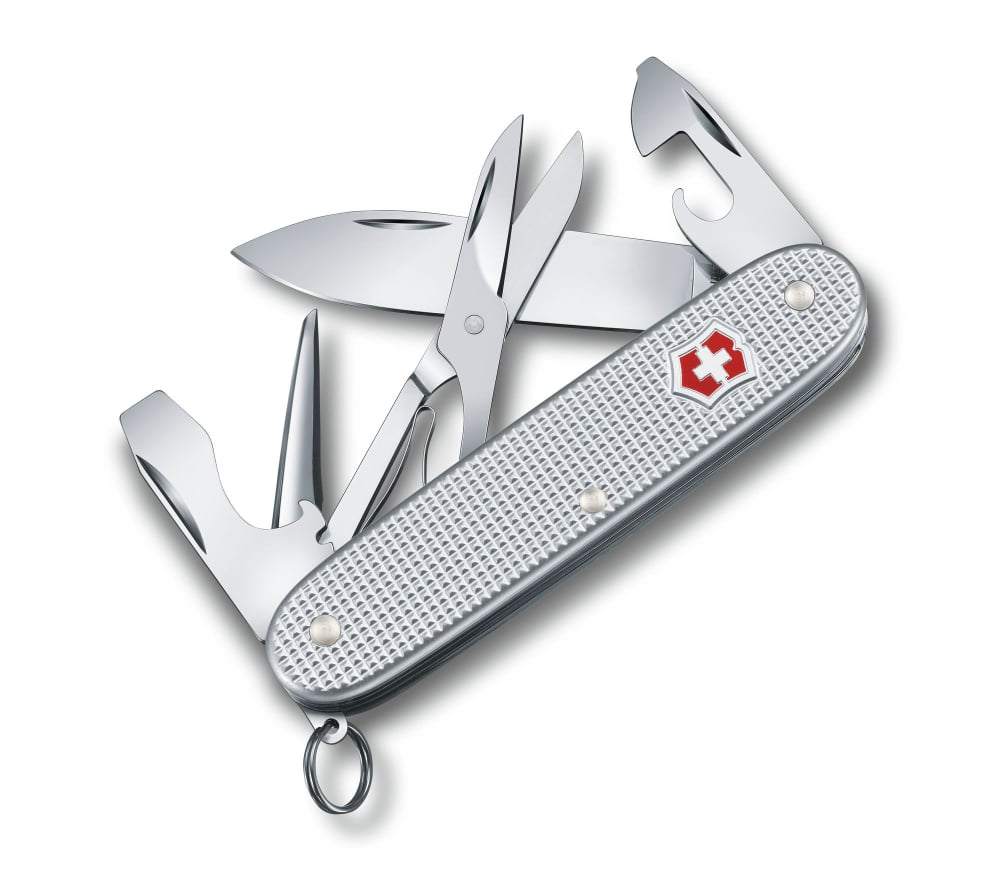
The Pioneer X is my pick when the best pocket knife for your day needs to do more than cut. Alongside its blade, you get scissors, screwdrivers, openers and a reamer in a compact aluminum-scaled body. The scissors are the decisive addition over the standard Pioneer: loose threads, tags and small trimming jobs often suit them better than an exposed knife blade. That practical extra capability earns its place more convincingly than a long list of seldom-used tools.
There is still a real knife here, rather than an emergency blade hiding in a toolbox. Our review of the thinner, standard Pioneer found its blade useful on apples and cardboard, and singled out the reamer and drivers as practical additions. The X adds the scissors layer to that tool arrangement. I would choose it when those small daily jobs occur regularly; a Swiss Army Knife does not automatically replace a dedicated folder or a pliers-based multitool.
The handling is deliberately traditional: two hands to open the blade, no blade lock and no modern pocket clip. The added scissors also make the X thicker and heavier than the plain Pioneer. Tools can fold if you apply pressure in the closing direction, so technique matters. If you rarely need scissors, buy the slimmer Pioneer. If fast one-handed knife access is central to your day, choose a dedicated folder and treat this as a companion.
| PROS | CONS |
|---|---|
|
|
Best for Large Hands: Vosteed Raccoon 2.0 Top Liner Lock
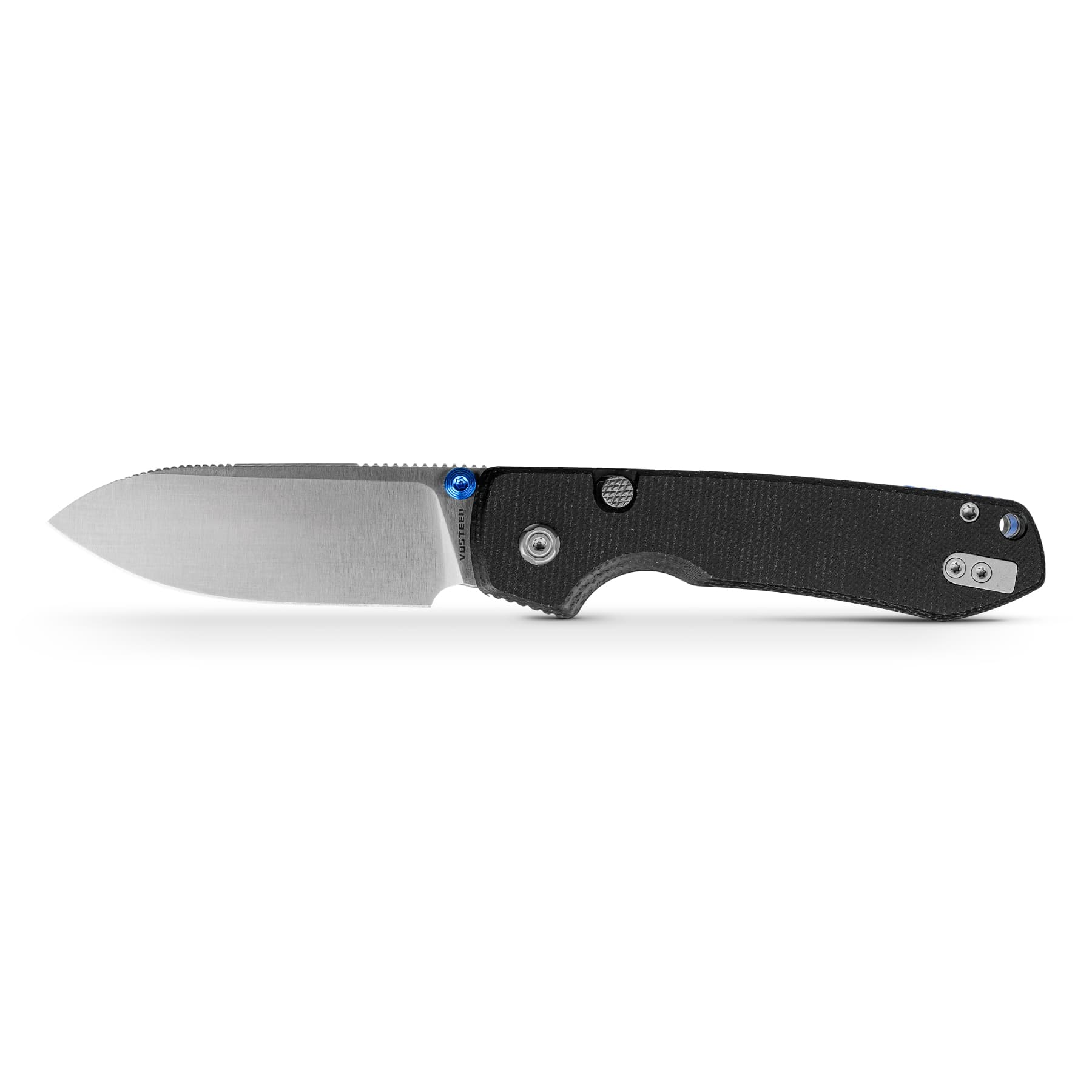
Choose the 2.0 Top Liner Lock version described here; the Raccoon collection also includes other locks and earlier revisions.
I recommend the Raccoon 2.0 to readers who like the Yonder’s everyday practicality but want more knife to hold. The black-Micarta, satin-blade A2903 has a 4.36-inch handle versus the Yonder’s 3.74 inches, giving you more length to hold without pushing into premium pricing. Hand room is the reason to buy it. A bigger handle cannot guarantee a perfect fit, but it gives buyers cramped by compact folders a sensible place to start.
The Top Liner Lock uses a button to release a liner-based mechanism, unlike the plunger-style button lock on the older Raccoon I reviewed. The 2.0 also brings exposed liners, a full aluminum backspacer and a recessed button platform. Those are meaningful construction changes, rather than a new color on the original knife. Its stainless 14C28N blade remains a practical choice for ordinary cutting, with straightforward maintenance and a drop-point profile that provides both tip control and a curve for slicing.
Extra structure comes with extra weight: this exact version is 3.76 ounces. Together with the longer handle, that makes it a poor substitute for an ultralight or truly compact folder. The PM2 Salt is the step up for a more deliberately traction-focused, corrosion-resistant working knife, but ordinary everyday users may have little reason to spend the difference. Choose the Raccoon for affordable grip space; choose the Yonder if compactness comes first.
| PROS | CONS |
|---|---|
|
|
Best Edge-Retention Pick: Spyderco Manix 2 MagnaMax

Look for MagnaMax in the listing: older C101GP2 inventory uses a different steel.
The MagnaMax Manix 2 is my specialist recommendation if you put edge life ahead of disappearing-pocket carry. Its broad, full-flat-ground blade sits in a substantial G10 handle with a forward choil and thumb ramp. That combination gives repeated cutting a clear priority over minimum weight. It is a purposeful alternative to the slimmer everyday defaults if abrasive material is a regular part of your workload.
The steel choice has a real technical basis. Larrin Thomas’s testing shows substantially higher CATRA slicing edge retention for MagnaMax than for MagnaCut, at the cost of lower toughness. Those are steel-test results; the finished knife’s geometry, heat treatment and sharpening still matter. In the Manix, that material is paired with a full working grip, an accessible thumb hole and a Ball Bearing Lock operated from either side. Check that the knife actually specifies MagnaMax: older S30V examples share the C101GP2 model number.
The cost of this approach is bulk. At around five ounces, the Manix is a considerable step up from the Bel Air, Deka or Bugout, and its broad folded shape competes for pocket room. Suitable sharpening equipment also belongs in the ownership budget. Choose the PM2 Salt for a lighter, corrosion-focused working package; choose the Manix when edge-life potential and its fuller grip justify carrying more knife.
| PROS | CONS |
|---|---|
|
|
Compare Our Pocket-Knife Picks
Compare size, materials and the main tradeoff below. Use the retailer links for current prices. On smaller screens, swipe sideways to compare all columns.
| Knife / buying links | Size / carry | Build | Best for / tradeoff |
|---|---|---|---|
| Kershaw Bel AirAmazonBlade HQ | Blade: 3.1 inClosed: 4.2 inWeight: 2.9 oz | Steel: CPM MagnaCutLock: DuraLockHandle: Aluminum | For: Balanced everyday carryTradeoff: Smooth handle has less traction |
| Hogue Deka MagnaCutAmazonBlade HQ | Blade: 3.25 inClosed: 4.25 inWeight: 2.1 oz | Steel: CPM MagnaCutLock: ABLE LockHandle: Polymer (FRN) | For: Lighter MagnaCut alternativeTradeoff: Polymer handle rather than aluminum |
| CIVIVI YonderAmazonBlade HQ | Blade: 2.88 inClosed: 3.74 inWeight: 2.73 oz | Steel: 14C28NLock: Crossbar lockHandle: G10 | For: Affordable crossbar folderTradeoff: Compact grip will not fit every hand |
| CJRB Pyrite-LightAmazonBlade HQ | Blade: 3.34 inClosed: 4.25 inWeight: 2.82 oz | Steel: AR-RPM9Lock: Button lockHandle: FRN | For: Low-cost everyday cuttingTradeoff: Larger overall than the Yonder |
| Benchmade BugoutAmazonBlade HQ | Blade: 3.24 inClosed: 4.22 inWeight: 1.85 oz | Steel: CPM S30VLock: AXIS LockHandle: Grivory | For: Minimum full-size carry weightTradeoff: Premium price for a flexible handle |
| CIVIVI Baby BanterAmazonBlade HQ | Blade: 2.34 inClosed: 3.12 inWeight: 1.99 oz | Steel: Nitro-VLock: Nested liner lockHandle: G10 | For: Small-pocket convenienceTradeoff: Short edge; right-oriented liner lock |
| Spyderco PM2 SaltAmazonBlade HQ | Blade: 3.45 inClosed: 4.82 inWeight: 3.9 oz | Steel: CPM MagnaCutLock: Compression LockHandle: G10 | For: Wet, demanding everyday workTradeoff: Broad pocket footprint |
| Victorinox Pioneer XAmazonBlade HQ | Blade: 2.75 inClosed: 93 mmWeight: 3.3 oz | Steel: Stainless steelLock: Nonlocking slip jointHandle: Alox | For: Scissors and useful toolsTradeoff: Nonlocking blade; no pocket clip |
| Vosteed Raccoon 2.0 TLLAmazonBlade HQ | Blade: 3.25 inHandle: 4.36 inWeight: 3.76 oz | Steel: 14C28NLock: Button-operated Top Liner LockHandle: Micarta | For: Roomier affordable handleTradeoff: Heavier than the earlier TLL |
| Spyderco Manix 2 MagnaMaxBlade HQ | Blade: 3.375 inClosed: 4.66 inWeight: 5 oz | Steel: MagnaMaxLock: Ball Bearing LockHandle: G10 / steel liners | For: Wear-resistant steel specialistTradeoff: Heavy and wide in the pocket |
How to Choose the Right Pocket Knife
Start With What You Actually Cut
Start with the jobs your knife will do most often. And yes, opening packages containing more knives counts. For packaging, cord and occasional food prep, a comfortable folding knife with a useful tip and a straightforward edge will take you a long way. If scissors and small tools solve more of your daily problems, the Pioneer X makes more sense than another inch of blade.
Blade shape matters, but you don't need to memorize nine different silhouettes. A gently curved edge gives you belly for slicing; a straighter edge makes it easier to keep the cutting edge against flat material. Consider where the tip sits and how easily you can guide it through a controlled cut. Recurves can gather material into the edge, but their inward curve complicates sharpening on a flat stone. Our blade-shape guide covers the finer distinctions.
Find the Right Size and Pocket Fit
After years of carrying different knives, my preference settled around a three-inch blade. That's a useful starting point for my tasks, not a reason to dismiss mini knives. Small knives make sense for light cutting and small pockets; larger handles earn their space when you need a secure, comfortable grip for longer work.

Look at closed length, handle thickness, weight and usable cutting edge, not blade length alone. A forward finger choil lets you grip closer to the edge for control, but takes space away from the sharpened portion. The Manix 2 is a good illustration: its generous choil leaves about 2.88 inches of cutting edge from a 3.375-inch blade. That can be a worthwhile trade. Just know which measurement you're buying.
A mini knife that leaves your little finger hanging has different limits from a full-hand folder. Equally, a light knife can still be wide enough to compete with your phone for pocket space. For a closer look at daily carry priorities, see our EDC knife guide. Check the carry rules where you'll use it before buying.
Choose Steel You Can Live With
Initial sharpness, cutting geometry and edge retention are different things. A keen factory edge tells you how well that particular knife was sharpened. The thickness behind the edge and the blade's grind influence how readily it passes through material. Edge retention describes how long it keeps cutting acceptably. An expensive steel doesn't automatically win all three.
Then ask how you want to maintain it:
- Frequent abrasive cutting: Wear resistance becomes more valuable when you're breaking down cardboard regularly. But a high-wear-resistance blade may take longer to sharpen, especially when you have to remove damage rather than refresh the edge.
- Wet or sweaty carry: Corrosion resistance deserves more attention. Even stainless knives benefit from cleaning and drying; the blade isn't the only metal part.
- Easy upkeep: A steel you can restore with your equipment may be a better purchase than one that wins a chart. Budget for sharpening equipment and learn to touch up the edge before it becomes thoroughly dull.
Heat treatment changes the balance of properties, and edge damage matters: gradual wear, rolling and chipping aren't the same problem. Neither the alloy name nor a hardness number tells the whole story. Metallurgist Larrin Thomas explains these tradeoffs in his steel ratings and testing discussion; our knife steel guide helps you compare the names you'll encounter. Choose the balance that suits your use, rather than treating the newest steel as a compulsory upgrade.
Check the Handle, Opening and Lock
A knife has to fit your hand, not the reviewer's. Pronounced finger grooves can feel wonderfully secure when they match your fingers and frustratingly restrictive when they don't. Handle edges and clips can also create hot spots that a quick squeeze won't reveal. Try different grips, and consider whether the same handle will remain comfortable through a stack of boxes.
Don't confuse an inexpensive feel with poor function. Reinforced polymer can make an excellent lightweight handle. G10 texture may add traction, while an aggressively textured patch beneath the clip can punish your pocket. Metal handles aren't automatically better to hold. Shape, surface finish and thickness matter alongside the material; our handle-material guide goes deeper.
For handedness, make three separate checks:
- Opening: Can you comfortably reach the stud, hole or other opener with your carrying hand?
- Unlocking and closing: Can you release the lock and control the blade without awkwardly repositioning your fingers? A reversible clip doesn't make a right-handed lock ambidextrous.
- Clip mounting: Does the knife actually support your preferred side and carry orientation?
One-handed operation is convenient, but a two-handed knife can be entirely sensible if quick access isn't a priority. The Pioneer X's slipjoint blade does not lock; keep that difference in mind when comparing it with the locking folders here. Our pocket-knife lock guide explains the mechanisms without asking you to choose by a strength contest alone.

The clip should retain the knife securely without making every pocket entry a wrestling match. Deep carry leaves less handle exposed, but gives you less to grab. Check clearance for thick seams, tension and whether the clip's tip catches on things. A beautifully machined clip can still work worse than a simple bent-metal one.
Decide What Is Worth Paying For
Pay for improvements you'll notice: comfortable cutting, easier carry, corrosion resistance, a lock you enjoy operating, or support you can actually use. The Pyrite Light is here because a useful everyday knife needn't be a major purchase. Our budget pocket knives guide offers more choices at that end of the market.
Beyond that, separate performance from pleasure. Nice machining, fancy materials and elaborate pivots can be enjoyable without making a knife better at opening a box. Bearings don't automatically make a better knife than washers, and adding more bearings isn't a daily-use upgrade by definition. Buy the refinement if you appreciate it. You don't have to invent a practical justification.
Which Pocket Knife Brands Should You Consider?
The best pocket knife brand depends on what you want from the knife. Start with models, then use the brand to narrow your search:
- Kershaw and Hogue: Compare the Bel Air and Deka if you want a modern everyday folder. Handle feel, blade shape and the particular version matter more than choosing a team. Our Kershaw guide explores that range further.
- Benchmade and Spyderco: The Bugout makes the lightweight-carry argument; the PM2 and Manix prioritize a different balance of grip, blade and pocket space. Explore our Benchmade picks and Spyderco picks, rather than assuming either logo guarantees your ideal fit.
- CIVIVI, CJRB and Vosteed: The Yonder, Pyrite Light and Raccoon TLL deserve comparison on their own merits. Check the exact lock, steel and handle version; a shared model name doesn't make variants interchangeable.
- Victorinox and traditional makers: Choose Victorinox when useful companion tools matter. If you prefer classic patterns and materials, start with our traditional pocket knives guide.
Which Pocket Knife Should You Buy?
The Kershaw Bel Air is where I’d start for a well-rounded everyday folding knife. The CIVIVI Yonder and CJRB Pyrite-Light are worth a look if you want to spend less, while the other picks give you options for lighter carry, smaller pockets or more demanding cutting. Think about which of those differences you’ll appreciate each day. A knife that feels right in your hand and fits comfortably in your pocket is a good place to land.
