

We independently evaluate all recommended products and services. Any products or services put forward appear in no particular order. If you click on links we provide, we may receive compensation.

A Benchmade can disappear into your pocket or fill it. The Bugout and Mini Adamas have almost the same blade length, yet one weighs less than half as much as the other. That difference matters more to everyday carry than choosing the most expensive handle or newest steel.
For ordinary cutting and light carry, I would start with the blue Bugout. The other folders here offer a reason to choose something different: the Osborne’s slim aluminum handle, a shorter Mini Griptilian, the Crooked River’s larger blade, or the more substantial Freek and Mini Adamas. This is a practical folding-knife shortlist, rather than a tour of every Benchmade hunting, water or automatic model.
Key Considerations
Start with the work and pocket space you have, then decide which materials are worth paying for.
- Carry weight: The 1.85-ounce Bugout and 4.60-ounce Mini Adamas put similar blade lengths into very different packages. Choose the extra handle and steel only if you want the more substantial build.
- Handle size: The Mini Griptilian is shorter, but its rounded handle is not the thinnest option. The full-size Crooked River needs considerably more room in a pocket. Small, thin and light are different things.
- Blade shape and stock: The thin Bugout favors ordinary slicing. The Crooked River adds cutting length, while the Mini Adamas has thicker stock. A thicker blade is not automatically a better cutter.
- Steel and care: S30V handles most daily cutting with ordinary care. The Freek’s coated M4 still needs drying at its exposed edge. MagnaCut in the selected Mini Adamas is useful for corrosion resistance, but does not eliminate maintenance.
- Exact model: A familiar name can cover different sizes, steels, handles and mechanisms. These are manual folders; the exact model code in each specification box identifies the version being recommended.
Best Benchmade Knives: Top Picks
- Best Lightweight EDC: Benchmade Bugout
- Best Slim All-Rounder: Benchmade Osborne
- Best Compact Utility Folder: Benchmade Mini Griptilian
- Best Large Classic-Style Folder: Benchmade Crooked River
- Best Larger Working Folder: Benchmade Freek
- Best Stout Compact Folder: Benchmade Mini Adamas
Best Lightweight EDC: Benchmade Bugout
| PROS | CONS |
|
|
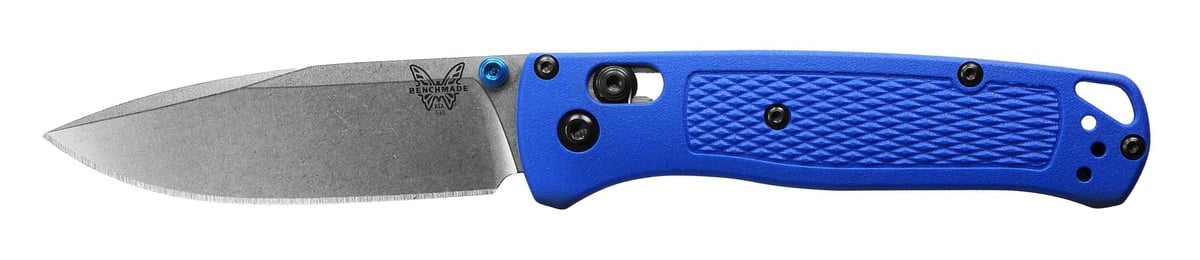
The blue Bugout is the Benchmade I would buy for a knife that spends more time in a pocket than in the hand. At 1.85 ounces, it gives you a useful 3.24-inch blade without making everyday carry feel like a commitment. Its narrow stock and straightforward drop point are well suited to opening packages, cutting cord and ordinary slicing.
This is the original-size 535 with blue Grivory scales and an uncoated S30V blade. In my earlier Bugout review, the thin blade worked particularly well on apples and cardboard. Harder gripping also exposed uncomfortable edges inside the lightweight handle. That is useful context for the same basic carry concept, rather than evidence that every Bugout configuration feels identical.
The mini deep-carry clip reverses for left- or right-side carry, and the thumb studs and AXIS release are easy to understand. I would move to the Osborne if I wanted a slimmer metal-handled feel, or the Freek for more grip. For normal cutting, though, the Bugout’s main attraction is how little knife you have to carry to get a useful edge.
Best Slim All-Rounder: Benchmade Osborne
| PROS | CONS |
|
|
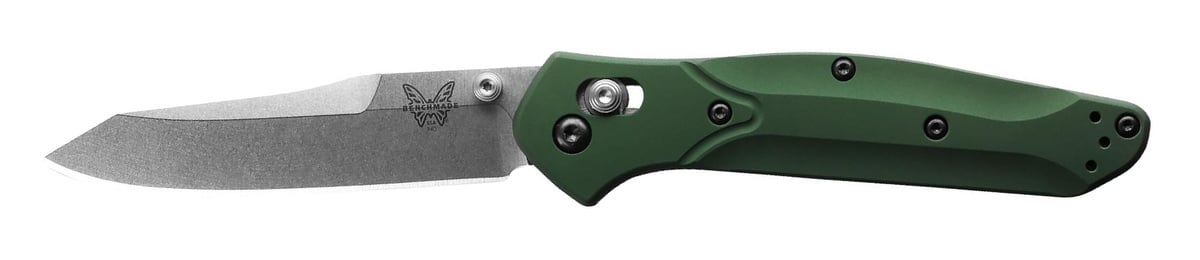
The Osborne 940 is my alternative to the Bugout when light carry matters but a polymer handle does not appeal. Its long, narrow shape gives you a 3.40-inch blade without a broad handle filling the pocket. The green aluminum scales and purple backspacer also give it an identity that does not depend on an elaborate limited-edition finish.
The selected knife is the standard 940 with S30V, not the carbon-fiber S90V 940-1 or a G10 940-2. Its reverse-tanto blade keeps material near the tip, but I would not describe it as a better slicer than the thinner Bugout simply because it has a more substantial point. Choose the shape for the work you actually do.
In my earlier review of the standard 940, I liked its balanced dimensions but noted that the painted pocket clip could show wear. At 2.90 ounces, it remains a reasonable everyday size. Its reversible standard clip carries differently from the Bugout’s mini deep-carry clip, and metal handles can feel colder in winter. Choose it for the combination of slim dimensions, useful blade length and a firmer metal handle, rather than expecting it to improve every cut.
Best Compact Utility Folder: Benchmade Mini Griptilian
| PROS | CONS |
|
|
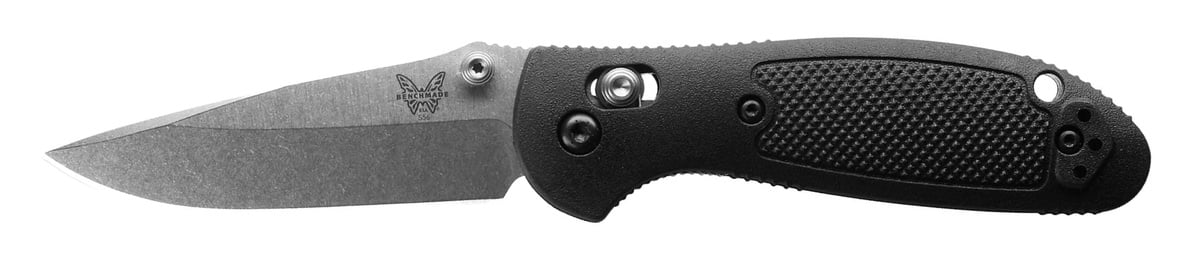
A smaller blade does not always mean a smaller-feeling knife. The Mini Griptilian has a rounded handle that gives your hand more shape to work with than the flat, thin Bugout. I would choose it for someone who wants a compact utility folder but does not enjoy a very minimal handle.
The 556-S30V here has a 2.91-inch drop-point blade and black nylon scales. It is the Mini, not the full-size 551, and it is not the older G10 and 20CV 556-1. Those differences matter if you are reading an older Griptilian review or comparing a listing that uses the family name without the model number.
Closed, it measures 3.87 inches; its 0.51-inch handle thickness and 2.81-ounce weight show why short and ultralight should not be treated as the same thing. The Bugout gives you a longer blade at less weight, while the Mini Griptilian offers a shorter package with a fuller shape. If your hands are large, that short handle is the compromise to consider before buying.
Best Large Classic-Style Folder: Benchmade Crooked River
| PROS | CONS |
|
|
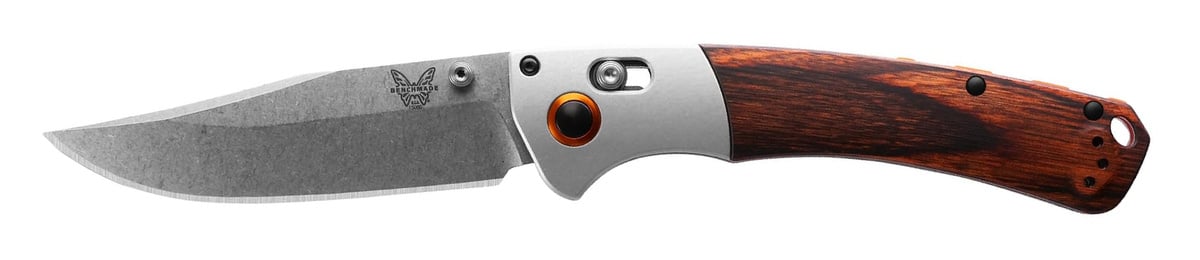
The Crooked River makes sense when you want a large folder that looks like a traditional hunting knife. Its stabilized wood scales, aluminum bolsters and clip-point blade give it a different character from the blue Bugout or black working folders. I would choose it for the larger handle and cutting length as much as its appearance.
This is the full-size 15080-2, with a 4-inch S30V blade and 9.30-inch overall length. Its 5.33-inch closed length is worth taking seriously if you usually carry a compact folder. The Mini Crooked River gives you the same general style in a smaller package, so the full-size version makes sense when you actually want the extra blade and handle.
At 5.41 ounces, it asks for considerably more pocket space and weight than the Osborne. A folder also has a pivot and handle recesses to clean after dirty outdoor work. If you want the traditional styling and generous grip, those are reasonable tradeoffs. If your work is mainly opening parcels, the Crooked River is more knife than you need.
Best Larger Working Folder: Benchmade Freek
| PROS | CONS |
|
|
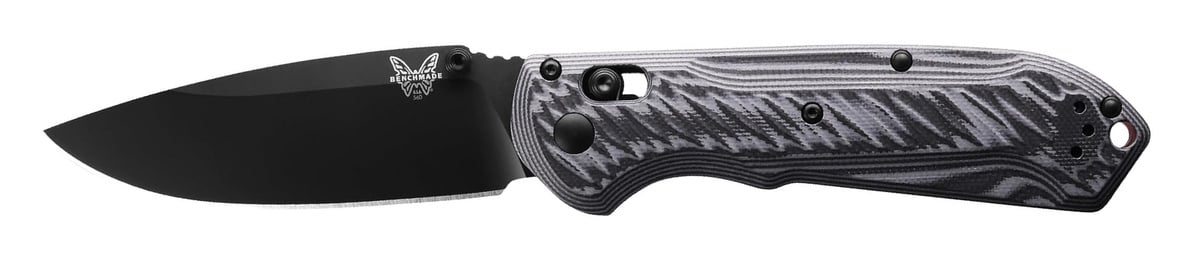
The Freek is the one I would consider when the Bugout feels too slight and the Crooked River’s traditional styling is not the point. Its larger handle and 3.60-inch drop-point blade provide a straightforward working-folder layout, with more room for your hand than the slimmer carry choices.
The 560BK-1 uses M4 and layered black-and-gray G10 with red liners. It is not the old S30V and dual-polymer Freek, nor the S90V carbon-fiber 560-03. M4 is a worthwhile choice for someone who values sustained cutting and is willing to maintain it, but the coating does not make the exposed edge stainless.
Its 4.86-inch closed length, 0.62-inch handle thickness and 4.30-ounce weight explain the cost of the fuller grip. I would not carry that extra bulk just for occasional packaging. Against the Mini Adamas, the Freek offers more blade length and a slightly lower weight, while asking for more attention after damp use. That is a practical choice between two working designs, rather than a ranking based on the steel name alone.
Best Stout Compact Folder: Benchmade Mini Adamas
| PROS | CONS |
|
|
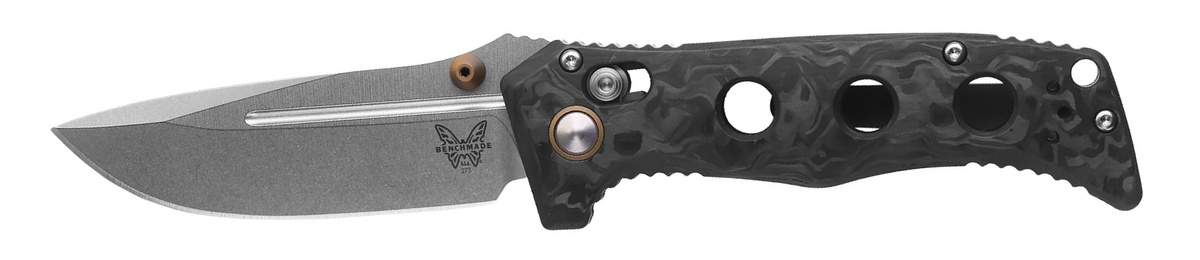
The Mini Adamas is a short-bladed folder with a substantial build. Its 0.14-inch blade stock, full steel liners and broad handle appeal when a light EDC knife feels too insubstantial. I would choose it for that construction and grip, not because heavier automatically means more useful.
The selected 273-03 combines marbled carbon fiber with MagnaCut. It weighs 4.60 ounces, so the carbon fiber should not be mistaken for an ultralight treatment. A less expensive G10 Mini Adamas can fill much the same role; this version makes sense if you specifically value the carbon-fiber finish alongside the current MagnaCut blade, rather than expecting it to transform the cutting experience.
In my earlier CruWear Mini Adamas review, the thicker blade still handled cardboard and sisal rope well. That was a different G10 and CruWear sample, not a test of this carbon-fiber MagnaCut version. The useful lesson is to consider geometry and handle fit alongside stock thickness. For mostly light cutting, I would still take the much lighter Bugout; for a longer working edge, the Freek is another sensible comparison.
Compare Our Picks
Scroll sideways on smaller screens to compare all the details.
| Knife | Best for | Blade / steel | Weight |
|---|---|---|---|
| Benchmade Bugout | Lightweight EDC | 3.24 in / CPM S30V | 1.85 oz |
| Benchmade Osborne | Slim All-Rounder | 3.40 in / CPM S30V | 2.90 oz |
| Benchmade Mini Griptilian | Compact Utility Folder | 2.91 in / CPM S30V | 2.81 oz |
| Benchmade Crooked River | Large Classic-Style Folder | 4.00 in / CPM S30V | 5.41 oz |
| Benchmade Freek | Larger Working Folder | 3.60 in / CPM M4 | 4.30 oz |
| Benchmade Mini Adamas | Stout Compact Folder | 3.25 in / CPM MagnaCut | 4.60 oz |
How to Choose a Benchmade Knife
Choose the handle before chasing the steel
If a knife is awkward to hold or inconvenient to carry, its steel will not rescue the purchase. Start with the Bugout for minimal weight, the Osborne for a slim metal handle, or the Mini Griptilian for a shorter rounded grip. The Crooked River and Freek give you more handle, with the pocket bulk that comes with it.
Match the cutting job to the blade
A long blade helps with larger material, but gets in the way when the job and carry space are small. The Bugout’s thin stock makes sense for packaging and food utility; the larger Freek is a better fit when you want more grip and cutting length. Choose the Mini Adamas for its substantial compact construction, not because thick stock guarantees superior cutting or makes a folder a pry bar.
Understand what the AXIS lock changes
All six use thumb studs and an AXIS crossbar lock. Releasing the bar lets you close without pressing a liner across the blade’s path. Keep the mechanism clean and use deliberate finger placement; the shared lock does not make every handle equally comfortable or every knife equally suitable for heavy work. Our guide to pocket knife locks explains the mechanism in more detail.
Pay for an advantage you will use
The Crooked River’s wood and bolsters, Osborne’s aluminum and Mini Adamas’s carbon fiber each have an appeal. They do not make a more expensive knife the right answer for every job. If you mainly want a compact utility folder, the Mini Griptilian is worth considering before spending more on a larger or more elaborate model.
Why Trust Us
KnifeInformer’s earlier Benchmade reviews supply the carry and cutting observations discussed here. The Bugout, Osborne and Mini Adamas accounts identify their review samples; the recommendations compare current configurations by blade geometry, handle fit, controls and carry weight.
Final Thoughts
The Bugout is my first choice for keeping everyday carry light. Choose the Osborne for a slim aluminum-handled alternative, the Mini Griptilian for a shorter utility knife, or the full-size Crooked River when you genuinely want more blade and handle. The Freek and Mini Adamas suit readers who want a more substantial working folder and accept the extra weight. None of those reasons requires buying the most expensive version of a familiar name. For other makers worth comparing, see my guide to the best knife brands.
Frequently Asked Questions
Which Benchmade knife is best for everyday carry?
I would start with the Bugout 535 if low weight and ordinary slicing matter most. The green Osborne 940 offers a different slim metal-handled feel, while the Mini Griptilian is a shorter alternative. The best choice depends on which of those differences you will notice in daily use.
Is the Mini Adamas better than the Bugout?
It is more substantial, not universally better. The selected Mini Adamas has thicker stock, full steel liners and a MagnaCut blade, but weighs 4.60 ounces against the Bugout’s 1.85 ounces. For light routine cutting, carrying the extra weight may offer little benefit.
What is the difference between the Crooked River and Mini Crooked River?
The full-size 15080-2 here has a 4-inch blade and a 5.33-inch closed length. The Mini puts the same general styling into a smaller package. Choose between them by the cutting length and pocket space you want, rather than treating Mini as a different finish on the same knife.
Does the Freek’s blade coating prevent rust?
No. The selected 560BK-1 uses CPM M4, which is not stainless. Its exposed edge and any worn coating still need attention after damp use. Clean and dry it rather than treating the coating as complete corrosion protection.
Are these Benchmade knives made in the USA?
Yes, the six selected configurations are US-made. Check the exact current model when buying, and do not use country of origin alone as a substitute for comparing design, materials and suitability.
