


We independently evaluate all recommended products and services. Any products or services put forward appear in no particular order. If you click on links we provide, we may receive compensation.

A good automatic brings a little extra enjoyment to an everyday tool: press the button, feel that snap, and get on with the cutting. My overall pick is still the Benchmade 9400 Osborne. Its useful 3.4-inch blade, slim handle and 2.65-ounce weight are a combination that makes sense well beyond the novelty of automatic opening.
You don’t have to spend that much, though. The Boker Kalashnikov covers the budget end, the Kershaw Launch 11 keeps pocket weight to a minimum, and the Microtech LUDT Gen III offers a particularly appealing premium package. Below are ten side-opening automatic knives, with the practical differences that would make me choose one over another. All open under spring power and close manually; for blades that travel straight out of the handle, see our OTF knife guide.
Our Top Picks
- Best Overall: Benchmade 9400 Osborne
- Best Work Knife: Pro-Tech TR-3
- Best for a Fuller Grip: Benchmade CLA
- Best Budget: Boker Kalashnikov
- Best Corrosion Resistance: Spyderco Autonomy 2
- Best Premium EDC: Microtech LUDT Gen III
- Best Compact: Kershaw Launch 11
- Best Traditional: Buck 112 Auto
- Best Large Auto: Microtech Socom Elite Auto
- Best for Gloves: Gerber 06 Auto
Our Picks for the Best Automatic Knives
Best Overall: Benchmade 9400 Osborne

The 9400 keeps the things that made the manual Benchmade 940 Osborne such a recognizable everyday-carry knife: a slim handle, a useful reverse-tanto blade and very little weight for the amount of knife you get. The green aluminum and purple backspacer have survived the trip, too. Look closer and the automatic gives itself away with a push button in place of the manual model’s AXIS lock.
This is the satin-bladed, S30V version. At 2.65 ounces, with a 3.4-inch blade and a 0.43-inch-thick handle, it makes an excellent case for carrying a full-length blade without a chunky pocketful of knife. The CLA below gives you the same blade length in almost exactly the same overall length, but weighs 3.47 ounces and has a thicker handle. That difference is why the Osborne stays at the top of my list for everyday carry.
The reverse-tanto profile puts useful material behind the point while keeping a fairly straight working edge for packages and general cutting. A spine-mounted safety and reversible tip-up clip round out the package. The split-arrow clip is not a deep-carry design, though, and the narrow handle won’t suit everyone. If you want more handle to settle into your palm and a clip that sits lower in the pocket, the CLA makes more sense. If slimness comes first, the 9400 is the one I’d take.
| PROS | CONS |
|---|---|
|
|
Best Work Knife: Pro-Tech TR-3 SWAT
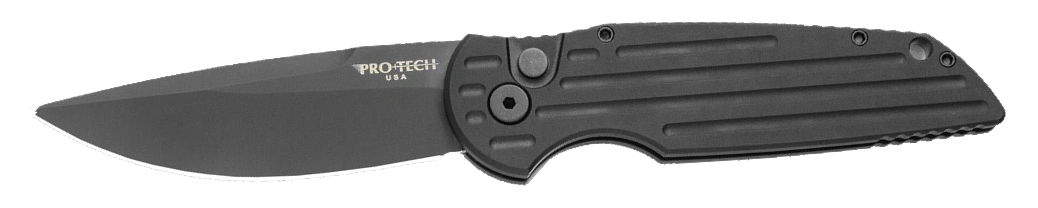
I’m still a sucker for simple lines, and the TR-3 gets that part right. The gently curved edge, useful point and uncluttered aluminum handle are easy to appreciate without a collector’s explanation. This SWAT version pairs a black 154CM blade with grooved black handles and a straightforward push-button action.
The handle is worth a closer look. It’s fuller toward the index finger and tapers toward the little finger, following the way a closed hand naturally narrows. It’s a small design detail that gives the TR-3 much of its appeal. You get a 3.5-inch blade and a 4.5-inch handle without moving into the much larger Socom Elite’s territory; the whole knife weighs 3.68 ounces.
154CM remains a sensible working steel. It offers a useful balance of corrosion resistance, edge holding and sharpening effort, even if it lacks the novelty of a newer steel stamp. I’d choose the TR-3 over the 9400 when a fuller aluminum grip and a more conventional blade profile matter more than shaving off an ounce. The limitations are equally straightforward: this SWAT configuration has right-hand, tip-up carry and no separate sliding safety. Don’t assume features from another TR-3 variation are included here.
| PROS | CONS |
|---|---|
|
|
Best for a Fuller Grip: Benchmade CLA
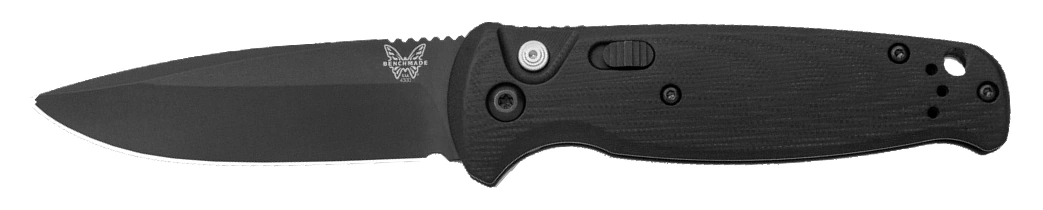
If the 9400 looks a little too narrow, the CLA is the Benchmade I’d put beside it. The name stands for Composite Lite Auto, and the difference is right there in the handle: contoured G10 rather than slim aluminum. The rounded edges and fuller shape give the design a more hand-filling character, while the factory deep-carry clip helps it sit discreetly in a pocket.
The comparison is unusually clean. Both knives have a 3.4-inch blade; the CLA is 7.85 inches open and the 9400 is 7.87. You’re choosing a different grip and carry setup, rather than buying appreciably more knife. The CLA’s handle is 0.49 inches thick, compared with the Osborne’s 0.43, and it adds 0.82 ounce. That is a reasonable trade if the slimmer knife never quite fills your hand.
The 4300BK here uses a black-coated 154CM drop-point blade, an enlarged opening button and a separate safety. The blade shape is an easy fit for ordinary cutting, with some belly for sweeping cuts and a useful point for opening packaging. The CLA sits in the premium price tier. Buy the CLA for its handle, controls and deep-carry clip; buy the 9400 if the lighter, slimmer package matters more.
| PROS | CONS |
|---|---|
|
|
Best Budget: Boker Kalashnikov
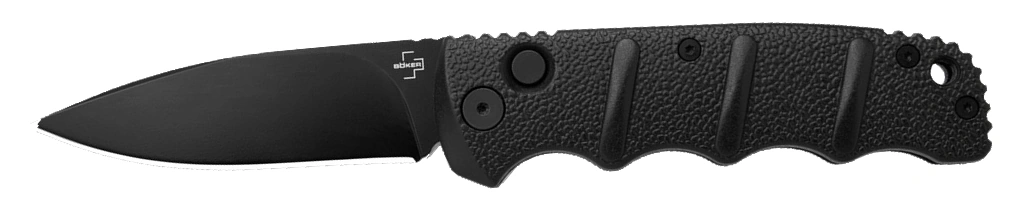
The full-size Kalashnikov is the budget pick for someone who wants a useful automatic without paying premium-American-folder money. The all-black 01BP0151 version has a 3.35-inch black-finished D2 drop-point blade, black aluminum handles and a plain edge. It’s a straightforward combination for opening boxes, cutting cord and the other small jobs that make a pocket knife worth carrying.
The important word here is full-size. Following Boker’s specifications, it measures 7.83 inches open and weighs 3.6 ounces, offering a useful amount of blade and handle for everyday work. Compared with the Launch 11, the Boker gives you another 0.6 inch of blade for less money, but adds 1.5 ounces. I’d take the Kershaw for compact carry and the Kalashnikov when I wanted more working room without stretching the budget.
D2 is the compromise to understand before buying. It can hold a useful working edge, but it is less corrosion resistant than the stainless steels on most of the other picks. The black finish does not protect the exposed cutting edge, so wipe it dry after use, particularly around sweat or moisture. The deep-carry clip is useful, although its right-hand-only setup narrows the appeal for lefties. For a low-cost general-use auto, though, the Kalashnikov earns its place by delivering a sensible size and useful blade geometry rather than chasing exotic materials.
There is one important buying detail: this listing is a third-party automatic conversion. Blade HQ states that the conversion voids the factory warranty and that it covers the conversion/spring for one year from purchase. That narrower coverage belongs in the budget calculation alongside the lower price.
| PROS | CONS |
|---|---|
|
|
Best Corrosion Resistance: Spyderco Autonomy 2

The Autonomy 2 makes the most sense when moisture is part of the job. Its LC200N blade is highly corrosion resistant, and the broad, full-flat-ground profile is built around general utility. The plain-edge C165GP2 shown here also avoids the specialized serrated blade of the original Autonomy, making this the more versatile choice for everyday cutting.
There’s more to the design than its steel. Textured G10 covers full stainless steel liners, the oversized firing button is easy to locate, and a separate safety sits alongside it. The broad pocket clip is reversible for left- or right-side tip-up carry. One unusually useful ownership detail is the manufacturer-designed removable spring module: Spyderco supports spring replacement using its dedicated kit without taking the whole knife apart.
The drawback is the amount of knife you have to carry. At 5.5 ounces and 8.44 inches open, the Autonomy 2 is a substantial step up from the 9400 or LUDT. I’d accept that bulk for its corrosion-focused construction and broad handle, but not just to open an occasional parcel. LC200N also doesn’t make the entire knife maintenance-free. Keep the mechanism clean, dry it after exposure, and use the safety as intended rather than treating it as a guarantee against unintended opening.
| PROS | CONS |
|---|---|
|
|
Best Premium EDC: Microtech LUDT Gen III
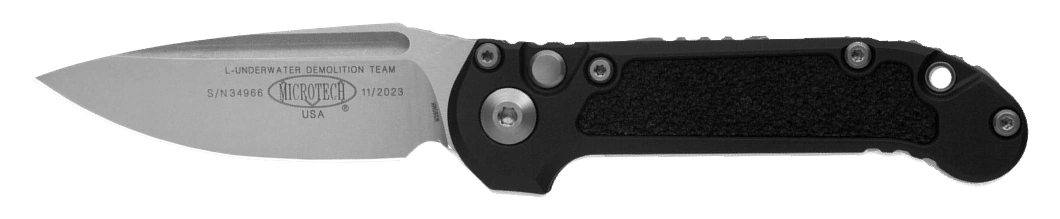
The LUDT Gen III brings a few practical changes to a familiar Microtech design. Older LUDTs used proprietary hardware; Generation III uses standard Torx screws, adds grip inlays and runs its automatic action on a bearing pivot. Those are changes to the knife itself, rather than simply a different blade finish on the old design.
This 1135-10 version combines a stonewashed M390MK drop-point blade with black aluminum handles and textured 3M inlays. At 8.05 inches overall and 3.6 ounces, with weight stated in Microtech’s 2026 catalog, it occupies the same practical size class as the TR-3. It’s also a much easier everyday proposition than the 9-inch Socom Elite. I’d pick the LUDT when I wanted the premium Microtech option without committing to a particularly large folder.
The blade numbers reveal a useful distinction: its listed 3.5-inch blade has a 3-inch cutting edge. The Autonomy 2 has the same stated blade length but more sharpened edge, so the headline measurement doesn’t tell the whole story. The LUDT counters with lower weight and a smaller carry package. Its right-hand, tip-up clip and lack of a separate safety are worth considering before you spend the extra money. For most everyday jobs, the less costly TR-3 remains a perfectly sensible alternative.
| PROS | CONS |
|---|---|
|
|
Best Compact: Kershaw Launch 11

The Launch 11 is the one to start with if you keep leaving larger knives at home. Its 2.75-inch blade and 2.1-ounce weight make it the lightest pick here, and the 3.8-inch closed length keeps the package compact. You still get an aluminum handle, CPM 154 steel and a reversible tip-up clip.
I like that Kershaw gives this little auto some personality without burying it in decoration. The long window through the handle removes material, and the bronze-colored pivot trim adds a small splash of contrast. The BlackWash blade finish suits a working pocket knife, too. More importantly, the drop-point profile provides a useful point and curved edge for ordinary cutting.
The smaller dimensions are both the appeal and the limitation. Compared with the 9400, you save a little over half an ounce and gain a shorter handle, but give up 0.65 inch of blade. That’s a good bargain for light daily tasks, less so if you need a spacious grip or regularly cut larger material. The recessed push button has no separate sliding safety. I’d choose the Launch 11 for minimal pocket weight; the Boker Kalashnikov buys more blade and handle at a lower price, with a clear penalty in bulk.
| PROS | CONS |
|---|---|
|
|
Best Traditional: Buck 112 Auto
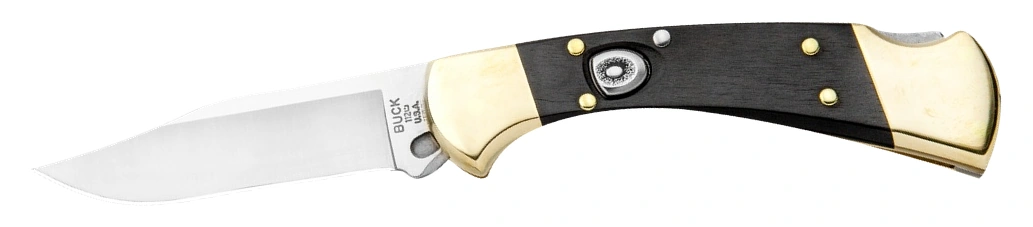
If you want an automatic that still looks like a traditional pocket knife, the Buck 112 Auto is the easy answer. Ebony wood, brass bolsters and a satin clip-point blade give it a completely different character from the aluminum-handled autos above. This is Buck’s factory-built automatic, rather than an aftermarket conversion of a manual 112.
The operating arrangement is different, too. The button opens the blade, but a lockback releases it for closing. You get a 3-inch 420HC blade and a leather sheath instead of a pocket clip. That makes the 112 a good fit for someone who already likes belt-sheath carry and wants familiar Buck styling with push-button opening.
The cost of that traditional construction is weight: 5.9 ounces for a knife that is only 7.25 inches open. The Launch 11 is much lighter, and the 9400 gives you a longer blade while weighing less than half as much. The standard 112 Auto’s 420HC is also a different steel from the S30V used on the Auto Elite. I’d choose this version for the easy-to-maintain blade, wood-and-brass build and sheath carry, rather than for maximum edge retention or minimum pocket bulk.
| PROS | CONS |
|---|---|
|
|
Best Large Auto: Microtech Socom Elite Auto

The manual Socom Elite we reviewed established the appeal of this big, distinctive platform. This recommendation is specifically for the automatic version, which replaces manual opening with a push button. The black 161A-1T here has a tanto blade, and the 4.05-inch blade and 9.11-inch overall length on Microtech’s exact-model page make it the largest knife in this lineup.
The aluminum handle is broad toward the front and tapers toward the rear, with textured inlays to give your fingers something more positive than smooth metal. At the manufacturer’s stated 5.6 ounces, it weighs about the same as the Autonomy 2 and less than the Gerber 06. Blade HQ lists different dimensions and weight and does not specify a steel grade, which varies by production run. You get considerably more length than either, but that still means a larger knife occupying your pocket.
This is the one I’d consider for a large hand or a genuine need for a longer blade. The angular tanto profile is a specific preference; for ordinary cutting, I’d lean toward the LUDT’s drop point and smaller dimensions. The Socom’s right-hand, tip-down clip is another meaningful difference from most of the list. If you strongly prefer tip-up carry, choose a different model rather than assuming the clip can be moved. Its large footprint and premium price make it an unnecessary step up for light packaging work.
| PROS | CONS |
|---|---|
|
|
Best for Gloves: Gerber 06 Auto

The Gerber 06 Auto remains the tank of this group. The aluminum handle is broad, deeply contoured and unmistakably substantial. An oversized opening button and large slide safety are the main reasons to consider it. Blade HQ describes the release button as designed for use with gloves, which is a more useful distinction than simply calling the knife “heavy duty.”
This plain-edge, drop-point version uses S30V, with a 3.625-inch blade and a 5-inch handle. The finger recesses and flared front provide a clearly defined grip, while the tip-up clip can be reversed. Those shapes will suit some hands better than others, so the handle deserves as much attention as the blade. A reversible clip also doesn’t move the opening button to the other side.
The tradeoff is hard to miss: at about 7.1 ounces, the 06 is the heaviest knife here. The Socom Elite supplies a longer blade at substantially less weight; the Autonomy 2 offers another oversized-button option with a corrosion-resistant LC200N blade. I’d pick the Gerber when its large controls and strongly shaped grip match the work, and leave it off the shortlist for lightweight everyday carry. Its mass is a design characteristic, not evidence that it can handle any task you throw at it.
| PROS | CONS |
|---|---|
|
|
Compare Our Automatic-Knife Picks
Compare size, controls and the main tradeoff below. Select a model for current availability and price. On smaller screens, swipe sideways to see every column.
| Knife | Size / carry | Build / controls | Why pick it / tradeoff |
|---|---|---|---|
| Benchmade 9400 Osborne | Blade: 3.4 inClosed: 4.47 inWeight: 2.65 oz | Steel: CPM S30VHandle: AluminumControls: Button + spine safety | For: A long, useful blade in a slim, lightweight packageTradeoff: Premium cost; less hand-filling than the CLA |
| Pro-Tech TR-3 | Blade: 3.5 inHandle length: 4.5 inWeight: 3.68 oz | Steel: 154CMHandle: Grooved aluminumControls: Button; no separate safety | For: A straightforward full-size cutter with a tapered gripTradeoff: Right-hand carry; no separate safety |
| Benchmade CLA | Blade: 3.4 inClosed: 4.45 inWeight: 3.47 oz | Steel: 154CMHandle: Contoured G10Controls: Button + separate safety | For: Contoured G10 and deep carry without a larger bladeTradeoff: Adds weight and thickness versus the 9400 |
| Boker Kalashnikov | Blade: 3.35 inOverall: 7.83 inWeight: 3.6 oz | Steel: D2Handle: AluminumControls: Converted push-button automatic | For: A usable full-size automatic at a lower costTradeoff: D2 care and limited conversion coverage |
| Spyderco Autonomy 2 | Blade: 3.5 inClosed: 4.94 inWeight: 5.5 oz | Steel: LC200NHandle: G10 / steel linersControls: Oversized button + safety | For: Moisture-prone work and a broad utility bladeTradeoff: 5.5 oz is a noticeable carry commitment |
| Microtech LUDT Gen III | Blade: 3.5 inHandle length: 4.5 inWeight: 3.6 oz | Steel: Böhler M390MKHandle: Aluminum / traction inlaysControls: Button; no separate safety | For: Premium Microtech design in an everyday-friendly sizeTradeoff: Higher cost; right-hand carry only |
| Kershaw Launch 11 | Blade: 2.75 inClosed: 3.8 inWeight: 2.1 oz | Steel: CPM 154Handle: AluminumControls: Low-profile button | For: Compact everyday carry with very little pocket weightTradeoff: Less blade and grip space than the larger picks |
| Buck 112 Auto | Blade: 3 inClosed: 4.25 inWeight: 5.9 oz | Steel: 420HCHandle: Ebony / brassControls: Button opens; lockback closes | For: Traditional styling and belt-sheath carryTradeoff: 5.9 oz and no pocket clip |
| Microtech Socom Elite Auto | Blade: 4.05 inOverall: 9.11 inWeight: 5.6 oz | Steel: Varies by production runHandle: Aluminum / traction inlaysControls: Button; no separate safety | For: A genuinely large blade and roomy handleTradeoff: Big pocket footprint; fixed tip-down carry |
| Gerber 06 Auto | Blade: 3.625 inHandle length: 5 inWeight: 7.14 oz | Steel: CPM S30VHandle: Contoured aluminumControls: Oversized button + safety | For: Large controls for gloved useTradeoff: Heavy, bulky and shaped around a particular grip |
How to Choose an Automatic Knife
Start with the size you’ll actually carry
A longer blade is useful only if you’re happy carrying the handle that comes with it. The Launch 11 is the compact choice at 2.1 ounces. The 9400 adds a substantially longer blade for little extra weight, while the CLA trades some of that slimness for fuller G10 handles. At the other end, the Socom Elite gives you the longest blade here without reaching the weight of the Gerber 06.
Look at cutting-edge length as well as blade length when it is available. The LUDT’s 3.5-inch blade includes a 3-inch sharpened edge, while the Autonomy 2’s 3.5-inch blade has a listed 3.33-inch edge. A choil or unsharpened section can make two equal-length blades quite different working tools. Handle shape, pocket depth and glove fit are personal decisions that a specification table cannot make for you.
Understand the button, lock and safety
An automatic opens when its release is pressed. With an assisted-opening knife, you start moving the blade before the spring helps finish the job. A button lock describes a locking mechanism and can appear on a manual knife, so a button by itself does not make a folder automatic. These side-opening picks close by hand after you release the lock; the Buck 112 uses a separate lockback for that step.
A separate safety adds another control to operate, while a recessed button relies on its placement and the knife’s locking design. Neither excuses careless handling. Keep fingers clear of the blade’s opening path and follow the maker’s carry instructions. For left-handed users, distinguish a reversible pocket clip from genuinely mirrored controls: moving the clip does not move the firing button.
Choose steel for the work and environment
For most everyday users, 154CM, CPM 154 and S30V are all sensible choices. Steel alone should not overrule a handle you like or a knife you’ll carry. Our guide to knife steels explains the balance among edge retention, toughness, corrosion resistance and sharpening. The blade’s geometry and heat treatment matter alongside the alloy.
The clearest environmental distinction here is between the D2 Kalashnikov and LC200N Autonomy 2. Choose the Spyderco when corrosion resistance is a priority; choose the Boker for its lower cost and accept the extra attention to moisture. Wipe blades clean, dry wet knives and follow each manufacturer’s cleaning and lubrication directions. A corrosion-resistant blade does not eliminate care for the pivot, spring or other components.
Which one would I choose?
For a single everyday automatic, I’d start with the 9400 Osborne. The Kalashnikov is the sensible budget alternative, the Launch 11 is the easy lightweight pick, and the LUDT Gen III is the premium option I’d shortlist for regular carry. The bigger and more specialized models earn their places when their particular handle, controls or corrosion resistance solve a real problem for you.
Before buying or carrying an automatic, make sure you understand the rules where you live, carry and travel. Our knife-law guide is a starting point; blade length alone does not establish legality. Stay safe, stay sharp.
