

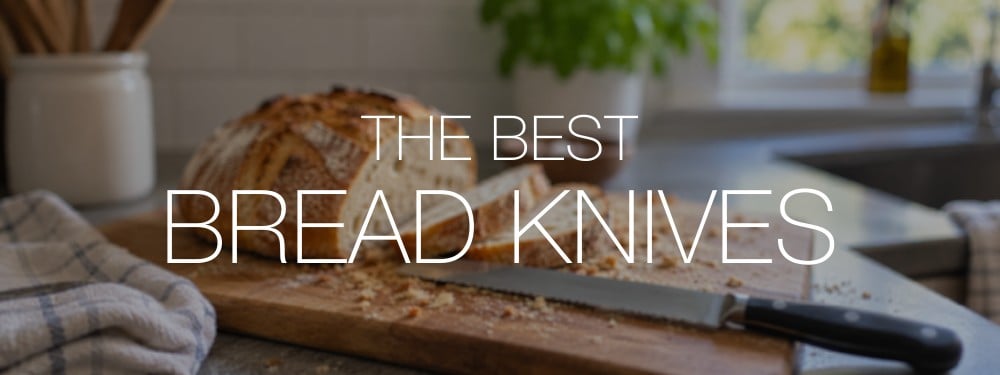
A good bread knife glides through a crackly sourdough crust without crushing the soft middle, and a bad one does the opposite. It squashes sandwich bread, tears the crumb and leaves the board covered in shards.
With bread, the knife matters more than the brand name on it. What decides it is the shape of the edge, how much blade you get past the loaf, and whether your knuckles have room above the board.
How We Earn Your Trust
Hands-On Testing
Where a knife was tested, we say who tested it, and partner footage is labelled. How We Test →
Specs You Can Check
Figures come from the manufacturer’s product page. Where a figure comes from a retailer or differs from the knife we tested, we say so.
How We Make Money
We earn a commission when you buy through our links. Commissions do not decide which knives we pick. How We Make Money →
Top Picks
My first choice for most kitchens is the Mercer Millennia M23210. It grips a hard crust, cuts soft bread without crushing it and costs very little. For thinner, cleaner slices, the MAC Superior is the upgrade worth paying for.





Bread Knife Comparison
Compare the edge and blade length first, then the handle.
| Knife | Best For | Blade | Overall | Weight | Edge | Construction | Steel | Handle | Main Trade-off |
|---|---|---|---|---|---|---|---|---|---|
| Mercer Millennia | Hard crust and soft loaves | 10.00 in254 mm | 15.50 in394 mm | 4.8 oz136 g | Wavy serrated | Stamped | High-carbon Japanese | Santoprene and polypropylene | Straight handle gives less knuckle room than the offset. |
| MAC Superior | Clean, crumb-free slices | 10.75 in273 mm | 15.38 in391 mm | 5.6 oz159 g | Scalloped serrated | Stamped | High-carbon molybdenum vanadium | Pakkawood | Costs several times as much as the Mercer. |
| Victorinox Fibrox | Bread, cakes and pastry | 10.24 in260 mm | 15.04 in382 mm | 4.8 oz136 g | Wavy serrated | Stamped | Stainless steel | TPE | Lighter blade can drift on tall, hard loaves. |
| Wüsthof Classic | Premium forged build | 9.00 in229 mm | 13.90 in353 mm | 6.7 oz190 g | Double serrated | Forged | X50CrMoV15 | POM | Nine-inch blade is short for wide boules. |
| Mercer Millennia Offset | Knuckle room on the board | 9.00 in229 mm | 14.50 in368 mm | 4.6 oz130 g | Wavy serrated | Stamped | High-carbon Japanese | Santoprene and polypropylene | Shorter blade than the straight Mercer. |
Best Overall: Mercer Millennia M23210
A ten-inch wide-wavy edge that bites into hard crust and leaves soft sandwich bread standing, for a fraction of what the premium knives cost.
What We Like about Mercer Millennia
- +Wide scallops catch a hard crust on the first stroke
- +Long enough for a big sourdough boule
- +Costs a fraction of the MAC or the Wüsthof
Good to Know about Mercer Millennia
- Your knuckles meet the board before the last bit of bottom crust is cut.
- The molded handle looks and feels like restaurant gear.
Full Specs
- Model
- M23210, Black, Wide Wavy
- Blade Length
- 10.00 in254 mm
- Overall Length
- 15.50 in394 mm
- Edge
- Wavy serrated
- Construction
- Stamped
- Steel
- High-carbon Japanese
- Hardness
- 53–54 HRC
- Handle
- Santoprene and polypropylene
- Weight (Listed)
- 4.8 oz136 g
Specs source: mercerculinary.com · Overall length from WebstaurantStore. Weight from Amazon.
This is the bread knife I’d hand to anyone who just wants good slices. The wide, rounded scallops catch a crackly crust on the first pull instead of skating across it, and the points do the cutting so you don’t have to press down. That matters on soft sandwich bread. Press down on a squishy loaf and you flatten it. With an edge this sharp, a few light strokes get through before the loaf has a chance to squash. The main annoyance was finishing the bottom crust: the straight handle put my knuckles against the board before I completed the cut.
Ten inches gives you room for long, even strokes across a wide boule, and long strokes are what keep a slice the same thickness from top to bottom. The textured grip stays put when your hand is wet or floury. Mercer built this for restaurant kitchens, and it costs a fraction of the MAC or the Wüsthof. You give up polish and a nicer handle, not cutting ability. Get the M23210 wide wavy version, not Mercer’s fine-toothed knife with a similar name.
Best for Clean Slices: MAC Superior SB-105
A thin, very sharp Japanese blade that cuts soft bread without crushing it and tracks straight through a tall loaf.
What We Like about MAC Superior
- +Thin blade parts soft crumb with almost no squash
- +Stiff blade keeps tall slices even
- +Sharp enough for ripe tomatoes and roasts
Good to Know about MAC Superior
- Costs several times as much as the Mercer.
- At over 15 inches long it needs a long drawer slot or a magnetic strip.
Full Specs
- Model
- SB-105 Superior
- Blade Length
- 10.75 in273 mm
- Overall Length
- 15.38 in391 mm
- Edge
- Scalloped serrated
- Construction
- Stamped
- Blade Thickness
- 0.08 in2.0 mm
- Steel
- High-carbon molybdenum vanadium
- Hardness
- 61 HRC
- Handle
- Pakkawood
- Weight (Listed)
- 5.6 oz159 g
- Origin
- Japan
Specs source: macknife.com · Steel, hardness, handle and origin from Cutlery and More.
Spend more on a bread knife and this is where the money shows. The MAC’s blade is about 2 mm thick and harder than the German and commercial knives on this list, so its scallops come very sharp and stay that way longer. A thin, sharp blade is the answer to the soft-bread problem. It parts a brioche or a fresh sandwich loaf without wedging it apart, and each slice comes off with a clean face instead of a torn one.
What stood out was how straight the blade tracked through a tall loaf, making it easier to keep the slice an even thickness. It costs several times what the Mercer does, and for a loaf a week the Mercer is plenty. If you bake your own bread, or you care about thin, even slices, the MAC is the upgrade I’d make.
Best for Bread and Pastry: Victorinox Fibrox Bread And Pastry
A light, budget bread knife with a rounded tip that doubles for cakes and pastry.
What We Like about Victorinox Fibrox
- +Rounded tip for leveling and icing cakes
- +Light and easy to guide through soft loaves
- +Grippy handle that stays put when wet
Good to Know about Victorinox Fibrox
- The lighter blade can wander on a tall, hard-crusted loaf if you force it.
- Straight handle, so your knuckles reach the board before the cut is finished.
Full Specs
- Model
- 5.2933.26 / 5.2933.26BK, Black
- Blade Length
- 10.24 in260 mm
- Overall Length
- 15.04 in382 mm
- Edge
- Wavy serrated
- Construction
- Stamped
- Steel
- Stainless steel
- Handle
- TPE
- Weight (Listed)
- 4.8 oz136 g
- Origin
- Switzerland
Specs source: victorinox.com · Steel from Amazon.
The Fibrox cuts bread about as well as the Mercer, and its blade is only a quarter-inch longer, so reach is not the reason to pick it. The rounded tip is. Victorinox makes this as a bread and pastry knife, and that blunt end lets you level a cake layer, split a sponge or spread icing without a sharp point catching. If you bake cakes as well as buy bread, one knife covers both jobs.
The light blade was easy to guide through soft bread, but pushing harder through a tall, crusty loaf made it more prone to wandering. Keep the strokes long and let the edge do the work. It sits in the same budget class as the Mercer. Check the model number before you buy, because Victorinox sells several serrated knives that look alike.
Best Premium: Wüsthof Classic Double Serrated
A heavy, forged German knife whose double serrations bite hard crust and leave soft crumb and tomatoes intact.
What We Like about Wüsthof Classic
- +Double serrations grip crust, then slice cleanly
- +Extra weight does part of the work on dense loaves
- +Full-tang riveted handle built to last decades
Good to Know about Wüsthof Classic
- Nine inches can run out of blade on a wide boule.
- The double-serrated edge is a job for a professional sharpener.
Full Specs
- Model
- 1040101123, Black
- Blade Length
- 9.00 in229 mm
- Overall Length
- 13.90 in353 mm
- Edge
- Double serrated
- Construction
- Forged
- Steel
- X50CrMoV15
- Hardness
- 58 HRC
- Handle
- POM
- Weight (Listed)
- 6.7 oz190 g
- Origin
- Germany
Specs source: wusthof.com · Overall length, steel, handle and weight from Cutlery and More.
The Wüsthof’s edge has small teeth set inside each larger scallop. The big scallops bite into a hard crust, and the small teeth keep cutting once you reach the soft crumb, so the middle doesn’t tear. The same edge is very good on ripe tomatoes and cakes. The extra weight helped on dense loaves, but on a wide round loaf I wanted more blade length for a longer cutting stroke.
The extra money buys a forged, full-tang knife with a riveted handle that should outlast everything else in the drawer, and a balanced feel that matches the rest of a German knife set. Its nine-inch blade is fine for sandwich loaves and baguettes. If you mostly cut big boules, the MAC or the Mercer gives you more blade.
Best for Knuckle Clearance: Mercer Millennia M23890 Offset
The raised handle lets you cut all the way to the board without scraping your knuckles.
What We Like about Mercer Millennia Offset
- +Your hand stays above the board on the last cut
- +Finishes the bottom crust cleanly
- +Same grippy handle and budget price as the M23210
Good to Know about Mercer Millennia Offset
- The nine-inch blade is short for a wide boule.
- The stepped shape won't fit every knife block slot.
Full Specs
- Model
- M23890, Black, Offset
- Blade Length
- 9.00 in229 mm
- Overall Length
- 14.50 in368 mm
- Edge
- Wavy serrated
- Construction
- Stamped
- Steel
- High-carbon Japanese
- Hardness
- 53–54 HRC
- Handle
- Santoprene and polypropylene
- Weight (Listed)
- 4.6 oz130 g
- Origin
- Taiwan
Specs source: mercerculinary.com · Overall length from WebstaurantStore. Weight from Amazon.
The raised handle made the biggest difference at the bottom of the loaf: I could finish the cut without my knuckles meeting the board. That extra clearance also makes the M23890 useful for cutting bagels and sandwiches.
It uses the same wavy edge and handle materials as the M23210 and sits in the same low price class. The shorter blade is the cost. On a big sourdough boule you’ll be sawing more than gliding, so I keep the straight ten-inch Mercer as the overall pick. If you mostly cut sandwich loaves, rolls and bagels, this is the one I’d buy.
How To Choose A Bread Knife
Quick Checklist
- Your Bread: Wide scallops for hard crust, finer or double serrations for soft bread and tomatoes.
- Blade Length: Ten inches for big loaves, nine for sandwich bread and bagels.
- Knuckle Room: An offset handle if your knuckles hit the board.
- Budget: Budget knives cut well. Pay more for a thinner blade or a forged build.
Match the edge to your bread. Wide, rounded scallops, like the Mercer and the Victorinox, bite into a hard crust fast and keep cutting for a long time. Finer or double serrations, like the Wüsthof, cut soft bread, tomatoes and cake with less tearing. A thin, very sharp blade, like the MAC, does both well. The thinner the blade, the less it squashes soft bread on the way down.
Let the knife do the work. Most crushed slices come from pressing down. Use long, light strokes and let the teeth cut. That is why blade length matters: you want a few inches of blade past the loaf so each stroke is a long one. Ten inches covers almost any loaf. Nine is fine for sandwich bread, baguettes and bagels.
Keep the slices straight. Start with a couple of light pulls to set a groove in the crust, then keep the blade upright and keep sawing rather than pushing. A stiff blade tracks straighter than a flexible one, and an offset handle lets you finish the bottom crust without tilting the knife.
Decide if the upgrade is worth it. The Mercer and the Victorinox cut bread as well as most people will ever need, at budget prices. Paying several times more gets you a thinner, harder blade that cuts cleaner and stays sharp longer with the MAC, or a forged knife built for a lifetime with the Wüsthof. If you bake your own bread or slice every day, it pays off. For a loaf a week, the Mercer is enough.
A bread knife sits alongside a chef’s knife rather than replacing it. See the kitchen knives guide for the rest of a basic set and the serrated sharpeners guide for keeping the edge sharp. Wash and dry it by hand, and keep the edge away from other utensils in the drawer.
How I Picked These Knives
I looked for knives that do both jobs in the title: get through a hard crust and cut soft bread without crushing it. From there it came down to the edge pattern, blade length, stiffness, the handle, and what each knife gives you for what it costs. Each pick fills a different need, and each is sold by a store I would buy from.
The Tojiro bread slicers are good knives and an enthusiast favorite. The F-737 is shorter than the ten-inch Mercer, and the long F-687 covers the same ground as the MAC. I gave that spot to the MAC for its more manageable overall length.
Why Trust My Picks
Soft sandwich bread, dense rye and crackly sourdough each ask something different of a knife. What separates a good bread knife from a bad one is the edge, the blade and how the knife lets you cut, far more than the brand. Every pick here earns its place on one of those points, and I tell you what each one gives up.
Final Thoughts
Match the knife to the bread you cut most. Wide scallops suit hard crust, finer serrations suit soft sandwich loaves, and an offset handle is the fix if your knuckles hit the board. Spend more only if you slice bread every day, because that is when a thinner or forged blade pays you back.
Bread Knife FAQs
How long should a bread knife be?
Long enough to leave a few inches past your loaf, so each stroke is a long one. Ten inches covers almost any loaf. Nine inches is fine for sandwich bread, baguettes and bagels.
How do I cut soft bread without squashing it?
Use a sharp knife and long, light strokes, and don’t press down. Let the teeth do the cutting. Fresh bread is softest while it is warm, so let it cool for an hour if you can.
Does an offset bread knife cut better?
It doesn’t cut better, but it finishes better. The raised handle lets the edge go all the way through the bottom crust without your knuckles hitting the board.
Can I sharpen a serrated bread knife?
Yes, with a tool made for serrations, like a tapered rod, worked one scallop at a time. A plain-edge pull-through sharpener will damage it. Send a double-serrated edge like the Wüsthof to a professional.
Is an expensive bread knife worth it?
For most people, no. The Mercer cuts hard crust and soft bread well for very little. A premium knife like the MAC or the Wüsthof cuts cleaner and stays sharp longer, which is worth it if you bake or slice bread every day.
Still Not Sure?
Take our 60-second quiz and get matched with the right knife.

