

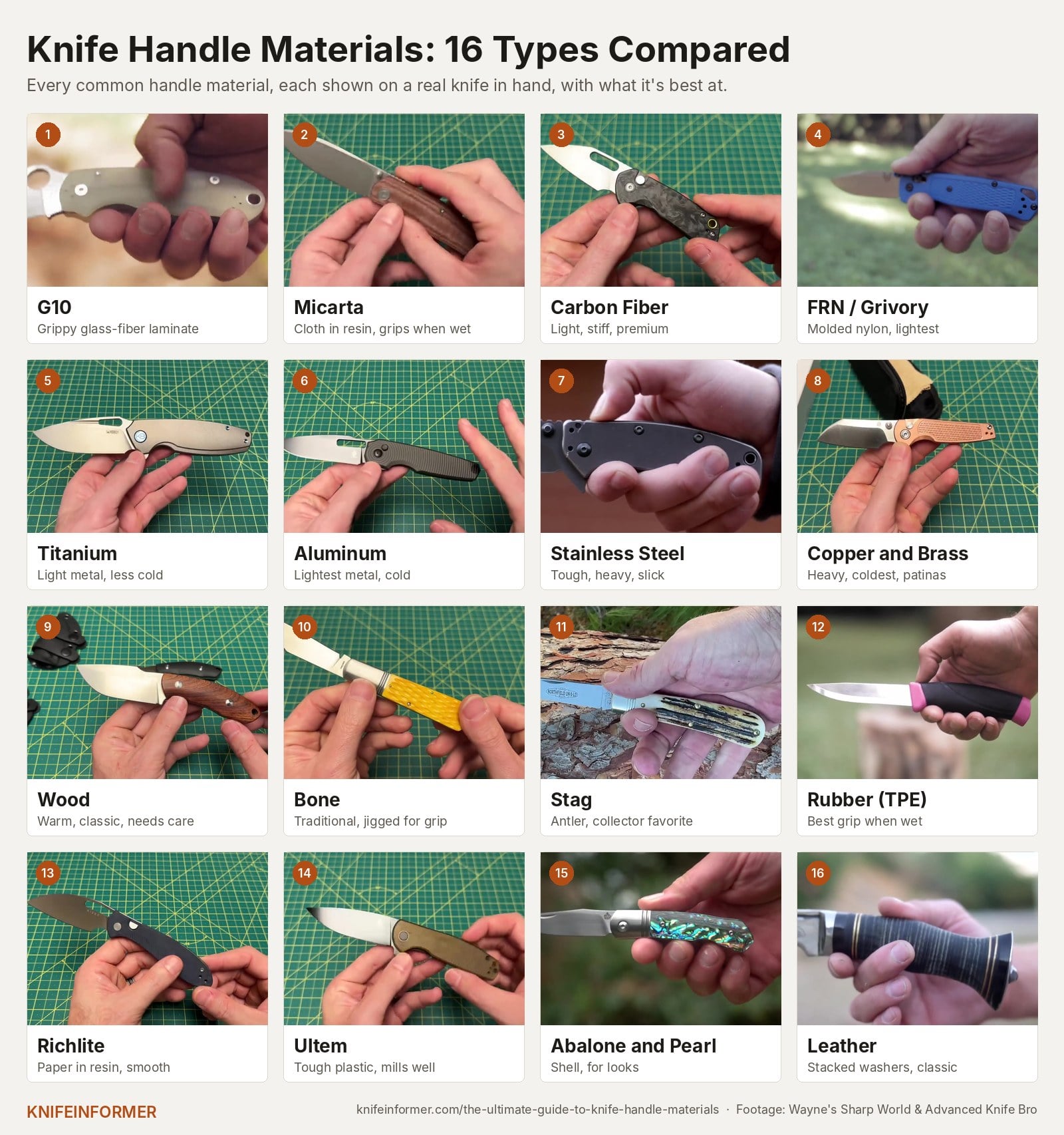
The best knife handle material for most people is G10. It grips wet or dry, barely absorbs water, is very hard to break and costs little. But it's the wrong pick for some jobs. Titanium wins for frame locks, rubber for wet work, POM for kitchens and FRN for the lightest carry. Below are the 16 main handle materials you'll actually find on knives today, each one shown in real hands, with what it's good at, what to watch for and a knife we recommend. I've also pulled the published density and heat figures for the main materials, so you can see why aluminum feels so much colder than titanium and Micarta grips when wet.
How We Earn Your Trust
Hands-On Experience
The clips are real footage from Wayne's Sharp World and Advanced Knife Bro, credited on each one. How We Test →
Numbers You Can Check
Weights, densities and heat figures link to the maker, retailer or material datasheet they came from.
How We Make Money
We earn a commission when you buy through our links. Commissions do not decide what we recommend. How We Make Money →
Best Knife Handle Material at a Glance
- G10Best overall. Grippy fiberglass laminate that barely absorbs water.
- MicartaBest natural feel. Cloth and resin that grips wet and ages well.
- Carbon fiberLight premium synthetic. Stiff, striking and pricey.
- FRN, Grivory and ZytelCheapest and among the lightest. Molded glass-filled nylon.
- TitaniumBest premium metal. Light, strong and less cold than other metals.
- AluminumBest value metal. Lightest metal, but cold to hold.
- Stainless steelToughest and cheapest metal, but heavy and slick.
- Copper and brassHeavy metals that build a patina.
- WoodWarm and classic. Choose stabilized wood for hard use.
- BoneThe traditional slipjoint handle, jigged for grip.
- StagDeer antler. The collector favorite.
- Rubber (Kraton and TPE)Best grip when wet. Common on hunting and kitchen knives.
- RichlitePaper in resin, with a stone-like look.
- UltemTough PEI plastic that mills beautifully.
- Abalone and mother of pearlShell. Pure looks for dress knives.
- LeatherStacked washers on classic fixed blades.
G10
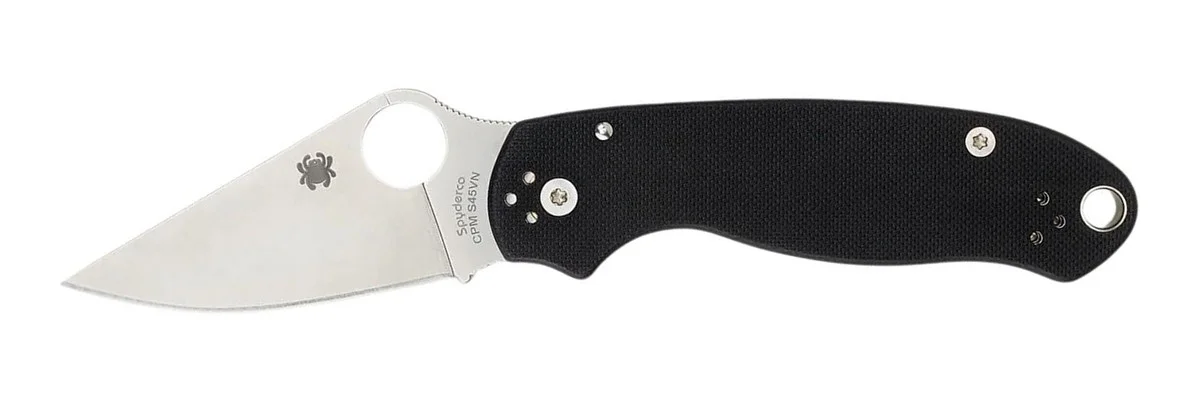
G10 is a laminate of fiberglass cloth soaked in epoxy resin and pressed under heat into a hard, dense sheet. It is the most common handle material on modern folding knives, and for most people it is the best all-round choice.
Best for: everyday carry, hard use and wet hands, at any price.
The name is an industrial grade, not a brand. Makers cut the sheet into scales, then mill or press a texture into the surface. That texture is what gives G10 its grip, and it can range from a fine sandpaper feel to an aggressive pattern that chews up pocket linings.
G10 barely takes on water. Datasheets for G10/FR4 sheet put water absorption under 0.1% (Acculam G10/FR4 datasheet). So it doesn't swell, warp or get slippery when it's wet, and it shrugs off sweat, blood and solvents. It's lighter than any metal handle but heavier than most plastics, at a specific gravity of about 1.85.
What We Like
- +Grippy, even wet
- +Ignores water, sweat and most chemicals
- +Inexpensive and comes in endless colors
Good to Know
- Aggressive textures can wear pocket linings
- Can chip if you drop it on a sharp corner
- Feels plain next to Micarta or carbon fiber
"I still think G10 is easily one of the best handle materials out there, probably the best handle material for a budget knife."
Wayne Walter, Wayne's Sharp World
If I had to pick one handle material for someone who doesn't know what they want yet, this is it. It's grippy, it's cheap to make, it comes in every color you can think of and it's very hard to break in normal use.
G10 Knives We Recommend
Micarta
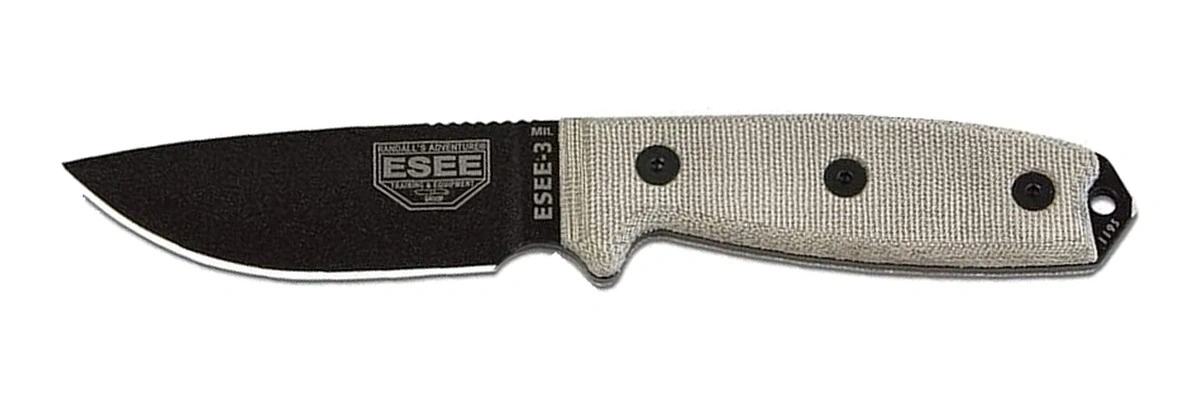
Micarta is layers of linen, canvas or paper soaked in phenolic resin and cured under heat and pressure. It feels warmer and more organic than G10, and it gets grippier as your hand oils work into it.
Best for: outdoor and fixed-blade knives, and anyone who likes a handle that ages.
Micarta goes back to Westinghouse, which was making it at least as early as 1910 with Leo Baekeland's phenolic resin (Micarta history). Today the name is a registered trademark of Norplex-Micarta, but knife makers use it for any cloth-and-phenolic laminate. Linen Micarta has a fine weave and a smooth look. Canvas is coarser and grippier. Burlap is the roughest of all.
The cloth is the difference from G10. Canvas phenolic sheet absorbs about 1.6% water in 24 hours (Interstate Plastics canvas phenolic datasheet), against under 0.1% for G10. That small amount of absorption, plus the cloth texture, helps Micarta feel tacky rather than slick when your hands are wet. The same absorption is why it slowly darkens with handling. It's also lighter than G10, at a specific gravity of about 1.35.
What We Like
- +Grips well when wet
- +Warm, natural feel and looks
- +Lighter than G10
Good to Know
- Can stain from oils and dyes
- Polished finishes start out slick
- Usually costs more than G10
"When the oils from your hands work into this, you're going to have some really, really nice micarta handles."
Wayne Walter, Wayne's Sharp World
A smooth, polished Micarta can be slick when it's new. Rough it up with fine sandpaper and it grips again. Treat it like a good leather boot and it only gets better.
Micarta Knives We Recommend
Carbon Fiber
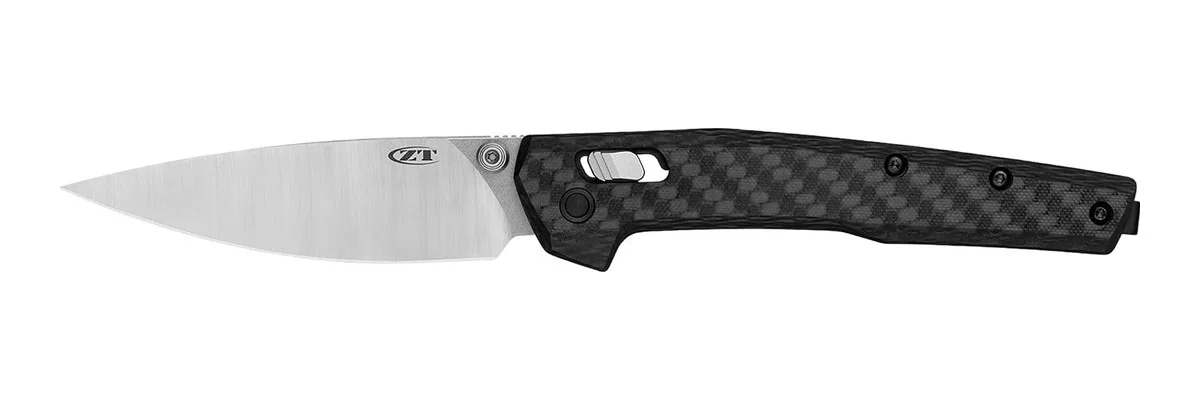
Carbon fiber is woven carbon fabric set in epoxy resin and cured under heat and pressure. It is the stiffest of the synthetic handle materials, lighter than G10, and it costs more than the other synthetics.
Best for: premium everyday carry where low weight and looks matter most.
It's built just like G10, only with carbon fabric instead of glass, and it comes out a little lighter, at around 1.55 to 1.6 grams per cubic centimetre (MIL-HDBK-17-2F). You'll see three main looks: classic twill weave, marbled (forged) carbon made from chopped fibers, and colored composites like FatCarbon that layer resin and carbon together.
The surface is naturally smooth, so makers add texture or jimping. Thin carbon fiber scales can chip or crack at the edges if you drop the knife on something hard, and some cheaper "carbon fiber" handles are really a thin carbon layer over G10. That isn't a bad handle, but you should know what you're paying for.
What We Like
- +Stiffest of the synthetics, and lighter than G10
- +Striking looks, especially marbled
- +Won't rust, rot or swell
Good to Know
- Costs the most of the synthetics
- Smooth unless textured
- Edges can chip on a hard drop
Carbon Fiber Knives We Recommend
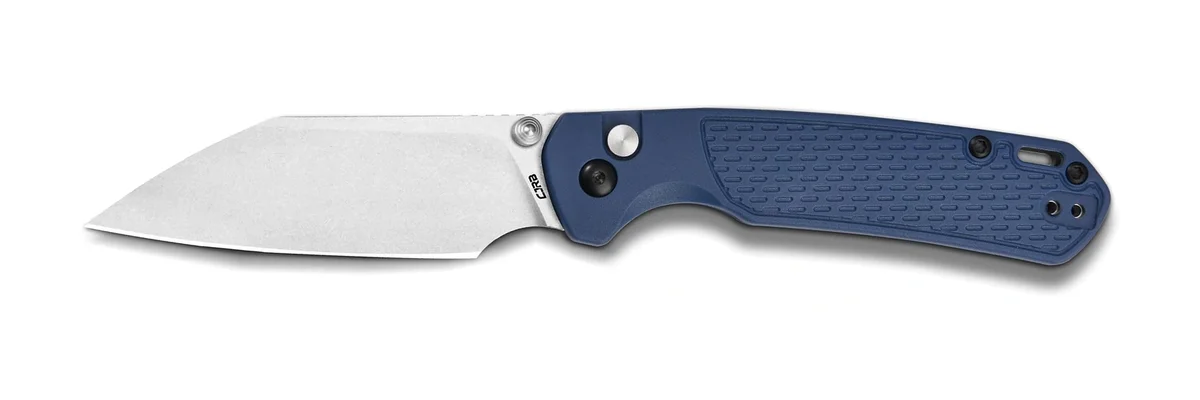
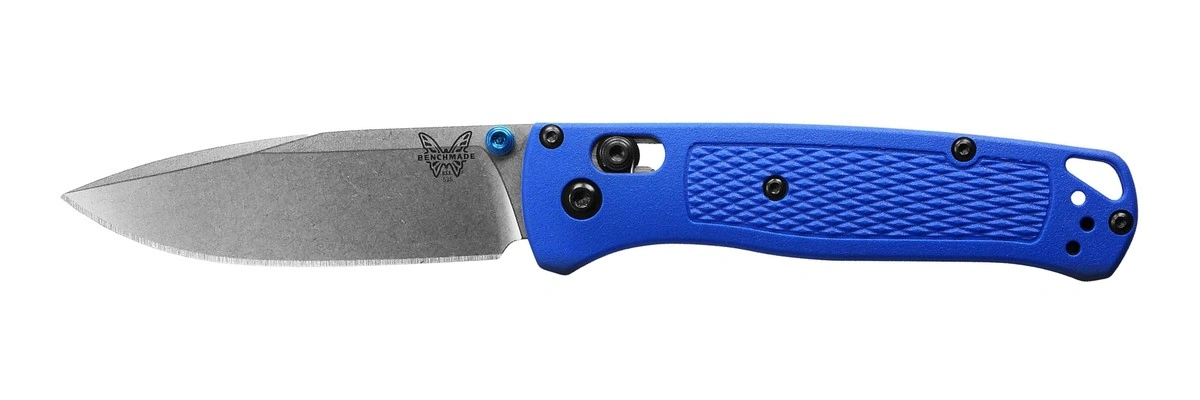
FRN, Grivory and Zytel
FRN (fiberglass-reinforced nylon) is nylon mixed with short glass fibers and injection-molded into shape. Zytel and Grivory are brand names for this family. It is the least expensive handle material, one of the lightest (especially without liners) and one of the toughest.
Best for: lightweight carry, budget knives and work knives you don't want to baby.
Because it's molded rather than machined, FRN can take any shape and texture the mold can hold, which keeps the price low. Zytel was DuPont's nylon brand and now belongs to Celanese, which bought that business in 2022 (Plastics Technology). Grivory is EMS-Grivory's glass-reinforced polyamide, and it's what Benchmade uses on the Bugout.
A typical 30% glass-filled nylon has a density of about 1.36 grams per cubic centimetre (Ensinger TECAMID 66 GF30), lower than G10. Higher-glass grades like the ones in many knife handles run denser, so the weight savings on knives like the Bugout come as much from thin, linerless designs as from the material. Many FRN knives also drop the steel liners, which saves even more weight. The trade-off is flex. A linerless FRN handle can bend a little when you squeeze it, and some people find it feels hollow or plasticky.
What We Like
- +Among the lightest handles you can buy
- +Cheap, tough and nearly impossible to break
- +Molded texture grips well
Good to Know
- Can feel hollow or plasticky
- Linerless handles flex under a hard squeeze
- Texture wears smooth over years
"the Grivory which to me feels like a slightly more sandy version of FRN"
Mark Hanlen, Advanced Knife Bro
FRN Knives We Recommend
Titanium
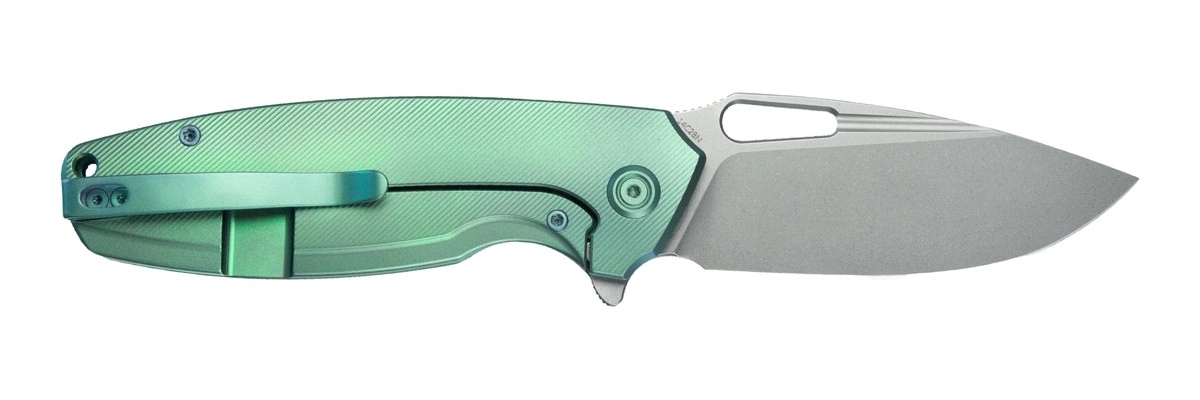
Titanium handles are usually machined from Ti-6Al-4V, a titanium alloy that is strong, corrosion-resistant and much lighter than steel. It is the classic premium metal handle, and the usual choice for frame locks.
Best for: premium everyday carry and frame-lock folders.
Ti-6Al-4V weighs 4.43 grams per cubic centimetre and conducts heat at only about 6.7 watts per metre-kelvin (ASM Aerospace Specification Metals). That second number explains something you notice the first time you pick one up in winter. Titanium doesn't pull heat out of your hand nearly as fast as aluminum does, so it feels cool rather than icy.
Bare titanium is smooth, so makers bead-blast, stonewash, mill or 3D-contour it for grip. It can also be anodized into bright colors. It scratches more easily than steel and wears to a soft gray patina over time, which some people love and some hate.
What We Like
- +Light for a metal, and strong
- +Feels far less cold than aluminum or steel
- +Won't rust, and can be anodized any color
Good to Know
- Costs more than aluminum or G10
- Scratches and scuffs easily
- Smooth finishes can be slippery
Titanium Knives We Recommend
Aluminum
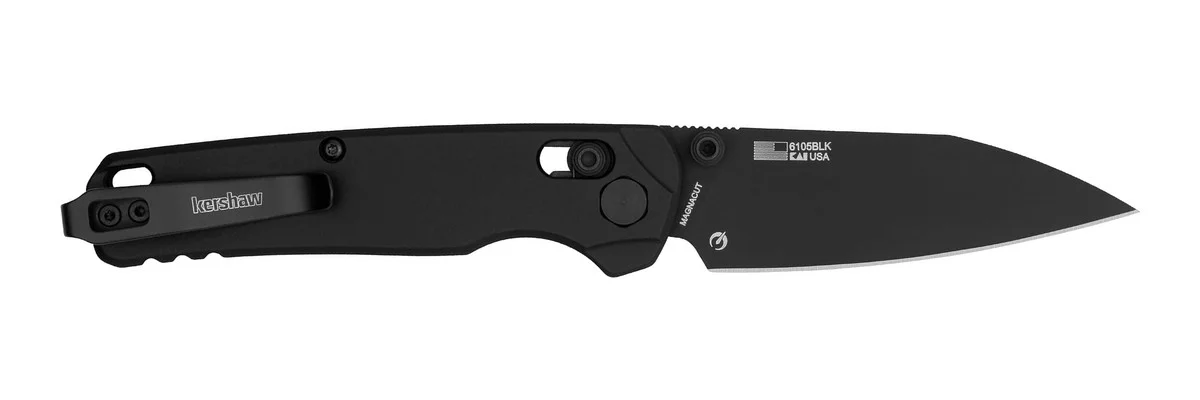
Aluminum handles are usually machined from 6061-T6 alloy and anodized for color and surface hardness. Aluminum is the lightest metal you'll find on a knife handle and costs far less than titanium.
Best for: slim everyday carry and automatics, when you want a metal handle on a budget.
6061-T6 weighs 2.70 grams per cubic centimetre, about 60% of titanium's weight for the same size of part. It also conducts heat about 25 times faster than titanium, at around 167 watts per metre-kelvin (Proto Labs 6061-T6 datasheet). That's why an aluminum knife feels cold out of a winter pocket and warm after a day in the sun.
Anodizing gives aluminum its color and a harder skin, but the edges and high spots wear through to bare metal over time. Aluminum also dents more easily than titanium. It's too soft to make a good lock bar on its own, so aluminum frame locks use a steel insert, and most aluminum folders use steel liners or a different lock.
What We Like
- +Lightest metal handle
- +Much cheaper than titanium
- +Takes milling and bright colors well
Good to Know
- Feels cold in winter
- Anodizing wears at the edges
- Dents and scratches more than steel
Aluminum Knives We Recommend
Stainless Steel
Stainless steel handles are heavy, tough and cheap to make. You'll find them mostly on budget frame locks and small gentleman's knives.
Best for: budget frame locks and small knives where a little extra weight doesn't matter.
Common handle steels like 410 stainless weigh about 7.74 grams per cubic centimetre (Ulbrich 410 datasheet), nearly three times aluminum. On a big knife you feel every bit of that. On a small one it can be fine: Blade HQ lists the stainless Cryo at 4.1 ounces with a 2.75-inch blade (Blade HQ).
Stainless is very hard to damage and won't rust in normal use. The downside is grip. Bare steel is slick, so makers add jimping, ridges or coatings. The upside is that a stainless frame lock can be very strong and inexpensive.
What We Like
- +Very tough and hard to damage
- +Cheap, even with a frame lock
- +Resists rust well
Good to Know
- Heavy
- Slick when wet
- Feels cold in winter
"something to think about if you use your knives in wet conditions often"
Mark Hanlen, Advanced Knife Bro
Stainless Steel Knives We Recommend
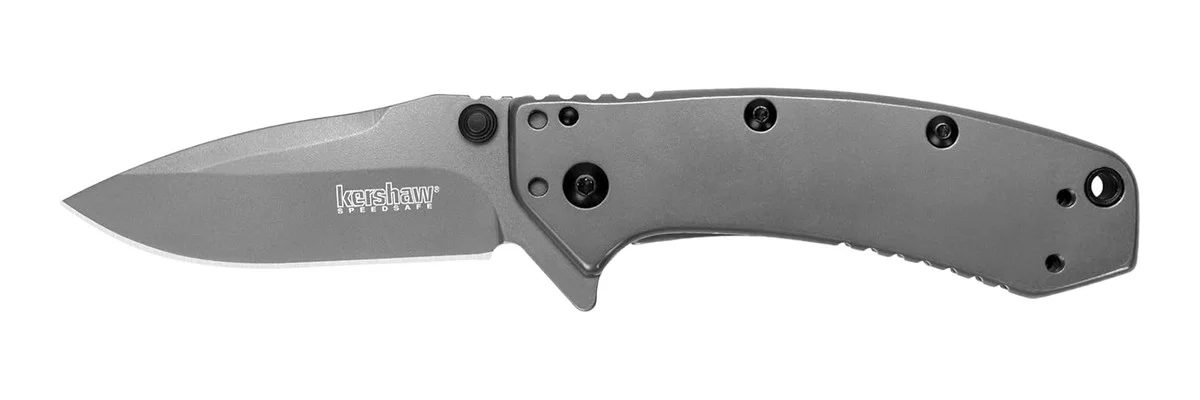
Copper and Brass
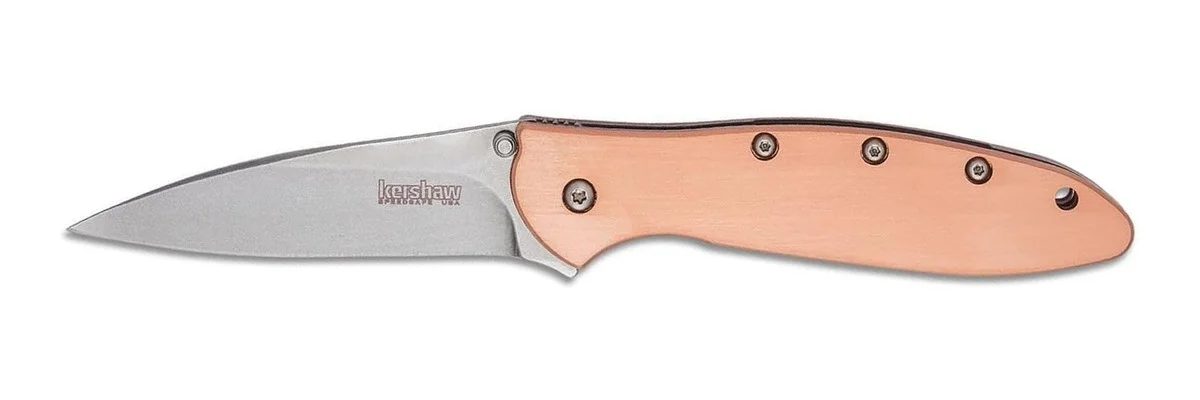
Copper and brass handles are heavy, warm-looking metals that change color as you use them. You buy them for the look and the heft, not for light weight.
Best for: collectors and anyone who wants a knife that develops a patina.
Both metals are even heavier than steel, so most copper and brass knives are small or skeletonized. Fresh copper is bright salmon pink. Within weeks of carry it darkens to brown, and in damp air it can go green. Brass starts gold and dulls to an antique brown. You can polish either one back to new, or leave the patina to build.
They're also soft. A copper handle will pick up scratches and dents from keys and coins, which is part of the appeal for some people and a deal-breaker for others.
What We Like
- +Unique look that changes with every carry
- +Solid, substantial feel
- +Easy to polish back to new
Good to Know
- Heavy
- Scratches and dents easily
- Patina can rub off on hands and pockets
Copper Knives We Recommend
Wood
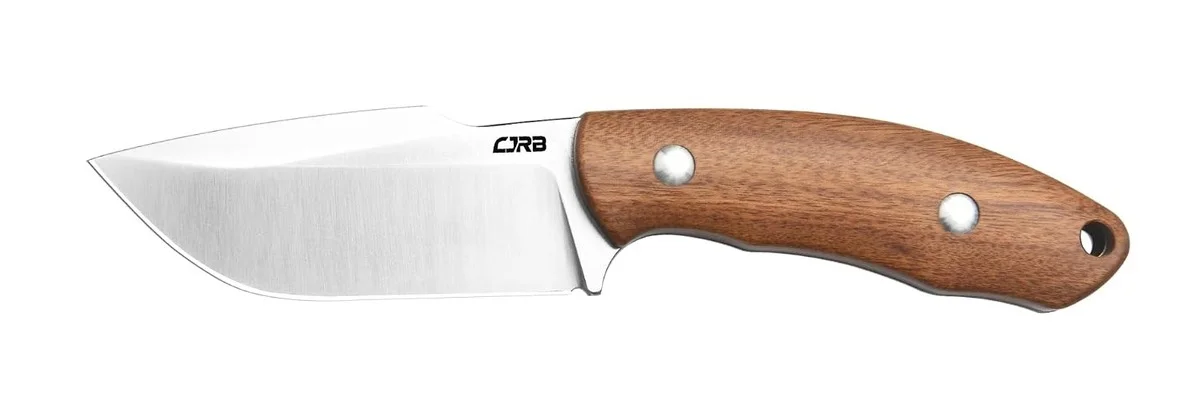
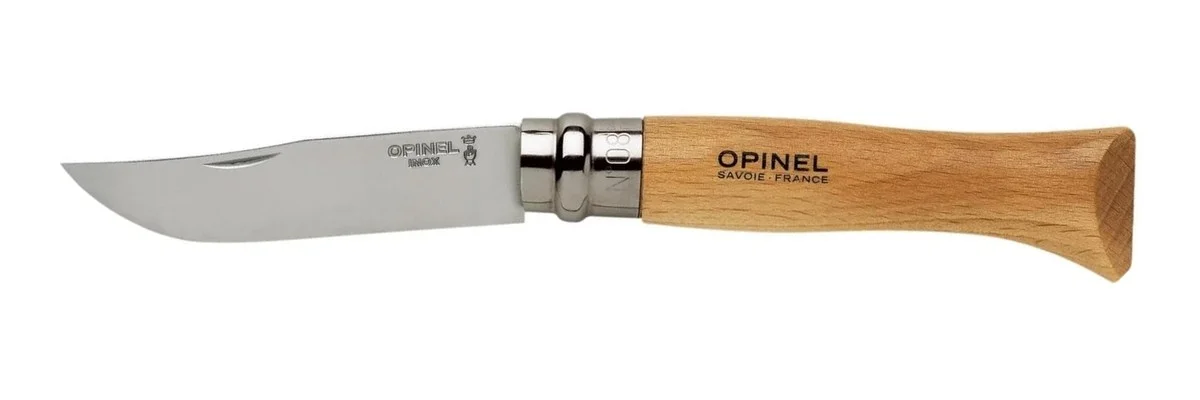
Wood is the oldest knife handle material there is. It's warm, comfortable and beautiful, but natural wood moves with moisture, so most modern knives use stabilized wood.
Best for: traditional and outdoor knives, and gentleman's folders.
Natural wood swells and shrinks with humidity and can crack if it's left wet. Stabilized wood is soaked in resin under vacuum and pressure to fill the pores, which makes it far more resistant to warping, cracking and swelling (Benchmade). Laminated woods like Pakkawood and Dymondwood go further, with thin wood veneers bonded together in resin.
Good wood has a warm, slightly grippy feel that synthetics don't quite match. Unstabilized wood is the one to watch. Get a classic Opinel soaked and the beech can swell enough to make the blade hard to open until it dries. Give natural wood a little oil now and then and keep it out of the dishwasher.
What We Like
- +Warm, comfortable and good-looking
- +Every handle is a little different
- +Inexpensive in common woods
Good to Know
- Natural wood can swell, crack or stain
- Needs occasional oil
- Less grippy than G10 when wet
Wood Knives We Recommend
Bone
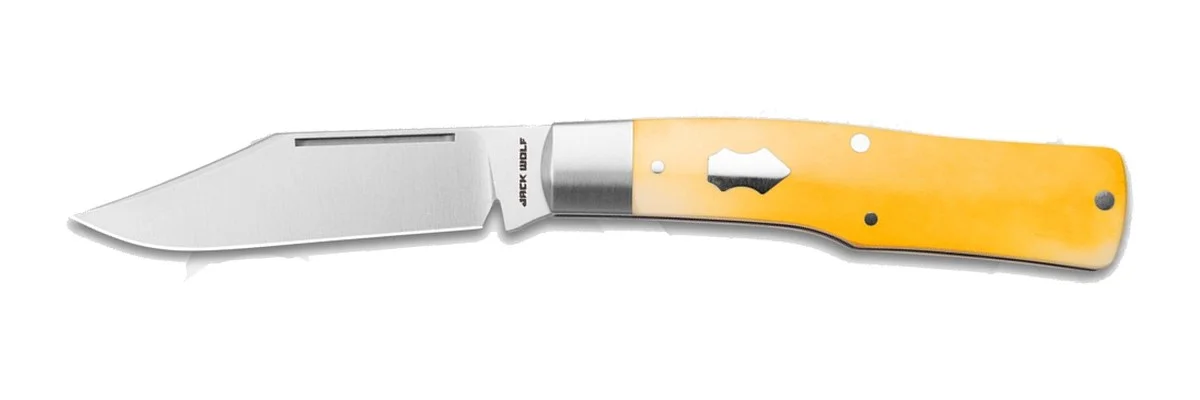
Bone handles are the classic material on traditional pocket knives. Almost all of it is cattle shin bone that has been cut, dyed and often jigged for grip, and sometimes stabilized.
Best for: traditional slipjoints and collectors.
Most bone on knives today comes from cattle shin bone, which is dense, takes dye well and is widely available (KnifeWorks). Jigging cuts a pattern into the surface, which adds grip and gives each handle its own look. Some patterns are cut to look like stag.
Bone is natural, so it can crack if it gets very hot, very cold or stays wet. Keep it dry, and it will last generations. That's how so many grandfathers' pocket knives are still around. And if the price looks too good for bone, check the listing. Budget traditionals often use Delrin, a tough plastic made to look like bone.
What We Like
- +Classic traditional look
- +Jigging adds real grip
- +Every piece is a little different
Good to Know
- Can crack with heat, cold or soaking
- Smooth bone is slippery
- Mostly found on slipjoints
Bone Knives We Recommend
Stag (Antler)
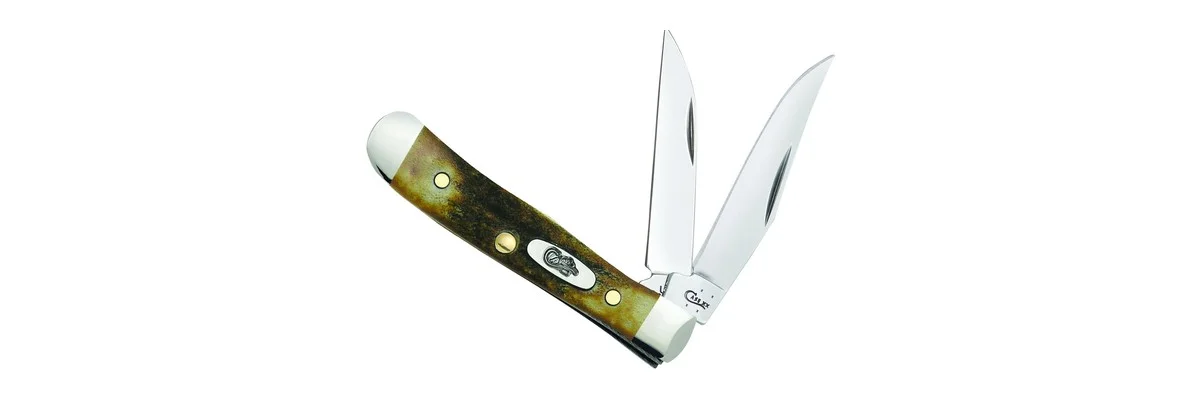
Stag is deer antler cut into handle scales. It is the most prized natural handle material on traditional knives, and one of the most expensive.
Best for: collectors and heirloom traditional knives.
Real stag has a rough, bark-like outer surface that gives decent grip, and no two pieces look alike. That makes it a favorite for traditional knives from makers like Case and Great Eastern Cutlery (KnifeWorks). Because it's natural, it can crack and shrink if you leave it in heat or water.
If you see "bone stag" or "jigged stag", that's usually bone cut to look like antler, which is cheaper and still a nice handle. Real stag is usually labeled as genuine.
The classic knife stag is Indian sambar. India banned exports of articles made from sambar and chital antler in 1998 (Beauty Without Cruelty India), so most sambar stag now comes from stock that predates the ban and costs more, and many makers use other deer or elk antler instead.
What We Like
- +Beautiful, one-of-a-kind look
- +Natural texture grips well
- +Holds its value with collectors
Good to Know
- Expensive
- Can crack with heat or soaking
- Bulkier than flat scales
Stag Knives We Recommend
Rubber (Kraton and TPE)
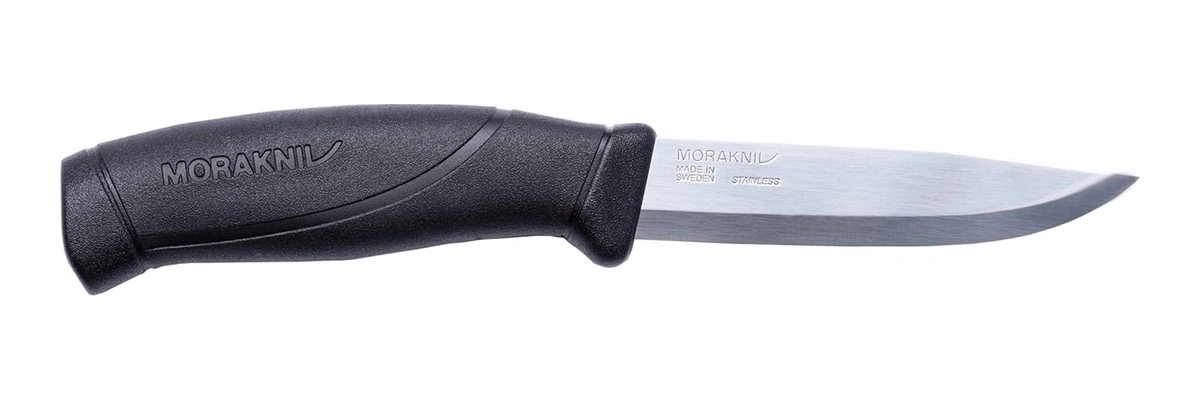
Rubber-type handles use soft thermoplastics like Kraton, TPE or Santoprene, usually molded over a hard plastic core. Nothing grips better when your hands are wet, cold or bloody.
Best for: hunting, fishing, kitchen and work knives.
These materials are soft enough to give slightly under your grip. Benchmade describes Santoprene as offering high traction and vibration absorption, with less precise feedback than a rigid handle (Benchmade). That's exactly why they're common on fillet, hunting and kitchen knives.
Rubber can collect lint and dirt, and over many years it can get sticky or tear. It's also bulkier and rarely shows up on slim folders. For a knife that's going to get wet, though, I'd take rubber over anything else.
What We Like
- +Best grip when wet, cold or greasy
- +Absorbs shock and vibration
- +Cheap and comfortable
Good to Know
- Collects lint and dirt
- Can tear or get sticky with age
- Bulky, rarely on folders
"The Companion is plastic coated rubber with plastic bolsters, meaning the ends of the handle have less traction."
Mark Hanlen, Advanced Knife Bro
Rubber-Handled Knives We Recommend
Richlite
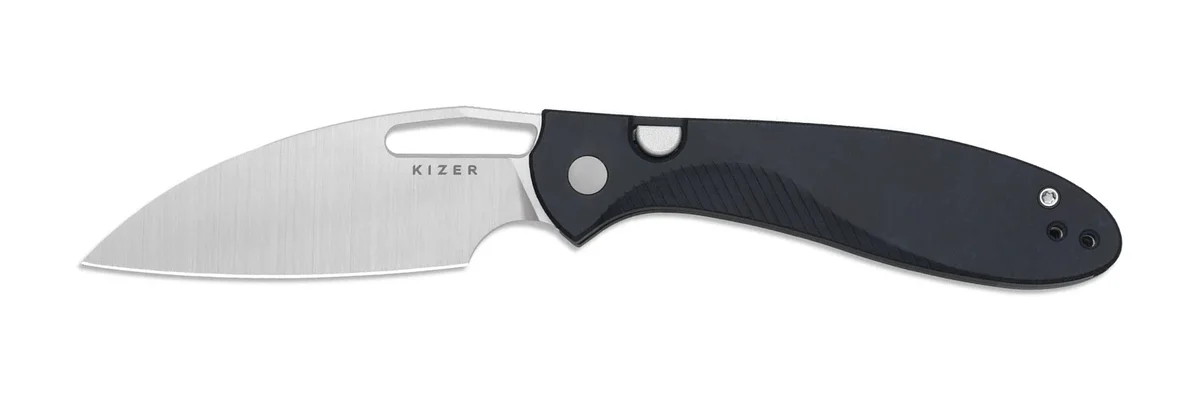
Richlite is paper soaked in phenolic resin and pressed into dense sheets. It looks like stone or slate, and it behaves a lot like paper Micarta.
Best for: knives where you want a stone-like look without the weight.
Richlite is roughly 65% recycled or FSC-certified paper and 35% phenolic resin (Material Bank), made in Tacoma, Washington. It's dense, has no voids, and machines cleanly into knife scales. Benchmade calls it non-porous, moisture resistant and dimensionally stable.
The catch is grip. A smooth Richlite handle can feel slick when your hands are dry. Kizer uses it a lot, often with milled textures that help.
What We Like
- +Unique stone-like look
- +Stable and moisture resistant
- +Lighter than metal
Good to Know
- Can be slick when smooth
- Less common, so fewer choices
- Shows scratches on dark colors
"Richlite I kind of have a love-hate relationship with. Really depends how it's used."
Wayne Walter, Wayne's Sharp World
Richlite Knives We Recommend
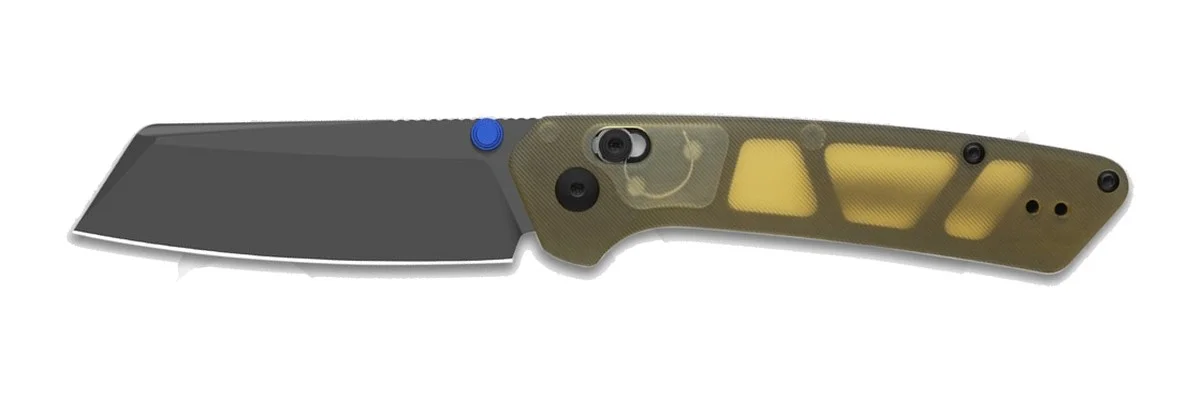
Ultem
Ultem is a high-temperature plastic called polyetherimide (PEI), made by SABIC. Its natural color is a see-through amber that turns darker and more opaque in thick scales, and makers mill it into some of the best-looking budget handles around.
Best for: lightweight folders where you want something different from G10.
SABIC's base Ultem resin is transparent amber, though it also comes in custom colors (SABIC Ultem 1010 data). It's stiff, strong and stable across a wide temperature range. On knives it's milled into patterns that catch the light, and its warm tones pair well with black hardware.
It's a solid plastic, not a laminate, so it won't delaminate the way a layered material can. It can scratch and look worn faster than G10, though.
What We Like
- +Distinctive warm color
- +Light and stiff
- +Takes detailed milling well
Good to Know
- Shows scratches
- Smooth unless milled
- Fewer knives to choose from
Ultem Knives We Recommend
Abalone and Mother of Pearl
Abalone and mother of pearl are the shiny inner layers of shells. They are purely decorative handle materials for dress knives and collectors.
Best for: gentleman's knives, gifts and display pieces.
Both are nacre, the iridescent material shells build up inside. Mother of pearl comes in white and black, and abalone shows swirling greens, blues and pinks. They're thin, brittle and slippery, so they appear as thin scales or inlays on small knives, usually on top of a stronger liner.
Don't carry one where it can take a hard knock, and keep it away from harsh cleaners. For looks, though, nothing else comes close.
What We Like
- +Stunning, one-of-a-kind look
- +Classic for dress knives and gifts
- +Light in thin scales
Good to Know
- Brittle, can crack or chip
- Slippery
- Expensive for good pieces
Leather
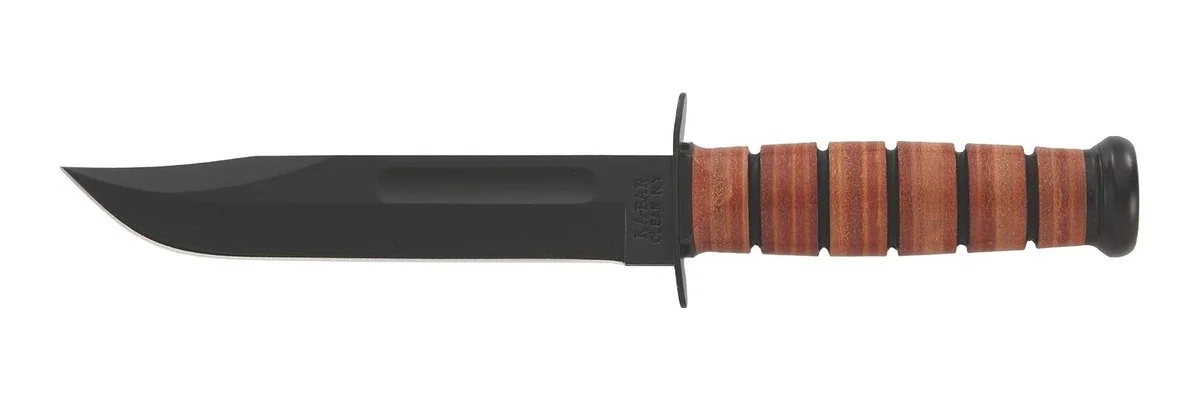
Leather handles are made from leather washers stacked on the tang, compressed and shaped. It is the handle on the classic USMC fighting knife and many old hunting knives.
Best for: traditional fixed blades and hunting knives.
Stacked leather is comfortable, absorbs shock and looks great with brass or aluminum spacers between the washers. It grips well when dry.
Leather soaks up water and blood, and if you store it wet it can shrink, crack or grow mold. Dry it after use and treat it now and then with a leather sealer or wax, and it will last decades.
What We Like
- +Comfortable and shock absorbing
- +Classic, traditional look
- +Grips well when dry
Good to Know
- Absorbs water and can rot
- Needs occasional care
- Mostly found on fixed blades
Leather-Handled Knives We Recommend
Other Handle Materials You'll See
- Pakkawood and laminated wood: thin wood veneers pressed with resin into a solid block. It looks like wood but acts more like a synthetic, so it's my pick for a wood look on a knife that gets wet. Common on kitchen knives.
- POM and polypropylene: tough molded plastics that shrug off water, soap and food acids. POM is the black handle on most German chef's knives, and polypropylene is the white or colored handle on butcher and fillet knives.
- Delrin: a POM plastic used to imitate bone or stag on budget traditional knives, often with a sawcut texture.
- Cord wrap: paracord wrapped around a bare tang on neck knives and survival fixed blades. It grips well wet and is cheap to replace, but it soaks up water and dirt, so plan to rewrap it.
- CF-Elite and FRCP: CF-Elite is Benchmade's carbon-fiber-reinforced thermoplastic, molded like FRN but with carbon fiber instead of glass. FRCP is Spyderco's fiberglass-reinforced copolymer, a see-through cousin of FRN.
- Peel-ply G10: G10 cured with a fabric layer on top that is peeled away after machining, leaving a fine checkered grip texture.
- Zirconium and Timascus: premium metals. Zirconium is heavier than titanium and can be heat-oxidized to a dark gray-black. Timascus is layered titanium alloys with a damascus-style pattern. Both are about looks.
- Horn: buffalo or ox horn, warm and traditional, and common on Japanese kitchen knife ferrules. It can crack if it dries out.
- Mammoth ivory: fossil ivory used on collector knives in place of elephant ivory, whose trade is heavily restricted in the US and banned in the UK. Check state and local rules before buying mammoth.
Knife Handle Materials Compared
All 16 main materials side by side. Weight is for a typical handle of each material. Grip, toughness and price are our ratings from hands-on use and the reviews linked above.
| Material | Weight | Grip (Dry) | Grip (Wet) | Toughness | Feel in Cold | Upkeep | Price |
|---|---|---|---|---|---|---|---|
| G10 | Light | Excellent (textured) | Very good | Very tough | Warm | None | $ |
| Micarta | Light | Good | Excellent | Tough | Warm | Can stain | $$ |
| Carbon fiber | Light | Fair | Fair | Can chip | Warm | None | $$$ |
| FRN / Grivory | Lightest | Good | Good | Very tough, flexes | Warm | None | $ |
| Titanium | Medium | Fair | Fair | Very tough, scratches | Cool | None | $$-$$$ |
| Aluminum | Light | Fair | Fair | Dents, scratches | Cold | Anodizing wears | $$ |
| Stainless steel | Heavy | Fair | Poor | Toughest | Cold | Wipe dry | $ |
| Copper / brass | Heaviest | Fair | Fair | Dents, scratches | Coldest | Patina | $$ |
| Wood | Light | Good | Fair | Can crack | Warm | Oil now and then | $-$$$ |
| Bone | Medium | Good if jigged | Fair | Can crack | Warm | Keep dry | $$ |
| Stag | Medium | Good | Fair | Can crack | Warm | Keep dry | $$$ |
| Rubber / TPE | Light | Excellent | Best | Tough, can tear | Warm | Wash off grime | $ |
| Richlite | Light | Fair | Fair | Tough | Warm | None | $$ |
| Ultem | Light | Fair | Fair | Tough, scratches | Warm | None | $$ |
| Abalone / pearl | Light | Poor | Poor | Brittle | Cool | Handle gently | $$$ |
| Leather | Medium | Good | Fair | Can rot | Warm | Dry and wax it | $$ |
The Numbers: Weight and Warmth
Two properties explain most of what you feel when you pick up a knife: how dense the handle is, and how fast it pulls heat out of your hand. These are published values for the actual alloys and grades used on knives.
| Material | Density (g/cm³) | Heat Conduction (W/m·K) | Source |
|---|---|---|---|
| Aluminum 6061-T6 | 2.70 | 167 | Proto Labs |
| Titanium Ti-6Al-4V | 4.43 | 6.7 | ASM (MatWeb) |
| Stainless steel 410 | 7.74 | 24.9 (at 100 °C) | Ulbrich |
| G10 (glass/epoxy) | 1.85 | about 0.3 (FR-4) | Acculam |
| Canvas phenolic (Micarta) | 1.35 | n/a | Interstate Plastics |
| FRN (nylon 66, 30% glass) | 1.36 | about 0.39 | Ensinger |
| Carbon fiber / epoxy | about 1.6 | n/a | MIL-HDBK-17-2F |
Heat figures are in watts per metre-kelvin. The G10 figure is the through-thickness value for FR-4 glass-epoxy (FR-4). We found no published heat figure for canvas phenolic.
- Why aluminum feels so much colder than titanium: aluminum conducts heat about 25 times faster than titanium (167 against 6.7). How cold a handle feels also depends on its density and heat capacity, so in the hand the gap works out closer to five times (ASM 6061-T6 and ASM Ti-6Al-4V). Titanium still feels cooler than G10 or Micarta. Copper is the coldest handle of all, because it moves heat more than twice as fast as aluminum (thermal conductivity list).
- Micarta is lighter than G10: canvas phenolic is roughly 25% less dense than G10 (about 1.35 against 1.85).
- Why Micarta grips when wet: canvas phenolic absorbs about 1.6 to 2% water in 24 hours, while G10 takes on only about 0.15% at knife-scale thicknesses. That bit of absorption makes Micarta tacky when wet, and it's also why Micarta darkens with use.
- Metal weights: for the same size part, aluminum weighs about 60% of titanium, and stainless steel about 1.75 times titanium.
- The catch: density isn't the whole story. Titanium handles are often thinner and skip the liners, and many synthetic handles add steel liners. That's why the same knife in different handles is the fairest comparison, below.
Same Knife, Different Handle
The fairest way to see what a handle material does: the same knife, from the same maker, in different handles. Weights are the published figures for each version.
| Handle | Weight | Source |
|---|---|---|
| Benchmade Bugout (3.24 in blade) | ||
| CF-Elite (carbon-reinforced nylon) | 1.8 oz | Benchmade |
| Grivory (glass-reinforced nylon) | 1.85 oz | DLT Trading |
| Carbon fiber (535-3) | 2.02 oz | REI |
| Machined aluminum | about 2.5 oz | DLT Trading |
| Spyderco Para 3 (2.92 in blade) | ||
| G10 with steel liners | 3.4 oz | DLT Trading |
| FRN, no liners (Lightweight) | 2.4 oz | Spyderco product guide |
The Bugout shows how little the handle changes a knife that was designed light: about 0.7 ounce separates the lightest version from the heaviest. The Para 3 shows the opposite. Swapping G10 and steel liners for linerless FRN takes off a full ounce, close to 30%. Interestingly, real carbon fiber (2.02 oz) made the Bugout a little heavier than the Grivory version (1.85 oz).
G10 vs Micarta, and Other Matchups
G10 vs Micarta
Both are cloth-and-resin laminates. G10 uses glass cloth and epoxy, so it barely absorbs water and is very tough. Micarta uses cotton or linen cloth and phenolic resin, so it is lighter, feels warmer and gets tacky when wet. Choose G10 for a hard-use knife you never want to think about, Micarta for a knife you want to feel and age like a tool.
G10 vs Carbon Fiber
Same build, different fiber. Carbon fiber is lighter and stiffer and looks premium. G10 grips better and resists chips better. Spyderco says a sheet of carbon fiber costs about five times as much as the same sheet of G10 (Spyderco). On a hard-use knife I'd take G10, on a light office carry knife carbon fiber.
Aluminum vs Titanium
Aluminum is lighter for the same size and much cheaper, but it dents, the anodizing wears and it feels cold. Titanium is stronger, holds up better as a lock bar and feels far less cold, but it costs more and scratches. Spyderco puts titanium at roughly 35 to 50 times the cost of stainless steel as a raw material. Pick titanium for a frame lock you'll carry for years, aluminum for a light, colorful knife on a budget.
FRN vs G10
FRN is molded, so it is lighter and cheaper, and it can flex a little in linerless designs. G10 is machined, so it feels more solid and usually grips a touch better. Put the two side by side and FRN feels a little slicker and more plasticky, while G10 feels slightly porous in the hand.
Handle Material, Liners and Lock Type
The handle material often decides the lock. If you want a frame lock, you're buying titanium or steel, because the handle itself becomes the lock bar. Good titanium frame locks add a hardened steel insert where the bar meets the blade. Spyderco notes that titanium tends to gall, or stick, to other metals under pressure, which helps a titanium lock bar engage the blade tang firmly (Spyderco).
- Aluminum is too soft to work as a lock bar on its own, so aluminum folders use liner locks, button locks, crossbar locks or autos.
- G10, carbon fiber and Micarta scales usually sit on steel liners, full or skeletonized. That is why a G10 knife can outweigh an aluminum one of the same size.
- Linerless FRN pairs best with crossbar and back locks, where the lock doesn't depend on a stiff handle side.
Finishes and Coatings
- Anodized aluminum comes in standard color anodizing and harder Type III hard anodizing, which wears better.
- Anodized titanium gets its color from a thin oxide layer. It adds no real hardness, scratches through, and can be re-anodized.
- PVD, DLC and Cerakote are tougher coatings used on titanium and steel handles.
- Stonewash and bead blast finishes hide scratches far better than polished or satin metal.
How Handle Materials Age
- Micarta darkens as it soaks up hand oils, and canvas Micarta gets grippier. A little light sanding brings it back.
- Copper and brass darken within weeks and can go green in damp air. Polish to reset, or let it build.
- Titanium picks up fine scratches that blend into a soft, worn gray. Stonewashed finishes hide this best.
- Aluminum wears through its anodized color at the edges and high spots, showing bare silver metal.
- G10 and FRN barely change, though sharp textures soften slowly over years of carry.
- Wood, bone, stag and leather dry out if neglected and can crack. A little oil or wax keeps them healthy.
How to Tell G10, Micarta and Carbon Fiber Apart
- Look at the edge. G10 shows fine, even layers, often in contrasting colors. Micarta shows a visible cloth weave, especially on canvas. Carbon fiber shows a woven checker, or marbled swirls on forged carbon.
- Feel it. G10 feels hard and slightly sandy. Micarta feels warmer and a little like fabric. Carbon fiber feels glassy smooth unless it has been textured.
- Tilt it under a light. Real carbon fiber weave shimmers and shifts as you move it. G10 and Micarta don't.
- Check the edge of "carbon fiber" scales. If you see glass-colored layers under a thin carbon top, it is carbon fiber laminated over G10.
Which Handle Material Is Right for You?
By How You Use It
- Everyday carry: G10, FRN, Micarta, aluminum or titanium. See our best EDC folding knives.
- Hard use: G10 or titanium on a strong lock. See our best hard-use folders.
- Lightest carry: FRN or carbon fiber. See our best lightweight pocket knives.
- Wet, cold or bloody work: rubber, textured G10 or canvas Micarta.
- Kitchen: POM, polypropylene, Pakkawood or a rubber-type handle. Skip natural wood, bone and leather on a knife that lives by the sink.
- Outdoors and bushcraft: Micarta or G10 on a fixed blade. See our best fixed blade knives.
- Traditional and collecting: bone, stag, wood or pearl. See our best slip joint knives.
- Premium metal: titanium. See our best titanium pocket knives.
Grip Matters More Than the Material Alone
Texture, shape and thickness change grip as much as the material does. A smooth G10 handle can be slicker than a well-milled aluminum one. If grip is your priority, look at photos of the actual texture, and read reviews that talk about how the handle feels.
The handle is only half the story. Pair it with the right blade steel using our knife steel guide, and the right lock with our knife lock types guide.
How to Care for Each Handle Material
- G10, FRN, carbon fiber, Ultem and Richlite: warm soapy water and a soft brush. Nothing else needed.
- Micarta: soap and water. If it gets slick, a light pass with fine sandpaper. A drop of mineral oil deepens the color.
- Titanium and aluminum: wipe clean. Avoid harsh cleaners on anodized colors.
- Stainless steel: wipe dry after it gets wet.
- Copper and brass: metal polish to brighten, or nothing to let the patina build.
- Wood, bone, stag and leather: keep dry, never soak, and oil or wax now and then.
- Every material: keep knives out of the dishwasher.
Knife Handle Material FAQs
What is the best knife handle material?
For most people, G10. It is grippy wet or dry, barely absorbs water, is very hard to break and is inexpensive. If you want a metal handle, titanium is the premium choice and aluminum the budget one. For the lightest knife, pick FRN, and for the best grip when wet, pick rubber or textured G10.
What is the best knife handle material for grip?
Rubber-type handles like Kraton and TPE grip best, especially when your hands are wet. Among hard materials, textured G10 and canvas Micarta grip best. Shell, smooth metals and polished carbon fiber are the slipperiest.
Is G10 better than Micarta?
Neither is better overall. G10 is tougher, barely absorbs water and costs less. Micarta is lighter, feels warmer and grips well wet because it takes on a little moisture, but it can stain. Most people pick G10 for hard use and Micarta for its look and feel.
Is titanium better than aluminum for a knife handle?
Titanium is stronger, harder to dent, feels much less cold in winter and can carry a frame lock. Aluminum is lighter for the same size, much cheaper and takes bright colors, but it dents more and feels cold. Choose titanium for a premium frame lock, aluminum for a light, inexpensive metal knife.
Is carbon fiber better than G10?
Carbon fiber is lighter and stiffer and looks more premium. G10 is grippier, tougher against chips and much cheaper. For a hard-use knife G10 is the better choice, for a light, premium carry knife carbon fiber is.
What is the most durable knife handle material?
G10 and FRN are the hardest to break in normal use, and stainless steel and titanium are the hardest to damage at all. Natural materials like bone, stag, wood and shell are the least durable.
What is the lightest knife handle material?
FRN, especially in linerless designs, is usually the lightest overall. Carbon fiber is close behind and stiffer. Among metals, aluminum is the lightest.
What is the best knife handle material for a kitchen knife?
For a kitchen knife that gets wet all day, choose POM (the black plastic on most German chef's knives), polypropylene or a rubber-type handle, a stabilized or laminated wood like Pakkawood, or G10 or Micarta. Avoid natural wood, bone and leather if the knife goes in water a lot, and never put any of them in the dishwasher.
Which knife handle materials feel cold?
Copper feels coldest of all, then aluminum and brass, then stainless steel. Titanium moves heat far more slowly, so it feels cool rather than icy. Synthetics, wood, bone, stag and leather feel warm in every season. Shell feels cooler.
What is FRN on a knife?
FRN stands for fiberglass-reinforced nylon. It is nylon mixed with short glass fibers and injection-molded into shape. Zytel and Grivory are brand names for this family of materials.
Glossary
- Scales: the two side pieces of a handle, screwed or pinned to the liners or tang.
- Liner: a thin steel or titanium plate inside a folder's handle that stiffens it and often holds the lock.
- Tang: the part of the blade that runs into the handle.
- Jimping: small grooves cut into the spine or handle for grip.
- Jigging: a pattern cut into bone or other natural material for grip and looks.
- Phenolic resin: the heat-cured resin used in Micarta and Richlite.
- Stabilized wood: wood soaked in resin under vacuum and pressure so it resists moisture.
- Anodizing: an electrochemical finish that colors the surface of aluminum or titanium, and hardens the surface of aluminum.
- Patina: the darkening or color change a material picks up with use, as copper, brass and Micarta do.
Still Not Sure?
Take our 60-second quiz and get matched with the right knife.

