


We independently evaluate all recommended products and services. Any products or services put forward appear in no particular order. If you click on links we provide, we may receive compensation.

With almost every DIY project, one must hold material with one hand while cutting with the other. Continually stopping to pull the blade out of a traditional folder quickly becomes frustrating and time-consuming. Spring-assisted knives are built for exactly these scenarios. An assisted mechanism finishes opening the blade after you start it with a thumb stud or flipper. Keep your fingers clear of the blade’s path and make sure the lock engages before cutting.
Assisted opening is only one part of the buying decision. A knife also needs a comfortable grip, a lock you can operate confidently, and a size that suits your work and pocket. Check the rules where you plan to carry it; a spring assist or a short blade does not by itself establish legality. Our state knife-law guide is a starting point. If you’re considering options beyond assisted opening, see our best pocket knives.
With the knife market saturated with options, knowing what to choose is hard. Our best assisted opening knives cover compact carry, everyday cutting, and heavier-duty work. The original hands-on impressions remain below, with buying notes to distinguish the specific versions and their opening systems.
Key Considerations
Getting what you pay for is usually the norm regarding assisted opening knives. I’ve found many cheaper options that didn’t hold up in the long run. I wanted the knives chosen to ride this piece's fine line of functionality and affordability. Although, I did want to include some premium quality options for those who insist on the best.
- Steel Type—It would be easy to fill this list exclusively with precision-machined knives made from super steels. We felt there needed to be affordable options, too. So, I evaluated knives made from various steel types, from cheaper high-carbon options to the latest high-grade stainless.
- Tolerances—Assisted-opening knives must have precision-crafted parts. I looked for knives with crisp operating mechanisms and tested for any play or wiggle in the blades when extended.
- Opening Mechanisms—I specifically looked for knives with comfortable flipper switches or thumb studs. These mechanisms needed to be easy to open with one finger and a modest amount of pressure.
- Edge Retention—This type of knife is usually used for EDC. With that in mind, I looked for options that wouldn’t wear down immediately the first time it was used.
Top Picks
- Best Overall: Benchmade Barrage
- Best Mid-Range: CRKT M16-03DB
- Best Budget: CRKT Squid XM
- Best Small: Kershaw Chive
- Most Durable: Zero Tolerance 0350
- Best Ambidextrous: Gerber Highbrow

Best Overall: Benchmade Barrage
Model note: The 580 reviewed here has a 154CM blade and black Valox handles. The specifications use current Benchmade figures; other Barrage versions differ.

| PROS | CONS |
|
|
The Barrage’s incredibly aggressive and assertive mechanism snaps it open with an authority that other knives can’t match. This knife is ideal for anyone looking for a reliable thumb stud opening blade. It slices boxes and cable ties like butter. I also like how lightly it carries in a pocket. Don’t mistake its roughly 4.3-ounce weight for flimsy. The polymer Black Valox scaling will take a real beating. The scaling is one of my few complaints with this knife. The handles are a little slick. That criticism applies to this Black Valox model. Other Barrage variants have different handles and steels, so check the model number rather than assuming every Barrage matches this review.

Another slight issue was that my knife's crossbar lock was very stiff. I suspected that it just needed to be broken in first, so I sat and worked the blade and mechanism while watching a movie. It loosened up after only about 30 minutes, and I feel that it’s very comfortable now. It has served me well on several small projects around the house. It is a premium-priced knife, so compare the current price against how often you will use it. This hard-working, fast blade is always available when needed in a pinch.
Continue Learning: Read our Barrage 581 review for a comparison with another version
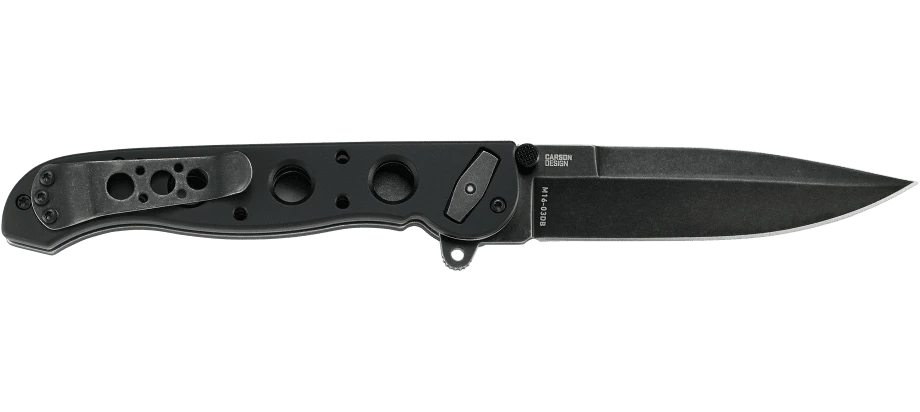
Best Mid-Range: CRKT M16-03DB
Model note: The assisted M16-03DB has the Deadbolt button-release lock and spear-point configuration shown in our original in-use photo. The M16-01KS, M16-01KZ, and M16-03KS are different, manual models. Specifications and buying links here refer to the M16-03DB.
| PROS | CONS |
|
|
I’ve owned the M16 for more than a year, and it has become one of my favorites. CRKT did some prime machining here because the tolerances are fantastic. I’ve experienced zero play or wiggle when locked. The flipper tab is well placed and comfortable. It doesn’t take much pressure to deploy the blade quickly, which I’ve done thousands of times. It has a nice, meaty snap that doesn’t shock the hand like some auto knives I’ve tested. Usually, I like the handles to have a little texture, but these handles feel nicer than expected.

The assisted M16-03DB combines a spear-point D2 blade with aluminum handles. The edge retention has been solid for me thus far, although D2 needs cleaning and drying after wet use. This knife should stand up to years of use. My only other complaint is that the lock release button was mushy when I first got it. However, it has slowly gotten much crisper the longer I’ve used the knife. Treat this as a mid-range option rather than one of the inexpensive manual M16 models.
Continue Learning: Read our manual CRKT M16-10KZ review for a different M16 version
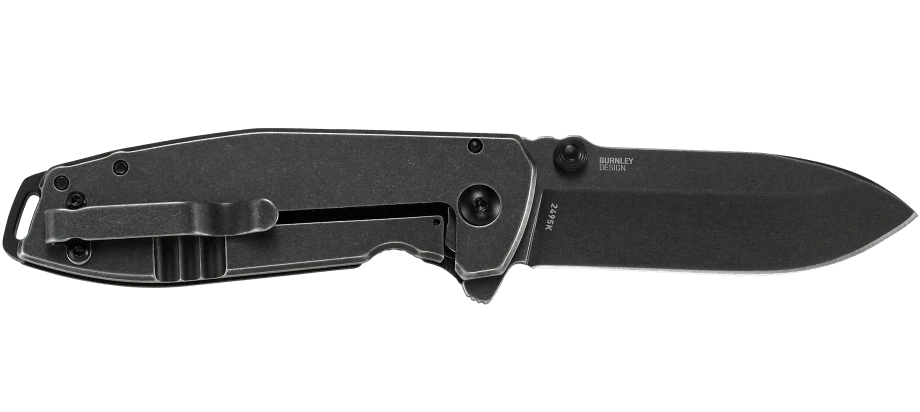
Best Budget: CRKT Squid XM
Model note: This pick is the assisted Squid XM 2495K, with a D2 blade, black G-10 scale, and frame lock. It measures 7.03 inches overall and 4.11 inches closed. The original Squid is a different, manual knife.
| PROS | CONS |
|
|
The CRKT Squid XM is a great little knife. It has been one of my preferred EDC knives because it's easy to open and close with one hand. I can even open and close it with my non-dominant left hand. CRKT gave this knife both a thumb stud and a flipper. The spring assist helps finish opening, while bearings in the pivot keep the movement smooth. The Squid XM snaps open with an incredibly satisfying click. This is an excellent knife for anyone who works extensively with their hands. It’s always ready to deploy at a moment’s notice. I love the slim profile of this knife. It slips easily into any pants pocket and isn’t noticeable until needed.

There are some rust concerns with the D2 blade. A few spots popped up while it was sitting in my van. However, they cleaned up quickly and didn’t affect the edge. Properly cared for, it shouldn’t be an issue. CRKT makes several different variants at different price points. There is something for every budget here.
Best Small: Kershaw Chive
Model note: Specifications are for the standard silver Chive 1600. The BladeHQ link is the Blackwash finish variant; listings may round dimensions and weight differently.

| PROS | CONS |
|
|
Finding an assisted-opening knife in a smaller package is difficult. However, legendary knife designer Ken Onion gave the Chive his signature SpeedSafe mechanism in a smaller package. As expected, it’s crisp and responsive. This knife has a blade under two inches in length. Its small size is useful for light tasks, but check local carry rules rather than relying on blade length alone. The weight under 2 ounces is easy to carry around all day. I recommend this one for anyone who needs something simple without much bulk. The look of the different variants is great, too. Although, we especially like the stainless steel scales variant.
The shorter length does limit the practicality for larger jobs. Keep the assisted mechanism clean and check the tip safety before carrying. Kershaw offers a limited lifetime warranty against defects in materials and construction, with exclusions for normal wear, misuse, and other damage; it is not a promise that every repair is covered.
Most Durable: Zero Tolerance 0350

| PROS | CONS |
|
|
The Zero Tolerance 0350 is a beefy knife that’s built to last. This knife has a huge flipper that forcefully springs the CPM S30V blade. It holds an edge for a long time. Zero Tolerance gave the knife some excellent G-10 handles that are very ergonomically designed. Some jimping and a thumb rise help the handle perfectly conform to the user’s hand. The current black 0350 uses a PVD-coated CPM S30V blade. The coating adds surface protection, but the exposed edge and pivot still need cleaning and drying after wet use.
Knife users need to know what they are getting into with this one. The knife weighs a hefty 6.20 ounces and is nearly 4.5 inches long while closed. It takes up some space in the pocket and may be too heavy for some people. However, Zero Tolerance made the pocket clip adjustable for four positions, making it easy to adjust the fit to your carry style. This knife is built for durability and longevity, making it a wise investment for anyone tough on their equipment.
Best Ambidextrous: Gerber Highbrow
Model note: These specifications are for the full-size Highbrow, which weighs about 6 oz. The BladeHQ link is a black, partially serrated version; the smaller Highbrow Compact has different dimensions.

| PROS | CONS |
|
|
Finding a knife that is equally convenient for right- and left-handed use can be difficult. The Gerber Highbrow is incredibly affordable and designed to be ambidextrous from the get-go. Accordingly, the pocket clip can easily be swapped to the opposite side to accommodate southpaws. This design utilizes a crossbar lock that’s easily manipulated from either side. It easily flips open thanks to a large flipper. Gerber added a safety to the center of the spine, which completes the ambidextrous package. Additionally, they offer this knife in both plain edge and serrated variations. There is something here for nearly every user’s needs. Although the 7Cr17MoV steel may be of lesser quality, at least it’s easy to maintain.
Our only other complaint is that Gerber offers only some basic smooth scaling for this knife. It would be nice to have some more textured handles available. However, that would also drive the price point, so it’s a trade-off situation. Check the current price and choose the full-size Highbrow if you want the dimensions listed here; the Compact is a different knife.

Compare the Best Assisted Opening Knives
Use this shortlist to compare the specific versions reviewed above. Click a knife name for its matching buying page. Prices and availability can change.
| Knife | Best fit | Blade / steel | Main trade-off |
|---|---|---|---|
| Benchmade Barrage 580 | Everyday cutting with a full-size handle | 3.60 in / 154CM | Premium price; smooth Valox grip |
| CRKT M16-03DB | Full-size blade with a button-released lock | 3.58 in / D2 | D2 needs rust care; full-size pocket footprint |
| CRKT Squid XM 2495K | Affordable everyday cutting in a compact shape | 2.95 in / D2 | D2 needs rust care; frame lock is less left-hand-friendly |
| Kershaw Chive 1600 | Very compact, light pocket carry | 1.90 in / 420HC | Short blade and handle limit larger jobs |
| Zero Tolerance 0350 | A substantial grip for tougher cutting | 3.25 in / CPM S30V | Heavy and bulky for everyday carry |
| Gerber Highbrow (full-size) | Left- or right-handed controls | 3.25 in / 7Cr17MoV | Nearly 6 oz; modest edge retention |
How To Choose The Best Assisted Opening Knives
Start with the jobs you actually do. The smallest option here is easy to carry but offers less handle and cutting edge; the heavier knives trade pocket comfort for a larger grip and blade. Next, check the exact model number. A flipper or thumb stud does not establish whether a knife is assisted, and some families include both manual and assisted versions.
Assisted Knife Definition
You begin opening an assisted knife by moving the blade itself, usually through its thumb stud or flipper. A spring or torsion mechanism then helps finish the opening movement. A bias toward closure keeps the blade shut until you overcome that initial resistance. Once you pass the engagement point, the blade does spring open; it does not stay closed at every partially open angle. Kershaw’s opening-system guide illustrates the difference.
Auto or Switchblade Definition
An automatic knife deploys through an actuator such as a handle button or slider, without your first pushing the blade open. A manual folder can have a flipper and bearings yet have no opening spring. Also, a button lock describes a locking system; the presence of a button alone does not make a knife automatic.
Opening and Closing Comfort
Try the opening control, lock release, and closing resistance if you can. An assisted blade can be convenient, but it still takes pressure to start and must be closed against the mechanism. Hand strength and dexterity vary, so do not assume an assist will be easier for you. A reversible clip also does not necessarily make the lock equally convenient for both hands.
Carry Rules and Safe Handling
In the U.S., 15 U.S.C. § 1244(5) provides an exception to specified federal switchblade restrictions for knives meeting its bias-to-closure and blade-exertion requirements. That is not blanket permission to carry every assisted knife everywhere. State and local rules, restricted locations, blade characteristics, and carry method can matter. Check current official rules for your destination before buying or carrying.
Keep fingers out of the blade path, verify that the lock is engaged before use, and use any carry safety as instructed by the manufacturer. A folding knife is a cutting tool, not a pry bar. Fast deployment is no substitute for a secure grip and controlled cuts.
Everyday Cutting and Upkeep
Spring-assisted knives are slightly underrated as working tools. I use mine often while working on DIY projects because they’re fast to deploy. A drop-point knife is useful for opening boxes and cutting rope. A fine tip can help with precise cuts, but keep the material supported and cut away from your hand. Choose enough handle for a secure grip rather than buying on blade length alone.
Consider maintenance alongside edge retention. D2 needs more attention to moisture than the stainless options here. Keep the blade and pivot clean and dry, follow the maker’s lubrication instructions, and stop using a knife if the lock or assist does not work correctly. A spring assist adds moving parts; a good manual folder may suit you better if simple upkeep is the priority.
Why Trust Us
Assisted opening knives are one of the types I use most often. I have carried many of the knives on this list for EDC purposes, some of them for years. In addition to real-world tests, I often subject knives to additional testing. This usually includes rugged edge retention tests using coarse materials like cardboard to test retention. Additionally, I relied on my own experience using a variety of knives for more than a decade to cover the topic.

Final Thoughts
At the end of the day, the Benchmade Barrage's powerful assist and excellent blade blew me away with their functionality. There aren’t many spring-assisted knives being built with this attention to quality and detail. The CRKT M16-03DB is a mid-range alternative with excellent tolerances and smooth operation. For a smaller pocket footprint, the Squid XM and Chive are worth a look; choose the Chive for minimal bulk and the Squid XM for more cutting edge.
FAQs
Q: How does a spring assisted knife work?
A: You start moving the blade with a thumb stud or flipper. After the initial resistance is overcome, a spring or torsion mechanism helps rotate it into the open, locked position. The blade pivots out of the handle; it does not travel along an out-the-front track.
Q: Is every flipper knife assisted opening?
A: No. A flipper is the tab you press, while assisted opening describes the mechanism inside. Manual flippers can open quickly using finger pressure and a smooth pivot without an opening spring. Check the exact model’s action, especially within the CRKT M16 and Squid families.
Q: Are assisted opening knives legal?
A: There is no single carry answer for every location and knife. The federal exception described above does not replace state and local rules or restrictions at particular locations. Check the exact knife, blade length, carry method, and current rules where you will use it.
Q: Is spring loaded the same as assisted opening?
A: “Spring loaded” is an imprecise shopping term that can refer to different mechanisms. Look for an explicit assisted-opening specification: you initiate movement at the blade, then the mechanism helps finish. Do not rely on the marketing label alone.

