

If a knife is still dull, a higher grit number isn’t always the answer. The stone has to reach the cutting edge before a finer finish can do much good.
I’d choose the first stone around the condition of the edge and the amount of setup you want. These five options cover low-prep waterstone sharpening, a starter kit, a full-size soaking combination and fine or coarse diamond plates. They are not five interchangeable grit numbers: each has a useful starting point and a different place in the sharpening routine. The shortlist focuses on synthetic waterstones and diamond plates; oilstones and natural stones use different preparation and maintenance routines.
Key Considerations
- Choose the starting grade for the edge: Routine dullness, chips and polishing are different jobs. A medium stone can restore an ordinary working edge; substantial damage needs a suitable coarser abrasive or a repair service. A fine finishing face is not a substitute for that first shaping step.
- Compare useful surface area: A long chef’s knife needs room for a controlled stroke. Look at the working face rather than the dimensions of the storage box or base. The stone also needs a stable holder or support that won’t slide.
- Check the wetting routine: Some stones need soaking, others need water on the surface, and the DMT plate can work dry or with water. Follow the instructions for the selected stone rather than treating every abrasive as a soaking waterstone.
- Budget for upkeep: Waterstones need their surfaces kept flat as they wear. Angle references can help establish a starting position, but you still control the stroke. A usable stone setup includes those practical details, not just a collection of grit numbers.
Knife Sharpening Stones: Top Picks
- Best Low-Prep Waterstone: Shapton Kuromaku 1000
- Best Starter Kit: Work Sharp Whetstone
- Best Diamond Plate for Routine Sharpening: DMT Dia-Sharp 8-Inch Fine
- Best for Restoring Dull Edges: DMT Dia-Sharp 8-Inch Coarse
- Best Large Combination Waterstone: Norton 1000/4000 Waterstone
Best Low-Prep Waterstone: Shapton Kuromaku 1000
| PROS | CONS |
|
|
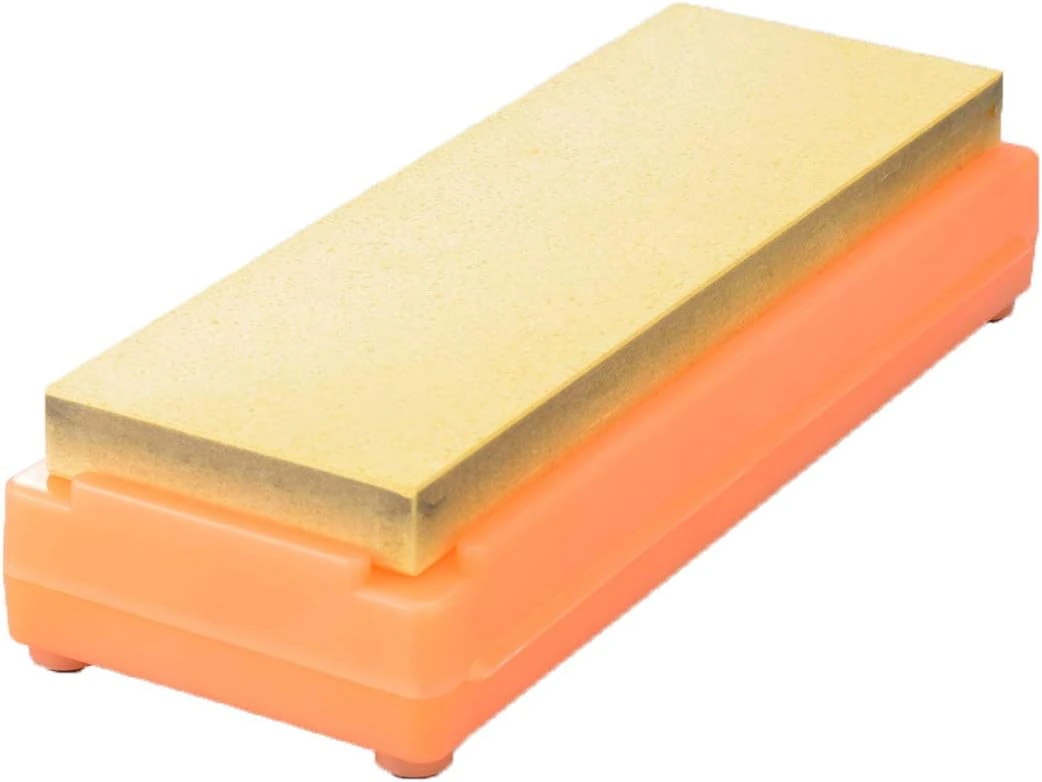
The orange Kuromaku 1000 is my starting choice here for someone who wants a straightforward medium waterstone. Its 210-by-70-mm face gives a kitchen knife room to work, and the 15-mm-thick stone comes in a plastic case that can serve as its holder. The K0702 is one stone, not a bundle of several grades.
Shapton recommends a five-to-six-minute presoak for the first use. After that, ordinary sharpening starts with water on the surface rather than another soak. That shorter routine is its appeal here. Avoid prolonged soaking, hot water and detergents, then let the stone dry naturally rather than forcing it dry with heat or a fan.
I’d use the 1000 as a working stone and add other grades only when the knives call for them. It isn’t a fast answer to large chips, and it isn’t a complete polishing progression. Shapton itself recommends its 1000 with a 5000 for household use, and points to the 1500 when choosing strictly one stone. The 1000 earns this place as a useful medium stage in a setup you can build around.
Choose the Work Sharp kit instead if starting-angle references and a water-control base are more useful to you than Shapton’s shorter preparation routine. Whichever you pick, you still have to hold the blade consistently, reach the edge along its length and maintain the stone’s flatness. Buying a respected stone doesn’t remove those parts of learning freehand sharpening.
Best Starter Kit: Work Sharp Whetstone
| PROS | CONS |
|
|
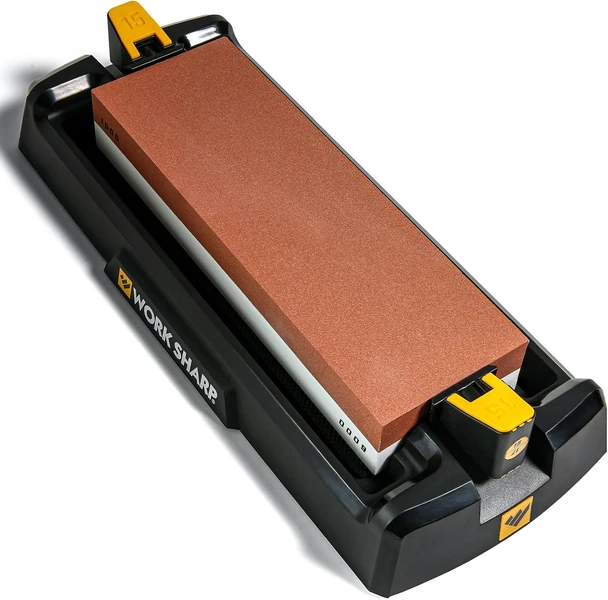
The Work Sharp kit puts more of the setup in one box: a double-sided 1000/6000 waterstone, a water-control base and removable angle references. I’d consider it for a beginner who wants a defined place to start, rather than buying a stone and then working out how to support it on the counter.
The references are 15° and 17° per side. They establish a starting position; they don’t clamp the knife or keep its angle fixed throughout a pass. You still have to maintain that position as the blade moves across the stone. Check the angle your knife needs before deciding either reference is suitable, and remove the guides when using a different freehand angle.
Use the 1000 face to form the edge, then the 6000 face for refinement when needed. The higher number isn’t a reason to skip the first job or to expect a finishing surface to repair a chip. Rinse the stone and base before switching sides so coarser residue doesn’t contaminate the finishing surface.
This is a soaking stone. Allow about ten minutes and check that the bubbles have stopped before sharpening. Keep the surface wet during use, then clean and dry the kit afterward. Use water only, not oil. For someone who wants less water preparation and is comfortable without the starting references, the Shapton or DMT makes more sense.
Best Diamond Plate for Routine Sharpening: DMT Dia-Sharp 8-Inch Fine
| PROS | CONS |
|
|
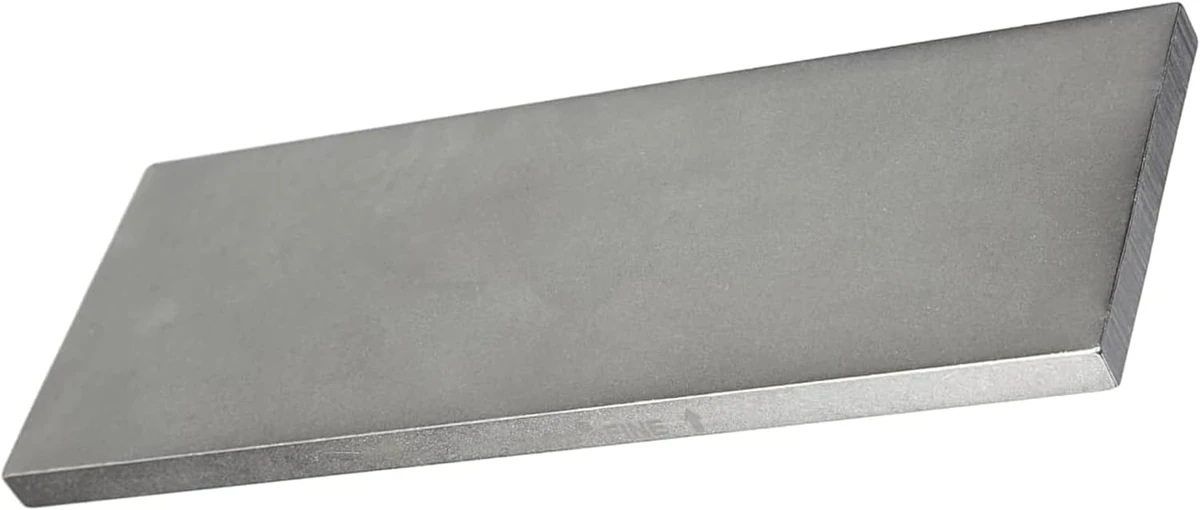
The Fine D8F is the choice here for someone who wants a broad bench surface without a waterstone’s soak-and-dry routine. It has a continuous 8-by-3-inch monocrystalline diamond face and non-skid feet. There’s no clamp or guide to set the bevel, so the freedom to choose an angle comes with the usual freehand responsibility.
DMT specifies Fine as 25 micron or 600 mesh. That does not make it equivalent to the 6000 waterstone face on the Work Sharp, or establish an exact conversion to a different brand’s grit scale. The useful role is ordinary sharpening of a slightly dull edge. Heavy damage or a highly refined finish may call for a different abrasive before or after this plate.
DMT supports dry use or water, with no oil needed. Clean and dry it after use, and keep the feet and bench free of residue that could let it move. You avoid the dishing-and-flattening routine of a wearing waterstone, but a diamond plate still needs sensible pressure and care.
One important boundary: this is a knife-sharpening plate, not a dedicated waterstone-flattening tool. DMT distinguishes its ordinary Dia-Sharp plates from the Dia-Flat range for lapping. I wouldn’t buy the D8F expecting it to flatten the other stones on this list. Choose it for the knives themselves, and plan a suitable separate flattening method if you also use waterstones.
Best for Restoring Dull Edges: DMT Dia-Sharp 8-Inch Coarse
| PROS | CONS |
|
|
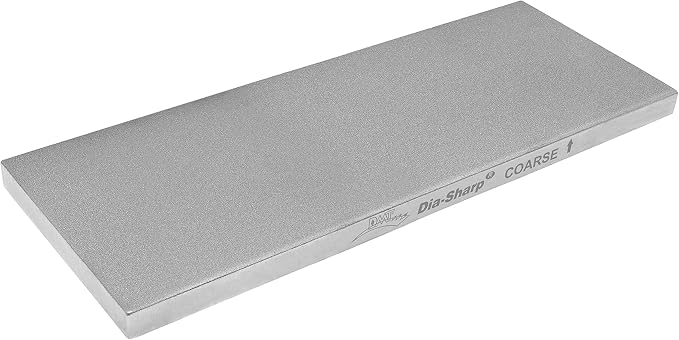
A fine stone can be frustrating when the bevel needs more than a touch-up. The D8C is the coarse member of DMT’s 8-inch Dia-Sharp range, with a continuous diamond face rated at 45 micron or 325 mesh. Its job is restoring a dull edge before you decide how much refinement to add.
The 8-by-3-inch face provides the same working room as the Fine D8F, but the abrasive has a different role. I’d start with Coarse when the edge is worn enough that a fine plate feels like the wrong starting point, then move to a finer surface if the knife and finish call for it. That is a progression within DMT’s own system, not a conversion between diamond mesh and waterstone grit.
Use it dry or with water, keep the plate clean and let the abrasive work without heavy pressure. The included non-skid feet help support it, but there is no guide holding the knife at an angle. It also isn’t a general-purpose flattening plate for your waterstones: DMT reserves lapping use for its Dia-Flat products. Large chips or major repairs may need a more aggressive abrasive or professional help.
Best Large Combination Waterstone: Norton 1000/4000 Waterstone
| PROS | CONS |
|
|
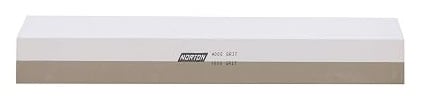
Long kitchen knives benefit from room to work. Norton’s 1000/4000 combination waterstone has an 8-by-3-inch face, larger than the Work Sharp kit’s stone, with a working grade on one side and a finishing grade on the other. The exact configuration here is Norton 61463624450, also listed as NT450.
I’d choose it when I wanted a full-size soaking stone and a two-step progression without buying two separate stones. Start on the 1000 face when the edge needs sharpening, then use the 4000 face when a finer finish suits the knife. You still control the bevel yourself; the storage box isn’t an angle guide.
The tradeoff against Shapton is preparation and upkeep. This is a soaking waterstone, and its surface needs periodic flattening as it wears. Norton recommends dry storage for less-frequent use and notes that frequent users can keep its waterstones soaking. Follow its care guidance, keep the setup stable and allow for cleanup. Neither face replaces a coarse stone for an edge that needs substantial restoration.
Compare Our Picks
Scroll sideways on smaller screens to compare all the details.
| Model | Best fit | Grit | Working surface | Main tradeoff |
|---|---|---|---|---|
| Shapton Kuromaku 1000 | Best Low-Prep Waterstone | 1000 | 8.3 x 2.8 in | One grit only; no finishing face |
| Work Sharp Whetstone | Best Starter Kit | 1000 / 6000 | About 7.1 x 2.4 in | Smaller working face than the DMT |
| DMT Dia-Sharp 8-Inch Fine | Best Diamond Plate for Routine Sharpening | Fine: 25 micron / 600 mesh | 8 x 3 in | No angle references or mechanical guide |
| DMT Dia-Sharp 8-Inch Coarse | Best for Restoring Dull Edges | Coarse: 45 micron / 325 mesh | 8 x 3 in | Coarse finish; separate refinement may be useful |
| Norton 1000/4000 Waterstone | Best Large Combination Waterstone | 1000 / 4000 | 8 x 3 in | Soaking and periodic flattening required |
How to Choose a Sharpening Stone
Start with the condition of the knife
Match the abrasive to the condition of the edge. In Shapton’s Kuromaku range, the 120, 220 and 320 stones handle coarse work; the selected 1000 is a medium working stone, while 5000 and above are finer finishing choices. In DMT’s range, Coarse is 325 mesh and Fine is 600 mesh. Those are examples within each maker’s system, not a conversion between them. A normally dull knife can start with a working grade; deep chips or a major bevel change call for an appropriate coarser abrasive or a repair service.
Pick a working routine you’ll repeat
The Shapton needs an initial presoak, then surface water for ordinary sessions. The Work Sharp needs soaking each time. The DMT can be used dry or with water. Also think about somewhere to drain and dry waterstones before storing them, and whether your longest blade has enough clear space for a controlled stroke.
Treat a finishing stone as a later step
Finish only after the working stage has formed the edge and the burr is under control. On the selected Work Sharp kit, the 1000 face sharpens and the 6000 face refines the finish. You can stop at a sound working edge when it suits the cutting task. Higher numbers alone do not make a better knife, and different abrasive systems should not be treated as interchangeable progressions. For finishing an already sound edge, compare our best knife strops.
Include support and flatness in the budget
The holder must keep the stone steady, and a waterstone’s wearing surface needs an appropriate flattening routine. Check the stone maker’s recommended method and the flattening tool’s compatibility. Clean sharpening residue from the knife before it returns to food preparation; the knife care and maintenance guide covers the wider cleaning, drying and storage routine.
Start coarse only when the edge needs it
DMT’s Coarse D8C fills the restoration step that a Fine plate can make slow. Its Fine D8F is the more useful general starting point for slightly dull edges. Norton’s 1000/4000 combination covers sharpening and refinement on a broad waterstone face, but neither side is a coarse repair stone. Serious chips may still call for a different abrasive or a sharpening service.
Plan for flattening
A dished waterstone makes consistent contact harder. For the Shapton 1000, Shapton supports its DGLP diamond-glass lapping plate or NAORU system; follow the selected tool’s instructions. Norton makes a dedicated silicon-carbide flattening stone for its waterstones. Match the flattening tool to the stone’s care guidance and keep loose coarse grit away from finishing surfaces. The D8C and D8F sharpening plates here should not be treated as substitutes for a purpose-made lapping tool.
Why Trust Us
The recommendations start with the condition of the edge and the sharpening routine each stone suits. Maker specifications establish the abrasive grades, preparation and care requirements; grit labels from different systems are kept distinct. Working room, maintenance and a sensible progression matter more here than the highest number on the box.
Final Thoughts
I’d start with Shapton 1000 for a low-prep waterstone, Work Sharp for a self-contained starter kit, or Norton for a full-size soaking combination. The D8F is a dry-capable diamond option for routine sharpening; add the coarse D8C when a neglected edge needs a more suitable starting abrasive. Choose the edge condition and workflow first, then build a progression around them.
Frequently Asked Questions
Does whetstone mean a stone that needs water?
No. Whet means sharpen. A sharpening stone’s required lubricant depends on its abrasive and binder, so follow the selected maker’s instructions. A soaking waterstone, a surface-wetted stone and a dry-capable diamond plate need different care.
Can I flatten a waterstone on the DMT Dia-Sharp?
DMT says ordinary Dia-Sharp plates are not intended for lapping unless designated Dia-Flat. Don’t assume a knife-sharpening plate is also a suitable flattening plate. Use a method the stone and lapping-tool makers support.
Will these stones work on serrated or single-bevel knives?
A flat bench surface is not a universal procedure for serrations, and a single-bevel knife needs its specific geometry preserved. Check the knife maker’s method and use an appropriate specialist abrasive or service where necessary. Don’t copy an ordinary two-sided routine onto an unfamiliar edge.
Do I need a leather strop with the stone?
Not automatically. First learn to reach the edge consistently and remove the burr using the stone’s appropriate finishing procedure. A strop can be a later finishing choice; it doesn’t replace the shaping work needed by a dull or damaged bevel.
