


We independently evaluate all recommended products and services. Any products or services put forward appear in no particular order. If you click on links we provide, we may receive compensation.
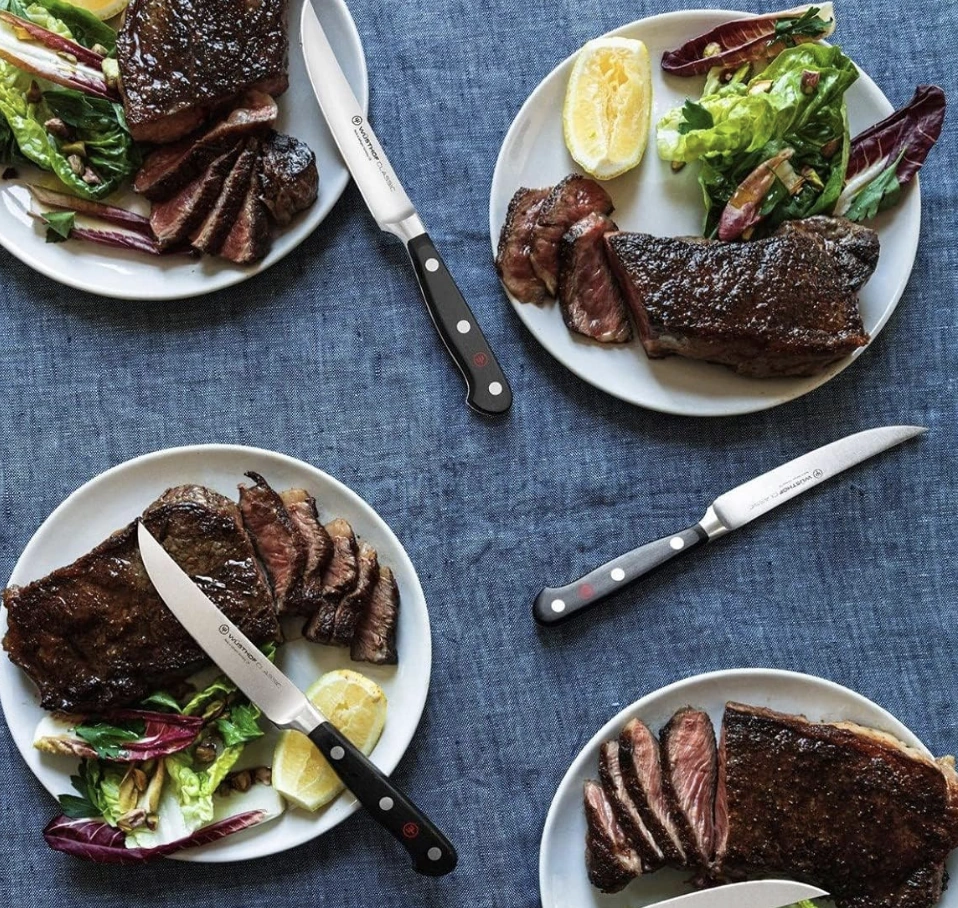
You've spent the time sourcing a quality cut, nailed the seasoning, and pulled it off the grill at the perfect moment. But most people sit down and hack through that beautiful steak with whatever dull, forgotten knife came in a block set years ago. It's like buying a great bottle of wine and drinking it out of a paper cup. A dedicated set of steak knives can completely transform the dining experience — cleaner cuts, better presentation, and more juice staying in the meat where it belongs.
We set out to find the best steak knives across multiple price points, testing everything from budget-friendly serrated options to premium Japanese straight-edge sets. Whether you're a knife enthusiast who cares about steel quality and edge geometry or simply someone who wants a better dining experience, there's a set on this list that'll fit the bill. Here's what we found.
Key Considerations
Steak knives don't get nearly as much attention as chef's knives or pocket knives, but the same principles that make a great blade apply here. Much of the decision comes down to personal preference, but we focused on a few critical factors when making these selections.
- Serrated vs. Straight Edge: This is the biggest debate in the steak knife world. Serrated blades stay sharper longer and handle crusty sears well, but they can tear meat fibers and are difficult to sharpen at home. Straight-edge knives make noticeably cleaner cuts with better mouthfeel, but they'll dull faster — especially since steak knives are used against ceramic plates rather than cutting boards.
- Blade Steel: Quality steel matters just as much in a steak knife as it does in a pocket knife. Higher-end steels like X50CrMoV15 and VG-MAX hold an edge longer, resist corrosion, and resharpen more easily. Budget steels work fine but will dull noticeably faster.
- Construction: Forged knives are generally heavier, more balanced, and longer-lasting. Stamped knives are lighter and more affordable. Full-tang construction is preferred for durability. However, steak knives don't see the same abuse as a chef's knife, so a well-made stamped blade can be perfectly adequate here.
- Handle Material: Wood handles look beautiful on the table but require more care. Pakkawood offers a good compromise between aesthetics and durability. Synthetic handles are the most durable and lowest maintenance but lack visual appeal. Since steak knives are shared among guests, comfort across different hand sizes matters more here than with personal cutlery.
- Price: We didn't want to fill this list exclusively with $150+ sets. Steak knives range from under $5 per knife to well over $50. I tried to find options that cover every budget without sacrificing quality. A solid mid-range set is often the sweet spot for most people.
Top Picks
- Best Overall: Wüsthof Gourmet Steak Knife Set
- Best Premium: Shun Classic Steak Knife Set
- Best Value: Messermeister Avanta Steak Knife Set
- Best Serrated: Chicago Cutlery Essentials
- Best European Style: Laguiole en Aubrac Steak Knives
- Best Budget: Victorinox Swiss Classic Steak Knife Set
- Best for Gifting: Zwilling Porterhouse Steak Knife Set
Best Overall: Wüsthof Gourmet Steak Knife Set
| PROS | CONS |
|
|
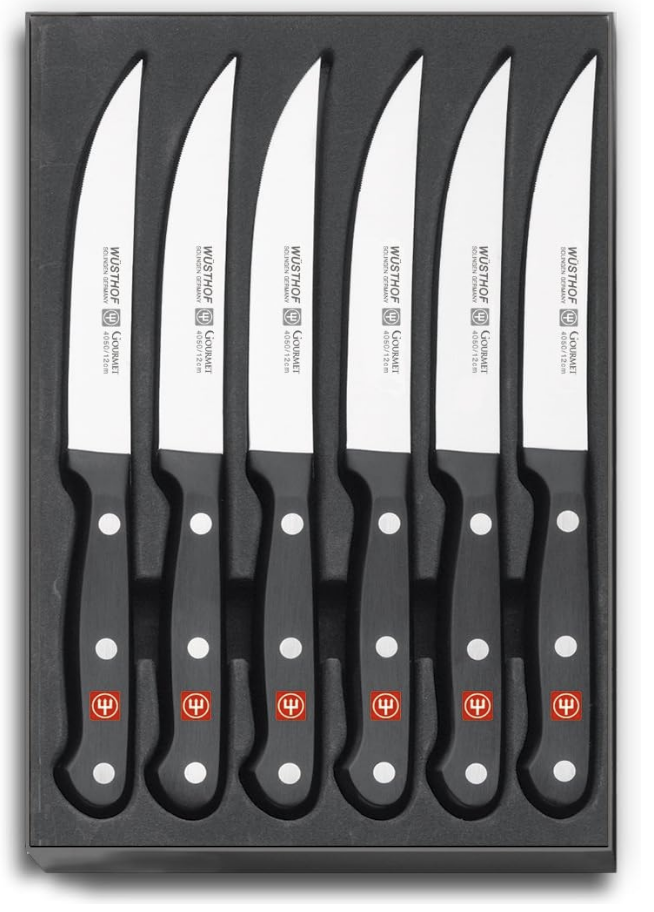
Wüsthof has been making knives in Solingen, Germany since 1814, and they've earned their reputation as one of the gold-standard names in cutlery. The Gourmet series is their more accessible line, using the same High-Carbon Stainless steel as the Classic series but with a precision laser-cut stamped construction instead of being forged. Don't let that dissuade you — these steak knives are seriously sharp out of the box and glide through both thick ribeyes and thinner flank steaks without effort. The straight edge produces clean cuts without tearing, keeping more juice in the meat. Knife enthusiasts will appreciate that the steel is easy to touch up on a honing rod or whetstone between uses.
The polypropylene handles won't be winning any beauty contests, but they're triple-riveted, full-tang, and nearly indestructible. They're technically dishwasher-safe, though we'd always recommend hand washing to protect the edge. What these knives lack in visual flair, they more than make up for in dependable performance. If you're the type of person who prioritizes function over form — and you probably are if you're reading this site — the Gourmet set is hard to beat at this price point. Wüsthof also offers these in 4-piece and 8-piece sets, giving some flexibility depending on your typical dinner party size.
Best Premium: Shun Classic Steak Knife Set
| PROS | CONS |
|
|
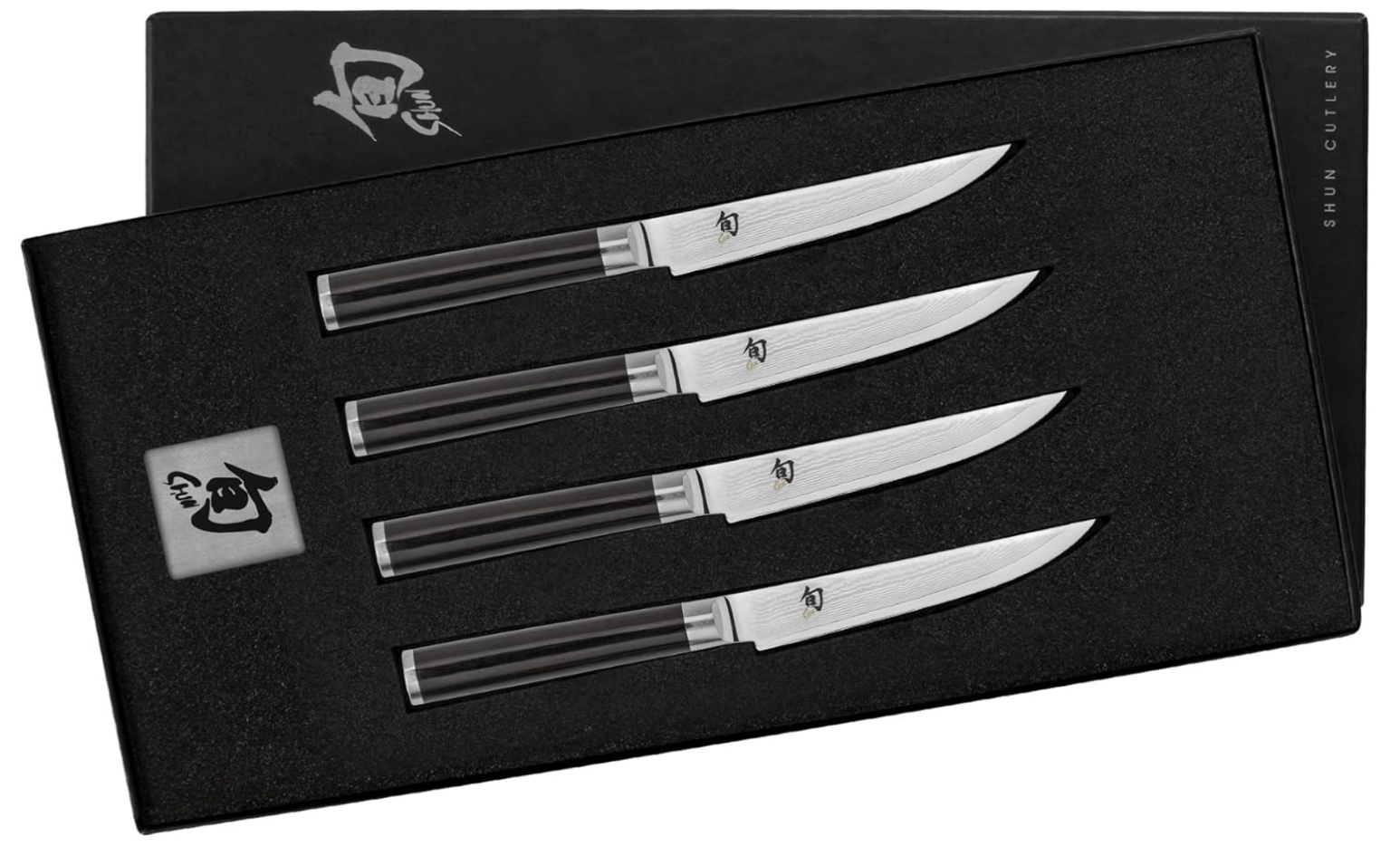
If you want the absolute best steak knife money can buy, the Shun Classic set is it. These are handcrafted in Seki City, Japan — the historical center for samurai sword manufacturing — and the quality shows. The VG-MAX steel core is clad with 34 layers of Damascus stainless on each side, creating that gorgeous woodgrain pattern that makes these knives a genuine conversation piece at the dinner table.
More importantly, the 16-degree edge angle per side is significantly sharper than most Western steak knives, and it shows. These cut through a well-seared steak like the meat isn't even there. There's essentially zero tearing, which means more juice stays inside every bite. For knife enthusiasts who appreciate edge geometry and premium steel, this is the set that'll make you smile at the dinner table.
The D-shaped ebony Pakkawood handles are comfortable, elegant, and moisture-resistant. Shun even offers free lifetime sharpening, which is a nice perk for a knife this sharp. The trade-offs are real, though. At this price, you're paying a premium — a single Shun steak knife costs more than many complete budget sets.
They absolutely must be hand-washed and dried immediately, which makes hosting a little more labor-intensive. The set also comes in groups of four, so larger dinner parties will require buying two sets. But for steak enthusiasts who want their cutlery to match the quality of a dry-aged prime ribeye, these are worth every penny.
Best Value: Messermeister Avanta Steak Knife Set
| PROS | CONS |
|
|
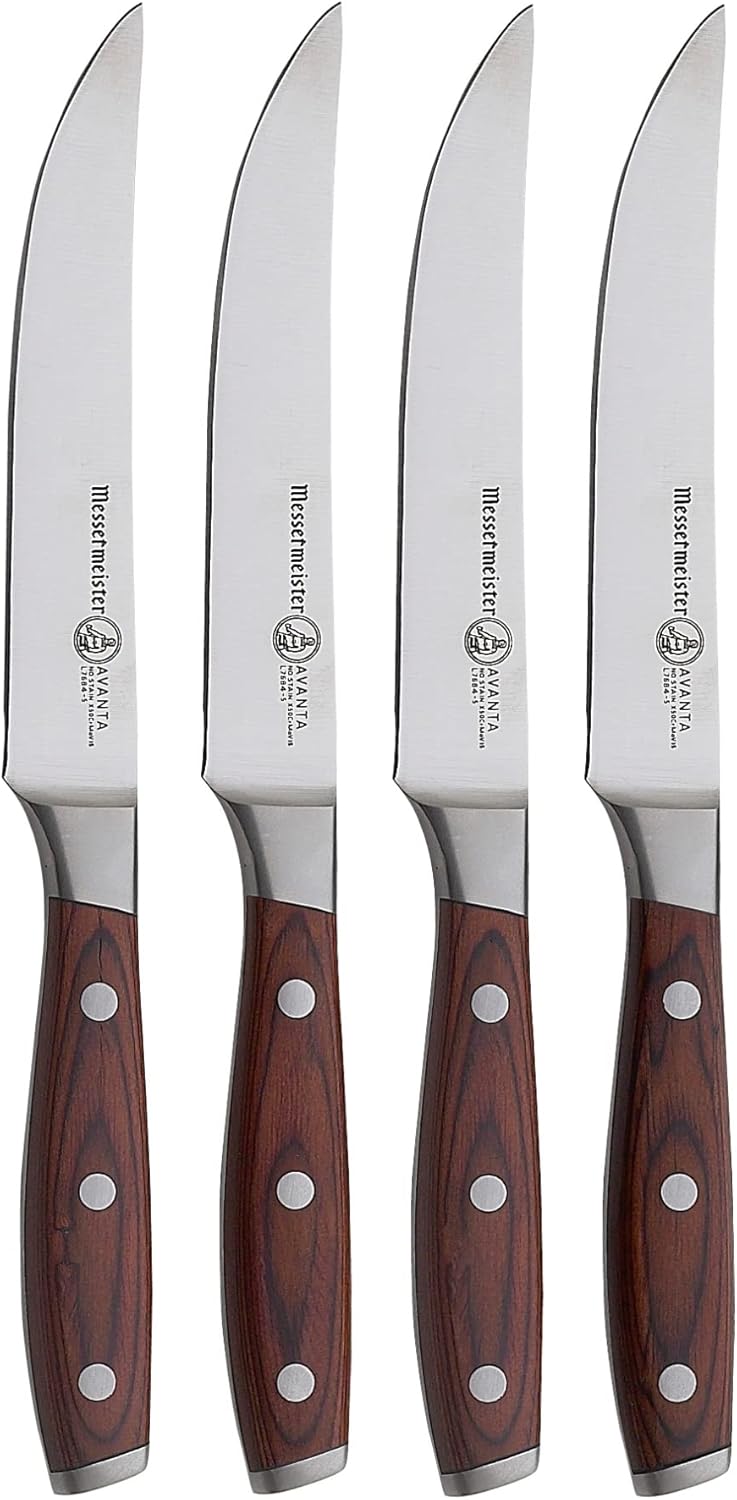
The Messermeister Avanta has become a darling of the kitchen knife review world, and for good reason. This set punches way above its price point with full-tang forged construction and triple-riveted Pakkawood handles that feel and look considerably more expensive than they are. The German X50 stainless steel blade delivers clean, smooth cuts without tearing — exactly what you want from a straight-edge steak knife.
Messermeister is a family-owned and women-operated company based in Ojai, California, and these knives were originally developed for use in culinary schools. That pedigree shows in the thoughtful balance and ergonomics. The 5-inch blade is slightly longer than most steak knives, giving a bit more cutting surface to work with.
For the price, the edge retention is solid but not exceptional — you'll want to hone these regularly and give them a proper sharpening a couple of times a year if they're getting frequent use. The good news is that straight-edge knives are easy to touch up at home with a honing rod or a basic whetstone, unlike serrated alternatives. Messermeister also offers the Avanta in stainless steel and Damascus handle variants if you want a different look. This is the set we'd recommend for anyone who wants quality without breaking the bank — a legitimate value pick that doesn't feel like a compromise.
Best Serrated: Chicago Cutlery Walnut Tradition
| PROS | CONS |
|
|
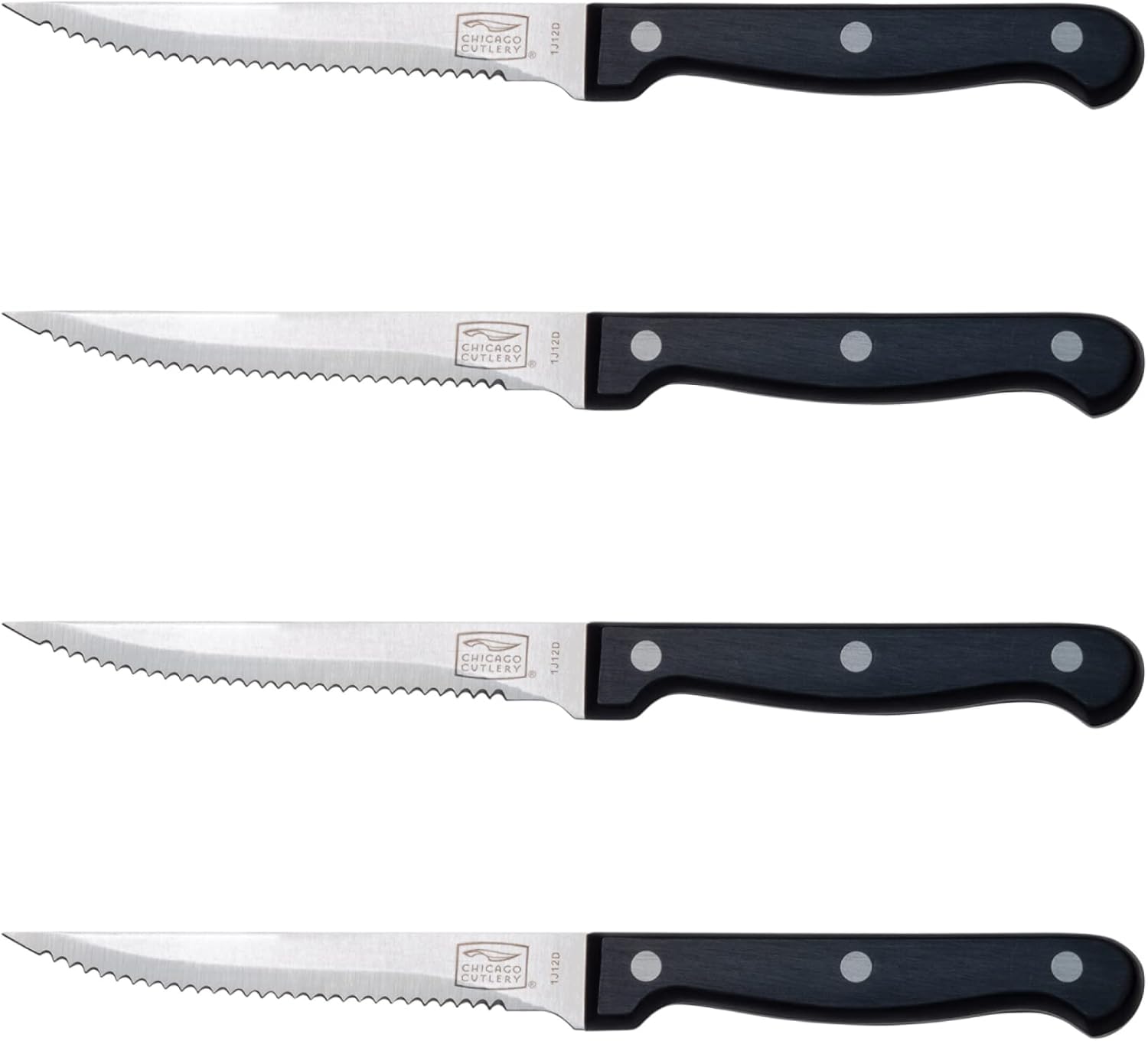
If you've ever been to a classic Texas-style chophouse, you've probably used a knife a lot like this one. The Chicago Cutlery Walnut Tradition is the quintessential old-school steak knife — big, bold, and built to work. The rivets have that timeless American look that pairs well with a checkered tablecloth and a 16-ounce T-bone. Chicago Cutlery has been around for over 80 years, starting as a sharpening service for local butchers and meatpackers. The serrated edge on these knives means they'll go years without needing any sharpening at all, which is ideal for anyone who doesn't want to maintain their steak knives.
The trade-off with any serrated knife is a less refined cut. These will tear through a perfectly seared filet mignon more aggressively than a straight-edge alternative. They're best suited for thick, hearty steaks where a rugged approach isn't an issue. The full-tang construction gives them solid heft and balance, though some people with smaller hands may find them a bit large. At this price point, though, it's hard to complain. These are a great set-it-and-forget-it option for anyone who prefers the low-maintenance approach to their steak knives.
Best European Style: Laguiole en Aubrac Steak Knives
| PROS | CONS |
|
|
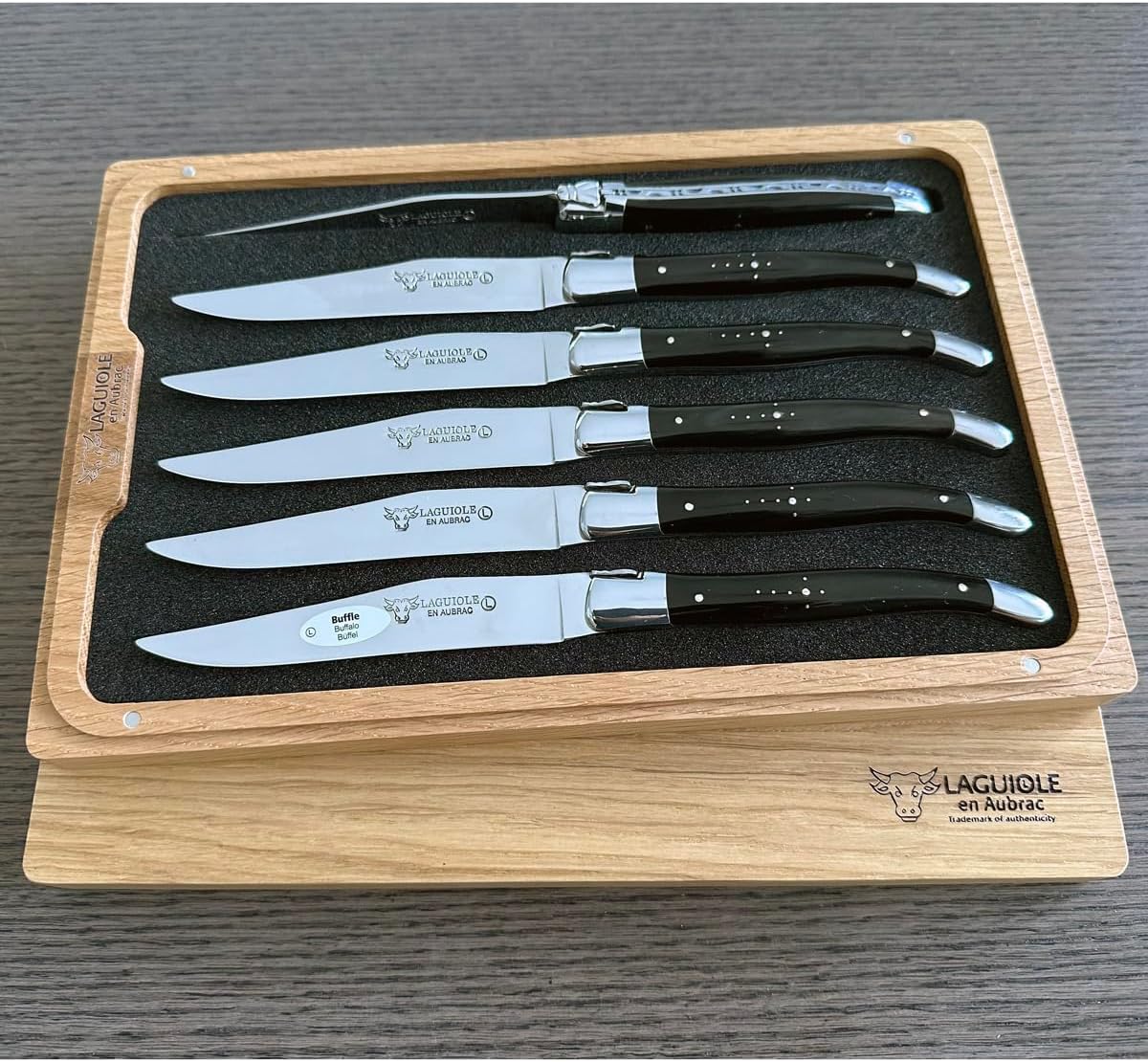
Laguiole knives have been crafted in southern France since the 1800s, and an authentic set is as much about the dining experience as it is about cutting performance. These are statement pieces. The signature bee motif on the spine, the gently curved handles available in olivewood, horn, or exotic materials, and the meticulous hand-finishing make each knife a work of art. But these aren't just pretty — the 12C27 Sandvik stainless steel blade holds a clean, sharp edge and resists corrosion well. It's a quality steel that knife enthusiasts will recognize from brands like Opinel and many Scandinavian knife makers.
Here's the critical caveat: "Laguiole" is not a protected trademark. The market is absolutely flooded with cheap knockoffs that look similar but use inferior materials and construction. If you're going to invest in a set, stick with reputable makers like Laguiole en Aubrac or Forge de Laguiole. The difference in quality is night and day. These are an investment piece — the kind of knife set you hand down to the next generation rather than replace. They're best for anyone who values craftsmanship and aesthetics as much as cutting performance, and they're guaranteed to be a talking point at any dinner party.
Best Budget: Victorinox Swiss Classic Steak Knife Set
| PROS | CONS |
|
|
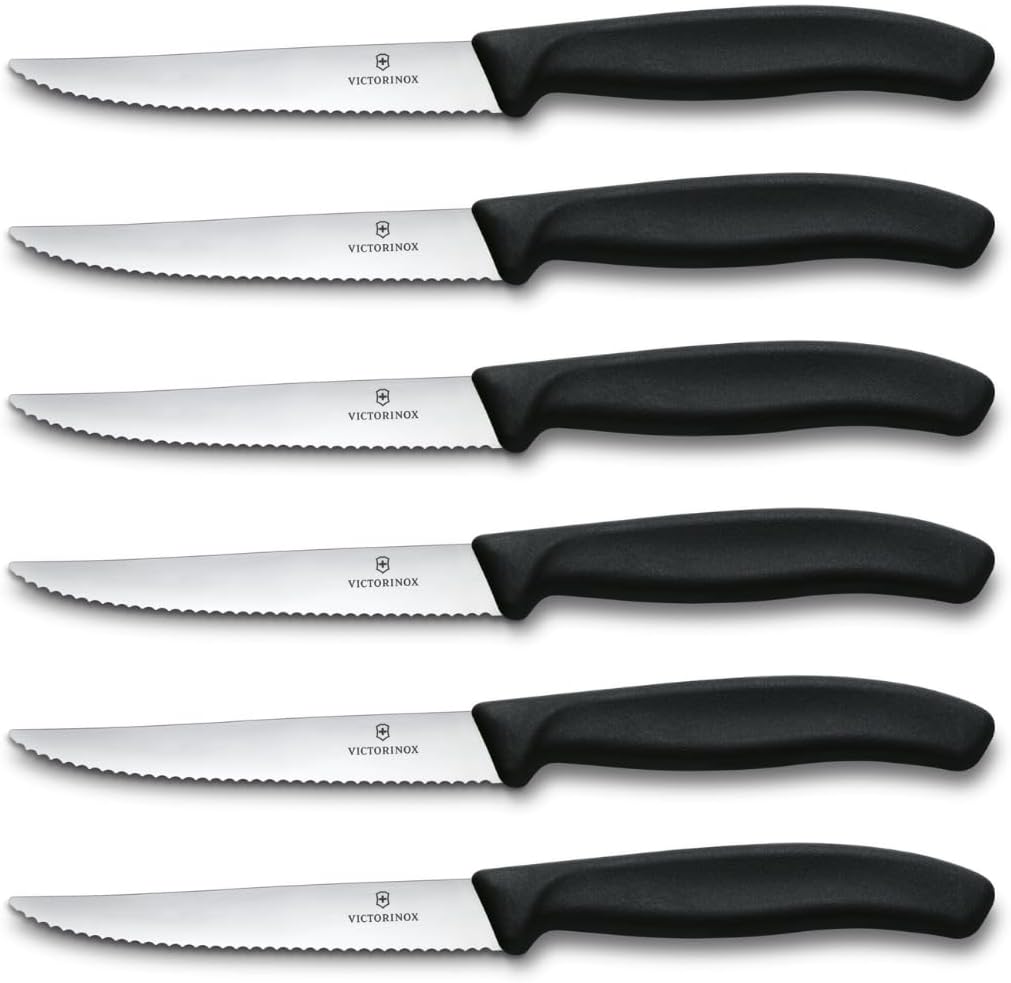
Victorinox has built a global reputation for delivering outstanding value — from Swiss Army Knives to their Fibrox Pro kitchen line — and their steak knives are no exception. These are razor-sharp out of the box and cut through steaks effortlessly despite the bargain price. The wavy serration is finer and more refined than what you'll find on most serrated steak knives, which means less tearing and a smoother cut. At around $5–6 per knife for a Swiss-made product with a lifetime warranty, the performance-per-dollar ratio here is unbeatable. Victorinox uses a special tempering process on their blades that allows them to be resharpened repeatedly, which is unusual for a serrated option.
The downside is purely aesthetic. The plastic handles are functional and NSF-approved, but they look and feel like what they are — utilitarian tools. These won't impress guests at a formal dinner party. But they'll outperform many sets costing three or four times as much when it comes to actual cutting. We love these as a daily-use set, a backup for large gatherings, or simply the right choice for anyone who wants great cutting performance without worrying about babying their knives. They're also dishwasher-safe, which is a rarity among quality steak knives.
Best for Gifting: Zwilling Porterhouse Steak Knife Set
| PROS | CONS |
|
|
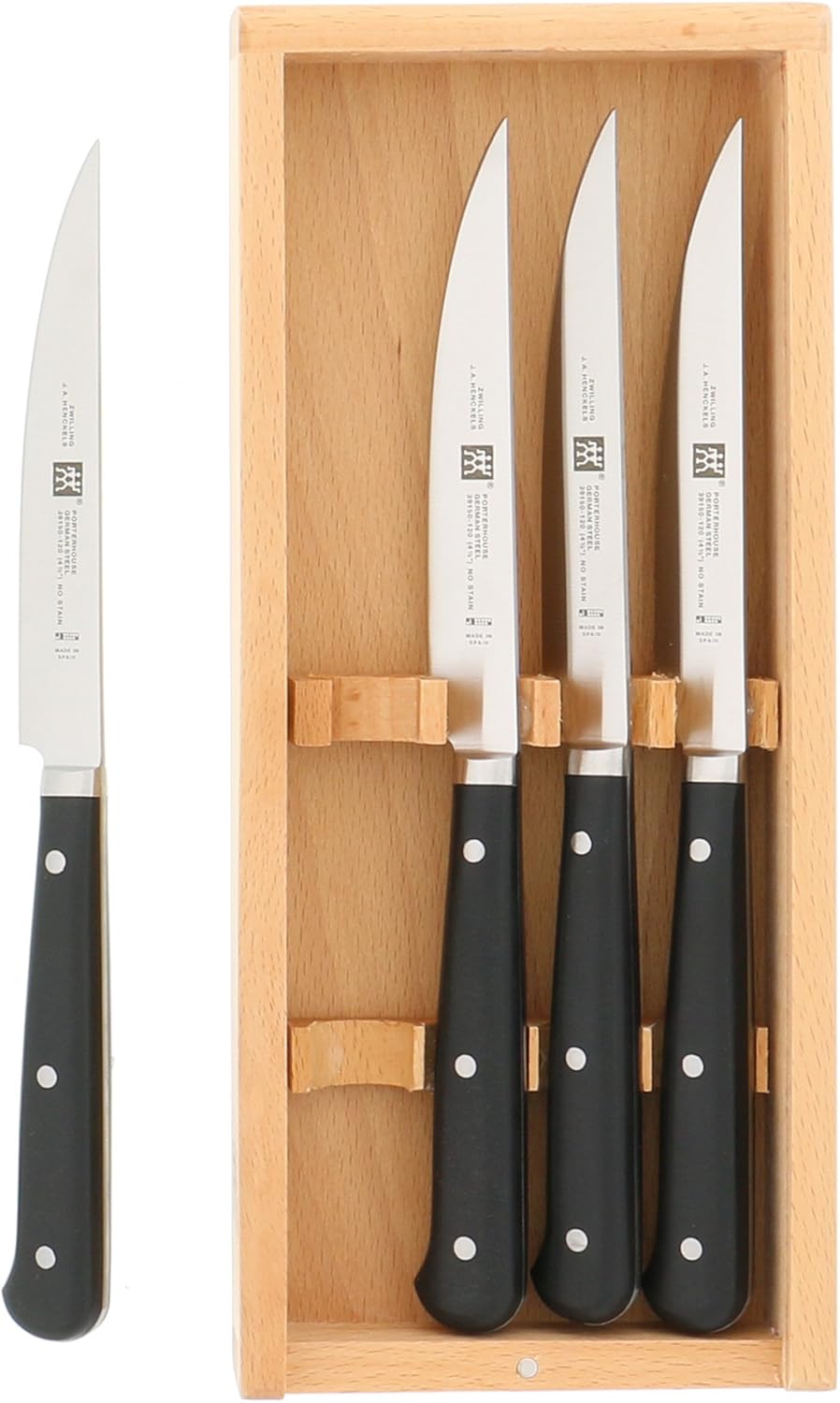
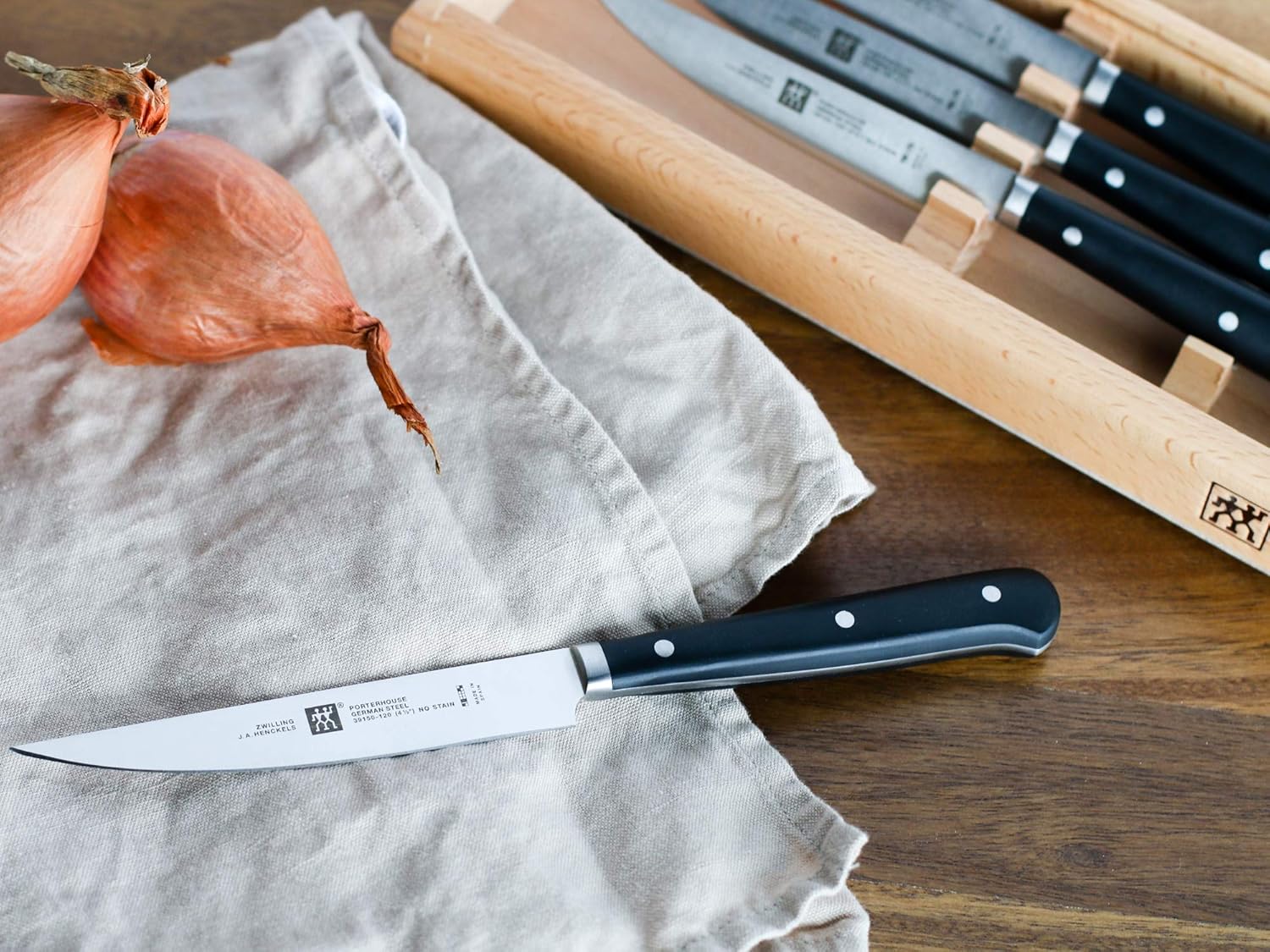
Zwilling J.A. Henckels has been making cutlery in Solingen, Germany since 1731 — nearly 300 years of knifemaking heritage. The Porterhouse line is specifically designed for the dining table, and the packaging shows it. The 4-piece set comes in a handsome beechwood presentation box, while the 8-piece set gets a sleek black case. Either one looks impressive enough to hand directly to someone as a gift. The knives themselves are precision-forged from a single piece of their special formula stainless steel, then ice-hardened for improved edge retention. They feel substantial in the hand, with a nice weight and balance that communicates quality from the first cut.
The biggest caveat with Zwilling is navigating their product lines. There's a meaningful quality difference between "Henckels International" (their more affordable tier) and "Zwilling J.A. Henckels" proper. The Porterhouse line falls under the main Zwilling brand, so you're getting the good stuff. The polished stainless finish on some models does show fingerprints easily, which can be a minor annoyance. Otherwise, these strike a great balance between performance, aesthetics, and value. For weddings, housewarmings, holidays, or any occasion that calls for a quality gift, you can't go wrong here — they look impressive out of the box and deliver solid performance on the plate.
How To Choose The Best Steak Knives
Most steak knives don't get the same level of scrutiny as a kitchen knife or a folding EDC. People tend to use whatever came with the block set and never think twice about it. But spending even a little time understanding what makes a good steak knife can significantly improve the dining experience. Here are the key factors to consider.
Serrated vs. Straight Edge
This is the single biggest decision you'll make when buying steak knives, and it really comes down to how you want to interact with your knives. Serrated edges stay functional for years without sharpening. The teeth bite into the meat and power through thick sears and crusts with minimal effort. But those same teeth also tear the meat fibers, which can affect the texture and release juices that would otherwise stay in the steak. Most restaurants use serrated steak knives because they're essentially maintenance-free, which makes sense for a business but isn't necessarily the best choice for a home cook who cares about quality.
Straight-edge steak knives produce noticeably cleaner cuts. The meat separates smoothly, retaining more juice and giving a better mouthfeel on every bite. The downside is that they dull faster — and steak knives dull faster than kitchen knives in general because they're used against ceramic dinner plates, which are extremely hard on blade edges. If you're willing to do occasional maintenance, straight-edge is the way to go. Some enthusiasts even carry their own steak knives to restaurants to avoid using dull serrated house knives.
Steel Quality
The type of steel in a steak knife determines how sharp it gets, how long it stays sharp, and how easily it can be maintained. X50CrMoV15 is the German industry standard, used by Wüsthof and Zwilling. It's a solid all-around performer that balances hardness, toughness, and corrosion resistance well.
VG-MAX is Shun's proprietary Japanese steel — it's harder, holds a keener edge, and has better edge retention, but it's also more brittle and more expensive. 12C27 Sandvik is a Swedish steel commonly found in French-style knives like Laguiole and Scandinavian makers like Opinel. It's a clean, capable stainless steel that takes a fine edge. Budget knives typically use generic stainless with lower hardness — they'll work fine but dull noticeably faster.
Handle Materials
Handle choice is often where personal preference takes over. Natural wood handles in walnut, olivewood, or rosewood look stunning on the dinner table and feel warm in the hand. The trade-off is that they require hand washing and can crack or warp over time if they're neglected or repeatedly dishwashed. Pakkawood — a stabilized, resin-impregnated wood composite — offers a great middle ground with the look of natural wood but much better moisture resistance.
Synthetic handles in polypropylene or POM are the most durable and lowest maintenance, and many are dishwasher-safe. They're functional but generally lack the visual appeal of wood. Since steak knives are shared among guests with different hand sizes, comfortable ergonomics for everyone at the table matters more here than with personal kitchen cutlery.
Set Size & Storage
Most steak knife sets come in groups of 4, 6, or 8. We'd recommend buying enough for your typical dinner party size, plus a couple of extras for larger gatherings. Storage is also worth thinking about. Leaving steak knives loose in a drawer is a great way to dull the edges (and cut yourself).
Options include countertop blocks, magnetic strips, in-drawer blade guards, and the presentation cases that come with some sets. Sets that include a storage solution like a beechwood box or a magnetic block tend to be great value since they solve the storage problem upfront.
Care & Maintenance
This applies to all steak knives regardless of price: always hand wash, dry immediately, and store properly. Dishwashers are the number-one enemy of good steak knives. The high heat, harsh detergent, and jostling against other utensils will dull blades, corrode steel, and damage handles faster than anything else.
Straight-edge steak knives can be honed on a standard steel rod between uses and sharpened on a whetstone when needed. Serrated knives are trickier — they'll hold their edge much longer, but when they do need sharpening, it's usually best to send them to a professional. Many makers like Shun and Wüsthof offer free or low-cost sharpening services, which is a nice bonus.
Why Trust Us
We've been covering the knife industry for over a decade, with hands-on experience across everything from tactical folders to kitchen cutlery. We've tested, handled, and researched every set on this list against a range of steaks and budgets. We also cross-referenced our findings with industry reviews, community discussions, and real-world user feedback. This list includes options across multiple price tiers because we believe a great steak experience shouldn't require a premium budget. Whether you spend $30 or $300, there's a set here that'll be a meaningful upgrade over whatever's currently in your kitchen drawer.
Final Thoughts
There are a lot of steak knives on the market, but these seven sets stood out for their combination of cutting performance, build quality, and value. The Wüsthof Gourmet set is our top overall pick — it delivers the trusted German quality and straight-edge cutting performance that most people are looking for at a reasonable price.
For anyone on a tighter budget, the Messermeister Avanta punches well above its weight with forged construction and Pakkawood handles at a bargain price. And if you want to splurge, the Shun Classic set elevates the dining experience in every way — from the Damascus blade pattern to the razor-sharp VG-MAX edge.
Regardless of which set you choose, upgrading from dull, forgotten knives to a dedicated set of steak knives will make a noticeable difference the very first time you use them. Your steaks deserve it.
FAQs
Q: Are serrated or straight-edge steak knives better?
A: It depends on your priorities. Serrated knives stay sharp longer and require less maintenance, making them better for most casual users. Straight-edge knives provide cleaner cuts with less tearing, which many steak enthusiasts and chefs prefer. If you're willing to sharpen your knives occasionally, straight-edge is generally the way to go for the best dining experience.
Q: Can I put steak knives in the dishwasher?
A: We don't recommend it. Dishwasher detergent and high heat can dull blades, corrode steel, and damage wood or composite handles over time. Hand washing and immediate drying is the best way to keep steak knives performing well for years. Some budget sets with synthetic handles are technically dishwasher-safe, but even then, hand washing will extend the edge life significantly.
Q: How many steak knives do I need?
A: At minimum, get a set that covers your typical dinner party size. A set of 4 works for smaller households, but 6 or 8 is more practical for entertaining. Having a couple of extras is always a good idea for larger gatherings or unexpected guests.
Q: How often do steak knives need to be sharpened?
A: Serrated steak knives can go several years without sharpening. Straight-edge steak knives should be honed every few uses and given a proper sharpening once or twice a year, depending on frequency of use. Steak knives dull faster than kitchen knives because they're used against ceramic plates, which are harder on edges than cutting boards.
Q: What is the best steel for steak knives?
A: High-carbon stainless steels like X50CrMoV15 (used by Wüsthof and Zwilling) offer a great balance of sharpness, edge retention, and corrosion resistance. For premium options, Japanese steels like VG-MAX provide superior hardness and edge retention. For most people, any quality stainless steel from a reputable brand will perform well. Check out our guide to knife steel for a deeper dive.
