

We independently evaluate all recommended products and services. Any products or services put forward appear in no particular order. If you click on links we provide, we may receive compensation.
A good M390 knife should earn its place in your pocket. The steel is appealing, but the blade, handle and carry setup are what you live with every day. A slim slicer for opening boxes feels very different from a substantial flipper or a belt knife, even when all three use M390.
Our picks cover those different jobs: a lightweight everyday folder, a flipper, a traditional pocketknife, a general-utility folder and a fixed blade for camp. Each recommendation identifies the exact M390 version, with Amazon and Blade HQ links to help you find the right one.
Key Considerations
M390 is appealing for its wear resistance in a stainless steel. Bohler describes the alloy as having very high wear resistance and good corrosion resistance. That does not make every M390 knife equally useful. We considered the complete knife, starting with these differences:
- Cutting role: A pocket folder suits packages and cord; a fixed blade gives you a fuller handle and simpler cleanup around camp. Choose the format for the work before choosing the steel.
- Blade geometry: Compare blade stock, grind and edge shape alongside length. A thicker blade is not automatically a better cutter. The comparison table lists stock thickness alongside blade length.
- Carry and handling: Compare the clip, opening method and lock. A lightweight crossbar-lock folder, a substantial flipper and a two-handed slipjoint ask different things of your pocket and your hands.
- Exact version: Model codes matter. Bugouts come in several steels, while Myto versions include M390, MagnaCut and Damascus. The recommendations and shopping links below identify specific M390 configurations.
- Steel tradeoff: M390 favors wear resistance and corrosion resistance over toughness. Knife Steel Nerds reports comparatively low toughness, so choose it for cutting rather than repeated impacts or prying.
- Price and upkeep: Decide which features justify the premium. The BestMan and M4 cost less than the Bugout, but their opening and carry formats are different. Leave room for an appropriate sharpening setup rather than spending your whole budget on the steel name.
Our knife steel guide explains the alloy tradeoffs in more detail. This guide helps you choose among actual M390 knives.
Best M390 Steel Knives: Top Picks
- Best Everyday Carry: Benchmade Bugout 535BK-4
- Best Fixed Blade: LionSteel M4
- Best Flipper: LionSteel Myto
- Best Traditional: LionSteel BestMan
- Best for General Utility: Benchmade Osborne 940-04
Best Everyday Carry: Benchmade Bugout 535BK-4
| PROS | CONS |
|
|
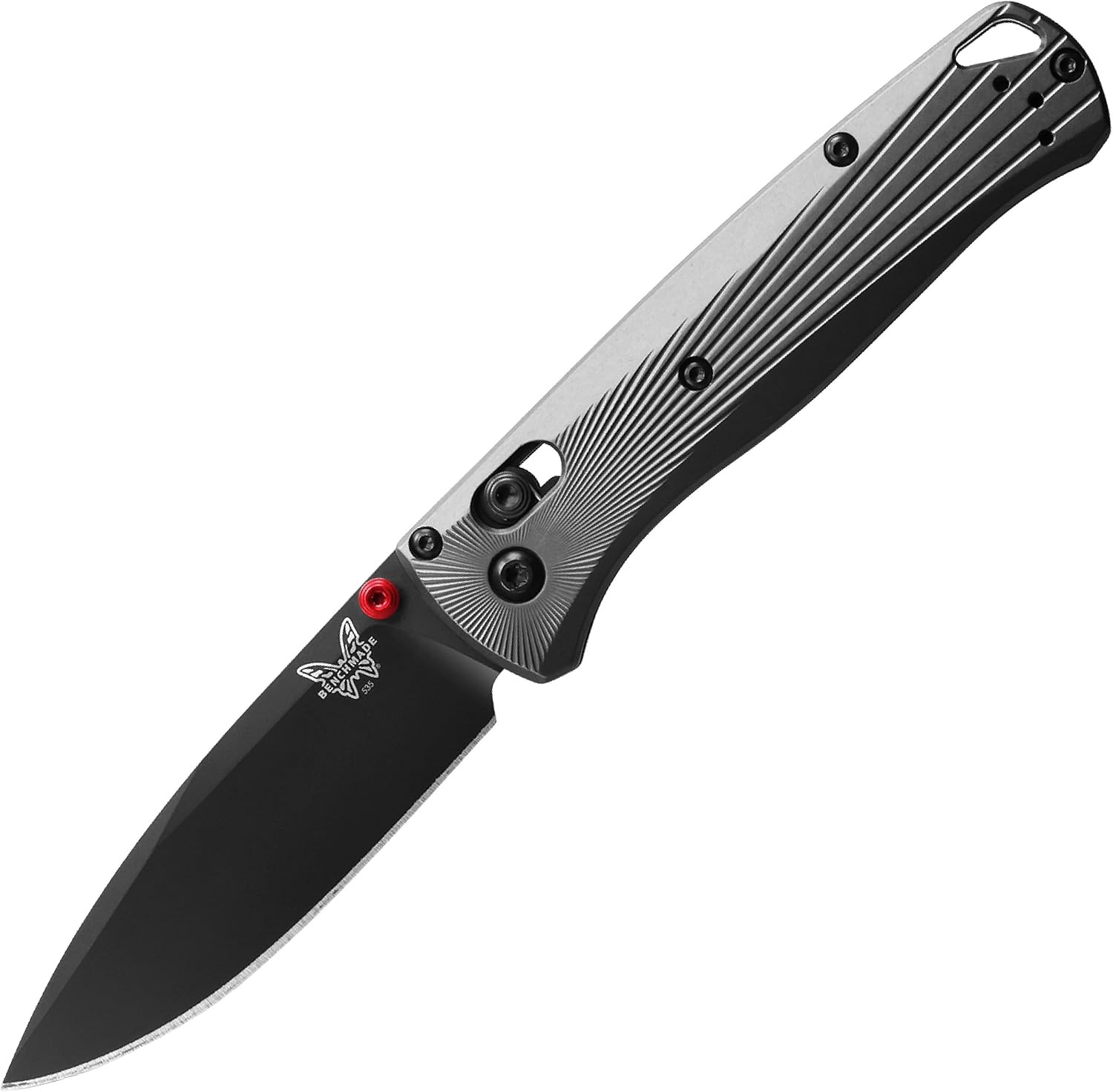
The 535BK-4 is our starting point for someone who likes the Bugout's slim shape but wants an aluminum handle and M390 blade. The gray scales, black blade and red accents make this version easy to spot. It keeps the thin drop point, ambidextrous controls and deep-carry clip that make the Bugout an attractive everyday folder.
Its 3.24-inch blade is a manageable size for breaking down boxes, cutting cord and opening packages. At 2.5 ounces, it also asks little of your pocket. The Osborne 940-04 is slightly lighter at about 2.42 ounces; we favor the Bugout here for its thinner blade and deep-carry clip. The 0.09-inch blade stock is thinner than the Myto's, which is one reason we'd lean toward the Bugout for an everyday cutting knife with less bulk.
The catch is the premium price. You're paying for the aluminum build, American production and Benchmade design as well as the steel. The thin drop point, deep-carry clip and ambidextrous controls are the features that need to earn their keep in your daily routine.
Best Fixed Blade: LionSteel M4
| PROS | CONS |
|
|
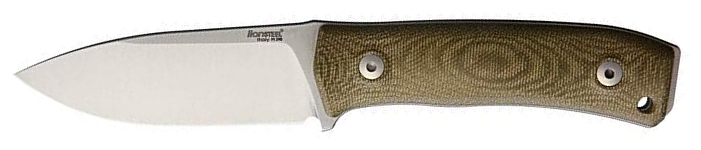
The M4 is the one we'd look at for a compact M390 belt knife. Its 3.75-inch drop point gives you a useful amount of edge for cord, food and general camp cutting, while the green canvas Micarta scales give the handle more substance than the folders here. This is a sensible size for controlled work without carrying a large field knife.
The fixed-blade construction is easier to clean after food prep or dirty work, but the leather sheath needs a dry knife. It also takes more belt space than a pocket clip. Our knife care and maintenance guide covers cleaning and storage.
The M4's strength in this lineup is its straightforward cutting format. We'd pair it with a saw for larger wood jobs rather than choose it for repeated chopping or prying. If you want one of the folders' quick pocket access, it's the wrong format; if you want a full handle and no pivot to clean, it makes much more sense.
Best Flipper: LionSteel Myto
| PROS | CONS |
|
|
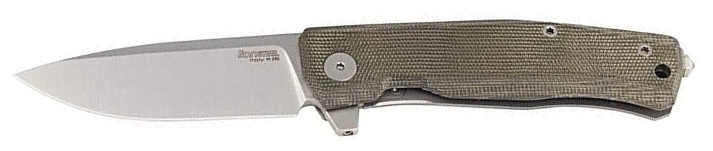
The Myto suits the buyer who wants a flipper and a more substantial build. This green Micarta MT01CVG pairs a satin M390 blade with a titanium frame lock. Its blade is almost the same length as the Bugout's, but the construction and carry feel belong to a different kind of folder.
LionSteel's removable flipper system is a nice detail: you can change the knife's profile if the tab isn't to your taste. A bearing pivot rounds out the flipper arrangement, while the Micarta front scale gives the handle a different texture from aluminum. Those features are the reason to choose the Myto over the simpler, lighter Bugout.
The Myto asks more of your pocket: Blade HQ lists a 0.69-inch handle thickness, compared with 0.41 inches for the Bugout. That is a useful distinction if bulky handles bother you. Choose the Myto for its flipper and Micarta/titanium construction; choose the Osborne if you want a narrower Micarta-handled folder with thumb studs. Look for MT01CVG when buying this M390 version.
Best Traditional: LionSteel BestMan

| PROS | CONS |
|
|
The BestMan is for someone who enjoys a traditional pocketknife. Ebony scales, titanium bolsters and a single clip-point blade give the BM1-EB a restrained look, without a flipper or pocket clip. M390 adds a modern steel to a familiar two-handed format.
Traditional style is the reason to consider it, rather than a promise of the finest slicing geometry. In his BestMan review, Josh Wussow liked the construction and ergonomics but found his Santos-wood sample thick behind the edge. That was a different handle version from the ebony knife here, and it is a useful caution when comparing it with the thinner-stock Bugout.
The single-blade model keeps things simple. LionSteel also makes two-blade BestMans, but we'd start with the BM1 for a straightforward everyday pocketknife. Its narrow clip point offers a useful shape for small, controlled cuts, and the nail nick suits a more deliberate opening routine.
The important limitation is the nonlocking blade. A slipjoint provides spring resistance rather than a lock, so avoid cuts that press on the spine or twist the blade. It rides loose in a pocket or in a separate slip. If one-handed access is essential, choose the Bugout or Osborne; if you like the traditional format, the BestMan offers something those folders don't.
Best for General Utility: Benchmade Osborne 940-04
| PROS | CONS |
|
|
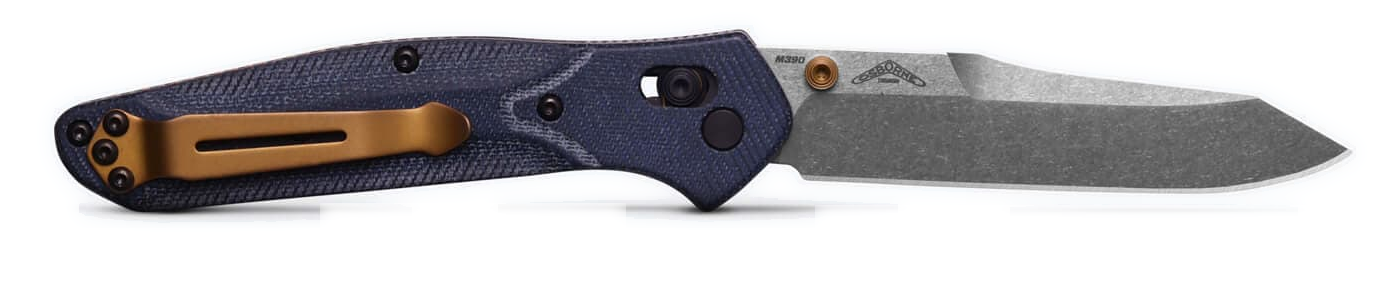
The 940-04 brings M390 and blue denim Micarta to the slim Osborne shape. Its 3.4-inch reverse-tanto blade gives you more blade length than the Bugout in a 0.445-inch-thick handle. That combination suits general utility when you want a longer edge without a bulky handle. This is the Micarta/M390 version, rather than the green aluminum S30V model in our original review.
In my original Benchmade 940 review, I liked the older model's compact proportions and one-handed AXIS operation. Those are good reasons to explore the Osborne family. This version changes the handle and steel, so compare the exact configuration before deciding between it and the Bugout.
The Osborne design has a long history, but this M390 and denim Micarta configuration joined the regular catalog in 2025. The older model's reputation is useful context; it is not a substitute for evaluating this version.
The Osborne gives you a little more blade length and the reverse-tanto profile. The Bugout gives you the thinner drop point and deep-carry setup we favor for light pocket carry. Both are premium purchases, so let the blade and handle you actually prefer settle the choice. If a flipper is more important than a slim handle, consider the Myto instead. For the Osborne, confirm the 940-04 model code so you do not buy a different handle-and-steel configuration.
Compare Our Picks
Scroll sideways on smaller screens to compare all the details.
| Knife / exact model | Best for | Blade / stock | Mechanism / carry | What you give up | Weight |
|---|---|---|---|---|---|
| Benchmade Bugout 535BK-4 | Thin blade and deep pocket carry | 3.24 in blade / 0.09 in stock | AXIS crossbar; Reversible deep-carry clip | Premium price | 2.50 oz |
| LionSteel M4 CVG | Camp cutting with a belt sheath | 3.75 in blade / About 0.16 in stock | Full-tang fixed blade; Leather belt sheath | Sheath bulk rather than pocket carry | 4.83 oz |
| LionSteel Myto MT01CVG | Flipper opening and substantial handle | 3.25 in blade / About 0.16 in stock | Frame lock; Tip-up clip | Thicker stock than the Bugout | 3.48 oz |
| LionSteel BestMan BM1-EB | Traditional two-handed carry | 2.875 in blade / 0.11 in stock | Non-locking slipjoint; No pocket clip | No lock or pocket clip | 2.37 oz |
| Benchmade Osborne 940-04 | Longer reverse-tanto blade for utility | 3.40 in blade / 0.115 in stock | AXIS crossbar; Reversible standard clip | Standard clip rather than deep carry | 2.42 oz |
How to Choose an M390 Knife
Blade HQ does not specify whether the M4's weight includes the sheath.
Match the knife to your carry routine
Start by ruling out formats you will not use. If you need quick pocket access, compare the locking folders and their clip positions. If you prefer a belt knife for food, cord and camp chores, account for the sheath and choose a handle that gives you room to work. A two-handed slipjoint suits a slower opening routine, but it is a poor substitute when you need one-handed access or a locking blade.
Compare what the extra money buys
The BestMan and M4 are the less expensive choices here, but neither replaces a locking pocket folder. The BestMan opens with two hands and has no lock or clip; the M4 needs a sheath. Spend more on the Bugout if its thin blade, light carry and ambidextrous controls suit your routine. The Osborne gives you a longer reverse-tanto blade in a narrow Micarta handle. The Myto's appeal is its flipper and Micarta/titanium construction, rather than a promise that thicker stock will cut better.
Check the exact offer before choosing an alternative
Match the model code, blade steel, handle and opening mechanism to the recommendation. A cheaper listing for another steel is a different purchase. For the BestMan, confirm that you want the single-blade BM1-EB and its nonlocking, two-handed format. For the M4, include the sheath in your carry decision rather than treating a belt knife as an equivalent pocket-carry setup.
Why Trust Us
We compared maker specifications, documented reviews and retailer listings to select M390 knives for everyday carry, traditional pocket use and camp cutting. Blade geometry, handle design and the whole carry setup mattered more than the steel name alone. Named reviewers' observations remain attributed, with differences between their samples and these configurations identified.
Final Thoughts
For everyday carry, our first choice is the Bugout 535BK-4. If your usual work calls for a belt knife, choose the M4 instead. Let the carry format and useful features settle the choice, and leave chopping or prying out of the job description.
Frequently Asked Questions
Should I buy an M390 knife instead of a MagnaCut knife?
Knife Steel Nerds' testing found MagnaCut substantially tougher and more corrosion-resistant than M390 under its test conditions. That makes it worth comparing when wet use or toughness is a priority. Compare the whole knife too: blade geometry, handle and the work you expect it to do. Our best MagnaCut knives guide gives you other designs to consider. If you already like a particular M390 model, compare it with a similar MagnaCut knife rather than letting the steel name decide everything.
How should I sharpen and care for an M390 knife?
Plan to maintain the edge rather than let it become completely blunt. Diamond or CBN abrasives are useful options, but they are not the only way to sharpen M390: Knife Steel Nerds explains why aluminum oxide can work with its carbide structure. Follow the knife maker’s guidance for the edge angle, and use controlled passes. Rinse and dry the blade after food prep or wet use; stainless steel still benefits from care. Our knife sharpening guide covers the basic technique.
Are M390, 20CV and 204P the same thing?
M390, CPM 20CV and CTS-204P come from different makers but have very similar nominal compositions. Think of them as close alternatives, rather than a reason to expect identical performance from every knife. Heat treatment, blade geometry and the rest of the build still matter. This guide covers knives specifically labeled M390; a well-made 20CV or 204P knife may be a useful alternative if you prefer its shape, handle or price. M398 is a different alloy, so do not treat that label as an interchangeable M390 option.
What should I check when the knife arrives?
Confirm the model and steel marking, inspect the edge and look for damage or unusual play. Operate the opener and lock carefully before carrying it. If something is wrong, use the seller’s return process instead of assuming you need to disassemble a new knife to fix it.
