


We independently evaluate all recommended products and services. Any products or services put forward appear in no particular order. If you click on links we provide, we may receive compensation.
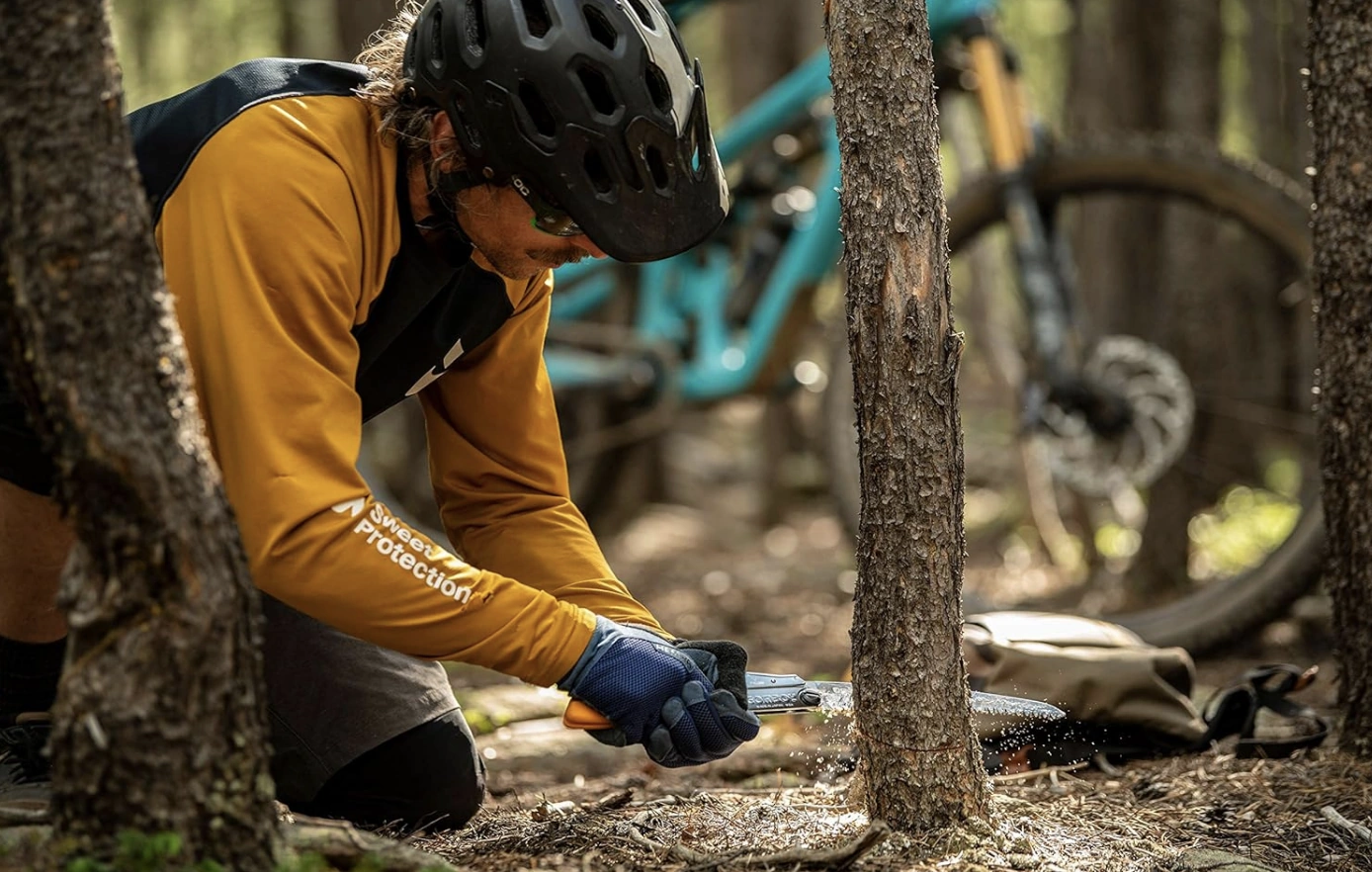
A folding saw is one of those tools that's easy to overlook until you desperately need one. Whether it's clearing a shooting lane during deer season, processing firewood at camp, or pruning overgrown limbs around the property, a good folding saw earns its spot in any outdoor kit. Pair one with a solid bushcraft knife and you're equipped to handle just about anything the backcountry throws at you.
Folding saws have surged in popularity over the last several years, thanks in part to the bushcraft community and their growing presence on survival shows and YouTube channels. They're safer than axes, more portable than traditional bow saws, and infinitely more practical than trying to baton through a 6-inch log with a survival knife. The problem is that the market has gotten crowded, and quality varies wildly from one brand to the next.
We set out to find the best folding saws across a range of budgets and use cases. Our picks cover everything from ultralight options for backpacking to serious camp saws that can handle larger timber. We also looked at both straight folding saws and frame-style bow saws to help you find the right tool for the job.
Key Considerations
A good folding saw shares a lot of the same qualities as a good knife — solid construction, comfortable ergonomics, and a blade that holds up under real use. Much of the choice comes down to what you plan to use it for. However, we looked for some critical things in making these selections.
- Blade Length: Most folding saws fall in the 7-to-10-inch range. Shorter blades are lighter and more packable but limited to smaller branches. Longer blades cut faster and handle bigger wood but add weight and bulk. A 7-to-8-inch blade is the sweet spot for most campers and hunters.
- Saw Type: There are two main categories — straight folding saws and triangular frame (bow) saws. Straight saws fold like a large pocket knife and are the most portable. Frame saws use a tensioned blade for more rigidity and better performance on bigger wood.
- Tooth Design: Teeth per inch (TPI) determines aggressiveness. Fewer, larger teeth cut faster in green wood. More teeth per inch give cleaner cuts but slower progress. Impulse-hardened teeth stay sharp much longer. Japanese-style pull-cut teeth are extremely efficient but less forgiving of poor technique.
- Locking Mechanism: A reliable lock is essential for safety. I looked for button locks or ring locks that secure the blade in both the open and closed positions. A saw that can accidentally fold on your hand is a trip to the ER waiting to happen.
- Handle Ergonomics: Comfortable handles reduce fatigue during extended cutting. Rubber over-molded grips provide good traction when wet. Handle shape matters too — a vertical grip on a bow saw is less fatiguing than a horizontal pistol grip for prolonged use.
- Price: We didn't want to fill this list exclusively with $50–$80 saws. I tried to find options that would fit any budget without sacrificing quality. Some of the best folding saws on this list cost less than a decent lunch.
Top Picks
- Best Overall: Silky Gomboy 240
- Best Budget: Bahco Laplander
- Best Bow Saw: Agawa Canyon Boreal 21
- Best Value: Corona RazorTooth
- Best Compact: Silky PocketBoy 170
- Best Heavy-Duty: Silky BigBoy 360
- Best for Hunters: Ka-Bar Folding Saw
Best Overall: Silky Gomboy 240
| PROS | CONS |
|
|
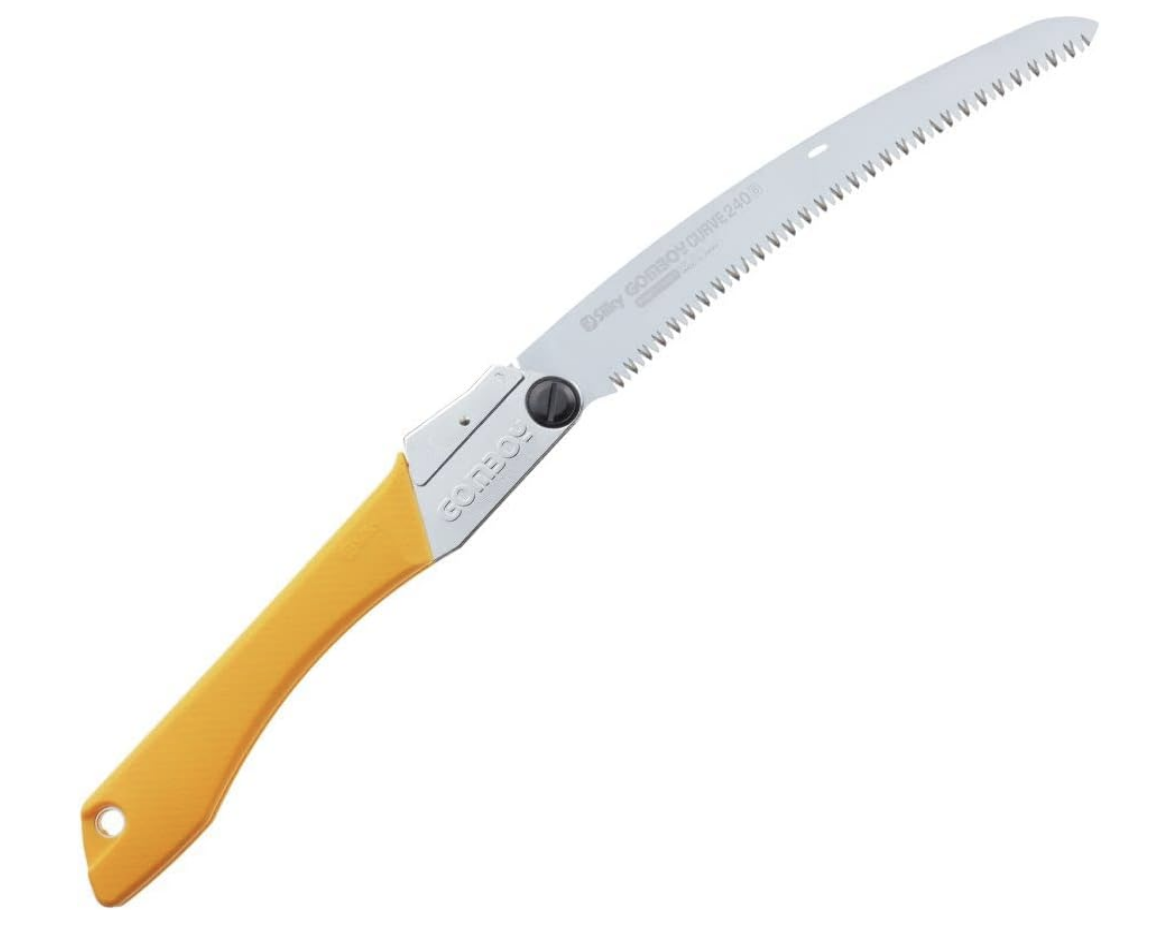
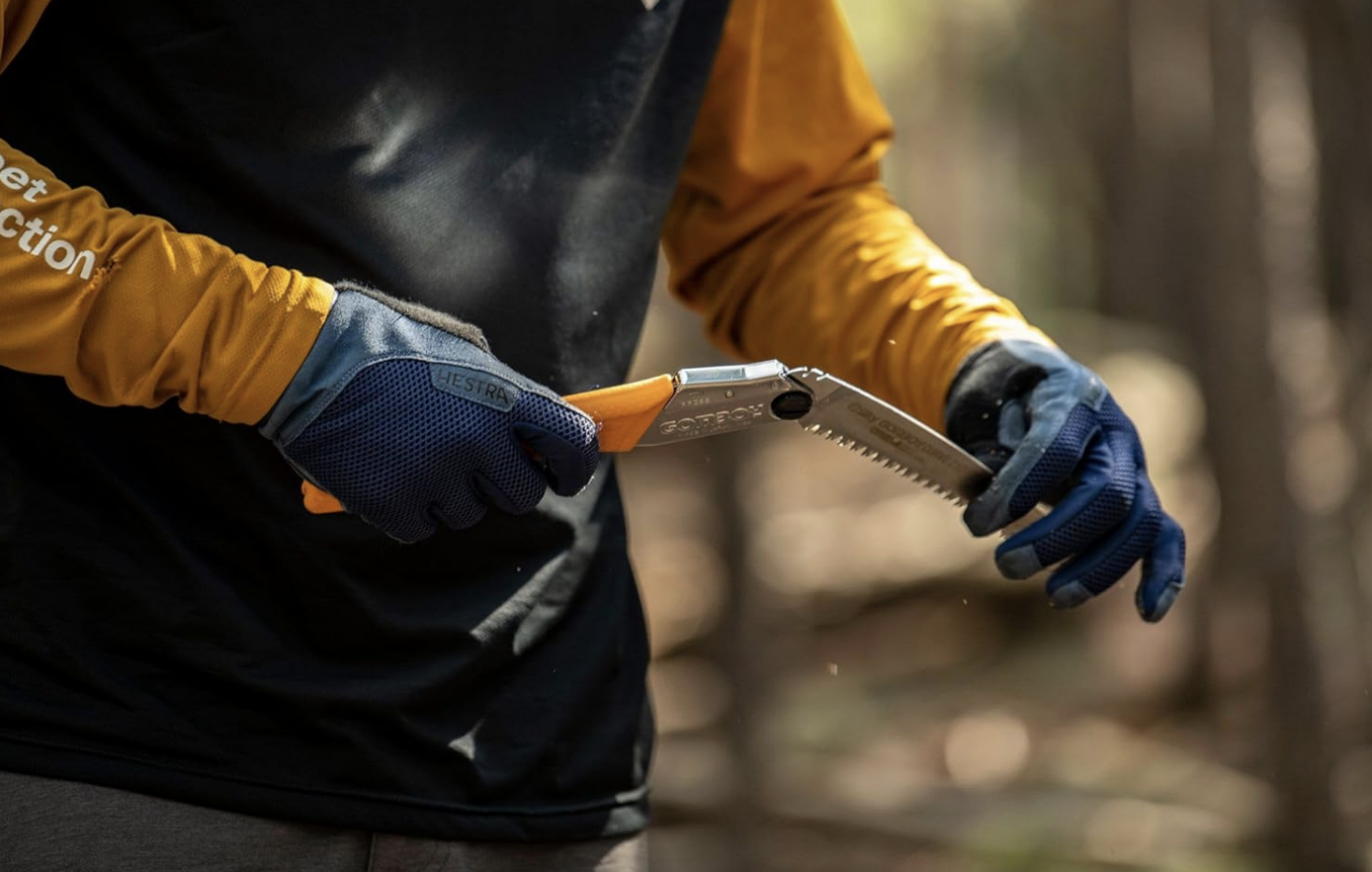
The Silky Gomboy 240 is the gold standard for folding saws among serious outdoors enthusiasts. The 240mm blade with large impulse-hardened teeth cuts through seasoned hardwood like it's butter. Silky's signature pull-stroke design means you don't have to muscle the saw — just let the teeth do the work. The chrome-plated, taper-ground blade cuts fast and clean without binding, which is something I can't say about a lot of the competition. The rubber grip is excellent in all conditions, and the locking mechanism inspires real confidence. Meanwhile, the blade is replaceable and available in multiple tooth configurations, so you can dial it in for your typical use case.
The biggest knock on the Gomboy is that the blade is less forgiving than competitors like the Bahco Laplander. If you torque it sideways under pressure, you risk bending or snapping the blade. This is user error, not a design flaw, but it's worth noting for anyone new to pull-stroke saws. Replacement blades run $25–$35, which stings compared to a $10 Bahco replacement. However, the Gomboy's cutting performance is a clear tier above everything else in its class. Bushcraft communities across the internet overwhelmingly rank this as the best folding saw you can buy, and I don't disagree. It pairs beautifully with a solid fixed blade for a complete backcountry cutting kit.
Best Budget: Bahco Laplander
| PROS | CONS |
|
|
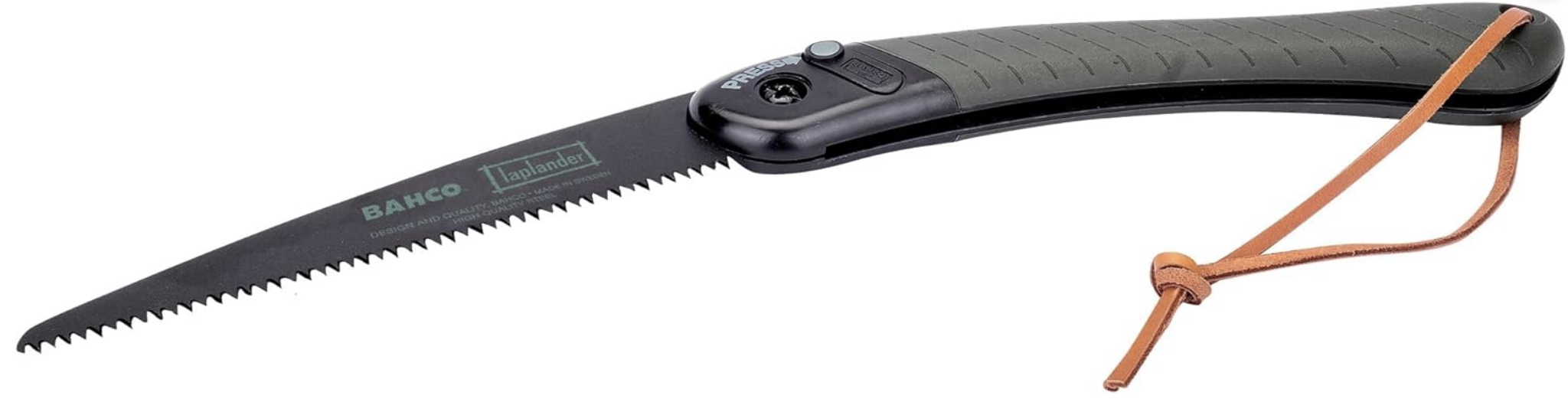
The Bahco Laplander has been the default recommendation in bushcraft and survival circles for well over a decade, and for good reason. It's tough, reliable, and cheap enough that you can toss one in every pack and vehicle without thinking twice.
The 7 TPI blade cuts on both the push and pull strokes and features a non-stick coating that keeps sap buildup to a minimum. The button lock and lanyard hole add practical touches. Bahco was founded by Johan Petter Johansson in Sweden and is now owned by Snap-On. The company has built a rock-solid reputation in the bushcraft community, similar to Morakniv on the knife side. Countless survival instructors default to the Laplander for teaching because students simply cannot break them.
The Laplander isn't going to win any speed contests. Side by side with a Silky, it's noticeably slower. The 7.5-inch blade also means you'll be limited on bigger logs — anything over 4 inches in diameter requires rotating the log. But for most camping, hunting, and backpacking tasks, it's more than sufficient. The blade stays sharp for a surprisingly long time, and replacements are about $10. Bahco also offers different blade tooth profiles for green wood, dry wood, and a universal configuration. At under $30, it's hard to argue against having a Laplander in every bag you own. This is the saw I'd recommend to anyone buying their first folding saw.
Best Bow Saw: Agawa Canyon Boreal 21
| PROS | CONS |
|
|
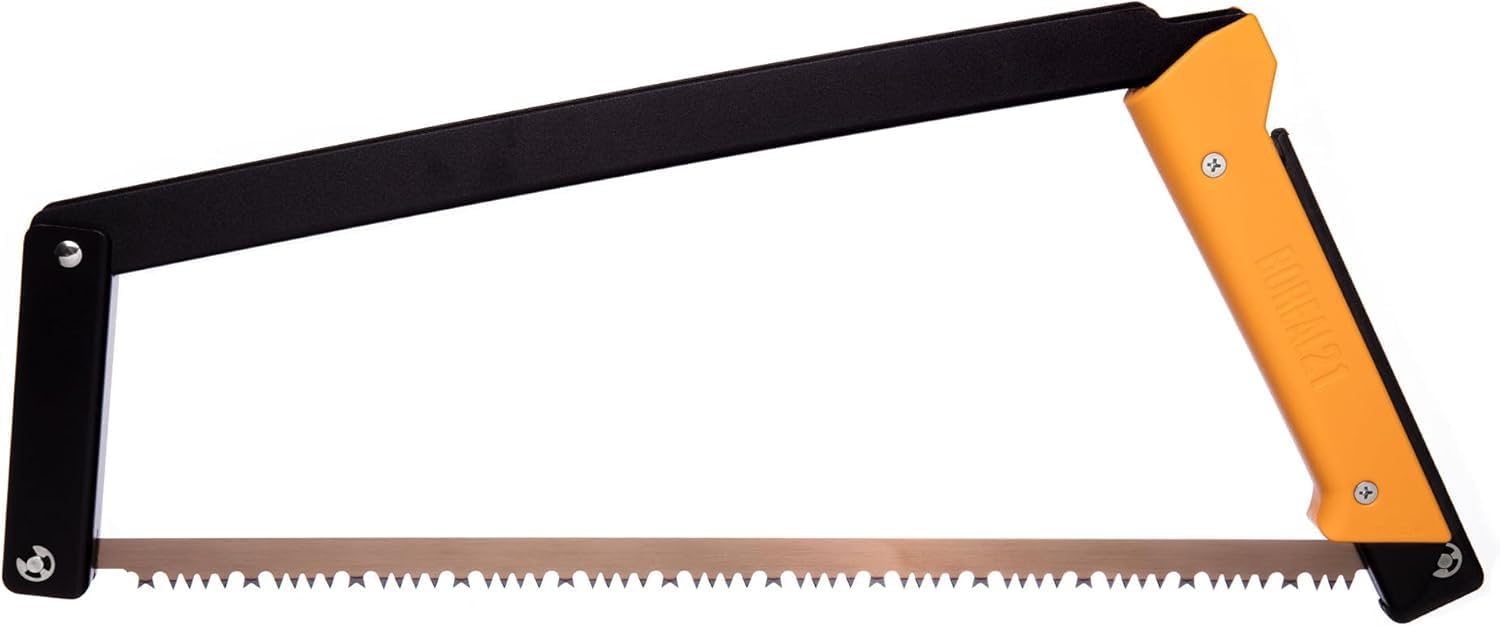
The Agawa Boreal 21 is a completely different animal from a standard folding saw. It's a folding triangular frame saw that packs down to roughly the size of a windshield wiper blade but deploys into a full 21-inch bow saw. The blade is completely concealed when folded, and the self-tensioning design means you never need to fiddle with adjustments. It cuts on both push and pull strokes, and the vertical grip is significantly less fatiguing than horizontal-grip folding saws during extended sessions. If you need to process a serious amount of firewood at camp, this is the saw to bring. Agawa is a small Canadian company that focuses exclusively on outdoor/bushcraft items and the attention to detail shows throughout.
The Boreal is available in 15, 21, and 24-inch configurations. The 21-inch is the sweet spot — deep enough to handle 7-inch diameter logs without rotating them, yet compact enough for pack carry. Multiple blade options are available, including all-purpose, aggressive, and bone/meat configurations. Replacement blades run about $10, which is a fraction of what Silky charges. The blades are made from Swedish bandsaw steel and hold their edge well. The main downside is weight — at just over a pound, it's not an ultralight option. But for car camping, established camp setups, and hunting trips where firewood processing is a priority, the Boreal is unbeatable. It's the kind of tool that makes you wonder why you ever struggled with a small folder for big jobs.
Best Value: Corona RazorTooth
| PROS | CONS |
|
|
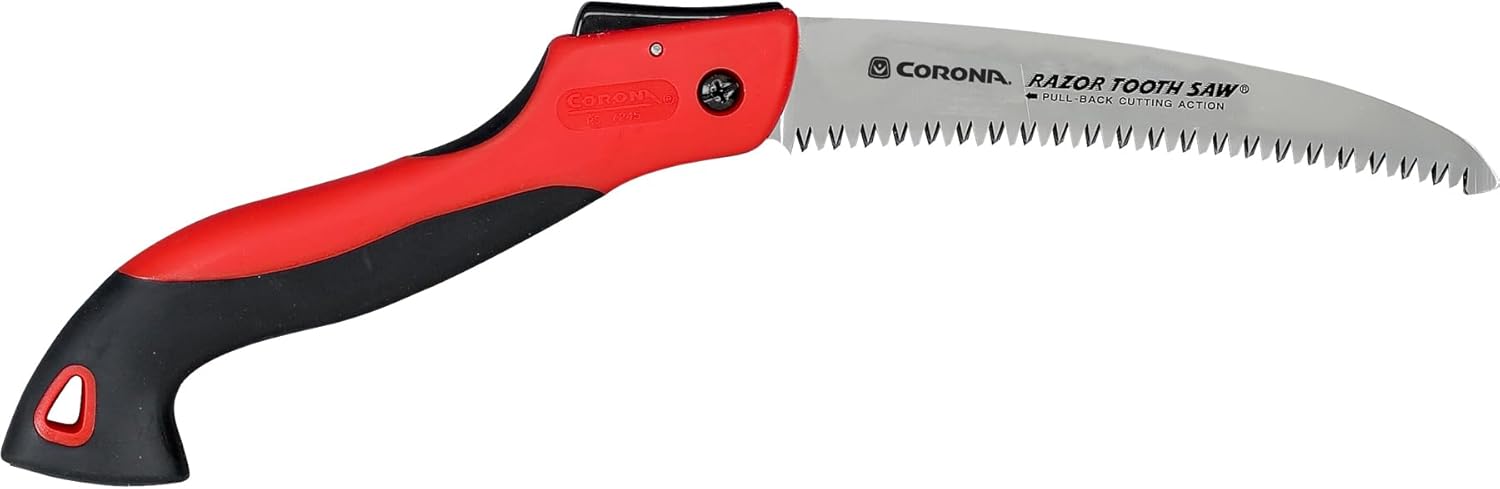
The Corona RazorTooth is a pruning saw by origin, but it's found a massive following among campers and bushcrafters for good reason. The curved blade with triple-ground teeth is absurdly aggressive. In side-by-side testing across multiple reviews, the Corona consistently cuts through 4-to-5-inch logs faster than saws costing three times as much.
The SK-5 steel blade holds up well, and the bi-molded rubber grip is genuinely comfortable. Corona started out making clippers for the California citrus industry and has been producing quality cutting tools ever since. The simple locking mechanism is cleverly placed far enough from your hand that accidental engagement isn't an issue. For the money, it's probably the most cutting performance you can get.
The Corona comes in 7, 8, and 10-inch blade lengths. The 7-inch is the most popular for camping and pack carry, while the 10-inch is better for property maintenance and larger cutting tasks. The curved blade does have a learning curve — it cuts best on the pull stroke, and the aggressive teeth can be too much for smaller branches. They tend to grab and tear rather than cut cleanly on small stuff. It's also worth noting that Corona saws are durable and bend without breaking, yet stay hard enough to remain sharp for a long time. Unlike many folding saws, the Corona locks shut as well as open, which is a nice safety feature. This is an excellent option for anyone who wants raw cutting power without spending Silky money.
Best Compact: Silky PocketBoy 170
| PROS | CONS |
|
|
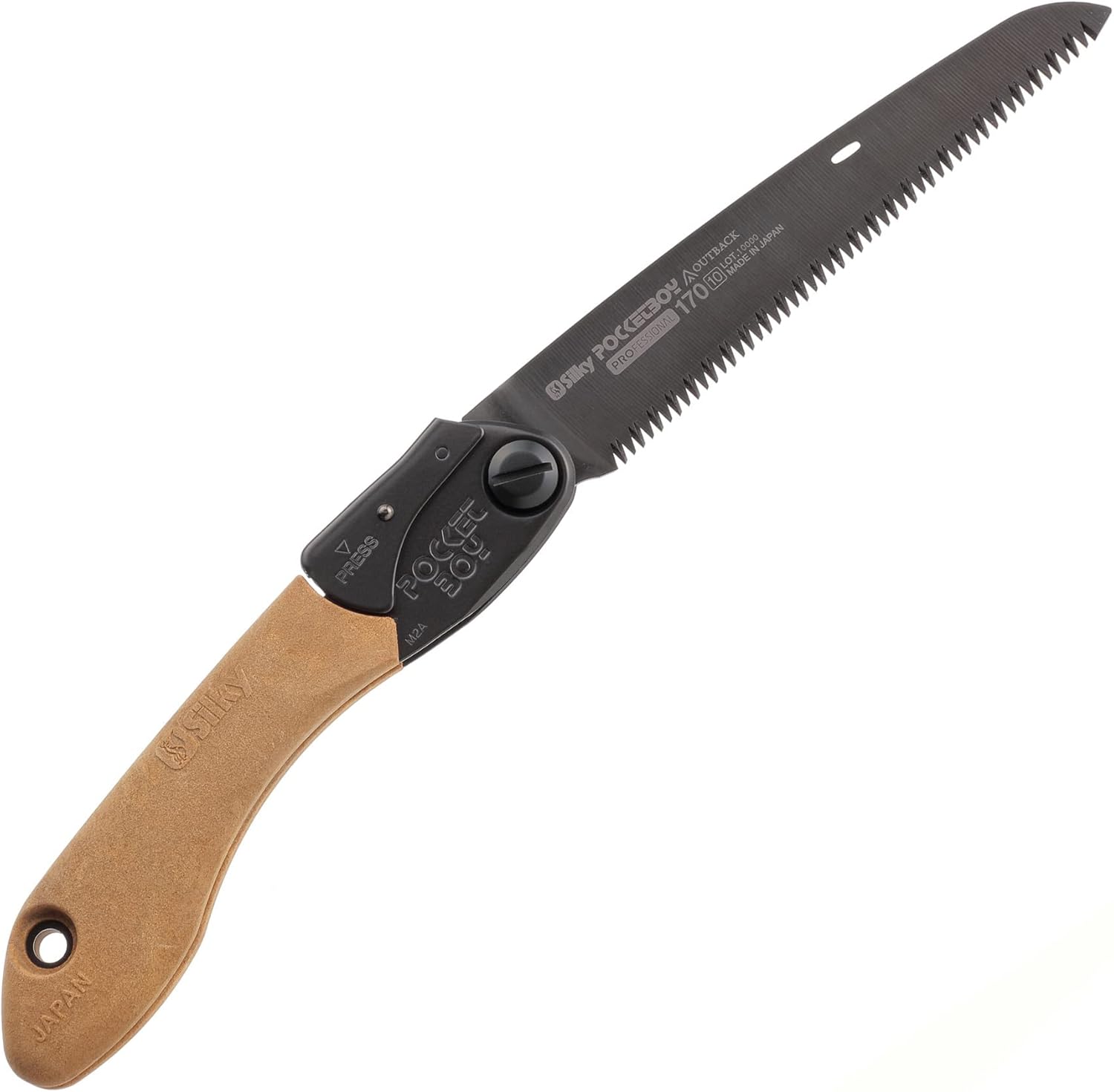
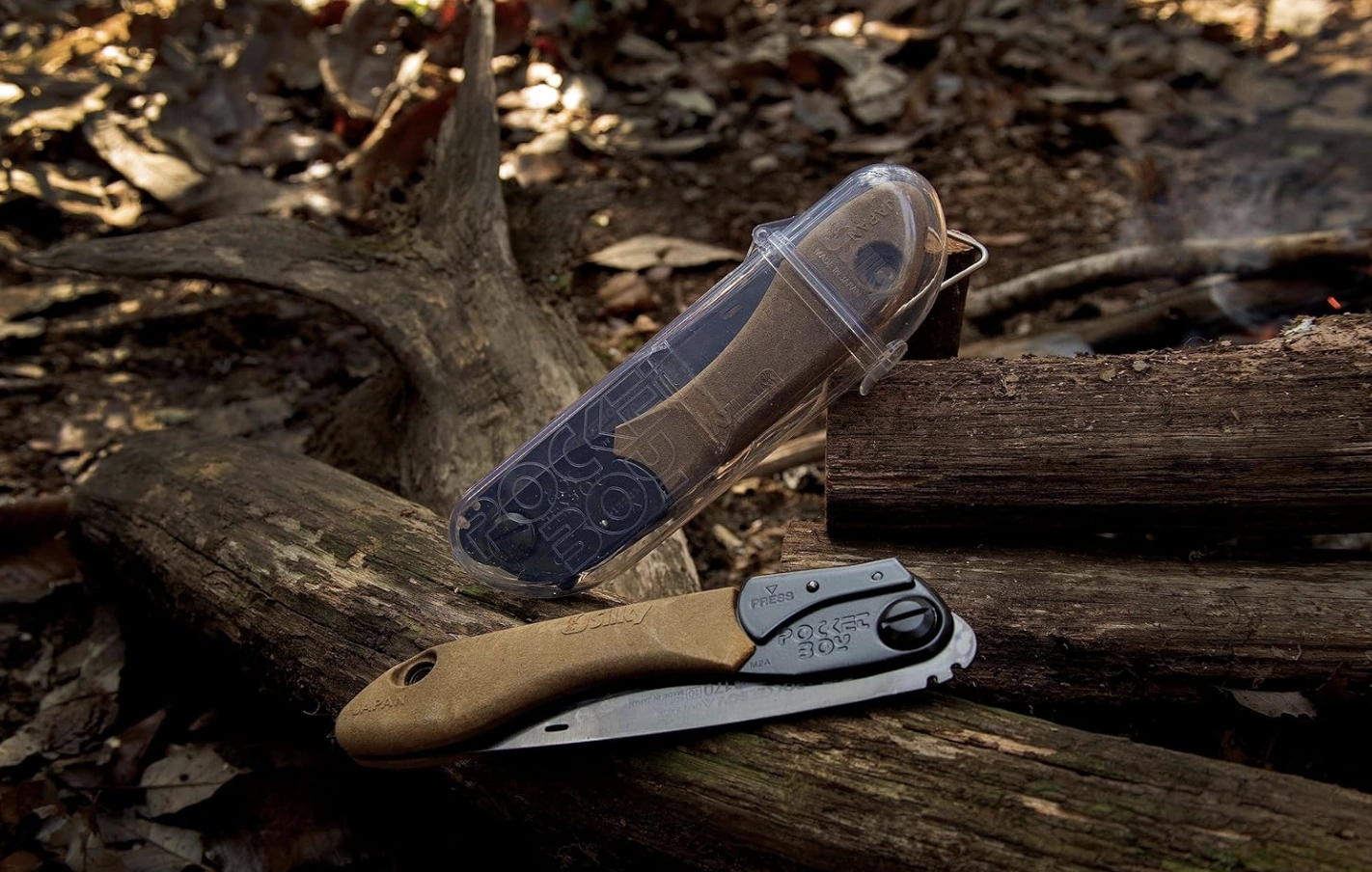
The PocketBoy is Silky's answer to ultralight packability. It's small enough to disappear into a hip pocket or the lid of a daypack, yet it performs like a saw twice its size. The impulse-hardened teeth chew through 2-to-3-inch branches with startling efficiency. Silky has been making saws in Japan since 1919, and the craftsmanship is evident here.
They offer this saw in multiple tooth configurations — the large-tooth version is the most aggressive and popular for camping, while the fine-tooth version is better for precision pruning. It's also available in a curved blade Outback Edition for those who prefer the pull-stroke feel of a curved blade.
The PocketBoy's limitations are purely size-related. It's not the saw for processing firewood or cutting anything over about 3 inches in diameter. Think of it as a complement to a larger saw or a standalone option for ultralight backpacking, day hikes, and hunting where you just need to clear shooting lanes or trim small branches. One thing I really appreciate is the spine of the PocketBoy — it's sharp enough to strike a ferro rod in a pinch, which is a nice little survival bonus. The replacement blade situation is the same as other Silky products — expensive relative to the saw itself. But the PocketBoy is one of those tools that earns its spot through sheer convenience. You'll forget it's in your pack until you need it.
Best Heavy-Duty: Silky BigBoy 360
| PROS | CONS |
|
|
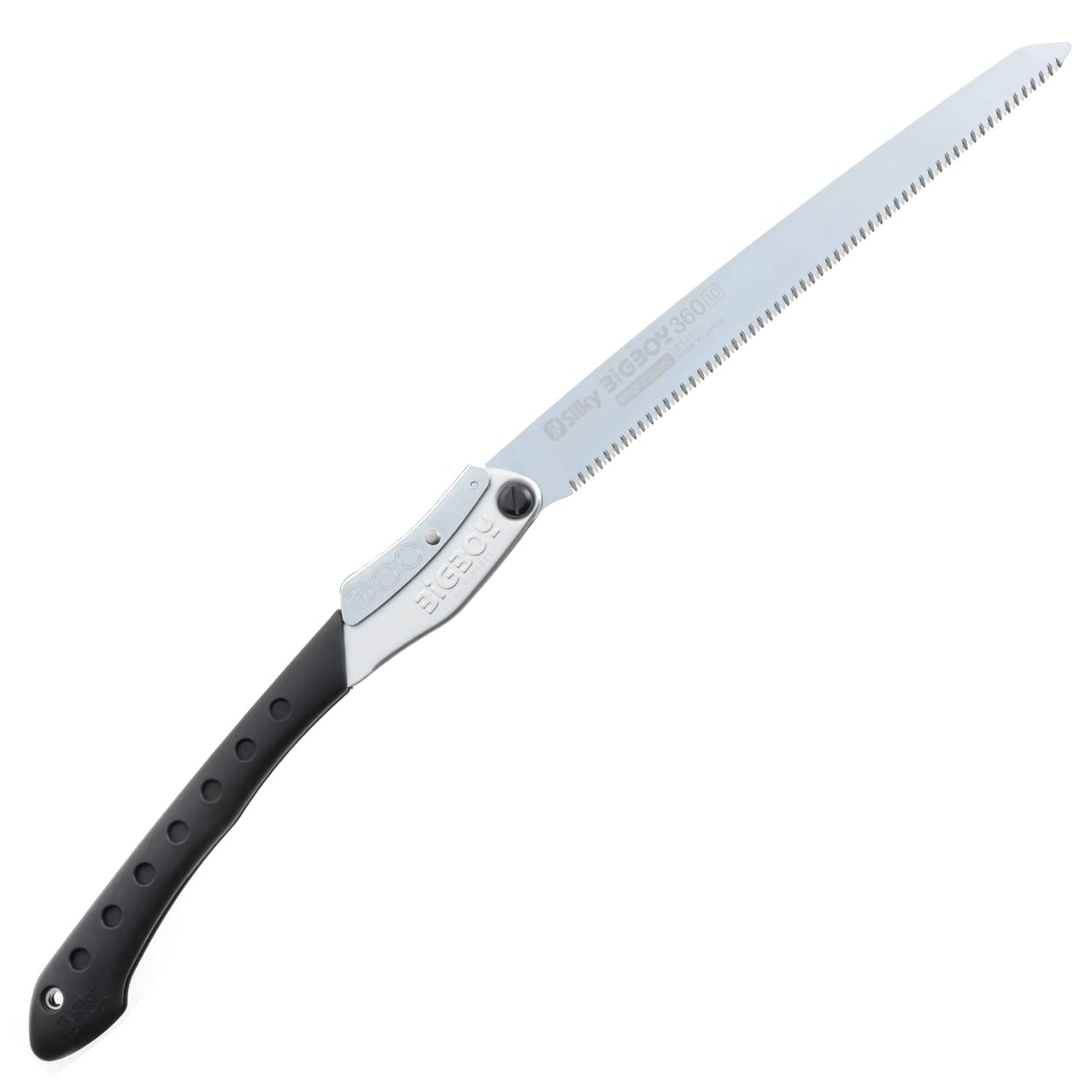
When the job calls for something more serious, the Silky BigBoy 360 is the saw to reach for. The 14-inch blade handles logs that would take all day with a smaller folder. Silky offers this one in four different tooth configurations, so you can pick the perfect blade for your intended use.
The medium-tooth configuration is a solid all-purpose choice, but the large-tooth blade really shines for aggressive cutting through dry hardwood. The handle is long enough for a comfortable two-hand grip, which makes a significant difference during extended cutting sessions. The grip was comfortable and secure enough that I never felt like I was sliding, which meant less fatigue in my hands. This is a professional-grade tool that's popular with arborists, trail crews, and serious backcountry campers.
The BigBoy's drawback is its size. Folded, it's still a substantial piece of gear — more than double the weight and length of the Laplander. It's best suited for car camping, base camp setups, or dedicated trail work rather than mile-after-mile backpacking. The blade is also prone to the same bending issues as other Silky saws if you get it pinched in a cut. That said, I know people who have used the same BigBoy blade for three-plus years of regular use without a replacement — you just have to use it properly and not force it. At this price point, it's an investment, but one that pays off quickly if you regularly need to cut larger wood. Pair it with a solid camp knife and you've got a backcountry wood processing setup that's hard to beat.
Best for Hunters: Ka-Bar Folding Saw
| PROS | CONS |
|
|
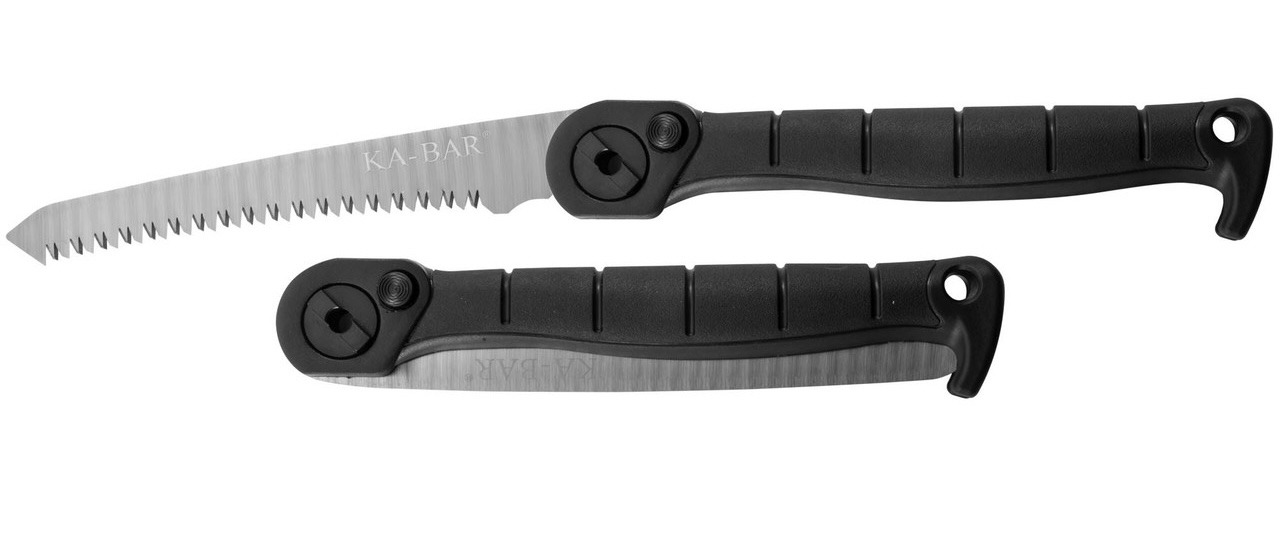
Ka-Bar might be known primarily for their knives, but their folding saw is a pleasant surprise. The standout feature is the handle — a fiberglass and nylon construction with a TPR overmold that provides the best grip of any folding saw I've tested. It's tacky without being sticky, and it maintains traction even in wet conditions. The push-button lock has a crispness to it that reminds you this is made by a knife company. It's an ideal companion for hunters who already trust the Ka-Bar name and want a saw that pairs well with their field gear. The 8-inch blade is right in the sweet spot for a hunting pack — long enough to be useful without taking up too much space.
The Ka-Bar produces exceptionally smooth and clean cuts, which speaks to the blade quality. It's not the fastest cutter in the lineup, falling behind both the Corona and Silky in raw cutting speed. However, the blade dulls very slowly and handles moderate-diameter wood with confidence. The safety features are worth mentioning too — after you start to fold the blade, you have to press the button again to fully collapse it into the handle. This prevents you from accidentally snapping the blade down on your fingers.
At around $40, it slots in as a solid mid-range option that punches above its weight. It's particularly well-suited for keeping in a vehicle or throwing in a hunting pack where you might need it for clearing shooting lanes, trimming branches, or cutting through bone.
How to Choose the Best Folding Saw
Picking the right folding saw is a lot like picking the right knife — there's no universal best option. It depends on what you plan to do with it and how much you're willing to spend. A weekend car camper has very different needs than an ultralight backpacker or someone clearing trail on a regular basis. That said, there are a few key factors that separate a good folding saw from one that'll end up collecting dust in your garage.
Straight Saw vs. Bow Saw
This is the first decision most people need to make. Straight folding saws fold like a large pocket knife. They're compact, quick to deploy, and easy to carry. Bow saws (also called frame saws) use a tensioned blade stretched between two points of a triangular frame. The tensioned blade provides much more rigidity, which translates to faster cuts and better performance on larger wood. The trade-off is bulk and setup time. For most people, a straight folding saw covers 90% of their needs. If you regularly need to process firewood at camp or work with logs over 5 inches in diameter, a folding bow saw like the Agawa Boreal is worth the extra weight.
Blade Material and Tooth Geometry
Most quality folding saws use some form of high-carbon steel. SK-5 is common in more affordable models like the Corona and Ka-Bar. Japanese saws from Silky use proprietary steels with impulse-hardened teeth, which is a heat treatment process that significantly extends the life of each tooth. The tooth geometry matters just as much as the steel itself. Western-style saws generally cut on both push and pull strokes. Japanese-style saws cut only on the pull stroke, which allows for a thinner blade and faster cutting with less effort. The pull-cut design does have a learning curve, but most users find it intuitive after a few minutes.
Blade Length
A good rule of thumb is that the blade should be at least twice the diameter of the wood you plan to cut, although you can always rotate the log to work around this. A 7-inch blade handles most camping tasks without issue. A 10-inch-or-longer blade is better for serious firewood processing. The trade-offs are straightforward — longer blades cut faster and handle bigger wood but add weight and bulk. For a backpacking kit where every ounce counts, a 6-to-7-inch saw is ideal. For a vehicle kit or base camp setup, go bigger.
Maintenance
Most modern folding saw blades are designed to be replaced rather than sharpened. The impulse-hardened teeth on saws from Silky and Bahco are extremely hard, which means they stay sharp for a very long time but are difficult to sharpen by hand. Some users do touch up teeth with a diamond file, but replacement is generally the better option once the teeth dull significantly. Basic care is simple — wipe the blade after use to remove sap and debris, apply a light coat of oil for storage, and keep the pivot mechanism clean. If the blade starts dragging or binding in the wood, it usually means the teeth are beginning to bend inward, reducing the kerf. You can sometimes bend them back into alignment with pliers, but at that point, a new blade is the better investment.
Why Trust Us
We've covered knives and outdoor cutting tools professionally for over a decade. This piece draws on extensive hands-on experience with camp saws as well as deep research across professional reviews, forum communities, and real-world user feedback.
I ensured that this piece didn't include saws that hadn't consistently proven themselves in the field. We also prioritized finding options across multiple price points because not everyone needs — or wants — to spend $70 on a folding saw.
Final Thoughts
A folding saw is one of those tools that deserves a permanent spot in your camp kit, hunting pack, or vehicle emergency supplies. There are tons of options out there, and honestly, most quality saws will get the job done.
However, the Silky Gomboy 240 blew me away with its cutting efficiency and build quality. It's the best folding saw for anyone who wants top-tier performance from a straight folder. For those on a tighter budget, the Bahco Laplander remains the unbeatable entry point — it's the utility knife of folding saws in that it does everything reasonably well at a price that's hard to argue with.
If you need to process serious firewood and don't mind the extra weight, the Agawa Canyon Boreal 21 is a game-changer. Ultimately, the best folding saw is the one that matches your use case and budget. Pair any of these with a quality bushcraft knife or survival knife, and you've got a cutting kit that'll handle anything the backcountry throws at you.
FAQs
Q: What size folding saw do I need?
A: For most camping and hunting tasks, a 7-to-8-inch blade handles everything comfortably. If you regularly need to cut logs over 4 inches in diameter, step up to a 10-inch blade or a bow saw like the Agawa Boreal. Shorter blades in the 5-to-6-inch range are best for ultralight backpacking and day hikes where weight is a priority.
Q: Can I sharpen a folding saw blade?
A: Most modern folding saw blades use impulse-hardened teeth that are designed to be replaced rather than sharpened. You can touch up some blades with a diamond file, but replacement is generally the better option once the teeth dull significantly. Replacement blades range from around $10 for Bahco and Agawa to $25–$35 for Silky.
Q: Is a folding saw better than a hatchet for camping?
A: They serve different purposes. A folding saw excels at cutting through branches and logs with precision and less effort. A hatchet is better for splitting wood and driving stakes. Ideally, you'd carry both. But if you can only pick one, a folding saw is safer, lighter, and more versatile for most camping tasks. Many people pair a folding saw with a heavy bushcraft knife that can handle light batoning for the best of both worlds.
Q: What's the difference between a folding saw and a bow saw?
A: A folding saw has a blade that folds into its handle, similar to a large folding knife. A bow saw uses a tensioned blade stretched between two points of a frame. Folding saws are more compact and quicker to deploy. Bow saws are more capable for bigger wood because the tensioned blade provides greater rigidity. Some products like the Agawa Boreal combine both concepts into a folding frame saw.
Q: Are Japanese folding saws worth the extra money?
A: If cutting performance is your priority, then absolutely. Silky saws use a taper-ground, impulse-hardened tooth design that cuts significantly faster and with less effort than Western-style saws. The trade-off is that the blades are less forgiving of improper technique and more expensive to replace. For casual or occasional use, a Bahco Laplander or Corona RazorTooth gives you excellent performance at a much lower cost.
Q: Can I use a folding saw to cut bone?
A: Some folding saws can handle bone cutting for game processing. The Agawa Boreal offers a specific bone/meat blade configuration. The Bahco Laplander's 7 TPI blade can also handle bone in a pinch. However, for dedicated game processing, we'd still recommend a proper survival knife or hunting saw designed specifically for the task.
