


We independently evaluate all recommended products and services. Any products or services put forward appear in no particular order. If you click on links we provide, we may receive compensation.
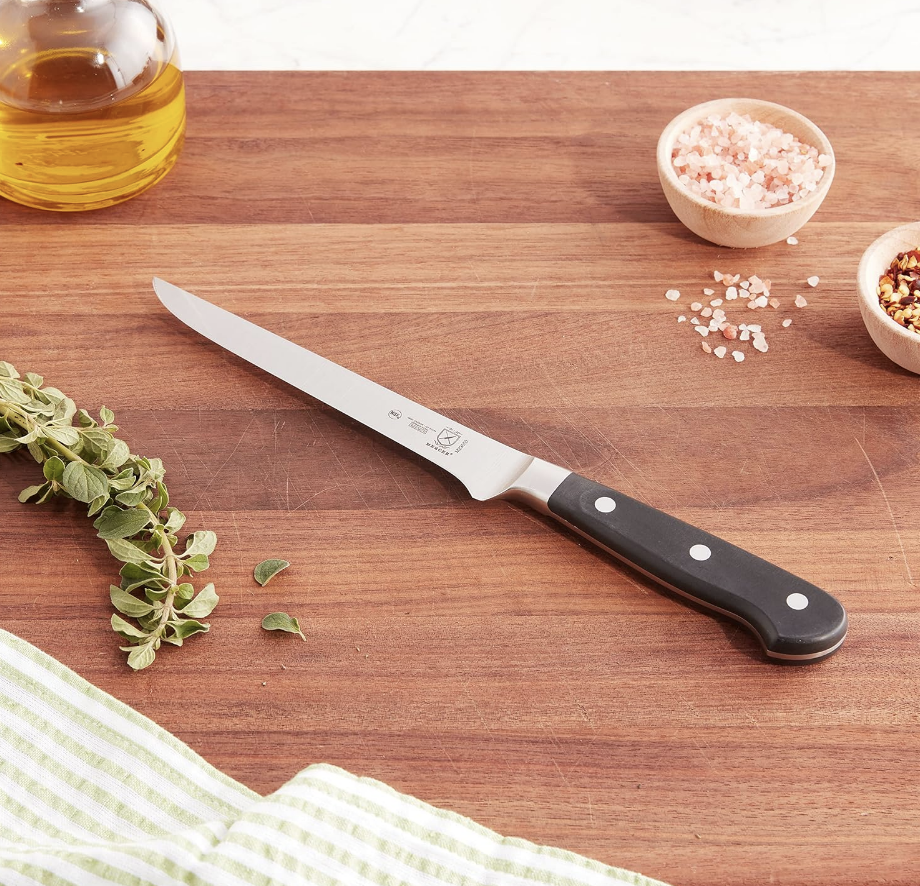
Whether you're breaking down a whole deer in your garage or filleting fresh-caught walleye on the dock, having the right boning knife makes all the difference. A quality boning knife transforms butchering from a frustrating hack-job into a surgical operation where meat slides cleanly from bone, yielding maximum usable cuts and minimal waste.
I've processed dozens of deer, countless fish, and more chickens than I care to count over the years. Nothing tests a knife's mettle quite like eight hours of processing a whitetail into table-ready cuts. The wrong knife leaves you with aching hands, mangled meat, and the urge to just drive to the grocery store next time. After extensive testing both in the field and at the processing table, we've assembled our picks for the best boning knives available today.
Key Considerations
When selecting the best boning knives for this list, I focused on features that matter during real-world use rather than just impressive specs on paper. Here's what I prioritized:
- Blade Flexibility: Boning knives come in flexible, semi-flexible, and stiff variants. Flexible blades navigate tight curves around bones and joints, while stiffer blades offer more control for larger cuts. I tested both styles to find the sweet spot for each use case.
- Edge Retention vs. Ease of Sharpening: You're going to be touching up your boning knife frequently. I looked for steels that hold an edge through a full deer or several fish but don't require diamond stones and an engineering degree to resharpen.
- Handle Ergonomics: Processing game is a marathon, not a sprint. After three hours of breaking down an elk, you'll understand why handle comfort matters. I tested each knife during extended sessions to identify hot spots, slippage issues, and fatigue factors.
- Blade Length: Most boning knives fall between 5 and 7 inches. Shorter blades offer more control for delicate work; longer blades excel at sweeping cuts along large bones. I focused on the 6-inch range as the most versatile.
- Safety Features: A good finger guard isn't just nice to have when your hands are slick with blood and fat. I evaluated each knife's guard design and handle texture for wet-hand performance.
- Cleanability: Knives with crevices and rough textures trap bacteria. I looked for designs that clean easily and thoroughly, especially important when processing wild game.
Top Picks
- Best Overall: Victorinox Fibrox Pro 6-Inch Boning Knife
- Best Budget: Mercer Culinary Renaissance 6-Inch Flexible Boning Knife
- Best Premium: Wüsthof Classic 6-Inch Flexible Boning Knife
- Best for Game Processing: Outdoor Edge RazorPro Double Blade Folding Knife
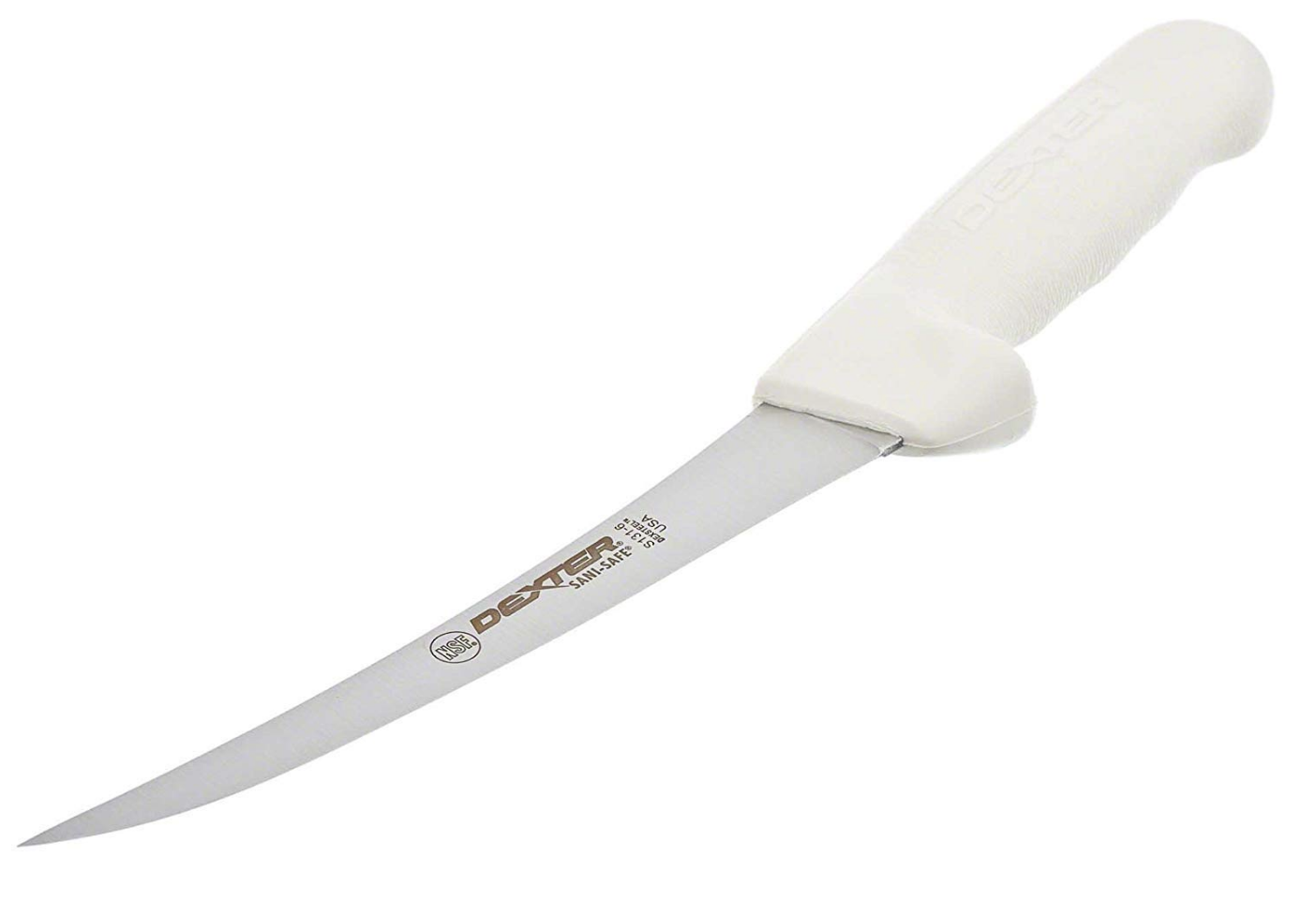
- Best Curved: Dexter-Russell Sani-Safe 6-Inch Curved Boning Knife
Best Overall: Victorinox Fibrox Pro 6-Inch Boning Knife

| PROS | CONS |
|
|
The Victorinox Fibrox Pro is the knife I reach for every single deer season, and for good reason. This Swiss-made workhorse punches way above its $40 price point. I've processed six deer with mine this year without a single touch-up, and the edge is still slicing cleanly through silverskin and connective tissue.
What really sells me on this knife is the Fibrox handle. It's not fancy – just textured nylon – but when your hands are covered in blood and fat at 2 AM in a cold garage, that aggressive texturing keeps the knife locked in your palm. I've never had even a hint of slippage. The handle also cleans up instantly with hot soapy water, unlike wood or leather-wrapped options that can harbor bacteria. The blade flexibility is right in the Goldilocks zone for me. It's flexible enough to follow the contours around a deer's shoulder blade or rib cage, but it has enough backbone that it doesn't feel flimsy when making longer cuts down the spine. My only gripe is purely aesthetic – this isn't a knife you'll display in a fancy block. Some users also prefer a stiffer blade for certain cuts, but that's really a matter of personal preference. For the money, you simply won't find a better all-around boning knife.
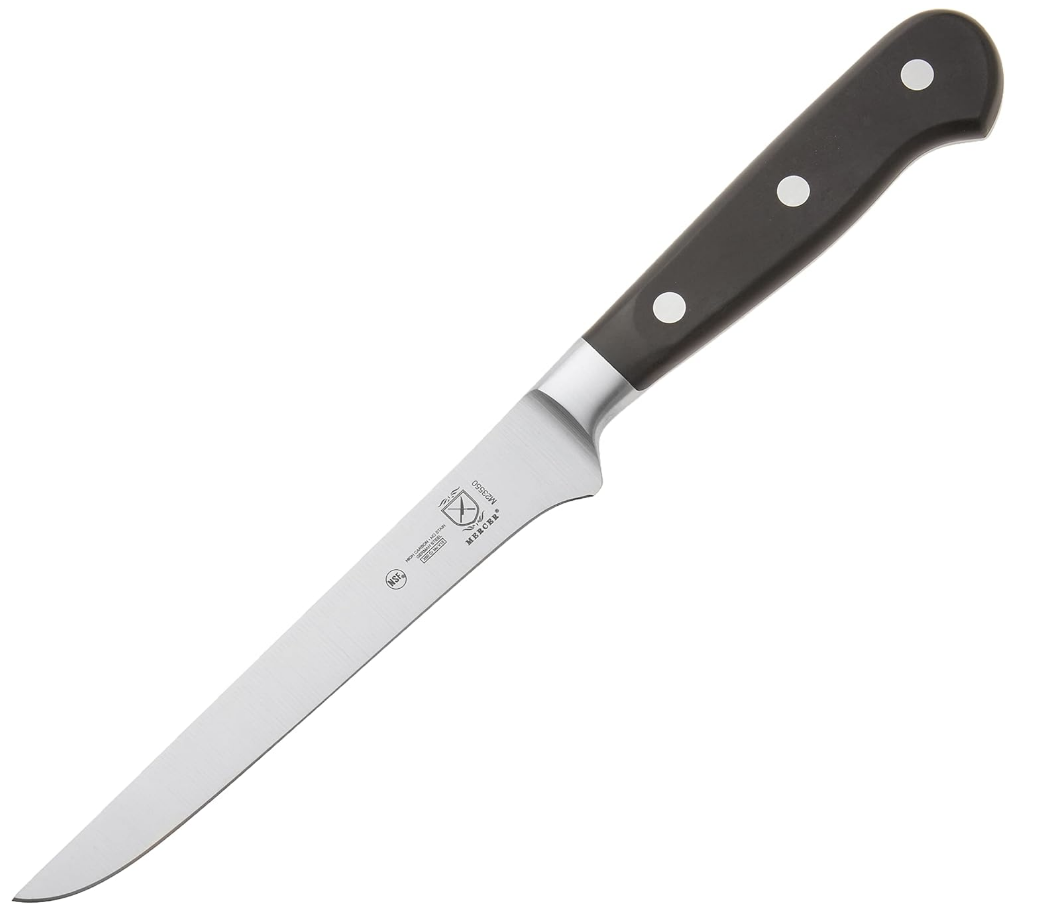
Best Budget: Mercer Culinary Renaissance 6-Inch Flexible Boning Knife
| PROS | CONS |
|
|
For anyone getting into home game processing or just needing a solid boning knife without breaking the bank, the Mercer Renaissance is a fantastic entry point. I picked one up on a whim when it was on sale for $18, expecting to be disappointed. Instead, I was genuinely impressed with what Mercer delivers at this price.
The German high-carbon steel isn't going to win any edge retention awards against premium options, but it holds up surprisingly well through a full processing session. I broke down two deer and a dozen chickens before needing to touch it up. More importantly, it sharpens easily – even with a basic pull-through sharpener – which matters more to most people than maintaining an edge for months. The Santoprene handle deserves special mention. It's got this soft, slightly tacky feel that provides excellent grip even when wet. The ergonomic shape fits my medium-sized hands perfectly, though folks with larger hands might find it a bit cramped. The main trade-off here is blade flexibility. It's definitely on the more flexible end of the spectrum, which is great for delicate work around joints but can feel a bit too bendy when making aggressive cuts through heavy connective tissue. For $20-25, though? This knife delivers way more than you'd expect.
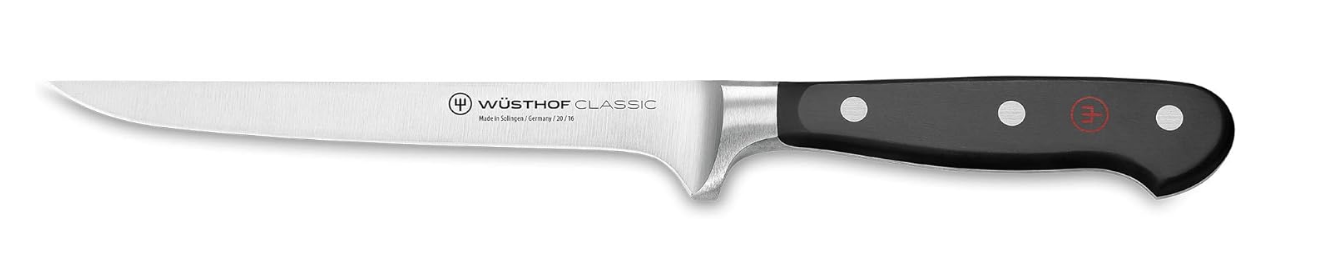
Best Premium: Wüsthof Classic 6-Inch Flexible Boning Knife
| PROS | CONS |
|
|
Look, not everyone needs to spend $120 on a boning knife. But if you process a lot of game, work in a commercial kitchen, or simply appreciate the difference that premium German engineering makes, the Wüsthof Classic is worth every penny.
I've had mine for three seasons now, and the edge retention is frankly ridiculous. I can process two full deer – that's roughly 30+ hours of cutting – before needing even a light touch-up with a honing steel. The X50CrMoV15 steel holds a razor edge that glides through fat, meat, and sinew like it's not even there. When I do finally sharpen it, the blade takes an edge that's sharper than most knives come from the factory. The balance on this knife is what really sets it apart. At 3.5 ounces, it's not the lightest option, but Wüsthof's precision forging creates perfect weight distribution. The knife becomes an extension of your hand – you can feel exactly where the tip is without looking, which matters when you're working blind around a shoulder joint. My main reservation recommending this knife is simply the price. If you only process one or two deer per year, the Victorinox will serve you just fine for a third of the cost. But for serious home processors or knife enthusiasts who appreciate premium tools, the Wüsthof justifies its price tag.
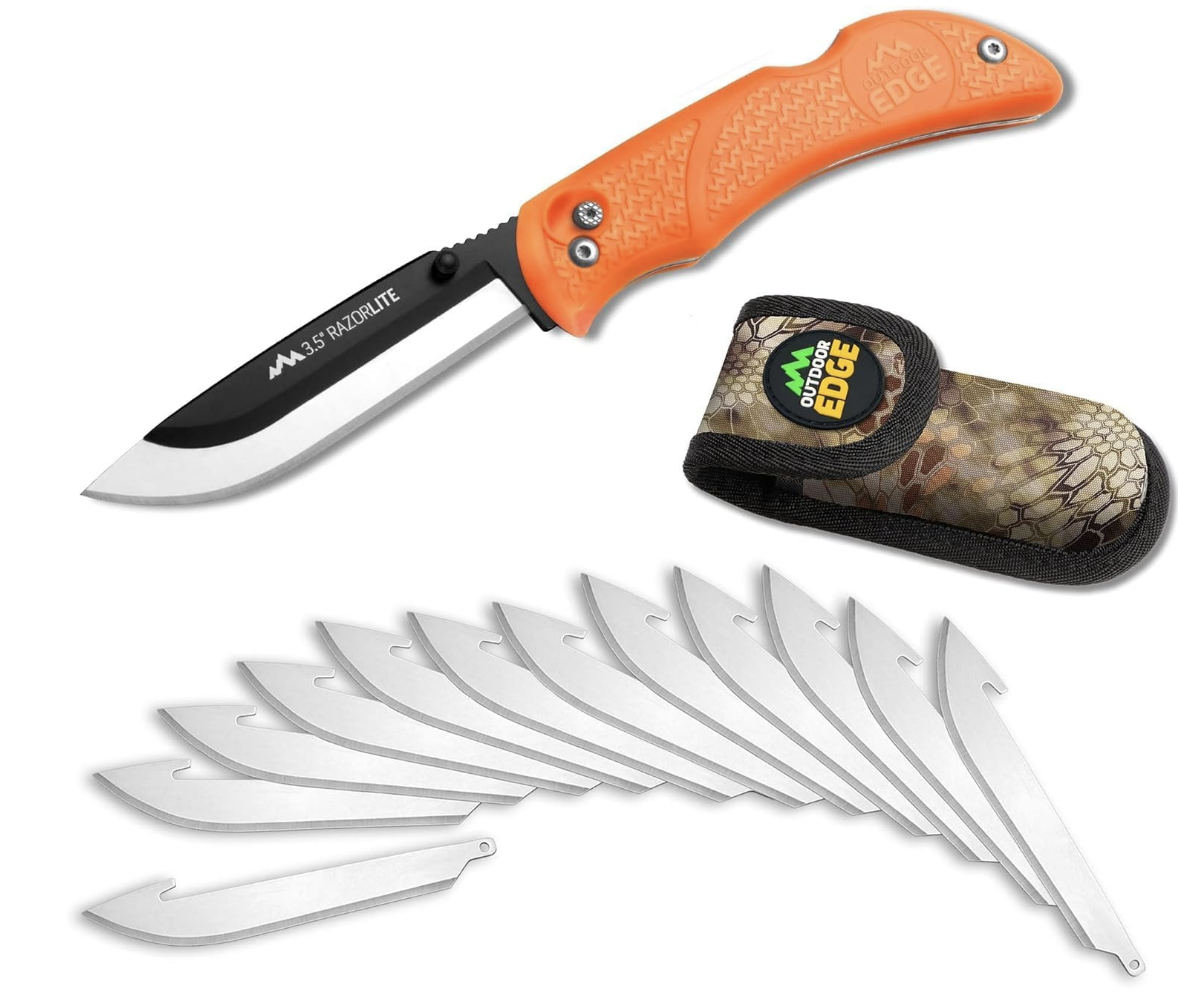
Best for Game Processing: Outdoor Edge RazorPro Double Blade Folding Knife
| PROS | CONS |
|
|
The Outdoor Edge RazorPro takes a completely different approach to the boning knife concept, and for backcountry hunters or anyone processing game in the field, it's brilliant. Instead of sharpening, you just swap in a fresh razor-sharp blade. After quartering an elk three miles from the trailhead, the last thing you want to do is break out a whetstone.
I keep this knife in my hunting pack and have used it on everything from whitetails to wild hogs. The replaceable blade system means you're always working with a scalpel-sharp edge. The kit comes with both a drop-point blade for general butchering and a gutting blade with a blunt tip for field dressing without puncturing organs. I can break down a deer completely in the field with just this one tool. The rubberized TPR handle is grippy even when soaked in blood, and the blaze orange color means I've never lost it in leaves or snow. Blade changes take maybe 30 seconds once you get the hang of it. The trade-off is versatility. This isn't the knife I'd choose for precision work at home on the butcher table. The 3.5-inch blade is too short for long sweeping cuts. But for field work? It's hard to beat the convenience of always having a fresh edge without carrying sharpening gear.
Best Curved: Dexter-Russell Sani-Safe 6-Inch Curved Boning Knife
| PROS | CONS |
|
|
Curved boning knives have a bit of a learning curve (pun intended), but once you master the technique, they can be incredibly efficient for certain cuts. The Dexter-Russell Sani-Safe is the curved boning knife I recommend to anyone wanting to try this style without a huge investment.
The curved blade really shines when you're working around bone structures – like separating meat from ribs or following the contours of a leg bone. The curve naturally follows the bone's shape with minimal repositioning of your hand or the carcass. I use this knife specifically for breaking down bone-in pork shoulders and beef short ribs, where it cuts my processing time significantly compared to a straight blade.
Dexter-Russell has been making commercial butcher knives since 1818, and that experience shows. The DEXSTEEL proprietary steel isn't fancy, but it's been refined over nearly two centuries to hold an edge well while remaining easy to sharpen. The white polypropylene handle is commercial-kitchen grade – it withstands repeated trips through industrial dishwashers. The main challenge with this knife is the learning curve. If you're used to straight blades, the curved style takes some adjustment. For $35, it's a great way to add a specialized tool to your kit without breaking the bank.
How To Choose The Best Boning Knife
Selecting the right boning knife depends largely on what you plan to process and how often you'll use it. A commercial butcher breaking down sides of beef has different needs than a home cook deboning chicken thighs or a hunter processing an annual deer harvest. Understanding the key features and how they affect performance will help you make the right choice.
Blade Flexibility
Boning knives are typically categorized as flexible, semi-flexible, or stiff. Flexible blades excel at following curves around bones and joints, making them ideal for poultry, fish, and smaller game. Semi-flexible blades offer a middle ground – enough give to navigate contours but enough rigidity for controlled cuts. Stiff blades provide maximum control for larger cuts on beef, pork, or elk where you need leverage. Most home users will find a flexible or semi-flexible blade most versatile.
Blade Length
Boning knives range from 5 to 7 inches, with 6 inches being the sweet spot for most applications. Shorter blades (5-5.5 inches) offer superior control for delicate work like chicken or fish. Longer blades (6.5-7 inches) make sweeping cuts easier along large bones. A 6-inch blade handles everything from processing a whole deer to deboning chicken breasts without feeling too big or too small.
Handle Design
Comfort matters more than aesthetics when you're processing game for hours. Look for handles with ergonomic curves that fit your hand naturally. Textured or rubberized handles provide better grip when wet – critical when working with blood and fat. A pronounced finger guard prevents your hand from sliding onto the blade. Avoid handles with deep crevices that trap bacteria. Smooth, easily cleanable materials like polypropylene or Fibrox are ideal for food safety.
Steel Type
High-carbon stainless steels offer the best balance of edge retention, corrosion resistance, and ease of sharpening for most users. Premium steels like X50CrMoV15 hold an edge longer but cost more. Mid-range options like 440C steel provide good performance at affordable prices. Avoid low-grade steels that require constant resharpening. Remember that any boning knife will need frequent touch-ups due to the nature of the work.
Straight vs. Curved Blades
Straight blades are the most versatile and easier to control for most users. Curved blades excel at specific tasks like following rib bones or working around leg joints. The curve naturally matches bone contours, reducing hand repositioning. However, curved blades require practice to master and aren't ideal for straight cuts. Most home users should start with a straight blade and add a curved option later if needed.
Replaceable Blade Systems
Some modern boning knives use replaceable razor-sharp blades instead of traditional fixed blades. These systems offer convenience – swap a dull blade for a fresh one in seconds without sharpening. They're perfect for field processing game where carrying sharpening gear isn't practical. The trade-offs are less blade control, shorter blade length, and ongoing costs for replacement blades. These work best as supplementary tools rather than primary boning knives.
Budget Considerations
Quality boning knives range from $20 to $150. Budget options ($20-40) like the Victorinox Fibrox Pro and Mercer Renaissance deliver excellent performance for occasional use. Mid-range knives ($50-80) offer upgraded materials and construction. Premium options ($100+) like Wüsthof provide exceptional edge retention and lifetime warranties. For most home users, a $35-50 knife hits the sweet spot of performance and value. If you process multiple deer annually or work in food service, investing in a premium knife pays off in reduced sharpening frequency and improved durability.
Final Thoughts
Choosing the best boning knife for deer, chicken, fish, or anything else you're looking to break down comes down to matching the blade to your specific needs and budget. For most users, the Victorinox Fibrox Pro offers unbeatable value – professional quality at a home-user price. It's the knife I reach for season after season. If you want to step up to premium German engineering, the Wüsthof Classic delivers exceptional edge retention and lifetime durability. For backcountry hunters, the Outdoor Edge RazorPro solves the sharpening problem with convenient replaceable blades.
FAQs
Q: What's the difference between a boning knife and a fillet knife?
A: Boning knives are typically stiffer and designed for separating meat from bones in poultry, beef, pork, and game. Fillet knives are more flexible and thinner for delicate work on fish. While there's overlap – some flexible boning knives work fine for filleting – dedicated fillet knives offer superior control for fish preparation.
Q: How often should I sharpen my boning knife?
A: Boning knives require frequent maintenance due to constant contact with bone. Touch up the edge with a honing steel every 20-30 minutes during extended processing sessions. Fully resharpen with a whetstone or sharpening system after processing 2-3 deer or equivalent work. A sharp knife is safer and more efficient than a dull one.
Q: Can I use a boning knife for other kitchen tasks?
A: Absolutely. A boning knife excels at any task requiring precision – trimming fat from steaks, removing silverskin, butterflying chicken breasts, or cutting along membranes. The narrow blade offers control that chef's knives can't match for detailed work. However, don't use it for chopping or cutting through bone, which can damage the edge.
Q: How do I clean and maintain a boning knife after processing game?
A: Immediately after use, wash with hot soapy water and scrub all blood, fat, and tissue from the blade and handle. Rinse thoroughly and dry completely to prevent corrosion. For wild game processing, many hunters also sanitize with diluted bleach solution. Store in a knife block or sheath – never loose in a drawer where the edge can get damaged.
Q: Is a more expensive boning knife worth the investment?
A: It depends on usage frequency. For occasional home use (1-2 deer per year, weekly chicken prep), budget options like the Victorinox perform excellently. If you process multiple large animals annually or work in food service, premium knives like Wüsthof offer better edge retention and durability that justify the higher cost. The best boning knife is one you'll actually maintain and use properly.
