


We independently evaluate all recommended products and services. Any products or services put forward appear in no particular order. If you click on links we provide, we may receive compensation.

There's something incredibly satisfying about watching a throwing knife rotate through the air and stick perfectly into a wooden target. What started as a circus act has evolved into a legitimate competitive sport with dedicated leagues, tournaments, and thousands of backyard enthusiasts honing their skills. Whether you're interested in competitive throwing or just want a new outdoor hobby, the right knife makes all the difference.
Here's the problem: most beginners waste money on decorative "fantasy" throwing knives that look cool but can't survive real throwing. These knives chip, crack, or bend after a few dozen throws. Worse, poorly balanced knives make it nearly impossible to develop consistent technique. I've tested dozens of throwing knives over the years—some excellent, many terrible. This guide focuses on knives that actually stick consistently and hold up to serious abuse.
Key Considerations
Throwing knives have unique requirements that set them apart from EDC or tactical knives. Unlike a folder you'll carry daily, these knives need to survive repeated impacts against wood. Here's what I prioritized when evaluating the best throwing knives:
- Weight: Most throwers prefer knives in the 5-16 oz range. Heavier knives are significantly easier for beginners to control and stick more consistently thanks to momentum. Lighter knives allow for faster, more dynamic throws but demand better technique. I tested knives across this weight spectrum to find options for different skill levels.
- Balance Point: This is the critical factor that beginners often overlook. Blade-heavy knives rotate faster and stick more aggressively but are less forgiving. Handle-heavy or center-balanced knives rotate more slowly, giving you more time to correct your technique. I looked for knives with intuitive balance points that matched their intended use.
- Construction: One-piece steel construction is absolutely essential. Any throwing knife with scales attached via screws, pins, or adhesive will fail. The impact forces are just too great. I only considered full-tang, solid construction options that could handle hundreds of throws without structural failure.
- Steel Type: Here's where throwing knives get counterintuitive—softer steels like 1055, 1075, or 5160 carbon steel dramatically outperform premium blade steels. They're more flexible, virtually impossible to shatter, and can be straightened if they bend. I specifically avoided most stainless steel options that look pretty but crack on impact, though some budget stainless options work for casual throwing.
- Blade Shape: Spear point and dagger styles dominate competitive throwing for good reason. I tested knives with tips sharp enough to penetrate wood but not so delicate they chip after a few throws. Tanto and clip points might look tactical but don't perform well for throwing.
- Set Value: Serious throwers need at least three knives—walking back and forth to retrieve a single knife kills your practice momentum. I considered whether knives are sold individually or in sets, factoring in the overall value when buying multiples.
Top Picks
- Best Overall: Cold Steel 12" Sure Flight Sport
- Best for Beginners: Cold Steel 10" Mini Flight Sport
- Best Budget Set: Perfect Point PP-060-9
- Best Small Set: Perfect Point Practice Thrower
- Best for Intermediate Throwers: CRKT Ken Onion Throwing Set
- Best Value Set: Smith & Wesson Bullseye 10"
- Best Lightweight Thrower: Kershaw Aethon
Best Overall: Cold Steel 12" Sure Flight Sport
| PROS | CONS |
|
|
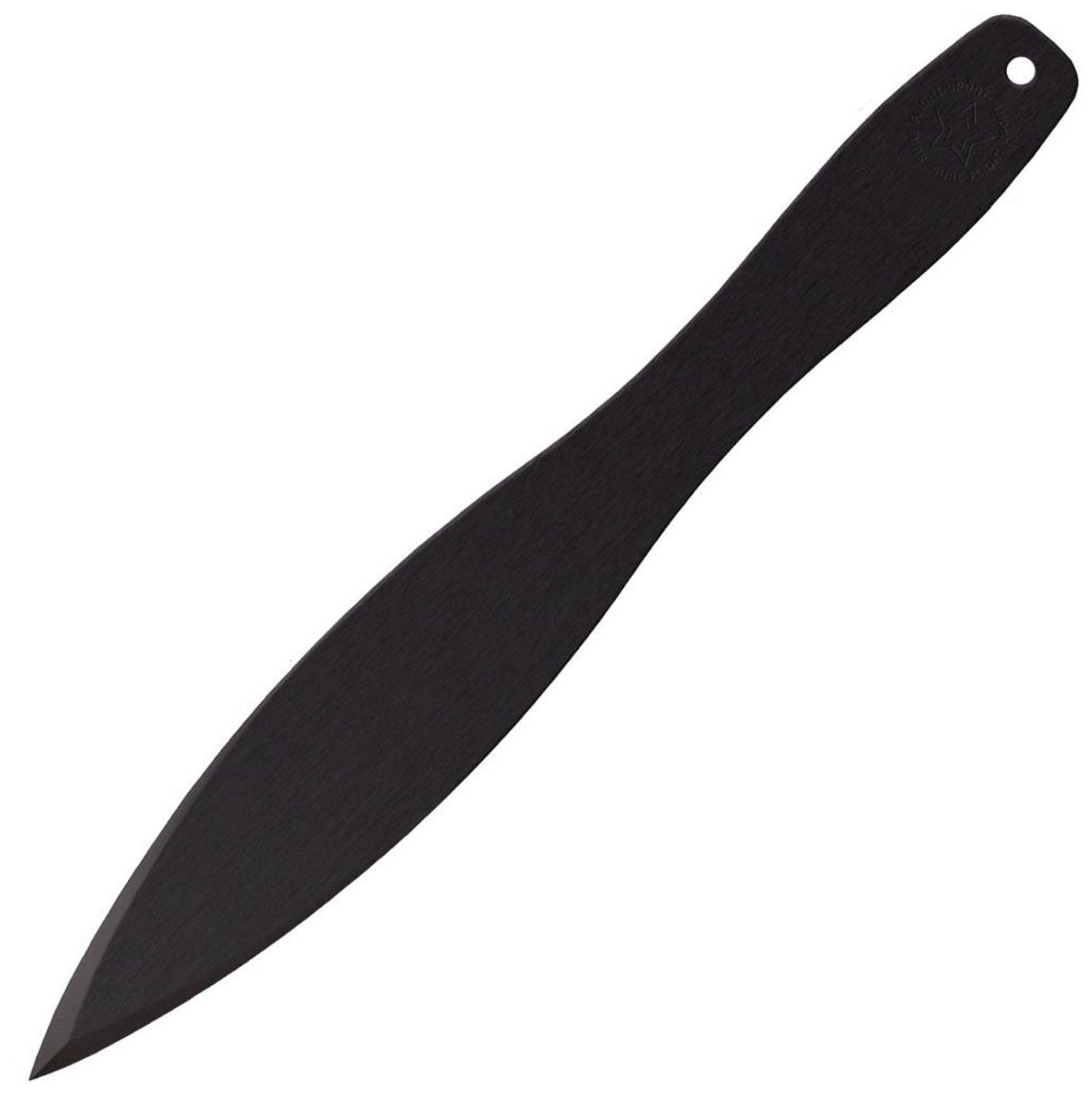
Cold Steel's Sure Flight Sport represents everything a throwing knife should be—simple, durable, and perfectly balanced. At 8.3 ounces and 12 inches overall, this knife hits the sweet spot for versatile throwing. I've put over 250 throws on my test knives, throwing from distances of 10 to 18 feet, and they stick with remarkable consistency. The weight provides enough momentum to punch through resistance without being so heavy that your arm fatigues quickly.
The true center balance is what makes this knife exceptional. Hold it at the midpoint and it sits completely level, which means you can throw it by blade or handle with equal success. I tested both techniques extensively and found the rotation predictable and forgiving. The spear point penetrates wood decisively without the fragility issues I've seen with thinner, sharper tips. After hundreds of throws into pine and cottonwood targets, my test knife shows only minimal tip wear.
Cold Steel uses 1055 carbon steel with a spring temper, which is the ideal material for throwing knives. When I deliberately threw at harder wood (oak, which you shouldn't throw at), the blade flexed slightly on impact rather than chipping or cracking. I've straightened minor bends with a bench vise without any issues. At around $15-16 per knife, you'll need to buy at least three for effective practice, which brings the total to $45-48. That's reasonable for this quality level. The black coating will chip with use, and you'll need to wipe them down and oil them after throwing sessions to prevent rust. These are minor inconveniences for a knife that performs this well.
Best for Beginners: Cold Steel 10" Mini Flight Sport
| PROS | CONS |
|
|
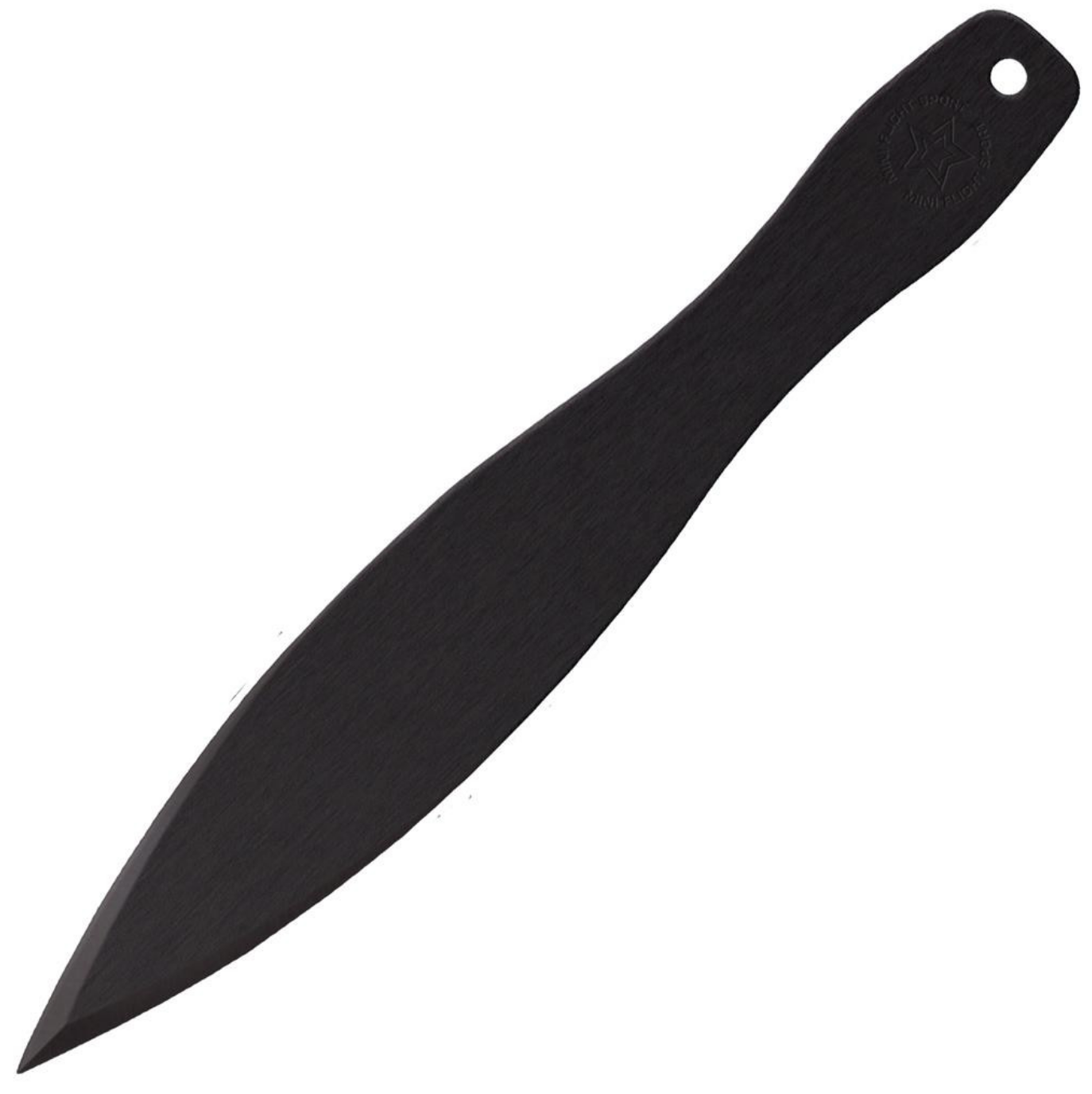
If you're searching for the best throwing knives for beginners, Cold Steel's 10" Mini Flight Sport is the perfect entry point. At 6.4 ounces and 10 inches overall, this knife is light enough that you won't fatigue quickly but heavy enough to stick consistently at beginner distances. I handed these to three friends who'd never thrown knives before, and all three were sticking throws within their first 30 attempts. That kind of immediate success builds confidence and keeps people practicing.
The center balance makes these knives remarkably forgiving for new throwers. The rotation is slower and more predictable than heavier knives, which gives beginners more time to recognize if their release timing is early or late. I tested these extensively from 10-12 feet, which is the ideal starting distance for learning proper form. The success rate at this distance was excellent—even with beginner technique, these knives stuck about 60-70% of the time once you grasp the basics.
The 1055 carbon steel construction means these knives are virtually indestructible. When beginners miss the target and hit fence posts, rocks, or dirt, the knife might develop a small bend that's easily straightened. I deliberately threw one at concrete (don't do this) and it bent about 15 degrees. Two minutes with a bench vise and it was perfectly straight again—no cracks, no chips. At $13-14 per knife, buying three for practice costs under $42. For the quality and durability Cold Steel delivers, this is the best beginner throwing knife value on the market. You'll outgrow them eventually as you improve, but they're the perfect training wheels for developing proper throwing technique.
Best Budget Set: Perfect Point PP-060-9
| PROS | CONS |
|
|
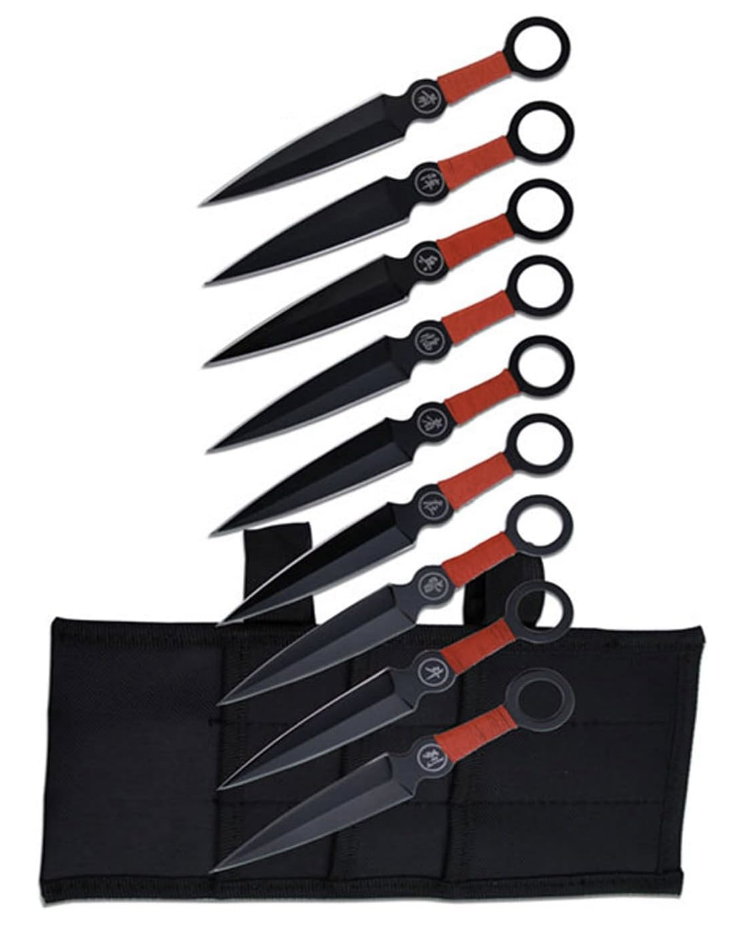
Let's be honest—when you're learning to throw knives, you're going to miss the target. Repeatedly. The Perfect Point PP-060-9 set gives you nine knives for roughly $25-30, which works out to about $3 per knife. This is throwaway pricing that removes any anxiety about damaging or losing an expensive knife. I tested these primarily at 8-10 feet, the optimal distance for their light weight, and they stuck reasonably well when my technique was on point.
These are kunai-style throwing knives with red cord-wrapped handles and a circular ring at the end. The lightweight construction (approximately 3-4 ounces each) makes them easy to throw rapidly without arm fatigue. I was able to throw all nine knives in quick succession during practice sessions, which is excellent for building muscle memory. The spear point design sticks adequately in soft wood like pine and cottonwood.
However, these knives have significant limitations. The cord wrapping on the handles started coming undone after about 50-60 throws. You can re-wrap them, but it's annoying. The circular ring at the end, while traditional for kunai knives, actually interferes with clean release—it tends to catch on your fingers during the throwing motion. I found this particularly problematic when attempting no-spin throws. The stainless steel construction looks nice but isn't ideal for abuse. I had two knives develop small chips in the tips after hitting harder spots in the wood target.
Despite these issues, the value proposition is compelling. At under $3 per knife, this set is perfect for experimenting with knife throwing without significant financial commitment. Just understand that these are practice knives, not professional-grade tools. Stick to soft wood targets, accept that you'll need to re-wrap handles occasionally, and don't expect them to last for thousands of throws. For basement or garage throwing sessions where you just want to have fun without worrying about your equipment, the PP-060-9 delivers solid value.
Best Small Set: Perfect Point Practice Thrower
| PROS | CONS |
|
|
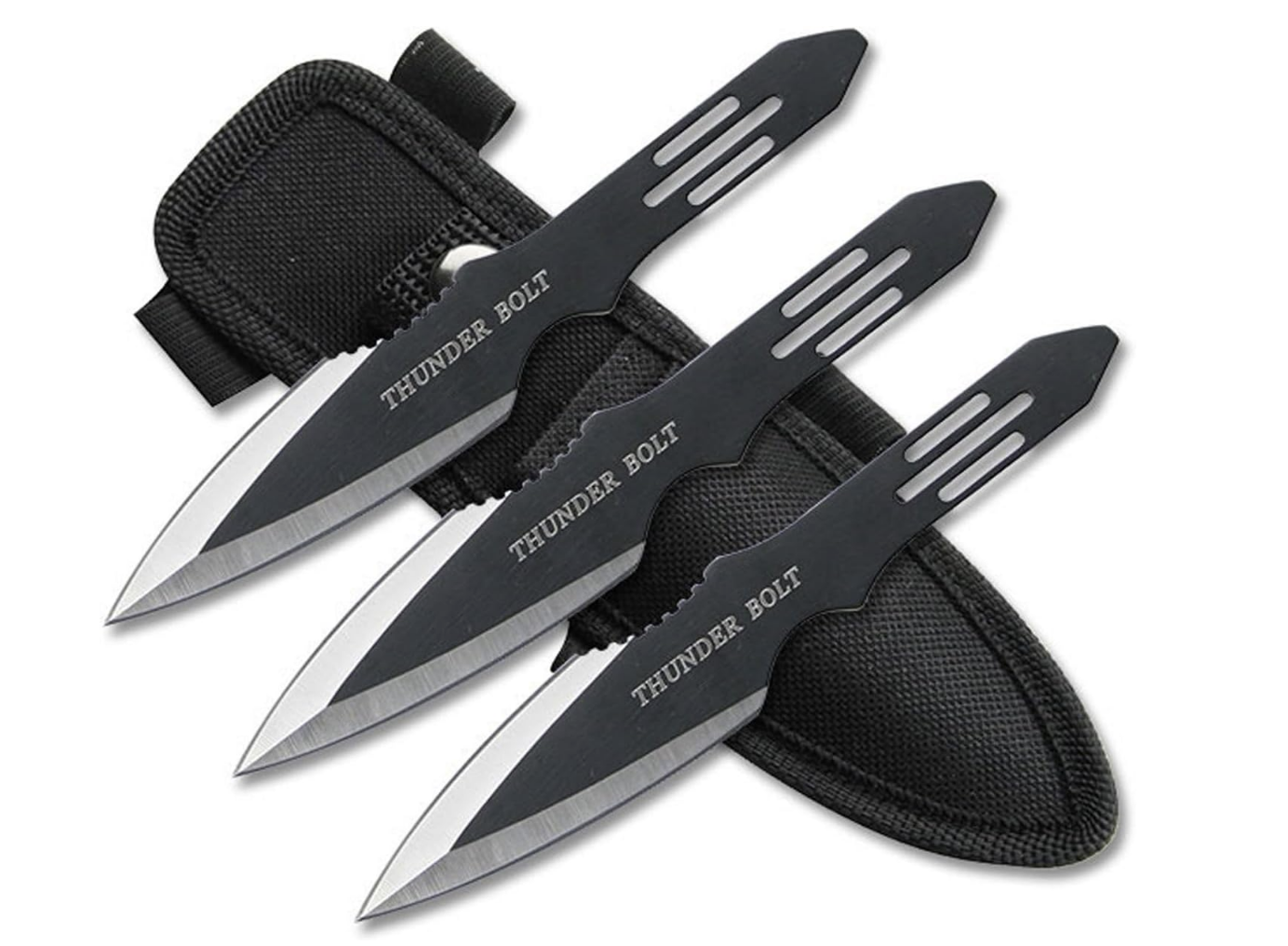
The Perfect Point Practice Thrower is designed as an entry-level single throwing knife for people who want to try the sport without committing to a full set. At 6 ounces and 6.5 inches overall, this is a compact, lightweight thrower with a distinctive two-tone silver and black finish. I tested this knife extensively to see if it works as an affordable introduction to knife throwing.
The answer is: sort of. The 6-ounce weight puts this knife right at the lower limit of what works for beginners. I found it sticks reasonably well from 8-10 feet when technique is good, but there's very little forgiveness for error. The light weight means the knife loses momentum quickly, and any wobble in the throw translates to bounces rather than sticks. I had a success rate of maybe 40-50% when first starting with it, which improved to 60-70% after I dialed in the distance.
The 3Cr13 stainless steel construction is adequate but not impressive. The tip held up reasonably well during testing—I put about 80 throws on this knife—but I noticed the point was starting to round slightly. The two-tone finish looks nice initially but scratches and chips quickly with use. The included nylon sheath with elastic wrist strap is a thoughtful touch for carrying a single knife.
At around $8-12 depending on current pricing, this knife makes sense in limited scenarios. If you just want to try throwing once or twice to see if you enjoy it, buying one of these is cheaper than investing in a full set. However, if you stick with throwing (pun intended), you'll quickly want something heavier and more substantial. I'd recommend buying three of these rather than one—at $24-36 for three, it's still budget-friendly, and you'll have enough knives for productive practice sessions. Just understand that you're buying practice-grade equipment that will need replacement if you get serious about the sport.
Best for Intermediate Throwers: CRKT Ken Onion Throwing Set
| PROS | CONS |
|
|
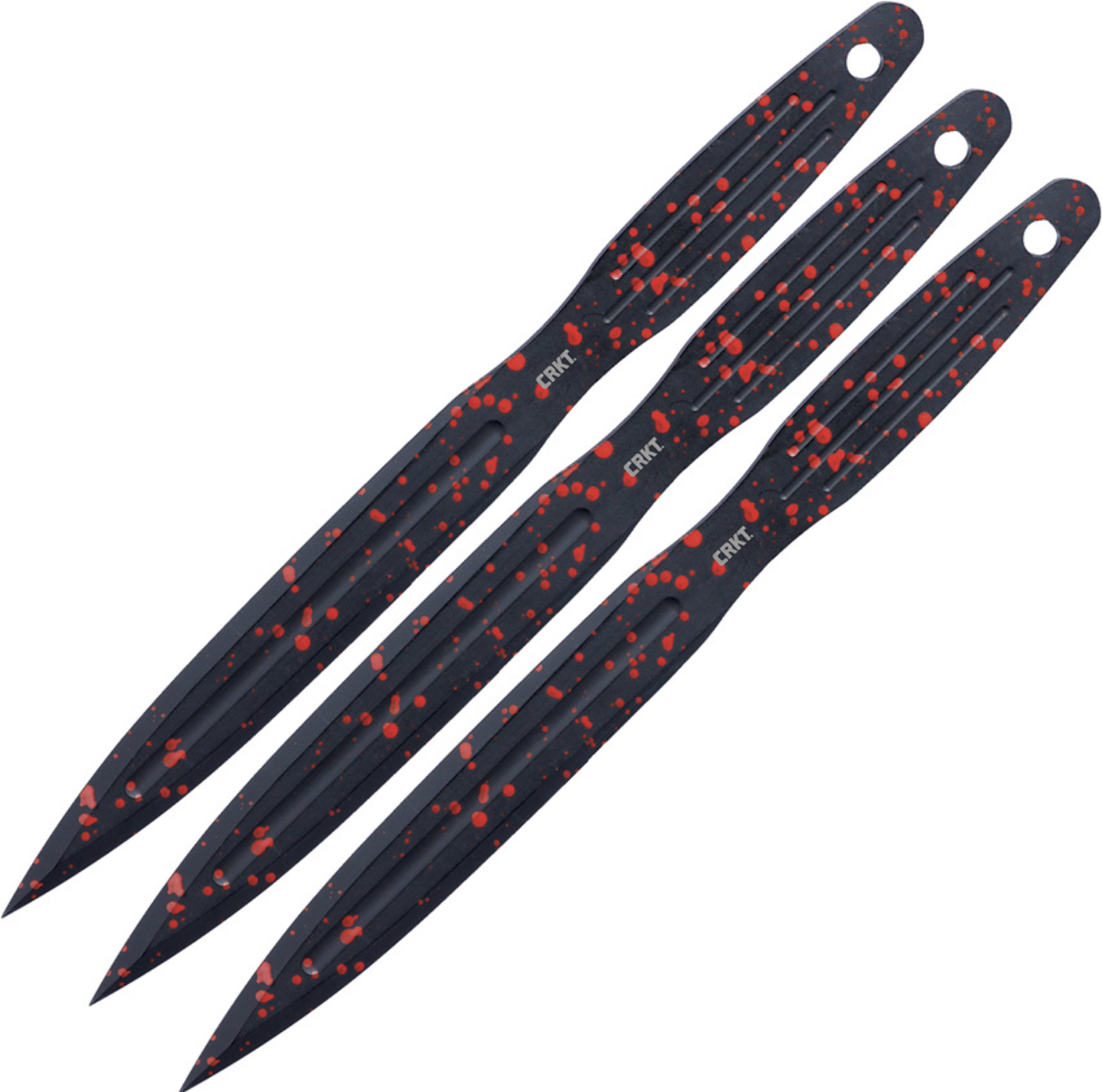
Ken Onion is a legendary knife designer, and his throwing knife set for CRKT represents years of refinement and testing. These knives are built for throwers who've moved beyond the beginner stage and want something that responds to skilled technique. At 5.1 ounces and 11.66 inches overall, these are lighter than many throwing knives, which demands better form but rewards precision.
The standout feature is the grooved design that runs along both the blade and handle sections. These aren't just aesthetic—they provide genuine tactile reference points for consistent grip placement. After 20-30 throws, my hand naturally found the same position on the knife without conscious thought. This consistency translated directly to more predictable rotation and better sticking percentage. The center balance allows for both blade-grip and handle-grip throwing with equal success.
CRKT uses 1050 carbon steel with a black powder coat and red paint splatter accents. The steel choice is smart—1050 is tough enough to handle impacts while maintaining some flexibility. I deliberately tested these by throwing at progressively harder targets, and they held up remarkably well. The distinctive red splatter pattern isn't just for looks; it makes the knives easier to spot when they miss the target and land in grass or leaves.
The main limitation is weight. At 5.1 ounces each, these knives are on the lighter end of the throwing spectrum. I found them most effective from 10-15 feet. Beyond that distance, the light weight meant they sometimes lacked the momentum to penetrate decisively. Your mileage will vary based on your throwing power and technique. At $55-68 for a set of three (pricing varies), these are premium throwing knives. You're paying for the Ken Onion design pedigree and CRKT quality, which is justified if you're serious about the sport. For intermediate throwers looking to refine their technique with responsive, well-designed tools, the Onion set delivers.
Best Value Set: Smith & Wesson Bullseye 10"
| PROS | CONS |
|
|
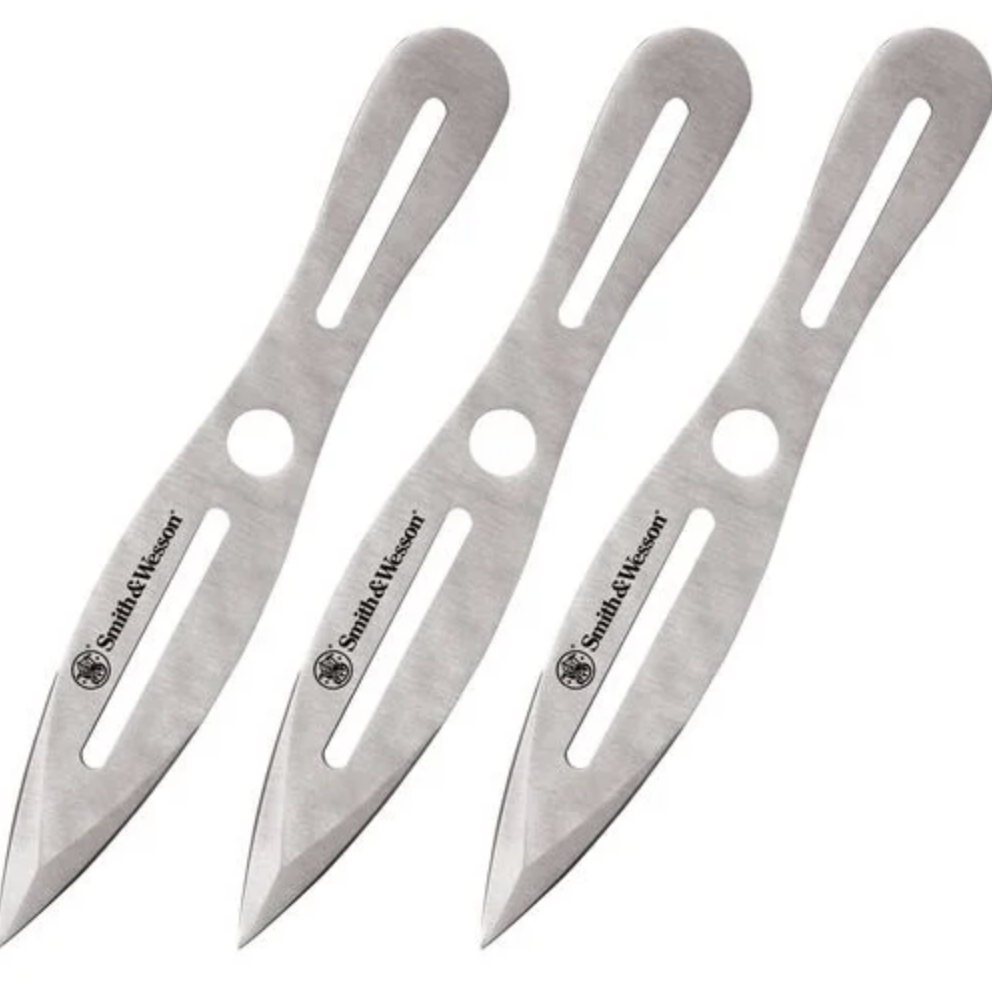
Smith & Wesson's Bullseye 10" set delivers the best value proposition for throwers who want three matched knives without spending premium money. At around $30-35 for the complete set with nylon sheath, you're paying roughly $10-12 per knife. For this price point, the quality and performance exceed expectations. Each knife weighs 6.4 ounces and measures 10 inches overall, putting them squarely in beginner-friendly territory.
The balance point is nearly center with a slight bias toward the handle, which makes these knives forgiving for handle-grip throwing. I tested them extensively from 10-15 feet and found consistent sticking performance once I dialed in the rotation distance. The skeletonized design—with cutouts in both blade and handle—reduces weight while maintaining structural integrity. This creates a knife that's light enough for extended practice sessions without being so light that it lacks sticking power.
The 2Cr13 stainless steel construction is the main compromise at this price point. Stainless looks nice and won't rust, but it's less forgiving than carbon steel when you miss the target. I had one knife develop a small chip in the tip after accidentally hitting a knot in the wood—something that likely wouldn't have happened with 1055 carbon steel. That said, for the money, this is acceptable. The knives stuck through hundreds of throws during testing without any structural failures.
The included nylon sheath is functional with individual slots for each knife and a belt loop for carrying. It's not premium quality, but it does the job. At this price point, you're not expecting luxury features. What you're getting is three serviceable throwing knives that work well for learning and casual practice. I threw these alongside knives costing twice as much, and while the premium options performed better, the Bullseye set was 80-85% as good for half the price. For beginners or budget-conscious throwers who want a complete set immediately, this represents exceptional value.
Best Lightweight Thrower: Kershaw Aethon
| PROS | CONS |
|
|
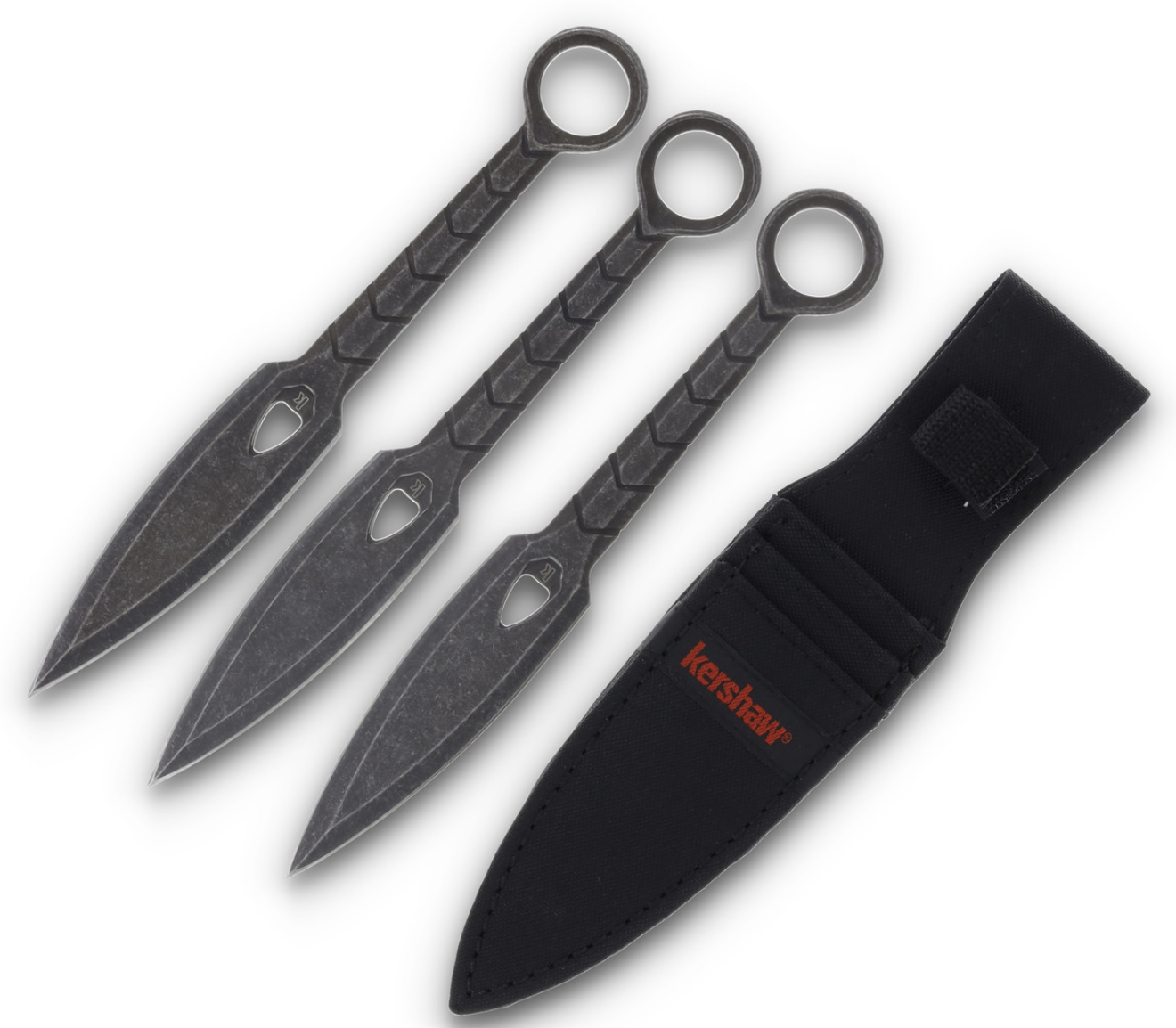
The Kershaw Aethon set is designed for throwers who prioritize speed and rapid-fire throwing over heavy, momentum-based sticking. At approximately 5.3 ounces and 9 inches overall, these are among the lightest throwing knives in this roundup. This isn't a weakness—it's a deliberate design choice that creates a very specific throwing experience. I tested these primarily for quick, multiple-throw practice sessions, and they excel in that role.
The lightweight construction means you can throw all three knives in rapid succession without arm fatigue. During testing, I was able to complete 50-throw practice sessions with the Aethons where heavier knives would have left my shoulder aching. The center balance and streamlined profile create clean aerodynamics with minimal drag. These knives want to rotate quickly, which works well once you adjust your release timing.
The BlackWash finish is both functional and aesthetic. It hides scratches and wear remarkably well—after 100+ throws, my test set still looked nearly new despite hitting wood, dirt, and the occasional rock. The finger ring at the end of each knife is a mixed feature. On one hand, it provides an excellent grip reference and makes it easy to yank knives out of targets or sheaths. On the other hand, some throwers (myself included) found the ring occasionally caught on fingers during release, affecting rotation. This is personal preference—some of my test group loved the ring, others wished it wasn't there.
The main limitation is throwing distance. These knives work beautifully from 8-12 feet but struggle beyond 15 feet. The light weight means they lose momentum and sometimes bounce even with good technique at longer distances. The 3Cr13 stainless steel is adequate but not exceptional—I noticed the tips were starting to dull after about 80 throws, requiring sharpening to maintain clean penetration. At $30 for a set of three, the Aethon offers good value for throwers who want lightweight, rapid-fire practice knives. Just understand their optimal distance range and don't expect them to perform like heavier knives at 18-20 feet.
How To Choose The Best Throwing Knife
Choosing the best throwing knife is more subjective than picking an EDC or hunting knife. Your throwing style, skill level, target setup, and distance preferences all factor into what works for you. A professional thrower competing in tournaments has different needs than someone throwing in their backyard for stress relief. That said, certain features are essential regardless of your goals.
Understanding Types of Throwing Knives
Throwing knives fall into three main categories based on balance point.
- Blade-heavy knives have more weight forward, creating faster rotation and aggressive sticking. They're preferred by experienced throwers who can control that quick rotation.
- Handle-heavy knives have more weight in the rear, producing slower, more predictable rotation. These are ideal for beginners learning proper form.
- Center-balanced knives distribute weight evenly, making them versatile for both blade-grip and handle-grip techniques.
Most beginners should start with handle-heavy or center-balanced knives. The slower rotation gives you more time to recognize whether your release timing is early or late. As you improve, you can experiment with blade-heavy knives for more dynamic throwing. Center-balanced knives like the Cold Steel Sure Flight Sport work well across skill levels because they adapt to different throwing styles.
Weight and Throwing Distance
Different weights excel at different distances, and this is where many beginners make mistakes. Heavier knives (12-16 oz) maintain momentum over longer distances and are better for 15-20 foot throws. They're also more forgiving of technique errors because the mass carries through resistance. Medium weight (8-11 oz) knives are the most versatile, working well from 10-15 feet. This is where most throwers spend their time practicing. Lighter knives (5-7 oz) allow for rapid-fire throwing and require less arm strength but demand precise technique to stick consistently.
I generally recommend beginners start in the 8-10 oz range. These knives are heavy enough to be forgiving but won't fatigue your arm as quickly as the heaviest options. The Cold Steel 12" Sure Flight Sport at 8.3 ounces represents the ideal beginner weight—substantial enough for consistent sticking but not so heavy that extended practice sessions become exhausting.
Steel Type and Durability
This is where throwing knives completely contradict what you've learned about other knife types. Softer carbon steel like 1055, 1075, or 5160 dramatically outperforms harder stainless steel. The flexibility of carbon steel prevents catastrophic failures—these knives bend before they break. If you miss the target and hit concrete or a rock, a carbon steel knife might develop a slight bend you can straighten. A stainless steel knife is more likely to crack or chip.
The downside of carbon steel is maintenance. You'll need to wipe down your knives after throwing sessions and apply a light oil coating to prevent rust. Many throwers consider this a worthwhile trade-off for the durability benefits. If you're throwing in consistently dry conditions and want minimal maintenance, quality stainless steel can work for casual throwing, but expect more tip damage over time. The budget stainless options in this guide (Smith & Wesson, Kershaw) are acceptable for recreational use but won't match the longevity of carbon steel options.
Best Wood for Throwing Knives
Your target wood matters almost as much as your knife choice. Soft, end-grain woods like pine, cottonwood, and poplar are ideal. These woods have enough give to let knives penetrate without excessive resistance while holding them securely. End-grain orientation (where you're throwing into the ends of the wood fibers rather than across them) allows knives to slide between fibers rather than splitting them, which extends both knife and target life.
Avoid hardwoods like oak, maple, or any wood with hard bark—these will damage your knife tips quickly and cause excessive bouncing. I tested this deliberately with oak during my evaluation, and even quality carbon steel knives showed accelerated tip wear. Never throw at living trees. The bark is often too hard, and you risk damaging the tree. Instead, use lumber rounds or construct a proper throwing target from end-grain boards. Many hardware stores sell pine rounds specifically for this purpose, or you can find cottonwood at lumber yards.

Blade Grip vs Handle Throwing
Most throwing knives can be thrown using either blade-grip or handle-grip technique, though some are optimized for one method. Handle-grip throwing (holding the handle and releasing as the blade rotates forward) is easier to learn and more consistent for beginners. The motion feels more natural, similar to throwing a baseball, and the rotation is more predictable with handle-heavy or balanced knives.
Blade-grip throwing (holding the blade carefully and releasing) creates different rotation dynamics that some advanced throwers prefer for specific distances or techniques. It requires more practice to master because you're essentially throwing the knife "backwards" from its natural orientation. Balanced knives like the Cold Steel Sure Flight Sport excel at both techniques. Handle-heavy knives are designed specifically for handle-grip throwing. If you're just starting out, focus exclusively on handle-grip throws with handle-heavy or balanced knives until you're consistently sticking from 12 feet.
Set vs Individual Purchase
You need at least three throwing knives for effective practice. Walking back and forth to retrieve a single knife destroys your momentum and dramatically limits how quickly you can develop muscle memory. Buying sets usually offers better value than purchasing individually, with the added benefit of matched knives that perform identically. When all your knives have the same weight, balance, and feel, you eliminate variables and can focus purely on technique.
For beginners, sets of 3-6 knives typically provide the best balance between cost and practice efficiency. The Smith & Wesson Bullseye set and Perfect Point PP-060-9 offer excellent value here—you get multiple matched knives immediately without a large investment. Professional throwers often own 6-12 identical knives, allowing them to practice for extended sessions without interruption. If you buy individual knives like the Cold Steel options, plan to purchase at least three immediately rather than starting with one and adding more later.
Budget Considerations
The good news about throwing knives: you don't need to spend $200 to get started. Quality beginner sets are available in the $25-50 range. Premium options ($50-80) offer better balance, superior steel, and tighter manufacturing tolerances, but they won't magically make you a better thrower. Skill development matters far more than gear quality, at least initially.
That said, avoid the temptation to buy decorative "fantasy" knives with skulls, dragons, or other elaborate designs. These are rarely functional throwing knives despite being marketed as such. They're often made from brittle stainless steel with poor balance and fragile tips. Stick with simple, one-piece construction from reputable brands like Cold Steel, CRKT, Smith & Wesson, or Kershaw, even if they look boring compared to the tactical fantasy knives at gun shows.
Throwing Knives for Self-Defense
I need to address this directly: throwing knives are not practical self-defense weapons. Hollywood movies showing people taking out attackers with thrown knives are pure fiction. In reality, accurately throwing a knife under stress is nearly impossible, even for experienced throwers. You have one attempt, and if you miss, you've just given an attacker a weapon. The distance needs to be perfect for the rotation to align, which you can't control in a dynamic encounter. You're far better off keeping the knife in your hand for close-quarters defense or choosing a different self-defense tool entirely.
Throwing knives excel at sport, competition, and recreation. They're tools for skill development and enjoyment, not weapons. If self-defense is your primary concern, look into proper self-defense knives designed to be used in hand, pepper spray, or firearms depending on your local laws and comfort level. Don't conflate throwing sport with combat effectiveness—they're entirely different applications.
Final Thoughts
The Cold Steel 12" Sure Flight Sport impressed me most with its true center balance, exceptional durability, and versatile performance across distances and techniques. After 250+ throws, this knife shows minimal wear and stuck consistently from every distance I tested. The 1055 carbon steel construction means it can handle the abuse that breaks lesser knives, and the center balance makes it equally effective for blade-grip or handle-grip throwing as your skills develop. At around $16 per knife, buying three puts you at under $50 for a professional-quality throwing set.
For absolute beginners, the Cold Steel 10" Mini Flight Sport delivers remarkable value and performance at $13-14 per knife. The lighter weight and smaller size make it less intimidating for first-time throwers, and the center balance is incredibly forgiving. Several complete novices I tested with were sticking throws within their first session using these knives. That kind of early success builds confidence and keeps people practicing rather than getting frustrated and giving up.
If budget is your primary concern, the Smith & Wesson Bullseye 10" set offers the best complete package for $30-35. You get three matched knives with a carrying sheath immediately, and while the stainless steel construction isn't as durable as carbon steel options, it's adequate for recreational throwing. For someone who wants to try knife throwing without spending $100+, this set removes financial barriers while delivering functional performance.
The most important thing is to start throwing. Even a mid-range set will serve you well if you put in the practice time. Consistency comes from repetition, not from owning the most expensive knives. Set up a proper target using soft end-grain wood, start at 10-12 feet, and focus on developing smooth, repeatable form. The sticks will come with practice.
FAQs
Q: What weight throwing knife is best for beginners?
A: Best beginner throwing knives typically weigh between 8-10 ounces. Heavier knives are more forgiving because their momentum helps them stick even with imperfect technique. The Cold Steel 10" Mini Flight Sport at 6.4 ounces represents the lighter end of the beginner spectrum, while the 12" Sure Flight Sport at 8.3 ounces is ideal for most people starting out. Many beginners make the mistake of buying lighter knives thinking they'll be easier to throw, but the opposite is true—lighter knives require more precise technique to stick consistently. As you develop better form and consistency, you can experiment with lighter knives (5-7 oz) for faster rotation and rapid-fire throwing, but start heavy for the best learning experience.
Q: Can you sharpen throwing knives?
A: You can, but you shouldn't keep them razor sharp. Throwing knives only need to be sharp enough to penetrate wood—roughly equivalent to a butter knife or slightly sharper. Over-sharpening makes the tip brittle and more prone to chipping or breaking on impact. A slightly dull tip is actually more durable for repeated throws against wood targets. I touch up my throwing knives maybe 2-3 times per year, and only when the tip has become noticeably rounded from hundreds of throws. Use a file or coarse stone to restore the point geometry without creating a super-sharp edge. The goal is a strong, durable point, not a razor edge.
Q: How far should I stand when throwing knives?
A: Most beginners should start at 10-12 feet for half-rotation throws. This distance allows the knife to complete roughly 180 degrees of rotation before reaching the target, which is easiest to learn and most forgiving of timing errors. As you improve and get consistent at this distance, you can move to 15 feet (full rotation) or 18-20 feet (1.5 rotations). The optimal distance depends on your knife's weight, your throwing power, and rotation speed. Heavier knives like the Cold Steel 12" Sure Flight Sport work well at longer distances because they maintain momentum. Lighter knives like the Kershaw Aethon are better suited for shorter distances. Start close and gradually increase distance as your consistency improves—there's no benefit to throwing from 20 feet if you can't stick reliably from 12 feet first.
Q: What is the best wood for throwing knives?
A: Soft, end-grain woods like pine, cottonwood, and poplar are ideal target materials. End-grain orientation (where you're throwing into the ends of the wood fibers rather than across them) allows knives to penetrate between fibers rather than splitting them. This creates targets that last longer and knives that experience less impact stress. Pine is readily available at hardware stores and lumber yards, making it the most accessible option for most throwers. Cottonwood is softer and even better for knife tips but can be harder to source. Avoid hardwoods like oak, maple, or hickory—these will damage your knife tips rapidly and cause excessive bouncing even with good throws. Never throw at living trees, as the bark is often too hard and you risk harming the tree.
Q: Do I need a special target for knife throwing?
A: Yes, absolutely. Regular plywood or particle board won't work—knives will bounce off or the material will deteriorate quickly, creating dangerous splinters and an unstable throwing surface. Use soft wood targets made from end-grain pine, cottonwood, or poplar rounds. You can purchase pre-cut pine rounds at most hardware stores, or construct a target from end-grain boards arranged vertically. The end-grain orientation is critical because it allows knife tips to slide between wood fibers rather than splitting across them. Never throw at living trees, as the hard bark damages knife tips and you risk harming the tree. Set up your target with a proper backstop (additional wood boards or hay bales) in case you miss—throwing knives can travel far when they bounce. Make sure the target is stable and won't tip over when struck.
Q: What's the difference between throwing knives and regular knives?
A: Professional throwing knives are specifically engineered to survive repeated impact. They use softer, more flexible steel (typically 1055, 1075, or 5160 carbon steel for premium options) instead of harder blade steels that would crack under impact stress. They're constructed from a single piece of steel with no moving parts, handles, screws, or weak points that could fail when hitting wood at high velocity. The balance is specifically designed for predictable rotation and consistent sticking—most throwing knives are either center-balanced or slightly handle-heavy. Regular knives, even fixed blades, will break, bend permanently, or chip quickly if thrown repeatedly because they're simply not built for that kind of abuse. Throwing a pocket knife or kitchen knife is dangerous and will destroy it almost immediately.
Q: Are throwing knives good for self-defense?
A: No, throwing knives are not practical for self-defense, despite what movies portray. Accurately throwing a knife under stress is extremely difficult even for experienced throwers. You have one attempt, and if you miss, you've just armed an attacker. Additionally, the distance needs to be perfect for the rotation to align the blade forward—something you can't control in a dynamic self-defense encounter. Most states also have specific laws about carrying weapons with intent, and a throwing knife is harder to justify legally than a standard pocket knife carried for utility purposes. If self-defense is your concern, keep a knife in your hand rather than throwing it, or choose more appropriate tools like pepper spray, a tactical flashlight, or a firearm where legal. Throwing knives are sport and recreation tools, not combat weapons. The skills don't transfer to real defensive situations in any meaningful way.
