

The Short Version
What I Like
- Extremely comfortable, slightly bulbous beech handle
- A lot of blade and handle for very little weight
- Simple rotating collar locks the blade open or closed
- Fairly easy to sharpen and useful for light everyday cutting
What to Consider
- No pocket clip, which is a big requirement for me
- Thin, bendy tip is not for prying
- Two-handed opening and not much fun to fidget with
Before knives became a mess of patents and tactical marketing, there were useful, boring designs like the Opinel. A traditional pocket knife doesn't need to look like something made for a zombie fantasy. I think a lot of the modern knife market is pretty far removed from what people actually need to cut.
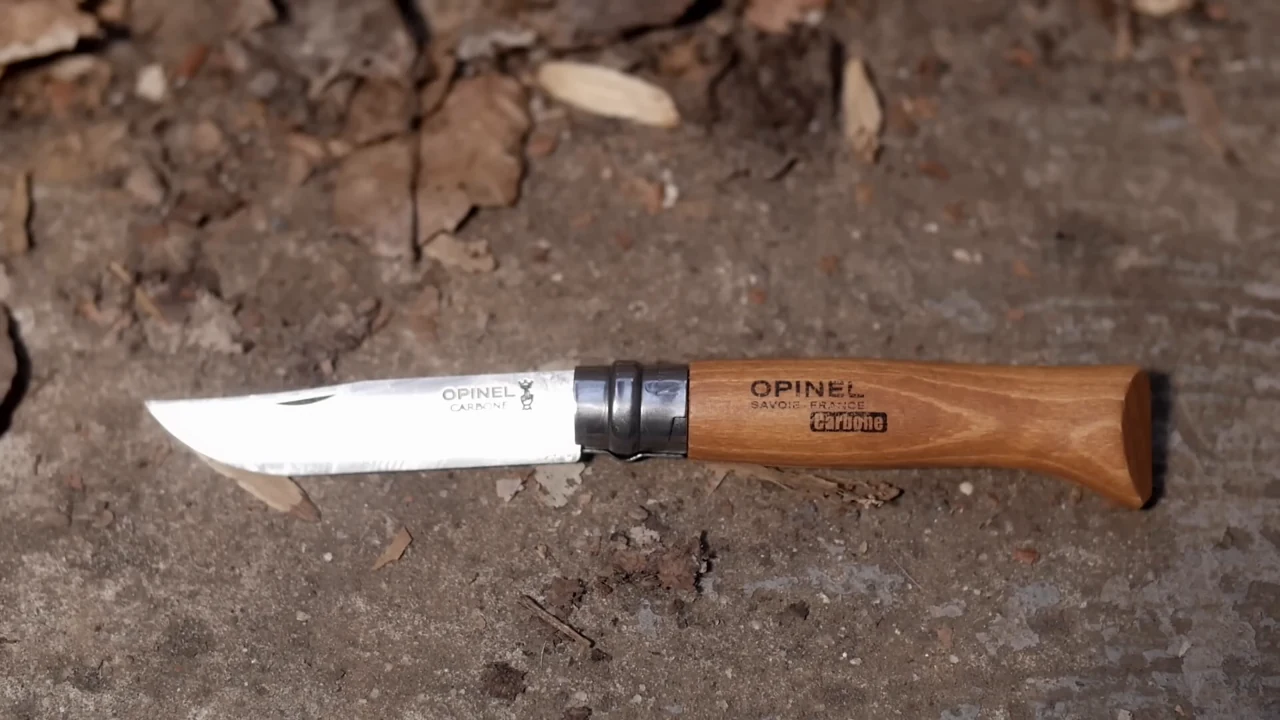
The Opinel No. 8 is a traditional French pocket knife that has been almost unchanged since 1890. That simplicity is the point. Whether it is the sort of knife I want to carry is another matter.
Dimensions
Opinel has been making these traditional folders in France since around 1890. The No. 8 is one size in a range with larger and smaller blades. The number refers to the rough blade length in centimeters, so choosing another size changes the blade as well as the amount of handle you have to hold.
There are stainless-steel and carbon-steel versions. Mine is the carbon model. Discoloration doesn't bother me, so the carbon steel works for me, though the stainless version makes more sense for someone who wants greater resistance to rust and discoloration.
Full Specs
- Blade length
- 3.28 in
- Overall length
- 7.59 in
- Weight
- 1.6 oz
- Blade steel
- XC90 carbon steel
- Handle
- Beech
- Opening
- Two-handed nail nick
- Lock
- Virobloc rotating ring
- Pocket clip
- None
- Country of manufacture
- France
Specifications: Manufacturer listing
Features
The carbon-steel No. 8 has a thin, convex-ground blade in a shape called a yatagan. To me, it looks like a very slight clip point. The blade and edge are both relatively thin, so I expect to sharpen it more often than a thicker tactical knife.
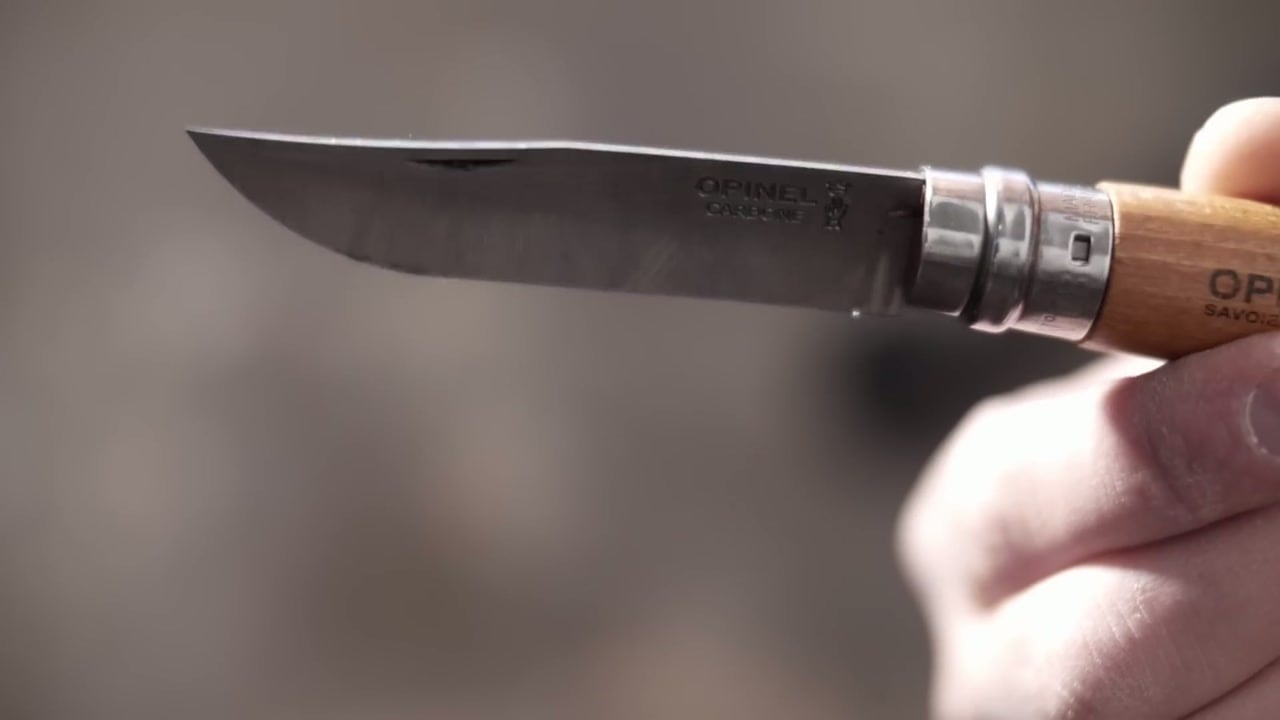
This is an ideal style of knife for food preparation and light everyday tasks such as cutting tie line and opening packages. If I needed something for heavier work like building a shelter, I would want a big fixed blade instead. I don't mind the carbon blade discoloring, and I generally dry it before I close it.
The basic carbon-steel No. 8 has a handle made from a solid piece of beech. There are other versions with synthetic handles or fancier woods, but this slightly bulbous shape is comfortable and fits my hand great.
If the No. 8 feels too small, a larger Opinel gives you a larger handle. On this one there isn't much of a guard between the handle and the blade. I want my hand to stay put when I use a knife like that, rather than slide forward toward the edge.
The locking sleeve is called the Virobloc. I twist it to lock or unlock the blade, and it can lock the knife both open and closed. Opening takes two hands: one holds the handle while the other pulls the blade out using the nail nick.
There is no pocket clip. In a jeans pocket, the Opinel tends to work its way to the bottom and sit sideways. That isn't how I like to carry a knife. I think it makes more sense in a jacket pocket, bag or backpack.
For its size, the Opinel is about as light as a folding knife can get. It gives you a lot of handle and blade for the weight because of the wood handle and thin blade stock. If you are rough with knives, though, you might want thicker stock.
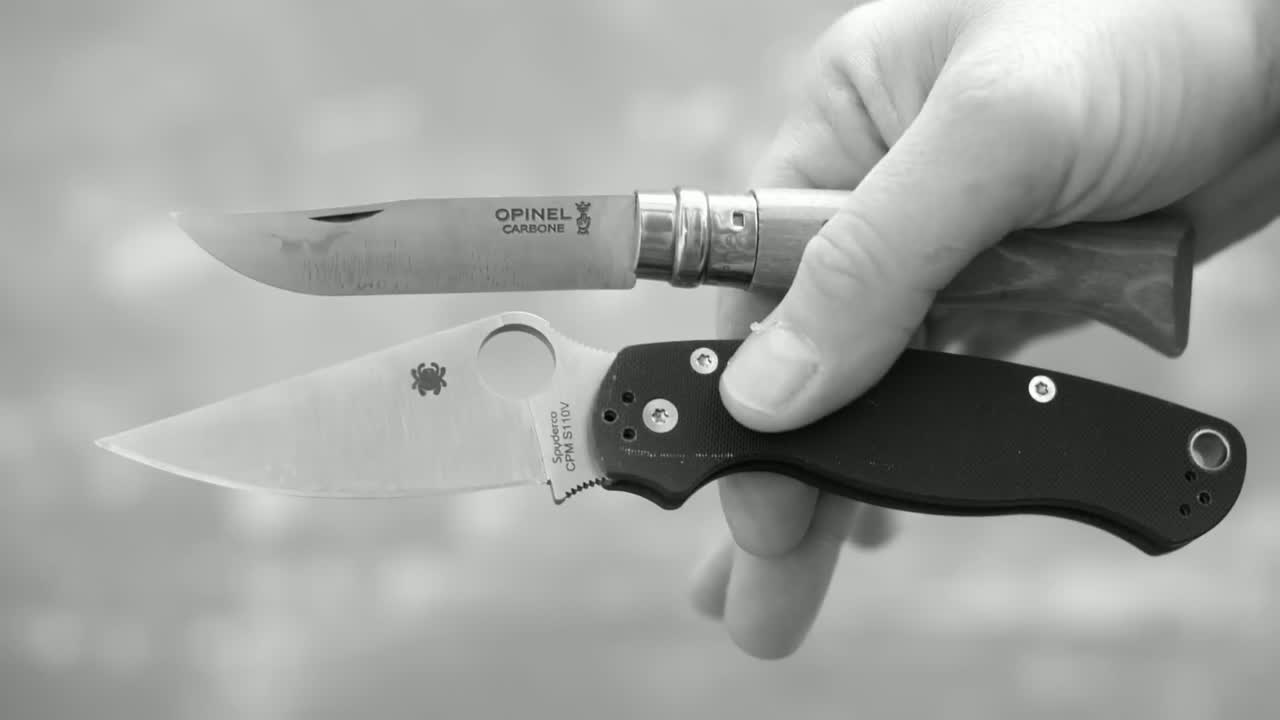
My Spyderco Paramilitary 2 is heavier at about four ounces, but it opens and closes one-handed, has a comfortable handle and is fun to fidget with. Its thin cutting edge is fairly easy for me to keep sharp. It also has a pocket clip, which is a big requirement for me, so it is more my style than the Opinel.
The Douk Douk is another traditional French folder. It has a metal handle and a slip-joint mechanism, and it feels a little rougher around the edges. I prefer the Opinel for its large, comfortable handle and longer cutting edge.
The Higonokami has thicker blade stock, but it doesn't have the Opinel's lock and is rougher around the edges too. The Opinel's tip can bend fairly easily. I wouldn't try prying much with it.
I think the No. 8 is a great starter knife or gift. It is fairly easy to sharpen and should last a long time if it isn't abused. I wouldn't carry it often myself because of the missing clip, the thin tip and the lack of fidget appeal, but the handle is extremely comfortable.
Opinel says to choose the stainless version if you use your knife in wet conditions or eat with it. It says the stainless holds its edge better against harder materials such as porcelain dinner plates.
Where to Buy the Opinel No. 8
Watch the Full Review

