

We independently evaluate all recommended products and services. Any products or services put forward appear in no particular order. If you click on links we provide, we may receive compensation.
These 18 knife facts cover ancient craftsmanship, pocketknife quirks and the science of a useful edge. Each has a source you can follow. Some are good dinner-table trivia. Others might change how you think about the knife in your pocket.
Jump to: History and unusual knives · Pocketknife facts · Steel, sharpness and kitchen knives
Knife history and unusual designs
1. King Tut’s dagger was made from meteorite iron
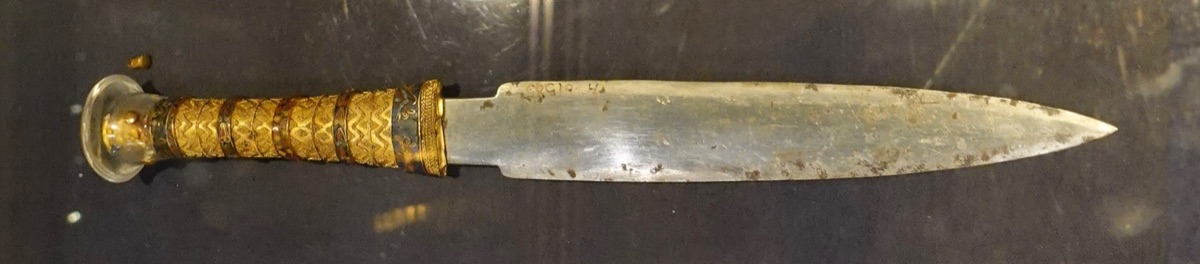
Tutankhamun’s iron dagger has more than a royal backstory. A 2016 study measured roughly 10.8% nickel and 0.58% cobalt in its blade, a composition that strongly supports a meteorite origin. The researchers used portable X-ray fluorescence, so they could examine the metal without cutting a sample from the artifact.
Source: Comelli and colleagues, Meteoritics & Planetary Science.
2. A Victorian folding knife packed in 100 “blades” and a tiny revolver
The Smithsonian holds a folding knife made in Solingen around 1880 for a New York cutlery store. Its count of 100 “blades” includes miniature implements tucked inside the handle covers, not simply 100 cutting edges. Among its attachments are scissors, a tuning fork, a mirror and a functional five-shot pinfire revolver.
Before you wonder how anyone carried it, they weren’t supposed to. It was an exhibition piece showing what skilled cutlers could make. Think craftsmanship taken to an absurd extreme, rather than somebody’s sensible everyday carry.
Source: Smithsonian collection record.
3. Some Renaissance knives came with music engraved on the blade
A knife dating to about 1550 in the Victoria and Albert Museum has musical notation etched on both sides. The museum says its broad, flat blade was probably used to serve or present slices of meat.
The music isn’t just decorative scribbling. As part of a research collaboration, it was transcribed, rehearsed and recorded at the Royal College of Music. That gives “dinner music” a rather literal meaning.
Source: V&A research account.
4. Ancient Egyptian flint knives could be remarkably elaborate
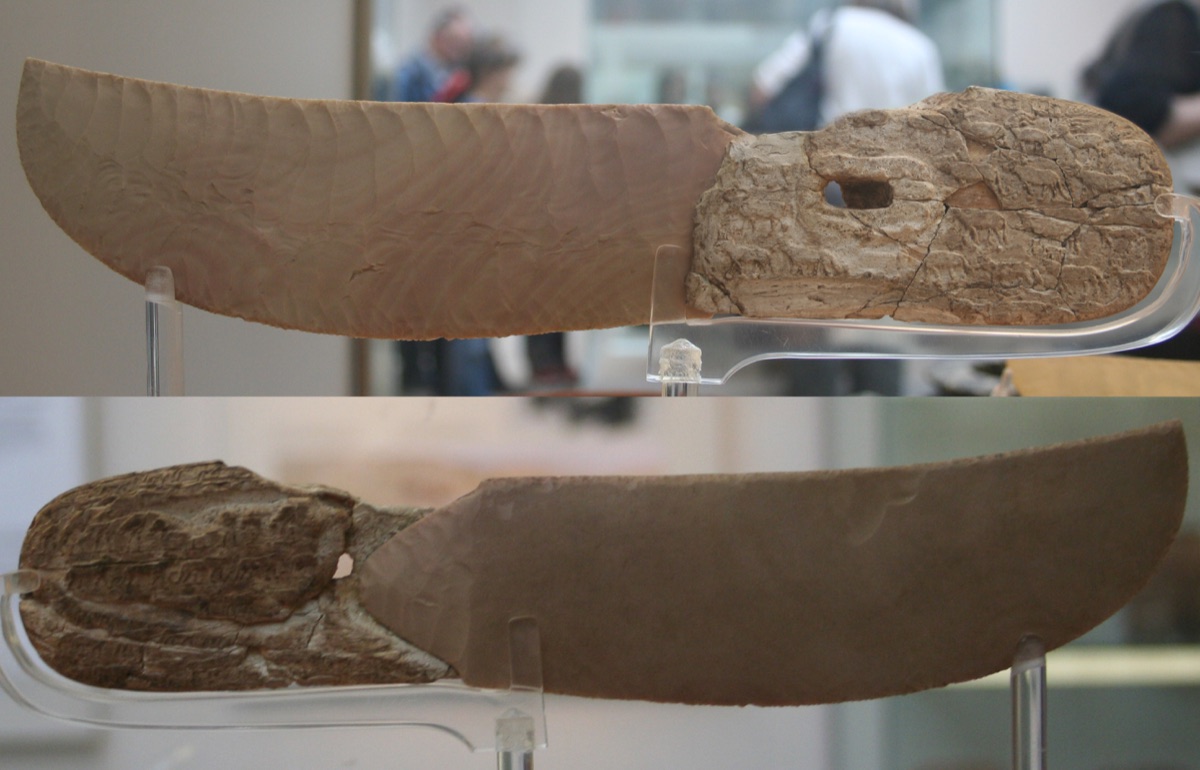
The British Museum’s Pitt-Rivers Knife dates to about 3200 BCE. It has a finely worked flint blade, small serrations and an ivory handle carved with rows of animals. The whole knife measures 24 cm (about 9.4 inches).
Its rippled surface came from controlled pressure flaking on one face; the other remained smoothly ground. The museum suggests the finest knives of this kind were probably made for display or ceremonial use. “Stone knife” doesn’t have to mean a rough edge on a convenient rock.
Source: British Museum object EA68512.
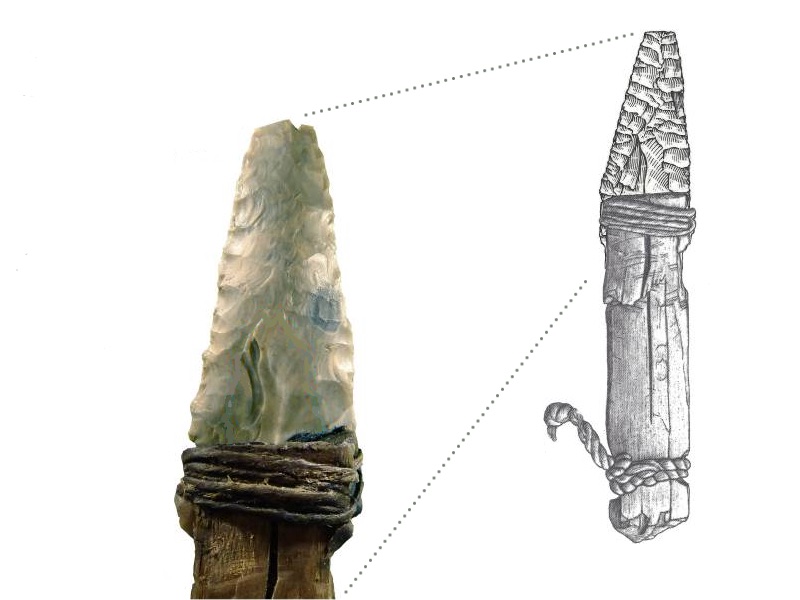
5. Ötzi carried a small flint dagger and a tool for maintaining its edge
The South Tyrol Museum of Archaeology describes Ötzi’s dagger as a 13 cm tool with a flint blade and an ash handle, bound with animal sinew. Its sheath was woven from lime-tree bast.
He also carried a retoucheur, used to remove tiny flakes from flint tools. The museum suggests the dagger’s unusually small blade may reflect repeated resharpening.
Source: South Tyrol Museum of Archaeology.
6. Roman folding knives could double as gladiator memorabilia
A copper-alloy knife handle recovered at Corbridge depicts a gladiator carrying a shield and wearing a helmet. English Heritage identifies him as a secutor. The missing iron blade would have folded along the figure’s back.
English Heritage interprets the handle as a sign of gladiator celebrity reaching Roman Britain. Decorated pocketknives had fans long before modern collectors came along.
Source: English Heritage.
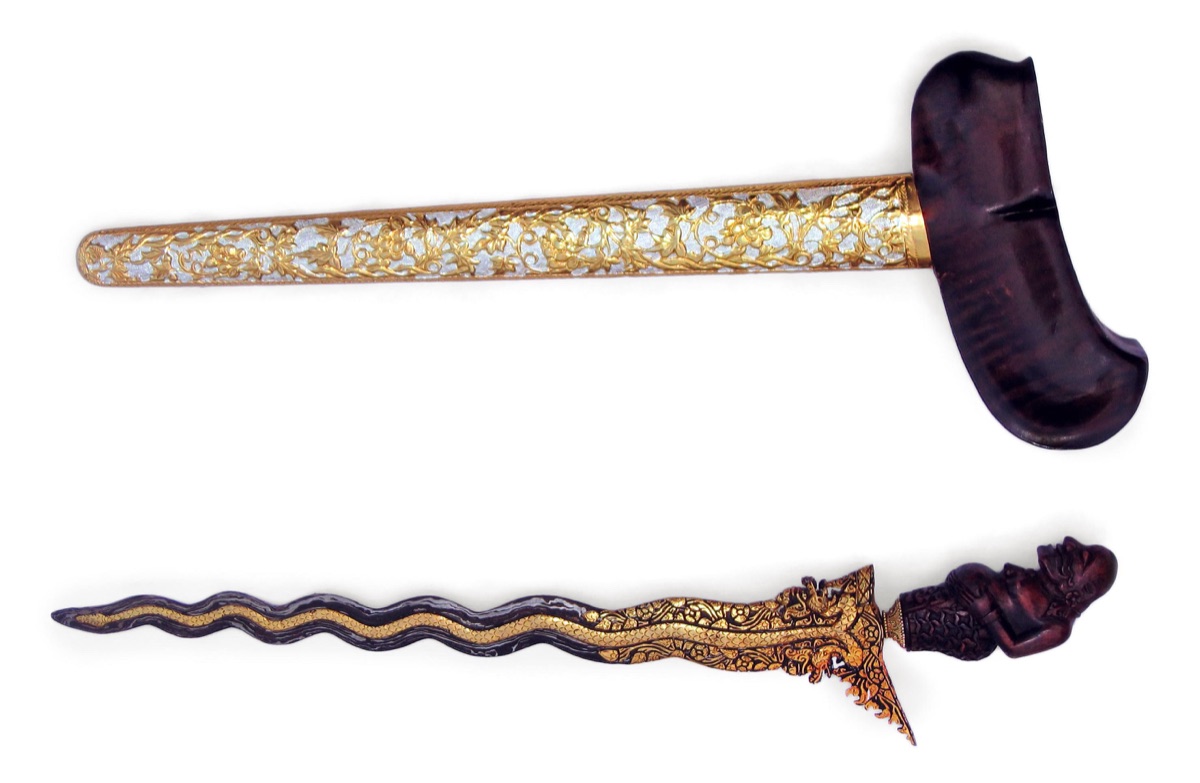
7. The Indonesian kris is recognized as cultural heritage
The kris, also spelled keris, is an asymmetrical Indonesian dagger with significance beyond its cutting edge. UNESCO describes it as both a weapon and a spiritual object, and inscribed the tradition on its Representative List of the Intangible Cultural Heritage of Humanity in 2008.
Its form, decorative metal patterns, age and origin all contribute to how it is understood and valued.
Source: UNESCO.
Pocketknife facts and familiar brands
8. “Victorinox” combines a person’s name with stainless steel
Victorinox’s name joins Victoria, the founder’s mother, with “inox,” a term for stainless steel. The company adopted Victoria as its brand name in 1909 and the combined name in 1921. There’s a family tribute hidden in a name many knife owners see every day.
Source: Victorinox company history.
9. NASA ordered Swiss Army knives
According to Victorinox’s history, NASA ordered 50 Master Craftsman knives in 1978.
Source: Victorinox company history.
10. One Swiss Army knife lists 73 functions
Victorinox lists 73 functions for the Swiss Champ XXL, item 1.6795.XXL. Its specified weight is 353 g (about 12.5 ounces), so all that versatility comes with something substantial to carry. Our Swiss Army knife guide looks at more everyday options.
A function count isn’t a blade count, and neither tells you how comfortable a tool is to use. Those 73 functions aren’t directly comparable with the Smithsonian’s 100 “blades.”
Source: Victorinox Swiss Champ XXL specifications.
11. Opinel’s missing numbers have a practical explanation
Look through Opinel’s familiar numbered knives and you’ll find gaps. The company says it stopped making No. 01 and No. 11 around 1935 because sales were poor: No. 01 was too small, while No. 11 offered little advantage over its neighbors.
Source: Opinel size guide.
12. The giant Opinel began as a shop-window attraction
Opinel’s oversized No. 13 grew out of promotional display knives made in the 1970s. People wanted to buy them, and the company turned the idea into a consumer model.
It measures 50 cm (nearly 20 inches) from handle to blade tip when open. Not exactly a pocket-sized Opinel.
Source: Opinel size guide.
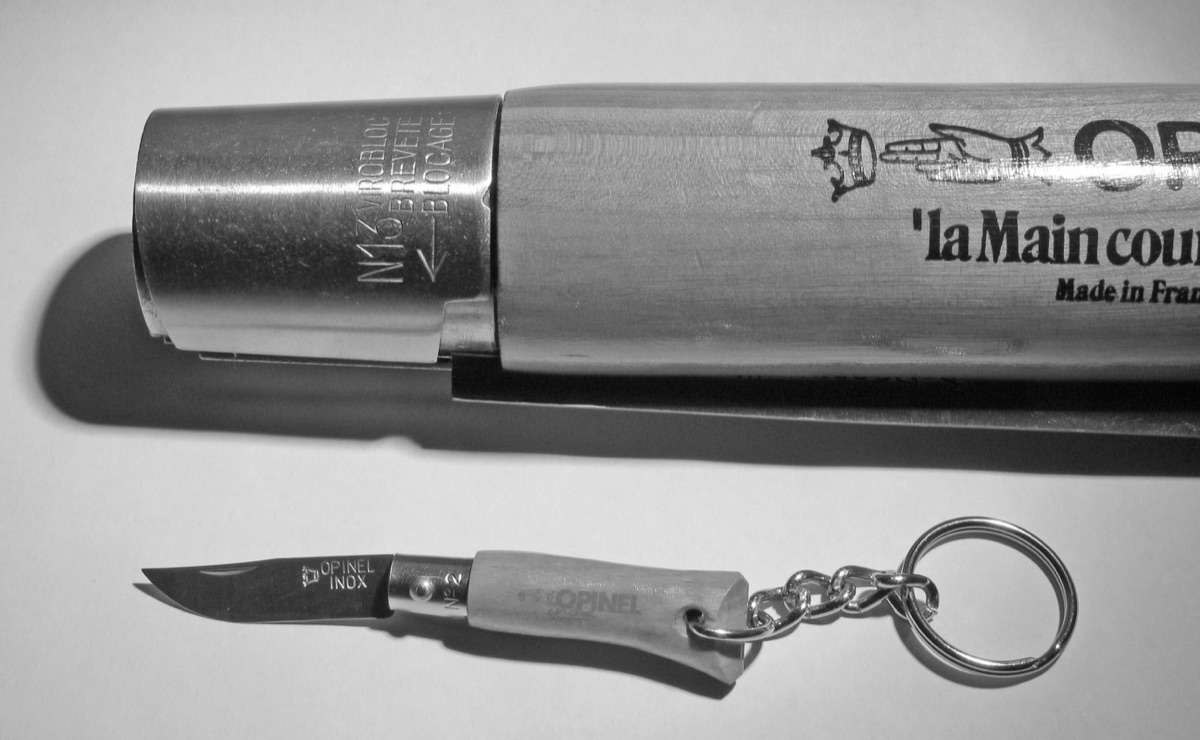
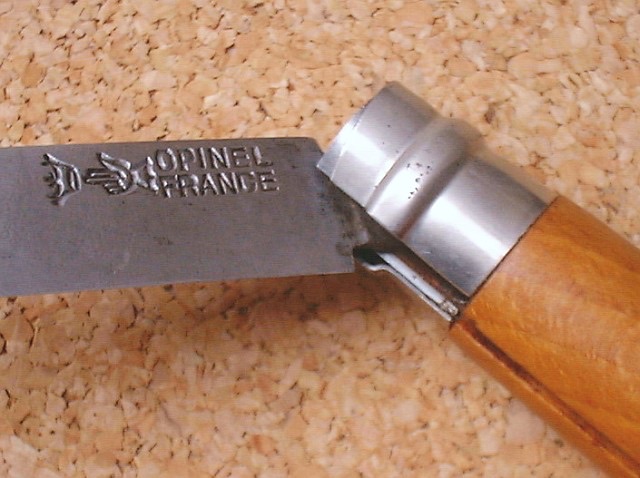
13. Opinel’s familiar locking ring came decades after the knife
Joseph Opinel made his first knife in 1890. The rotating Virobloc ring arrived in 1955, invented by Marcel Opinel to secure the blade when open. A later development allowed it to lock closed, too.
Not every Opinel has the ring, though. Some of the smaller models go without it.
Source: Opinel museum guide.
Steel, sharpness and kitchen-knife facts
14. A more acute edge can keep cutting longer in a wear test
It sounds backward if you equate “more metal” with “lasts longer.” In CATRA testing of 154CM and CPM-154 knives discussed by metallurgist Larrin Thomas, more acute edges maintained better cutting performance through abrasive cardstock than more obtuse edges.
The catch is the job. Resistance to abrasive wear isn’t the same as resistance to chipping or rolling. This is evidence about controlled slicing, not an instruction to grind every work knife as thin as possible.
Source: Knife Steel Nerds: CATRA study.
15. Sharpness and cutting ability aren’t quite the same thing
Sharpness concerns the very tip of an edge and how it starts a cut. Cutting ability includes the energy required to complete that cut. Blade thickness and edge geometry influence the second even when the edge is sharp.
That distinction explains why a knife that feels impressively sharp may still be a poor slicer for a particular job. Our guide to knife steel covers the material side of those tradeoffs.
Source: Knife Steel Nerds: sharpness versus cutting ability.
16. Chromium has to be in the right place to help a blade resist corrosion
A steel’s ingredient list doesn’t tell the entire corrosion story. Steelmaker Alleima explains that chromium tied up in carbides is unavailable to help form the protective surface film. Heat treatment changes how much chromium is dissolved in the steel matrix.
In plain English, the total amount listed on a datasheet and the amount available to resist corrosion are different things. That’s one reason a single alloy percentage is an incomplete way to judge a finished knife.
Source: Alleima materials explanation.
17. Nitrogen is part of the recipe in a familiar pocketknife steel
Alleima’s 14C28N datasheet lists a nominal 0.11% nitrogen, alongside 0.62% carbon and 14% chromium. The steel is designed for applications including pocket, chef’s, hunting and fishing knives.
That final “N” is a handy reminder that knife steel involves more than iron and carbon. Our knife-steel composition chart offers a broader introduction to alloying elements.
Source: Alleima 14C28N datasheet.
18. A ceramic knife isn’t made from ordinary pottery, and it can be sharpened
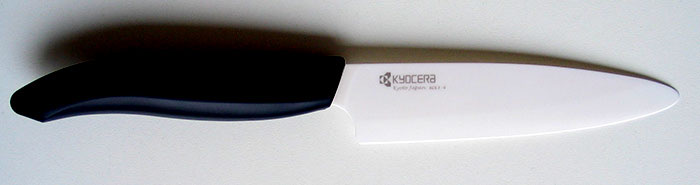
Kyocera’s ceramic blades are made from zirconium oxide, also called zirconia. It’s an engineered ceramic, and the company provides diamond-based sharpening options for suitable straight-edged blades.
The material comes with different handling rules. Kyocera advises against twisting, prying, and cutting hard or frozen food; its ceramic knives are intended for tasks such as slicing fruit, vegetables and boneless meat. “Ceramic” doesn’t mean disposable, but it does mean your usual sharpening rod may be the wrong tool.
Source: Kyocera use and sharpening guidance.