


A knife's blade grind is how the blade thins from the thick spine down to the sharp edge. It decides how well a knife slices, how tough the edge is and how easy it is to sharpen, which is why two knives with the same shape can cut so differently. Below is every common grind, with a cross-section drawing for most of them and real footage where I have it. If you want the outline of the blade instead, see our guide to knife blade shapes.
How We Earn Your Trust
Hands-On Experience
The clips are real footage from Wayne's Sharp World and Advanced Knife Bro, credited on each one. How We Test →
Facts You Can Check
Every knife named here was checked against the maker's or a major retailer's listing for its blade style.
How We Make Money
We earn a commission when you buy through our links. Commissions do not decide what we recommend. How We Make Money →
Every Knife Blade Grind at a Glance
- Hollow GrindConcave sides. Slices very well, with a delicate edge.
- Full Flat GrindStraight taper from spine to edge. The all-rounder.
- High Flat GrindA flat grind that starts just below the spine.
- Sabre GrindFlat grind from the middle down. Tough, slices less.
- Scandi GrindOne wide bevel to the edge. Made for wood.
- Convex GrindCurved sides that usually leave more steel behind the edge. Good for chopping.
- Chisel GrindGround on one side only.
- Compound GrindTwo grinds on one blade, often a flat tip.
Hollow Grind
A hollow grind has sides ground with a concave curve, usually on a wheel, so the blade gets very thin just above the edge.
Thin steel behind the edge means a hollow grind feels scary sharp out of the box and glides through cardboard, rope and food. It's common on pocket knives and hunting knives, and it's the classic grind on straight razors.
The hollow grind, sliced through. The orange face is the cut end. Illustration: KnifeInformer
The thin edge is the trade-off. It can chip or roll under hard use, and it's not the grind I'd pick for chopping or batoning wood.
What We Like
- +Slicing
- +Everyday carry and hunting knives
- +A blade that stays thin as you sharpen it
Good to Know
- Not ideal for chopping and batoning
- Not ideal for hard, twisting cuts
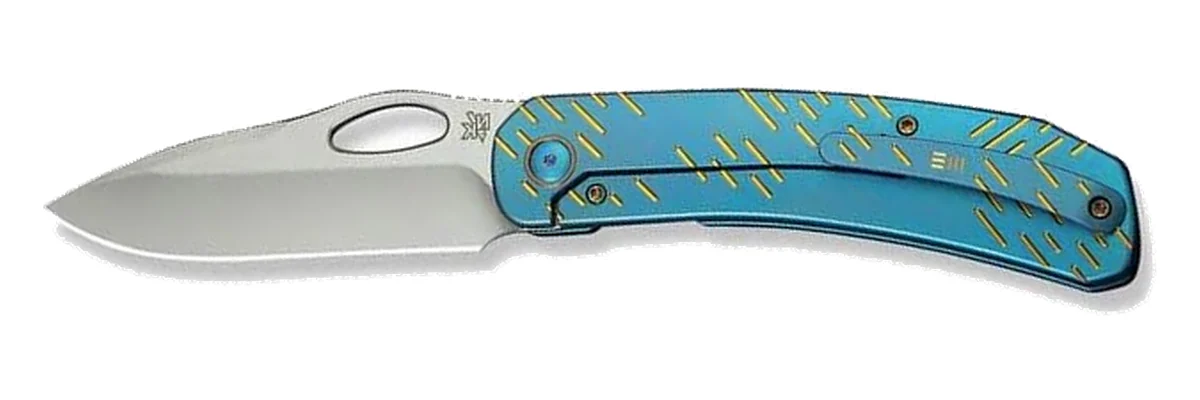
Knives we've reviewed with this grind: WE Inmate, Jack Wolf Collusion
Hollow Grind Knives We Recommend
Full Flat Grind
A full flat grind tapers in a straight line from the spine all the way down to the edge.
This is a great all-round grind, and it's what I'd look for on most pocket knives. It's thin enough to slice well, with more steel behind the edge than a hollow grind. Full flat and hollow grinds make the best slicers on this site, and how thin the blade is behind the edge matters more than which of the two it is.
The full flat grind, sliced through. The orange face is the cut end. Illustration: KnifeInformer
Over years of sharpening, the edge gets slightly thicker as you work your way up the taper. You won't notice for a long time.
What We Like
- +Everyday carry
- +Kitchen and food prep
- +A mix of slicing and toughness
Good to Know
- Not ideal for heavy chopping, next to a convex grind
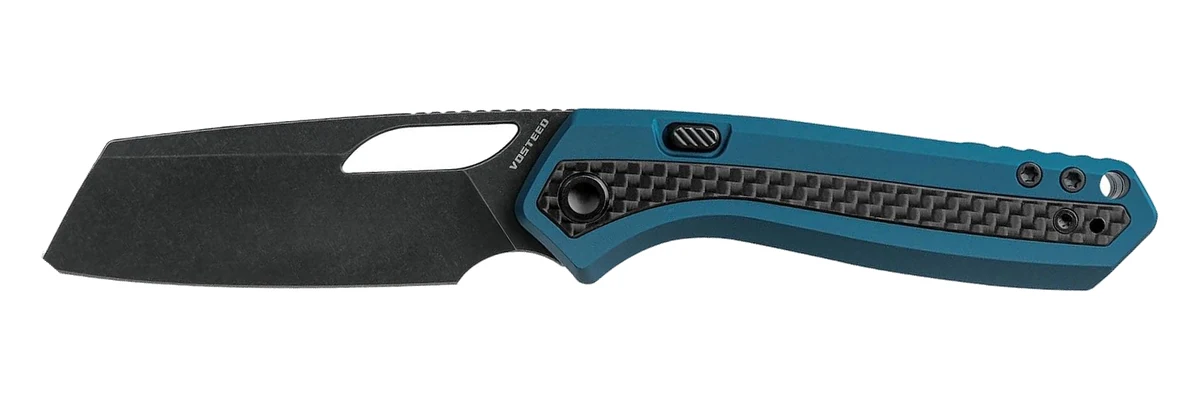
Knives we've reviewed with this grind: Vosteed Kroc 329
Full Flat Grind Knives We Recommend
High Flat Grind
A high flat grind is a flat grind that starts a little below the spine instead of right at it.
It slices almost like a full flat grind, but it keeps a narrow, full-thickness strip along the spine. That makes the blade a touch stiffer and stronger. Lots of modern folders use it, and in day-to-day use it's hard to tell from a full flat grind.
The high flat grind, sliced through. The orange face is the cut end. Illustration: KnifeInformer
What We Like
- +Everyday carry
- +A bit more strength than a full flat grind
Good to Know
- Not ideal for very fine slicing, next to a hollow grind
Sabre Grind
A sabre grind is a flat grind that starts around the middle of the blade or lower, leaving a thick, full-height top half.
All that steel up top makes a sabre grind tough. It's common on tactical knives, military knives and hard-use fixed blades, where strength matters more than slicing.
The sabre grind, sliced through. The orange face is the cut end. Illustration: KnifeInformer
The steep bevel near the edge pushes material apart instead of slicing through it, so it doesn't slice as well as a flat or hollow grind.
What We Like
- +Hard use
- +Tactical and military knives
Good to Know
- Not ideal for slicing
- Not ideal for food prep
Scandi Grind
A scandi grind is one wide, flat bevel that goes straight to the edge. A traditional scandi has no secondary bevel, though many production knives add a tiny microbevel.
It's the classic grind on Scandinavian bushcraft knives. The wide bevel bites into wood beautifully for carving and making feather sticks, and you can feel exactly where the edge is.
The scandi grind, sliced through. The orange face is the cut end. Illustration: KnifeInformer
It's also easy to sharpen. You lay that wide bevel flat on the stone and it sets the angle for you. It's less good at slicing food or cardboard than a thin flat grind.
What We Like
- +Bushcraft and woodwork
- +Easy sharpening in the field
Good to Know
- Not ideal for slicing food and cardboard
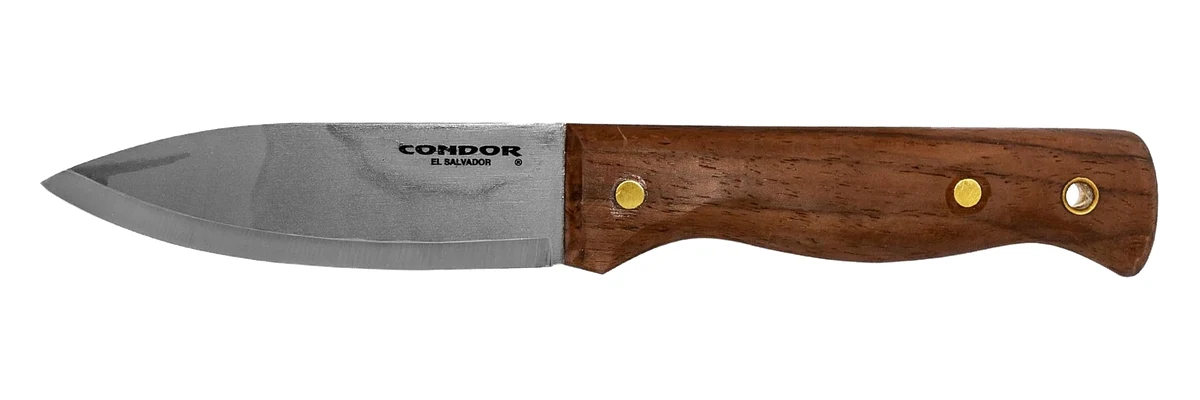
Knives we've reviewed with this grind: Condor Bushlore
Scandi Grind Knives We Recommend
Convex Grind
A convex grind has sides that curve outward, like the shape of an axe, so there's more steel behind the edge.
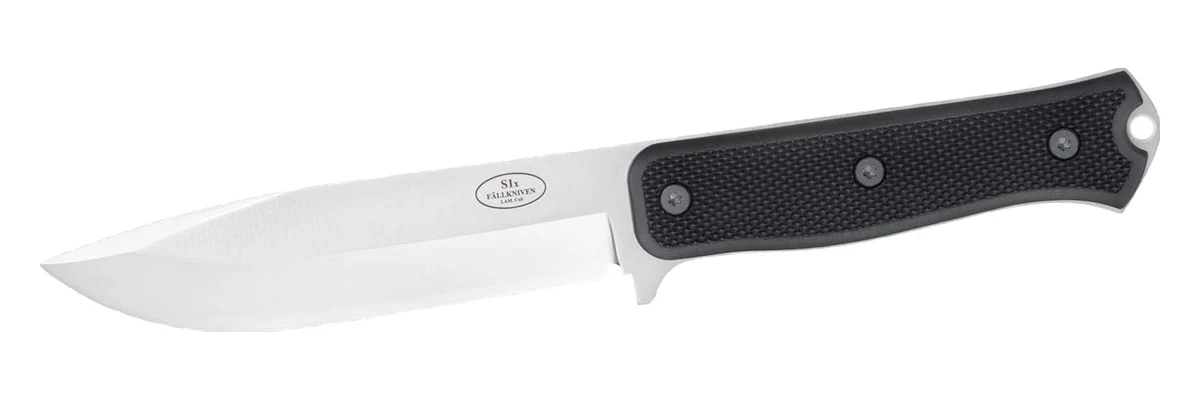
It usually leaves more steel behind the edge, so it holds up to chopping and batoning, and it still cuts well. Fallkniven is well known for convex edges, and you'll see them on axes and a lot of survival knives.
The convex grind, sliced through. The orange face is the cut end. Illustration: KnifeInformer
It's harder to sharpen on flat stones. Many people strop it on leather, or on sandpaper over something soft, to keep the curve.
What We Like
- +Chopping and batoning
- +Survival and outdoor knives
- +An edge that resists chipping
Good to Know
- Not ideal for quick sharpening on flat stones
Convex Grind Knives We Recommend
Chisel Grind
A chisel grind is ground on one side only, and the other side is flat or nearly flat.
It's easy to make very sharp and easy to sharpen, because there's only one bevel. You see it on some tactical knives, single-bevel Japanese kitchen knives like the deba and yanagiba, and the kiridashi.
The chisel grind, sliced through. The orange face is the cut end. Illustration: KnifeInformer
It cuts slightly off to one side, and most are set up for right-handers.
What We Like
- +Quick sharpening
- +Very keen edges
Good to Know
- Not ideal for left-handers, unless it's a left-hand model
- Not ideal for straight, centered cuts
Compound Grind
A compound grind combines two grinds on one blade.
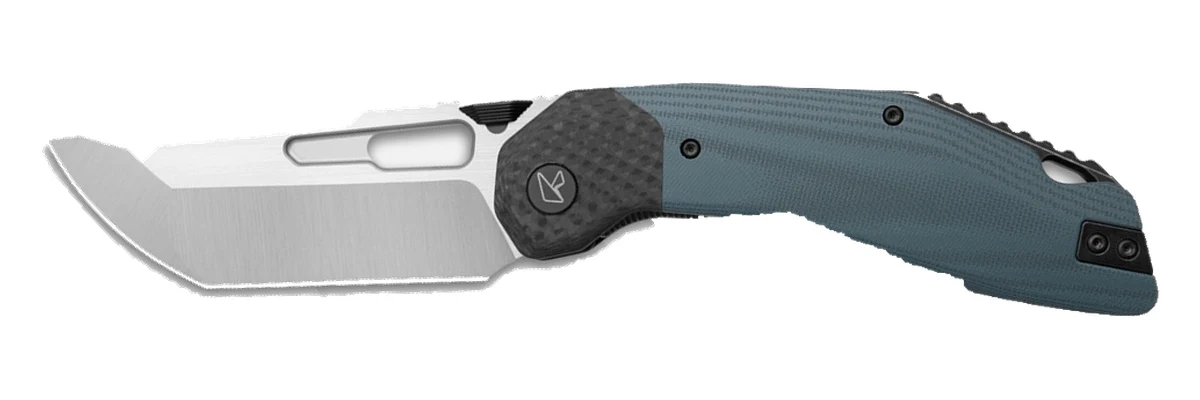
On folders that have one, that usually means a hollow or flat main grind with a separate flat-ground section at the tip, which leaves more steel at the point for strength. You see it a lot on tanto blades, where the tip takes the most abuse.
The edge bevel is usually ground at one angle along the whole edge, so you sharpen it like any other knife. The two main grinds only meet higher up the blade.
What We Like
- +A strong tip with a slicey main edge
- +Tanto and tactical blades
Good to Know
- Not ideal for a simple, single-grind blade
Knives we've reviewed with this grind: Ketuo Yakuza
Compound Grind Knives We Recommend
Edges, Swedges and Other Blade Details
The Edge Bevel
On most knives the main grind doesn't go all the way to the edge. A narrow second bevel, the edge bevel, is ground at a steeper angle right at the cutting edge. It makes the edge more durable and is what you're actually sharpening. A scandi grind is the exception: the main bevel is the edge, apart from any tiny microbevel.
Plain, Serrated or Partly Serrated
A plain edge is easier to sharpen and gives you clean, controlled cuts, and it's what I'd pick for almost everyone. A serrated edge has small teeth that saw through rope, seatbelts and fibrous stuff, and it keeps cutting fibrous stuff longer as it dulls, but it's much harder to sharpen. A partly serrated edge has teeth near the handle and a plain edge toward the tip. It sounds like the best of both, but you get less of each.
Swedge
A swedge is a bevel ground along the top of the blade, usually near the tip. In most cases it isn't sharpened. It thins the tip for better piercing and saves a little weight.
Plunge Line and Choil
The plunge line is where the grind stops at the back of the blade, and the choil is the unsharpened notch where the edge meets the handle. A sharpening choil makes it easy to sharpen the whole edge. A finger choil lets you choke up on the blade for fine work.
Knife Blade Grinds Compared
The grinds side by side. "Toughness" is how well the edge holds up to hard use and impact.
| Grind | Slicing | Toughness | Sharpening | Best For |
|---|---|---|---|---|
| Hollow | Excellent | Lower | Easy | Slicing, everyday carry |
| Full Flat | Very good | Medium | Easy | All-round, kitchen |
| High Flat | Very good | Medium | Easy | Everyday carry |
| Sabre | Fair | High | Easy | Tactical, hard use |
| Scandi | Good | Medium | Very easy | Bushcraft, woodwork |
| Convex | Good | High | Harder | Chopping, survival |
| Chisel | Good | Medium | Very easy | Tactical, Japanese kitchen |
| Compound | Good | Medium to high | Medium | Tanto, tactical |
Blade Grinds Head to Head
Hollow Grind vs Flat Grind
The hollow grind is thinner behind the edge, so it slices a touch better and feels sharper out of the box. The flat grind keeps more steel there, so it's tougher. Both are great on a pocket knife. For chopping or batoning, go flat or convex instead.
Flat Grind vs Convex Grind
A flat grind slices better and is easier to sharpen on a stone. A convex grind puts more steel behind the edge, so it handles chopping and impact better. Flat for a pocket knife or kitchen knife, convex for an axe or a big survival knife.
Scandi Grind vs Flat Grind
For woodwork, the scandi wins: the wide bevel bites into wood and is easy to sharpen in the field. For slicing food, cardboard and everyday tasks, a flat grind is better because it's thinner behind the edge.
Sabre Grind vs Scandi Grind
Both have a flat bevel that starts partway down the blade. The difference is at the edge: a sabre grind adds a small edge bevel, while a scandi grind runs its wide bevel straight to the edge, apart from any tiny microbevel. Sabre for hard use, scandi for woodwork.
Sabre Grind vs Full Flat Grind
Both can start from the same thick spine. The sabre grind keeps the blade full thickness down to the grind line, so there's more steel low on the blade. The full flat grind tapers from the spine, so it's thinner behind the edge and slices better. Unless you're really hard on your knives, the full flat grind is the more useful choice.
Which Blade Grind Is Right for You?
For most people and most pocket knives, a full flat or high flat grind is the answer. Otherwise, start with what you'll use the knife for.
- Everyday carry: full flat, high flat or hollow. See our best EDC knives.
- Kitchen and food prep: full flat, or chisel on Japanese knives.
- Hunting and skinning: hollow or full flat.
- Bushcraft and woodwork: scandi.
- Chopping and survival: convex or sabre. See our best survival knives.
- Hard use and tactical: sabre or compound.
Knife Blade Grind FAQs
What are the main types of knife blade grinds?
The main grinds are hollow, full flat, high flat, sabre, scandi, convex, chisel and compound. Flat and hollow grinds are the ones you'll see most on pocket knives.
What is the best grind for a pocket knife?
A full flat or high flat grind is the best all-rounder. It slices well and keeps enough steel behind the edge to stay tough. A hollow grind slices a touch better but is a bit more delicate.
Which knife grind is the sharpest?
A hollow grind often feels the sharpest, because the steel is so thin just behind the edge. But no grind is sharpest by name alone. The edge angle, how thick the blade is behind the edge and how well it was sharpened matter more.
Which knife grind is the strongest?
Convex and sabre grinds usually leave more steel behind the edge, which helps with chopping and impact. Compare knives of similar thickness, though. A thick flat grind can be tougher than a thin convex one.
Is a scandi grind good for everyday carry?
It works, but it's really made for woodwork. For cardboard, food and everyday tasks, a flat or hollow grind slices better.
Is a convex grind hard to sharpen?
It's harder on flat stones, because you have to keep the curve. Stropping on leather, or using sandpaper over something soft, keeps it sharp.
Is a hollow grind or a flat grind better?
For pure slicing, the hollow grind has a slight edge. For toughness and long-term sharpening, the flat grind wins. On a pocket knife, both are great choices.
What is a V grind?
V grind is a loose name for any grind where two flat bevels meet at the edge, like a flat or sabre grind with an edge bevel. Some people also use it for the edge bevel itself.
What is a zero grind?
A zero grind runs the main bevel all the way to the edge, with no secondary bevel. A traditional scandi grind is a zero grind. Many production scandi knives add a tiny microbevel at the edge to make it more durable.
Does the grind affect edge retention?
Yes. The steel and edge angle matter most for how long the edge holds, but geometry matters too. A blade that's thin behind the edge keeps cutting well as it dulls, while a thick one feels dull sooner. Too thin, though, and the edge can chip or roll.
What grind is best for bushcraft?
A scandi grind for carving and feather sticks, or a convex grind if you chop and baton a lot.
What is the difference between a blade grind and a blade shape?
The shape is the outline you see from the side, such as a drop point or tanto. The grind is how the blade thins from the spine to the edge. Our blade shapes guide covers every shape.
What is a secondary bevel?
It's the narrow, steeper bevel ground right at the cutting edge on most knives. It makes the edge more durable, and it's the part you sharpen. A traditional scandi grind has none, though many production scandis add a tiny microbevel.
Next, see every outline in our guide to knife blade shapes, how the blade stays open in our guide to knife lock types, or what it's made of in our knife steel comparison.
Still Not Sure?
Take our 60-second quiz and get matched with the right knife.

