


We independently evaluate all recommended products and services. Any products or services put forward appear in no particular order. If you click on links we provide, we may receive compensation.
Do you want to control each pass at the bench, sharpen working knives with a powered belt, or refresh an edge away from home? Work Sharp makes tools for all three jobs, and choosing the workflow is more useful than buying the biggest kit.
The Precision Adjust Elite suits deliberate guided sharpening when its fuller abrasive set is useful. A powered belt, compact kitchen machine or portable manual tool may fit other knives better. The rolling kit and whetstone offer other ways to control the edge at home. The distinctions below explain what you gain, what you give up and where paying more makes sense.
Key Considerations
- Choose the method before the bundle: A clamp guides the abrasive, a powered belt removes material under motor power, and a stone leaves the angle to you. Extra accessories are only useful once the underlying method fits the job.
- Check blade fit and the intended angle: Short, narrow, flexible or unusually shaped blades can challenge clamps, guides and magnetic holders. A marked setting is not proof of the working angle on every blade; check the actual setup and knife maker’s guidance.
- Separate upkeep from repair: A sound edge needing a touch-up is different from a chipped blade or a substantial bevel change. Start with an appropriate abrasive rather than using the coarsest supplied option every time.
- Think about where you will use it: A powered machine needs a suitable dry workspace and electricity. A portable kit is easier to carry, while a waterstone adds soaking, drying and surface care to the session.
Work Sharp Knife Sharpeners: Top Picks
- Best Guided Bench Setup: Work Sharp Precision Adjust Elite
- Best for Adjustable Powered Sharpening: Work Sharp Ken Onion Edition Mk.2
- Best Lower-Cost Powered Option: Work Sharp Knife & Tool Sharpener Mk.2
- Best Compact Kitchen Option: Work Sharp E2
- Best Portable Kit: Work Sharp Guided Field Sharpener
- Best Rolling Option: Work Sharp Rolling Knife Sharpener
- Best Freehand Stone Kit: Work Sharp Whetstone
Best Guided Bench Setup: Work Sharp Precision Adjust Elite
| PROS | CONS |
|
|
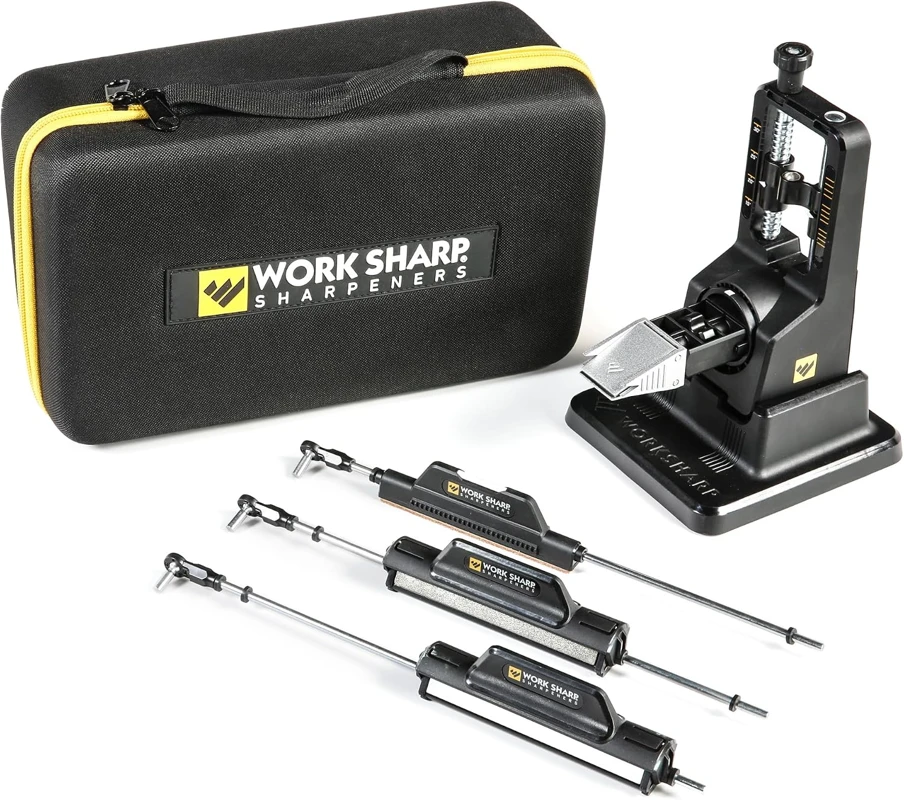
The Precision Adjust Elite suits deliberate bench work on compatible pocket and outdoor knives. The clamp holds the blade while you move an abrasive along the guided rod, with adjustment from 15° to 30° per side. It reduces one part of freehand sharpening, but you still choose the angle, inspect the edge and control the pressure.
This Elite package includes 220, 320, 400, 600 and 800 diamond grades, fine ceramic, a leather strop, a separate serration rod and a carry case. Its abrasive surfaces are half an inch by four inches. It is not the Professional model with its different frame, larger abrasives and digital angle indicator, so don’t buy it expecting those features.
The base Precision Adjust already includes 320- and 600-grit diamond faces and fine ceramic on the same style of guided setup. The Elite adds coarser and finer diamond grades, leather finishing, a serration rod and a case. I’d pay the extra for that fuller progression and storage; for occasional touch-ups, the base kit is the simpler, less expensive starting point.
Blade fit is the first check. The manual acknowledges that not every blade and handle design works with the system; long blades may need the clamp removed and reinserted instead of simply flipped. Placement and blade geometry affect the working angle. Use the system dry, avoid dragging an abrasive onto the blade face, and don’t leave a knife mounted between sessions.
In my earlier Work Sharp Mk.2 and Precision Adjust review, I preferred the original Precision Adjust for hobby knives and appreciated the powered Mk.2 in the toolbox. That was the original base kit, not a test of this Elite package. The distinction still helps explain the choice: buy the Elite for guided, incremental work and its expanded abrasive set, rather than expecting it to replace a powered tool for every job.
Best for Adjustable Powered Sharpening: Work Sharp Ken Onion Edition Mk.2
| PROS | CONS |
|
|
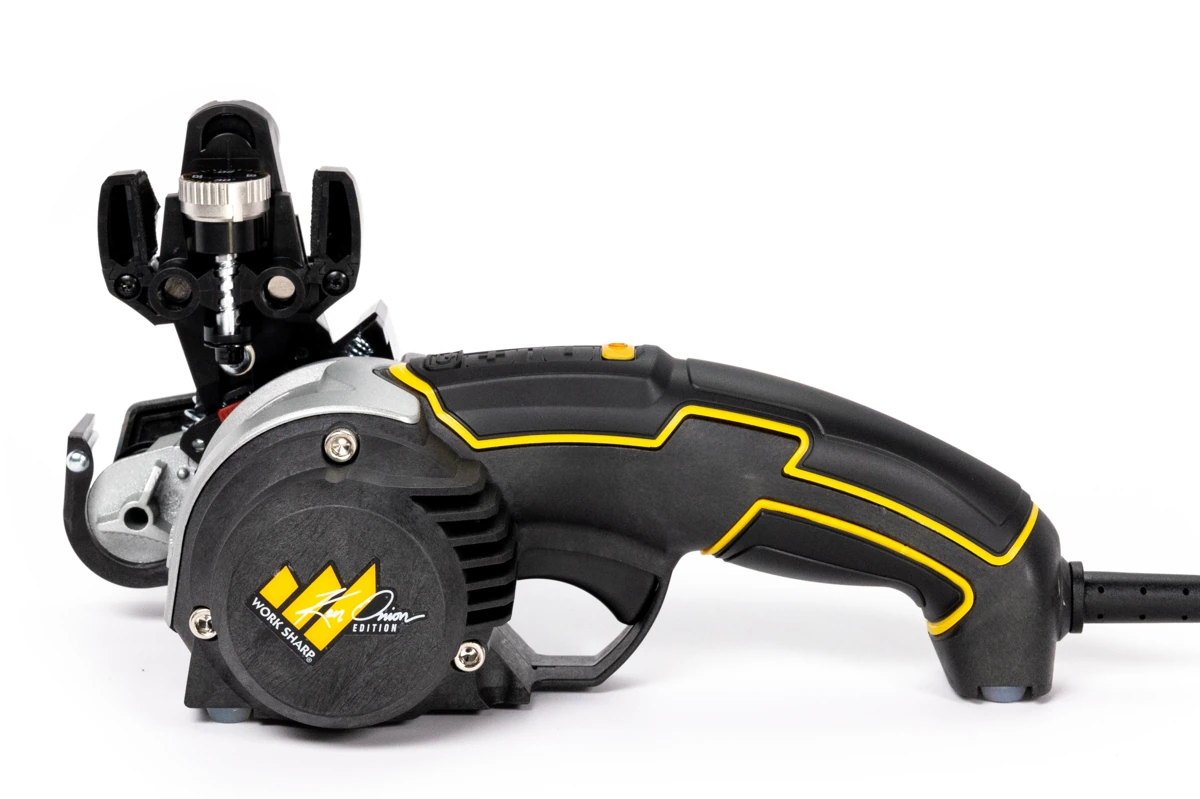
The Ken Onion Mk.2 is the powered choice when adjustable angle and speed matter more than the deliberate pace of a clamp system. It has a 15–30° per-side guide and seven speed settings, with belts ranging from coarse shaping grades to fine finishing abrasives. The selected standard kit does not include the separate Blade Grinding Attachment.
I’d choose it for someone willing to learn the controls and use the appropriate belt for the job. A coarse belt is not a required first step for routine upkeep, and more speed is not a substitute for consistent contact. Follow the manual’s pressure, speed and stopping sequence so the tip stays supported rather than being drawn off a running belt.
The Edge Guide is useful for long, flexible blades when the manual calls for it. That doesn’t make every knife fit: pocket hardware can interfere with insertion, and an edge below the guide’s 15° limit needs another method if you want to preserve it. Powered material removal leaves less room for an uncontrolled pass, so practice before moving to a favorite blade.
The standard Knife & Tool Mk.2 is worth considering when its 20° or 25° presets cover the work and you don’t need the Ken Onion’s adjustment. I liked the standard Mk.2 as a practical toolbox sharpener in that earlier review. Here, the Ken Onion earns its place for the adjustable guide and speed controls, provided you’re comfortable learning the belt technique.
Best Lower-Cost Powered Option: Work Sharp Knife & Tool Sharpener Mk.2
| PROS | CONS |
|
|
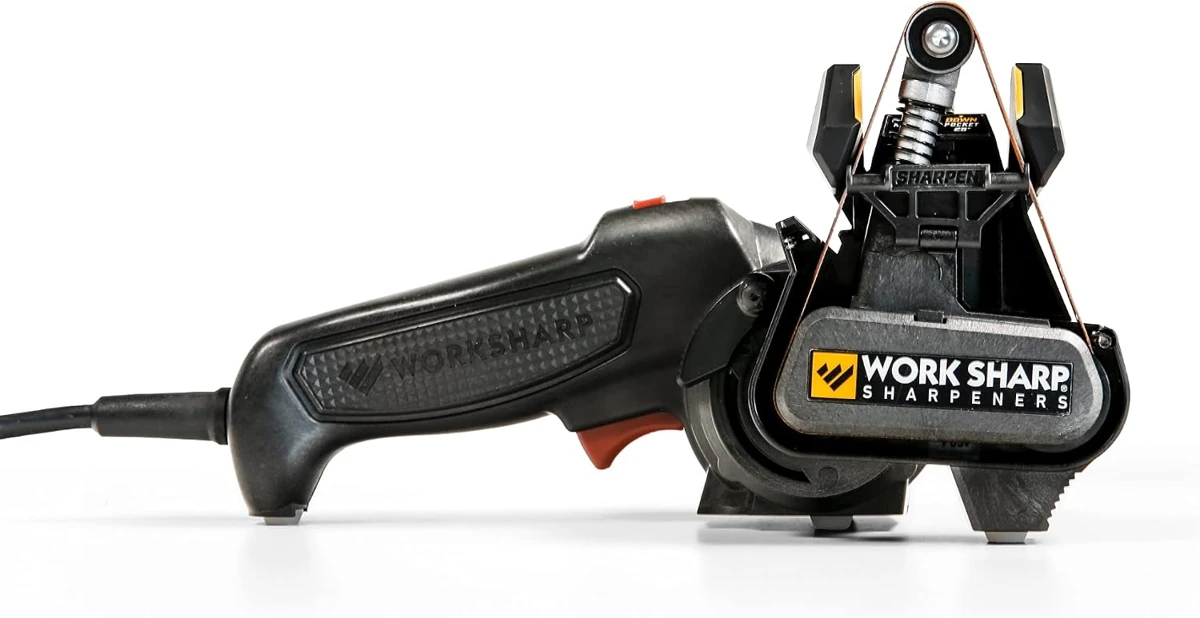
The standard Mk.2 is the powered Work Sharp I’d look at before paying for the Ken Onion’s extra adjustment. Its two speeds and 20° or 25° per-side presets cover a useful range of ordinary working knives, provided those angles match the edges you intend to keep.
I reviewed this model on KnifeInformer and found the learning curve relatively short, although the moving belt takes some getting used to after manual sharpeners. The lower speed is the sensible starting point for knives. The coarse P80 belt deserves particular care: it is a repair tool, not the automatic first stage for every slightly tired edge.
The WSKTS2 kit includes P80, P220 and 6000 belts. An edge guide supports the blade during the stroke, while the adjustable knife guide selects between the two presets. Follow the manual’s separate procedures for knives, serrations and tools; the ability to sharpen a tool does not make its speed or abrasive sequence appropriate for a thin knife.
Choose the Ken Onion Mk.2 when you need 15–30° angle adjustment or more speed control. Choose this one when 20° or 25° fits and you would rather spend less. The E2 below is the more compact kitchen-focused option, but it gives up the broader knife-and-tool belt workflow.
Best Compact Kitchen Option: Work Sharp E2
| PROS | CONS |
|
|
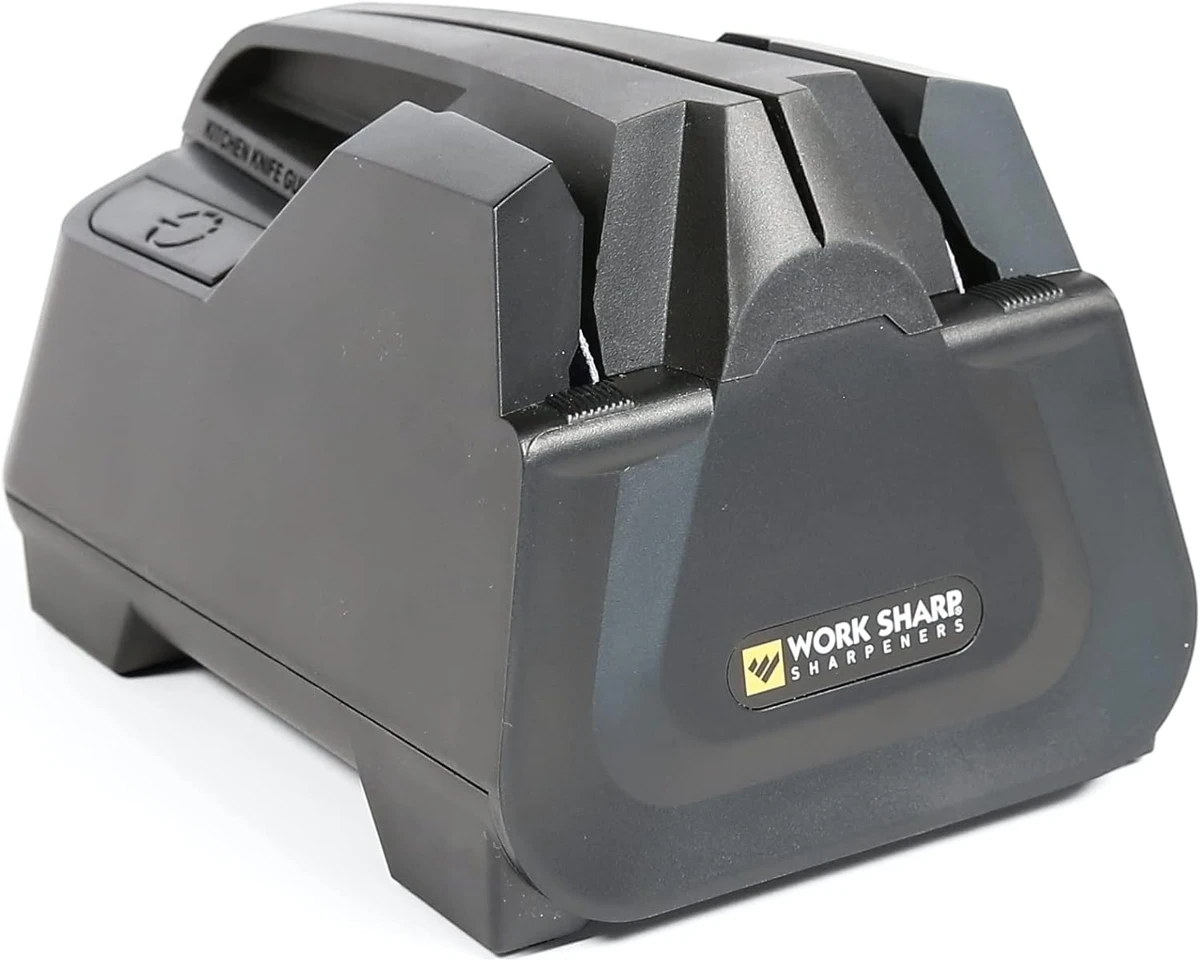
A home cook with a small counter and ordinary 20° kitchen knives does not necessarily need a belt sharpener. The E2 uses powered abrasive discs and a separate manual ceramic honing wheel in a compact housing. It is the simpler kitchen-focused choice here when you want to sharpen, clean up and get back to cooking.
Its CPE2 identity matters. These are fixed 20° per-side guides, not an adjustable substitute for the Ken Onion. Check the knife maker’s recommended geometry before buying it for a narrow Japanese bevel, an asymmetric edge or another specialty blade. A convenient machine is a poor match if it changes the edge you meant to preserve.
The powered section uses replaceable P120 abrasive discs. The ceramic honing slot serves a different maintenance role and can handle supported serrations using the manual’s procedure. Do not put a serrated knife through the powered slots simply because the machine has a compatible honing stage.
I’d choose the E2 over the standard Mk.2 for a compatible kitchen collection when counter space and simplicity matter most. The standard belt tool is the better starting point for broader knife-and-tool work; the Ken Onion offers more angle choice. For everyday kitchen upkeep, that simpler workflow is its advantage.
Best Portable Kit: Work Sharp Guided Field Sharpener
| PROS | CONS |
|
|
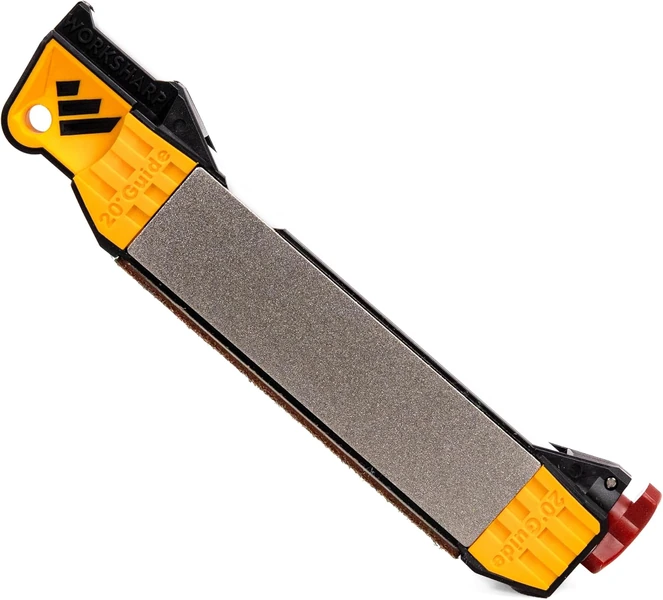
The Guided Field brings several useful stages to a compact outdoor sharpening kit. It combines 220 and 600 diamond plates, ceramic and a leather finishing strip, so you can carry more than one maintenance stage without packing a bench system. Its role is portable work, not recreating the room and support of a full-size stone.
The diamond starting references are 20° per side; the ceramic and leather references are 25°. Those are positions to learn from, not a clamp that holds the knife through a pass. If you want to retain a shallower bevel, don’t assume following every reference preserves it. The 25° finishing position changes the contact at the edge compared with the 20° starting position.
I’d reserve the coarse diamond plate for work that needs it rather than start there on every touch-up. The smaller surfaces demand careful handling along a long blade, and a flexible fillet knife can move away from the abrasive under pressure. This is a useful outdoor kit, not a universal answer for every narrow or flexible knife.
Choose it when carry size and several manual stages matter together. Choose the whetstone for a larger freehand working surface at home, or the Precision Adjust when clamping and a guided abrasive better suit the knife. Buying the Field solely for its small leather strip makes less sense if you already own sharpening stones and need a dedicated strop.
Best Rolling Option: Work Sharp Rolling Knife Sharpener
| PROS | CONS |
|
|
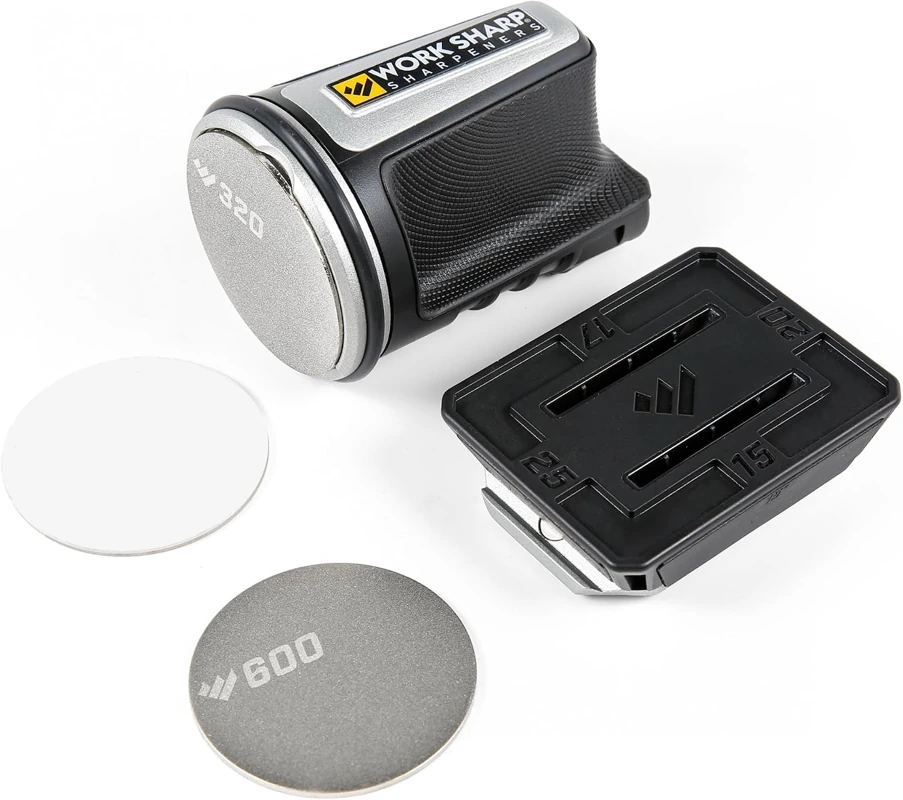
The rolling kit takes a different approach: position the blade on a magnetic angle holder, then move the abrasive along the edge. Its four positions are 15°, 17°, 20° and 25° per side, with 320 and 600 diamond abrasives and fine ceramic. I’d choose it for compatible knives when that movement feels more manageable than balancing an angle on a whetstone.
Check the actual blade before choosing this format. It needs a secure magnetic hold, enough exposed edge for abrasive contact and clearance for the roller to travel. Height and placement matter, especially with narrow blades and folding knives. Work Sharp illustrates a riser mounting method for folders; that is not a promise that every folder or handle shape will work.
The three abrasives let you do more than simply polish, but the starting grade still depends on the edge’s condition. Keep the blade secure and the work surface stable, and follow the manual when changing sides and abrasives. A nominal holder angle is useful only if the setup maintains the contact you intend.
I’d take the Precision Adjust instead for a compatible pocket knife when I want the blade clamped and the abrasive guided. The rolling kit makes more sense when the magnetic setup fits the knives and its motion suits the user. Don’t assume an ordinary two-sided rolling routine also preserves serrations or a single-bevel edge.
Best Freehand Stone Kit: Work Sharp Whetstone
| PROS | CONS |
|
|
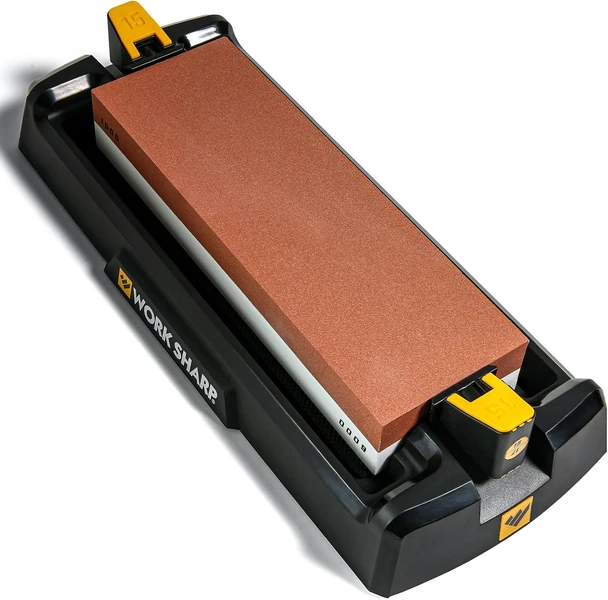
The Whetstone kit is a self-contained starting point for learning freehand sharpening. It includes a double-sided 1000/6000 waterstone, a water-control base and removable 15° and 17° starting references. The references give you a place to establish the blade’s position; they do not keep it there once the stroke begins.
The 1000 face does the ordinary sharpening work, with the 6000 face available for refinement when needed. Don’t skip shaping the edge because a higher grit number looks more appealing. Rinse the stone and base before switching faces so coarser residue does not contaminate the finishing surface.
Allow about ten minutes of soaking and check that the bubbles have stopped, keep the surface wet during use, then clean and dry the kit. Use water only, not oil. Like other wearing waterstones, it needs an appropriate flattening routine rather than an assumption that the surface stays flat indefinitely.
I’d choose it over the clamp or rolling kit when freedom to set the angle and learn the stroke matters most. That freedom also means more responsibility for controlling a long or flexible blade. If you want a guide to do more of the positioning work, the Precision Adjust is the more direct fit; if you don’t want a water routine, pick another method.
Compare Our Picks
Scroll sideways on smaller screens to compare all the details.
| Model | Best fit | Angle control | Abrasives | Main tradeoff |
|---|---|---|---|---|
| Work Sharp Precision Adjust Elite | Best Guided Bench Setup | 15–30° per side; adjustable | 220/320/400/600/800 diamond; ceramic; strop | Blade must fit the clamp securely |
| Work Sharp Ken Onion Edition Mk.2 | Best for Adjustable Powered Sharpening | 15–30° per side | P120, X65, X22, X4 and 6000 belts | Excess pressure or poor tip handling can remove too much metal |
| Work Sharp Knife & Tool Sharpener Mk.2 | Best Lower-Cost Powered Option | 20° or 25° per side | P80, P220 and 6000 belts | Limited presets compared with Ken Onion Mk.2 |
| Work Sharp E2 | Best Compact Kitchen Option | 20° per side; fixed | P120 abrasive discs; manual ceramic honing | Fixed angle and kitchen-focused workflow |
| Work Sharp Guided Field Sharpener | Best Portable Kit | 20° diamond; 25° honing references | 220/600 diamond; ceramic; leather strop | Small surfaces are less comfortable for long kitchen blades |
| Work Sharp Rolling Knife Sharpener | Best Rolling Option | 15°, 17°, 20° or 25° per side | 320/600 diamond; fine ceramic | Blade height, magnetic grip and clearance limit compatibility |
| Work Sharp Whetstone | Best Freehand Stone Kit | Freehand; 15° / 17° references | Aluminum oxide | You maintain the angle throughout each stroke |
How to Choose a Work Sharp Sharpener
Pick the workflow you actually want
The Precision Adjust guides an abrasive over a clamped knife. The two Mk.2 belt machines provide powered sharpening, while the E2 concentrates on a compact kitchen routine. The Guided Field packs manual stages into a portable kit, the roller uses a magnetic holder and the whetstone leaves angle control to your hands. Start there, then decide which accessories help. For powered choices from other makers, compare our best electric knife sharpeners.
Check the blade against the setup
A narrow blade can have clearance problems, a flexible blade can move under pressure and a long blade may need extra support or repositioning. Magnetic grip and clamp fit are separate questions. Follow the exact model’s instructions rather than assume one brand’s tool accommodates every knife.
Keep package names separate
The selected Precision Adjust Elite expands the original system’s abrasive progression and accessories. It is different from Professional and Professional Elite hardware. The standard Knife & Tool Mk.2 and Ken Onion Mk.2 are different machines, and the selected Ken Onion kit does not include the separate Blade Grinding Attachment. Check the model and contents before comparing prices.
Use the abrasive the edge needs
Routine upkeep does not require starting with the coarsest supplied grade. Repair, changing the bevel and finishing are different jobs, and a large collection of abrasives does not decide the sequence for you. For major damage on a valuable knife, a suitable sharpening service may be the better purchase.
Allow for setup and care
The powered machine needs electricity and controlled handling, the clamp needs secure mounting and blade fit, and the waterstone needs soaking and drying. Keep abrasive residue out of moving parts and finishing surfaces, and clean the knife before it returns to food. For everyday blade cleaning and storage, see the knife care and maintenance guide.
Why Trust Us
These choices compare Work Sharp methods, price tradeoffs, blade fit, angle control and the work required from the user. My earlier review covers the original Precision Adjust and standard Knife & Tool Mk.2. Those observations help explain those tools; recommendations for other current models draw on their exact manuals and specifications.
Final Thoughts
Begin with the Precision Adjust Elite for guided bench work. For powered sharpening, the standard Mk.2 saves money when its presets fit; the Ken Onion Mk.2 buys more angle and speed control. Choose the E2 for a compatible compact kitchen setup or carry the Guided Field for portable maintenance. The roller and whetstone suit different preferences at home. Buy around your knives and routine, then add equipment when there is a reason.
Frequently Asked Questions
Which Work Sharp sharpener is best for a beginner?
It depends on the knives and the method you want to learn. The Precision Adjust can reduce freehand angle control when a blade fits its clamp, while the whetstone teaches you to hold the angle yourself. Powered belts need careful practice; do not choose them on the assumption that a motor makes technique unnecessary.
Is the Precision Adjust Elite the same as the Professional?
No. This selected Elite kit uses the original Precision Adjust platform with expanded abrasives, finishing accessories and a case. The Professional has different hardware, larger abrasive surfaces and a digital angle indicator. Check the exact package rather than treating the names as interchangeable.
Do the guides preserve every knife’s factory angle?
No. Check the knife maker’s guidance and the actual abrasive contact. Guide limits, clamp placement, blade geometry and magnetic-holder fit can all matter. The Guided Field’s 20° and 25° references also represent different contact angles rather than one universal factory bevel.
Can I sharpen serrated knives with every Work Sharp tool?
No. Use only the exact model’s supported serrated procedure and a compatible tooth pattern. The selected Precision Adjust Elite includes a separate serration rod, but that does not make every abrasive or slot suitable for the job. Do not apply a plain-edge belt or rolling sequence indiscriminately.
Should I use every abrasive in the kit each time?
No. Choose the stages needed for the edge’s condition and the finish you want. Unnecessary coarse work removes material without a useful purpose, and a polishing stage does not replace shaping an edge that has not yet been sharpened properly.
