


A bigger fixed blade can look reassuring right up until it gets in the way of the job. ESEE’s compact knives, medium field blades and longer camp cutters share enough features to make the choice confusing. The useful question is how much blade you actually want to carry and control.
I would start with the ESEE-4 for a general outdoor knife, then move smaller or larger for a specific reason. These five choices cover compact carry, a thinner field blade, a longer camp knife and a Scandi-ground woodcraft option. Here’s where each makes sense, and what you give up by choosing it.
Key Considerations
Choose the working size first, then compare the blade and the complete carry arrangement.
- Blade length and working edge: The blade measurement can include an unsharpened section near the handle. Compare the cutting edge too, particularly when deciding whether a larger knife gives you meaningfully more useful reach.
- Thickness and task: The 0.125-inch ESEE-3 and RB3 have thinner blade stock than the 0.188-inch ESEE-4 and 6. Compare that alongside length and edge geometry: a thick blade is not automatically the better cutter.
- Steel and maintenance: All five configurations here use 1095 carbon steel. Their finishes leave the sharpened edges exposed, so cleaning, drying and occasional oiling remain part of ownership.
- Handle and sheath: Scales change how the same family fits the hand. The sheath, attachment and position also matter: a comfortable knife is less useful if its carry package gets in your way.
- Knife weight versus carry weight: The weights below are for the knives without their sheaths. Allow for the sheath and attachment too, especially when deciding whether the longer ESEE-6 earns its place on your belt.
Best ESEE Knives: Top Picks
- Best General-Purpose Outdoor Knife: ESEE-4
- Best Compact Fixed Blade: ESEE Izula-II
- Best Lightweight Field Knife: ESEE-3
- Best Longer Camp Knife: ESEE-6
- Best Woodcraft Option: ESEE RB3
Best General-Purpose Outdoor Knife: ESEE-4
| PROS | CONS |
|
|
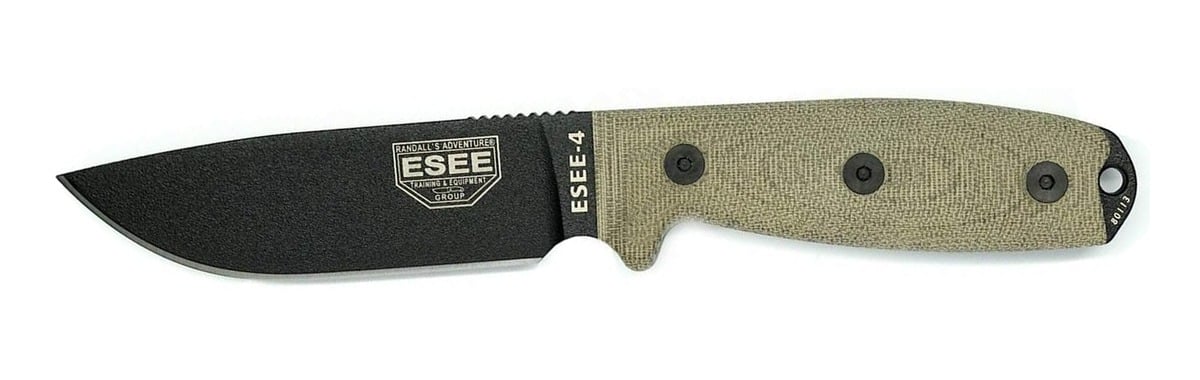
The ESEE-4 is my starting point when you want one medium-sized outdoor knife rather than a dedicated chopper or a very small belt tool. The selected 3D-Micarta version has a 4.50-inch blade with 4.10 inches of cutting edge. That distinction is useful: it tells you how much edge is actually doing the work, rather than treating the entire distance from handle to tip as sharpened steel.
At 9 inches overall and 8 ounces before the sheath, the 4 sits between the compact Izula-II and the longer ESEE-6. Its 0.188-inch stock gives it a more substantial blade than the 0.125-inch ESEE-3. I would choose that middle size when grip and general field utility matter more than minimizing belt weight. In the earlier guide, Logan Smith favored the 4 and particularly liked its handle comfort. Its contoured scales are worth considering if the flatter handles on the standard 3 do not appeal to you.
The compromise is that extra steel. If your work is mostly small, controlled cuts, compare the thinner 3 before committing to the 4’s extra size and weight. The powder-coated 1095 blade also needs care at the exposed edge and markings. The coating helps protect the blade’s faces, but it does not remove the need to dry the knife after wet use.
Best Compact Fixed Blade: ESEE Izula-II
| PROS | CONS |
|
|
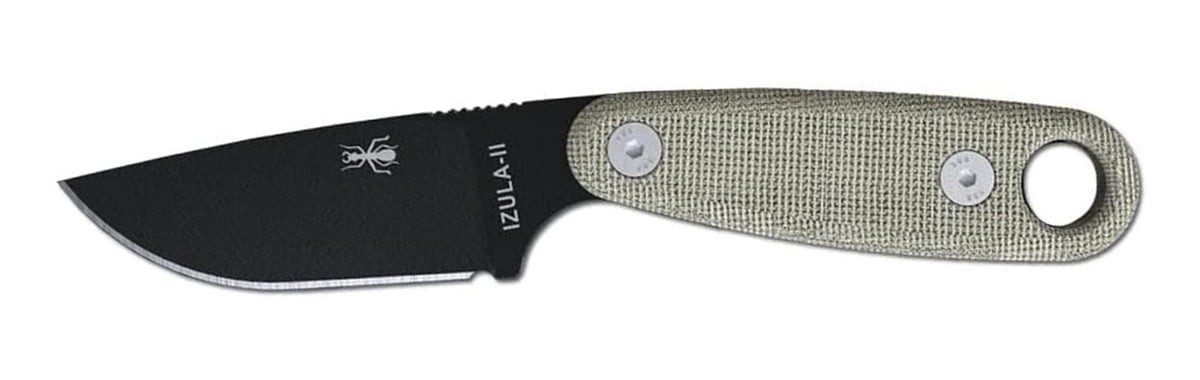
The Izula-II makes sense when a larger belt knife would spend more time at home than at work. It keeps the compact Izula idea but adds handle length and Micarta scales. The manufacturer gives it a 6.75-inch overall length, a 2.63-inch blade and a 3.20-ounce weight without the sheath. It is a genuinely smaller tool than the field knives here, not simply a lighter version of the 4.
Logan Smith called it one of his favorite small fixed blades in the original guide. A short blade keeps everyday utility cuts manageable, while the longer handle gives you more room than the original skeletonized Izula. The II also includes Micarta scales, so you do not have to price those separately. If minimum size matters more than grip length, the shorter original Izula is still worth a comparison.
I would choose the II for compact fixed-blade carry, with sheath placement decided before purchase. The included molded sheath and clip plate are part of that choice, and the complete package occupies more room than the bare knife. A short edge also has less reach for larger food or camp cuts. Step up to the 3 or 4 when that becomes a regular limitation rather than expecting a compact knife to do every larger job.
Best Lightweight Field Knife: ESEE-3
| PROS | CONS |
|
|
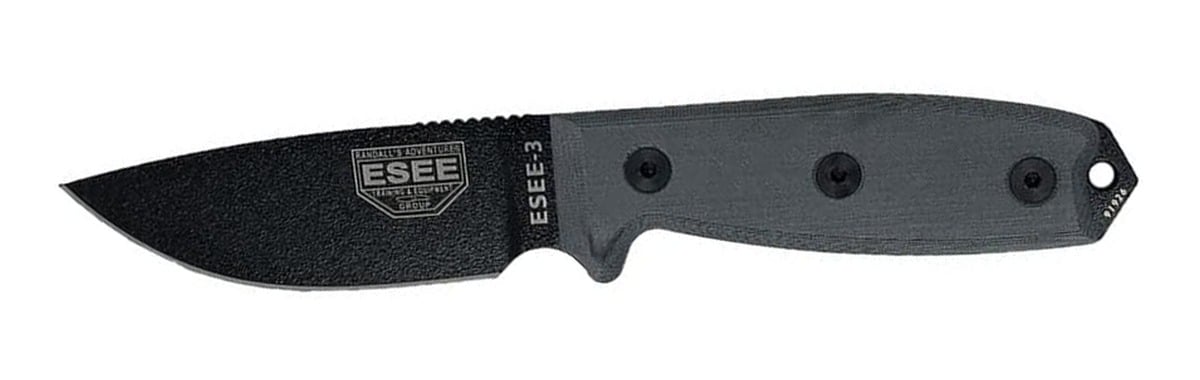
I would choose the ESEE-3 for a smaller field knife with more handle and cutting length than the Izula-II. Its 0.125-inch blade stock is thinner than the ESEE-4’s 0.188-inch stock, and the knife weighs 5.20 ounces before adding the sheath. That makes it worth comparing when the 4 feels like more knife than you want on your belt.
The version here is the standard 1095 model with gray Micarta scales, a plain black blade and a coyote brown molded sheath. It measures 8.31 inches overall. The blade measures 3.88 inches, with 3.38 inches of cutting edge; the unsharpened section near the handle accounts for the difference. That is enough of a step up from the Izula-II to matter for longer cuts, while keeping the knife smaller and lighter than the 4.
The tradeoff is reach and maintenance. The shorter edge gives you less room for larger food or camp cuts than the 4 or 6, and the exposed 1095 edge needs drying and occasional oiling. I would take the 4 if I wanted a thicker blade, or the 6 when longer reach mattered more than belt weight. Choose the 3 when its more compact dimensions suit the work you actually do.
Best Longer Camp Knife: ESEE-6
| PROS | CONS |
|
|
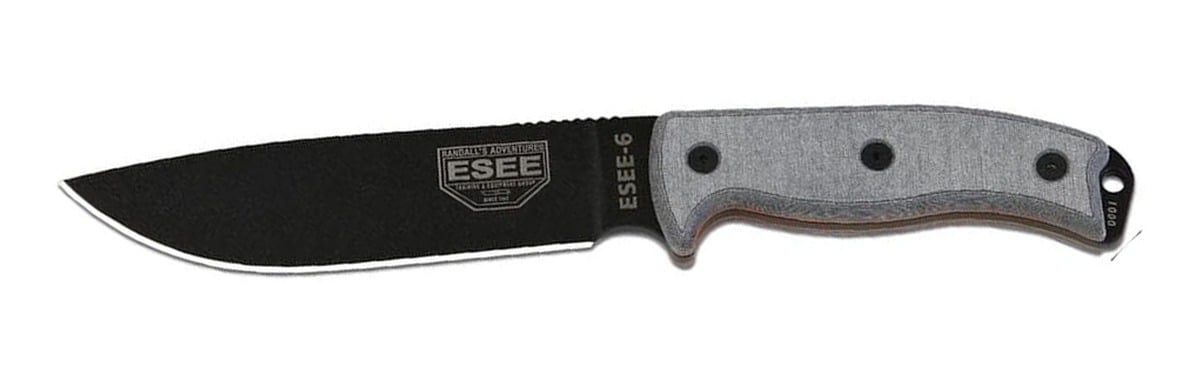
The ESEE-6 is the step up when a medium field knife regularly runs short of reach. Its 6.50-inch blade provides 5.75 inches of cutting edge, with an 11.75-inch overall length. That gives you more room for longer camp cuts than the 4, but adds substantial knife to carry: the ordinary Micarta-handled version weighs 12 ounces without its sheath.
In my earlier ESEE-6P account, I used a black-coated 1095 model for wood work and kitchen cutting, and preferred its balance and lower weight to the heavier ESEE-5. I also found that the molded sheath could be noisy and would have preferred a simpler belt arrangement. Those observations came from that earlier 6P. They make the current sheath and attachment worth a close look, particularly if you expect to carry it while moving around camp.
The full-flat blade and longer edge are the reasons to choose the 6. The cost is belt space and a less convenient tool for short, close cuts. I would take the 4 for a more compact general field knife and the 6 when the extra reach earns its place. The package linked here includes a black molded sheath and clip plate; it is different from the coyote-sheath and knife-only listings you may encounter.
Best Woodcraft Option: ESEE RB3
| PROS | CONS |
|
|
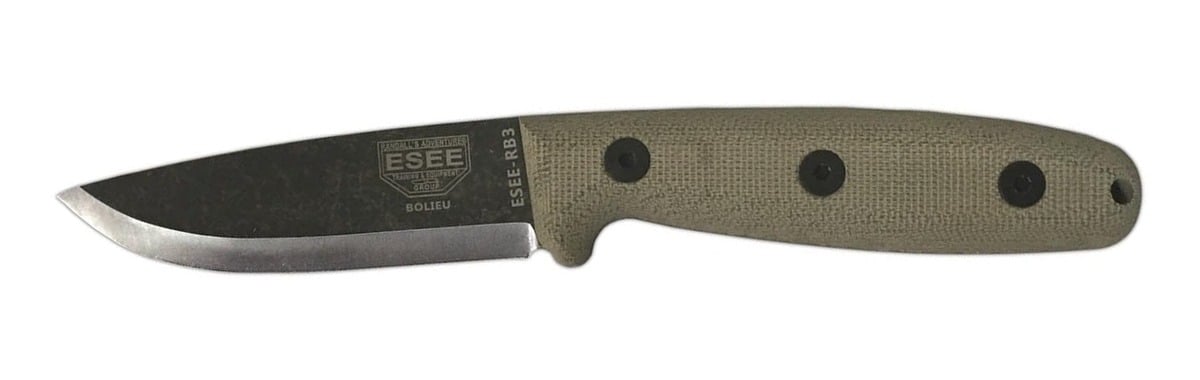
The RB3 is the ESEE I would compare when controlled woodcraft is the priority. Reuben Bolieu’s design combines a Scandi grind, Micarta handle and leather pouch sheath. The current black-oxide stonewashed version has a 3.50-inch blade, measures 8.13 inches overall and weighs 6 ounces without the sheath. It gives you a woodcraft-focused alternative to the flat-ground 3 and the thicker 4.
A Scandi bevel gives you a broad reference surface when working against wood. Whether you prefer that to a flat-ground blade with a secondary bevel depends on your technique and other cutting jobs. Logan Smith liked the RB3’s handle and woodcraft focus in the earlier guide, which covered the older uncoated Camp-Lore version. The current knife has ESEE branding and a black-oxide finish, so that older account does not establish how this finish wears.
Choose the geometry with sharpening in mind as well. Keeping the broad bevel consistent is a different job from touching up a narrow secondary bevel, and the leather pouch gives you a different carry arrangement from the molded sheaths on the other knives here. Dry the blade and sheath after wet use: black oxide does not make 1095 stainless. I would choose the RB3 when its bevel and pouch carry suit my woodcraft, rather than simply treating it as another size of ESEE field knife.
Compare Our Picks
Scroll sideways on smaller screens to compare all the details.
| Knife | Blade | Weight | Best use |
|---|---|---|---|
| ESEE-4 | 4.5 in | 8.00 oz | General outdoor use |
| ESEE Izula-II | 2.63 in | 3.20 oz | Compact fixed-blade carry |
| ESEE-3 | 3.88 in | 5.20 oz | Lighter field cutting |
| ESEE-6 | 6.5 in | 12.00 oz | Longer camp cuts |
| ESEE RB3 | 3.50 in | 6.00 oz | Woodcraft |
How to Choose an ESEE Knife
Begin with the smaller useful knife
If you mainly open packaging or make short utility cuts, the Izula-II may cover the work without a larger belt knife. For a general outdoor tool, compare the 3 and 4 first. A longer blade is worth carrying when you repeatedly need the reach, not merely because it looks more capable.
Compare the 3 and 4 before sizing up
The standard ESEE-3 is thinner, lighter and shorter than the 4, with flatter Micarta scales. The 4 offers a longer cutting edge and the contoured handle selected here. Decide which dimensions and grip you prefer before paying for extra blade you may not need.
Make the longer blade earn its weight
The 6 adds cutting reach, but its 12-ounce knife weight is before the sheath and attachment. My earlier 6P account also raised a sheath-noise concern. Look at the full carrying arrangement and the jobs that call for a longer edge before moving up from the 4.
Choose the whole carry package
Check the sheath, clip plate or backing supplied with the actual version. Some ESEE listings are knife-only, while other packages include different accessories. The comparison weights are for the knives alone, so allow for carrying equipment as well.
Treat the finish as help, not immunity
Clean and dry the blade, including the exposed edge and markings. Coated 1095 can still rust, and damp storage in a sheath is poor prevention. Follow ESEE’s care guidance rather than expecting a black finish to remove maintenance.
Know what the warranty actually covers
ESEE’s warranty covers qualifying breakage, but it is not free insurance against rust, normal wear, loss or cosmetic damage. The customer pays shipping both ways, and replacement color or coating is not guaranteed. The detailed policy is more useful than a no-questions-asked slogan.
Why Trust Us
Logan Smith’s earlier KnifeInformer guide supplies the attributed ESEE-4, Izula-II and RB3 preferences retained here. My earlier ESEE-6P account adds use and sheath observations from that historical 1095/Micarta sample. The recommendations also compare current manufacturer specifications, blade geometry, maintenance and carrying arrangements. The standard 1095 ESEE-3 here is a different configuration from the stainless version in the earlier guide.
Final Thoughts
The ESEE-4 is my starting point for a medium general-purpose outdoor knife. Move to the Izula-II for compact carry, the standard ESEE-3 for a thinner and lighter field knife, or the 6 when a longer camp blade is useful often enough to carry. Choose the RB3 for its Scandi geometry and leather pouch. Start with the job, then choose the blade and sheath you will be comfortable using. For other makers worth comparing, see my guide to the best knife brands.
Frequently Asked Questions
Which ESEE knife should I buy first?
I would begin with the ESEE-4 for a general outdoor knife, then compare the thinner 3 if controlled cutting and a smaller package matter more. The Izula-II makes more sense for compact daily utility. A larger knife is not automatically a better first purchase.
What is the difference between the ESEE-3 and ESEE-4?
The standard 1095 ESEE-3 here has a 3.88-inch blade, 0.125-inch stock and a 5.20-ounce knife weight. The selected ESEE-4 has a 4.50-inch blade, 0.188-inch stock and weighs 8 ounces. The 3 is the more compact, lighter choice; the 4 adds edge length and a thicker blade.
What is the difference between the Izula and Izula-II?
The II has a longer handle and comes with Micarta scales. The ordinary Izula is shorter and can be configured differently. Compare the complete sheath and handle package as well as the knife price; the II is not automatically the cheapest compact choice.
Should I choose the ESEE-4 or ESEE-6?
Choose the 4 if you want a more compact general field knife. The 6 adds cutting reach with a 6.50-inch blade and 5.75 inches of cutting edge, but its 12-ounce knife weight and longer sheath take up more room. The larger knife makes sense when you regularly use that extra reach.
Does ESEE’s coating prevent rust?
No. The coating leaves the edge and other exposed areas needing care, and it can wear during use. Clean and dry 1095 after wet or sweaty conditions, and follow the manufacturer’s care instructions. Rust is excluded from the detailed warranty policy.
Is the RB3 only for experienced bushcrafters?
No blanket experience threshold makes sense. Its Scandi geometry is a particular cutting and sharpening choice, not proof that beginners cannot use it. Learn controlled technique and compare its bevel maintenance with the other knives before deciding it suits your work.
