


We independently evaluate all recommended products and services. Any products or services put forward appear in no particular order. If you click on links we provide, we may receive compensation.

The best balisong for your money depends on whether you want a live blade for cutting or an unsharpened trainer for learning to flip. Weight, handle construction and pivot design all affect the choice, and spending more does not automatically buy a knife that suits you better.
Our shortlist starts with two live blades: the substantial steel-handled Kershaw Lucha and the lighter aluminum-handled REVO Nexus. For practice, the Squiddy-B keeps weight, noise and cost down, while the Squidtrainer V4 offers a more substantial metal build.
Our Top Picks
- Live-blade value: Kershaw Lucha
- Lighter live blade: REVO Nexus
- Quiet lightweight trainer: Squid Industries Squiddy-B
- Metal trainer: Squid Industries Squidtrainer V4
Live blades versus trainers: The Lucha and Nexus have sharpened edges. The Squiddy-B and Squidtrainer do not. If your interest is learning to flip, start with a trainer; it reduces cutting risk but does not eliminate pinches or impact injuries.
Best Live-Blade Balisongs
Kershaw Lucha: Live-Blade Value
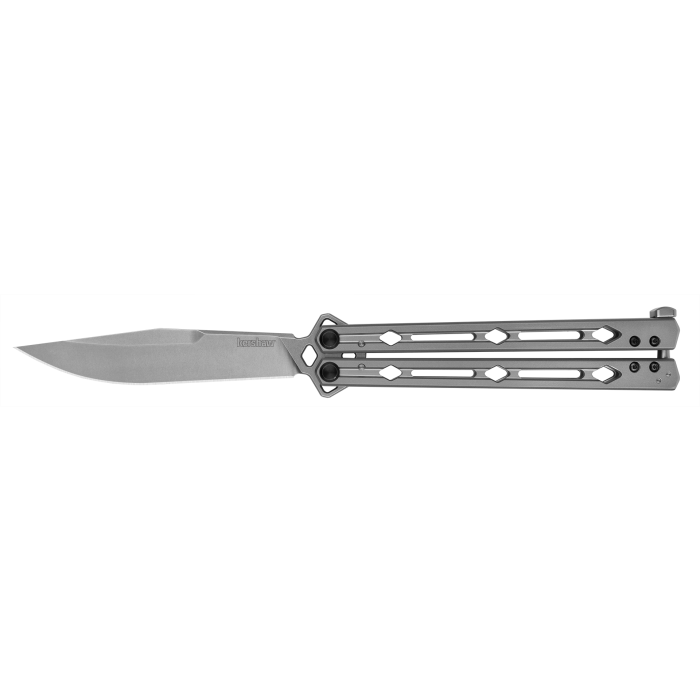
The standard Kershaw Lucha 5150 has a straightforward appeal. You get a U.S.-made live blade with Sandvik 14C28N steel, stainless-steel handles and dual KVT ball-bearing pivots, without stepping up to a premium titanium build.
The tradeoff is weight. At 5.9 ounces, the standard Lucha is heavier than the aluminum-handled Nexus below. Its steel handles will appeal more to someone who likes a substantial knife than to someone seeking the lightest possible flipper. Kershaw rounds the handle bevels and gives the latch a stop intended to keep it from contacting the blade.
Choose the model carefully: the standard steel-handled 5150, the unsharpened Lucha Trainer and other Lucha versions are not interchangeable. The standard 5150's published specifications describe the version pictured here.
REVO Nexus: Lighter Live-Blade Alternative
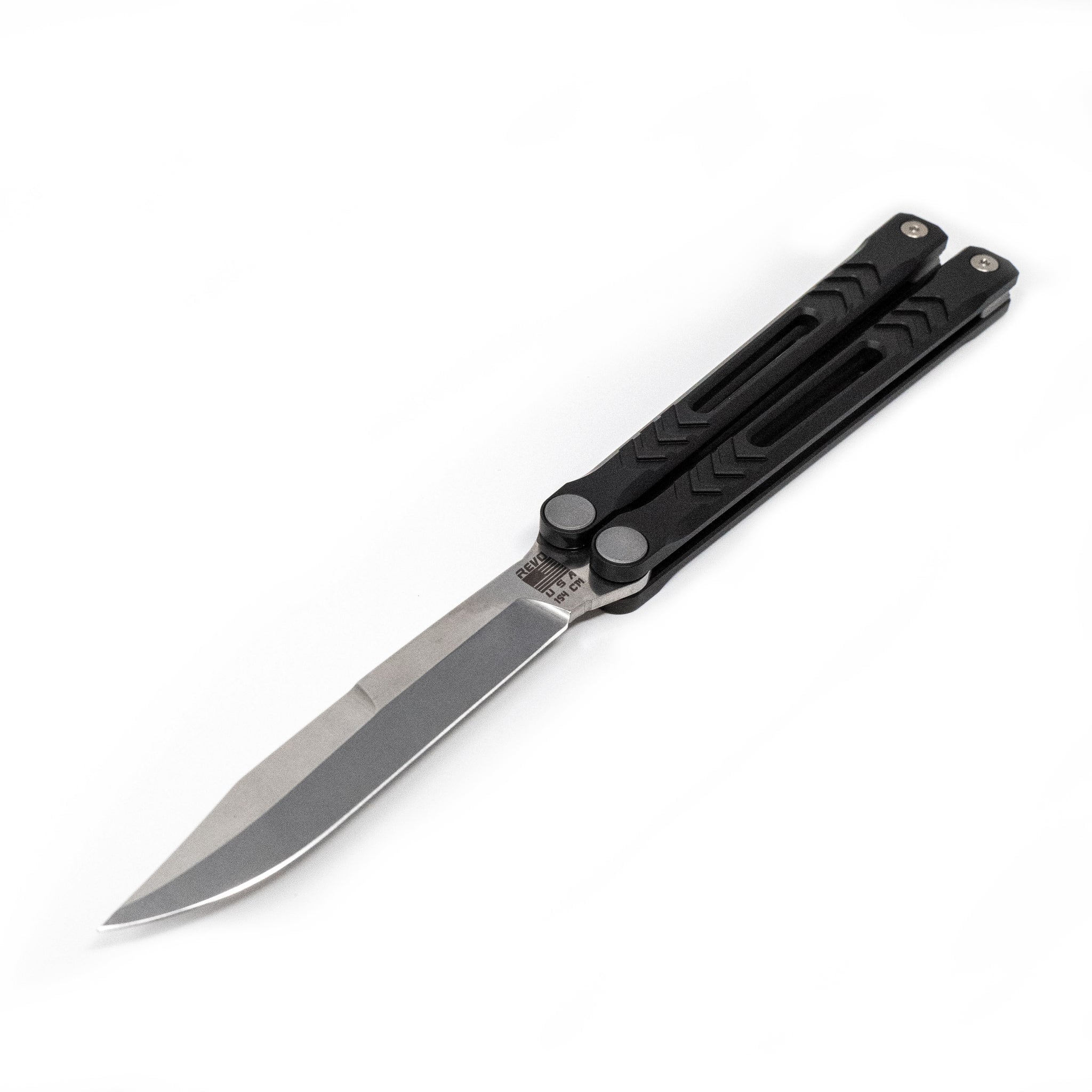
The REVO Nexus gives you a useful alternative to the Lucha: aluminum handles, a 4.5-inch 154CM blade and ceramic-bearing pivots. REVO lists this U.S.-made model at 4.7 ounces, appreciably lighter than the Lucha's 5.9 ounces. The linked black-handled 154CM version was available at a modest step up in price, making it worth considering if you prefer a lighter build than the Lucha.
There are compromises. The handles are relatively thick, and the latchless design means there is no built-in latch to secure the handles together for pocket carry. Those details make more sense for a buyer prioritizing handling and flipping than someone wanting a conventional pocket knife.
Best Balisong Trainers
Squid Industries Squiddy-B: Quiet Lightweight Trainer
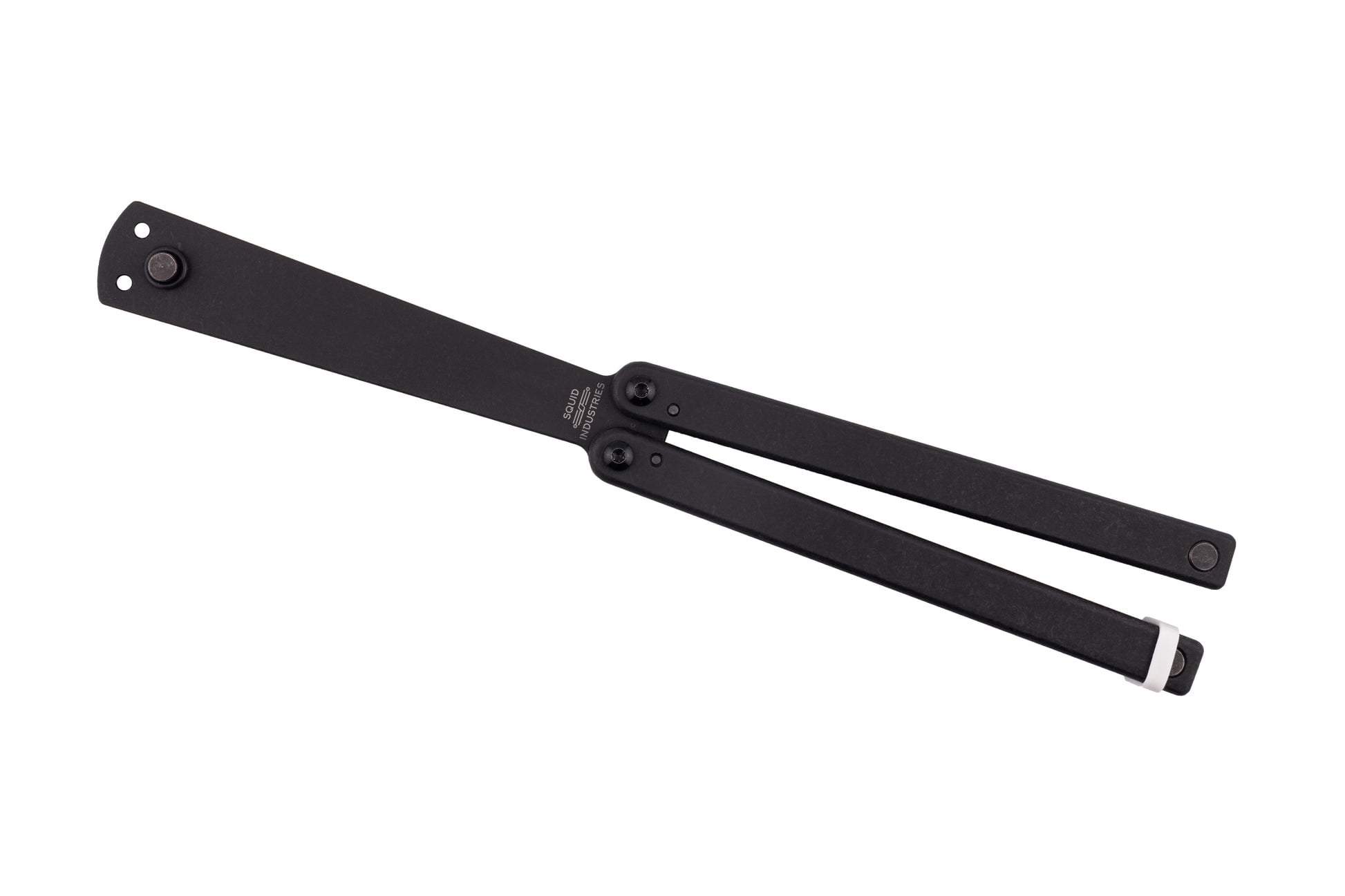
The Squiddy-B is the lower-cost option here for someone who wants a light, quiet practice tool. Squid Industries machines it from black acetal plastic and lists it at 2.6 ounces. A weighted nose pin helps tune the balance, while O-rings reduce the clacking noise. It uses bronze washer pivots and has no sharpened edge.
Its low mass is both the attraction and the limitation. It will not feel like the steel-handled Lucha, and owner reports flag smooth handles that can feel slick and a springier, bouncier feel than heavier metal trainers. Choose it for quieter, lightweight practice rather than expecting it to mimic every live-blade balisong.
The Squiddy-B is a different model from the original white Squiddy previously covered in this guide. The black acetal build, nose weight and noise-reduction system are specific to this model.
Squid Industries Squidtrainer V4: Metal Trainer
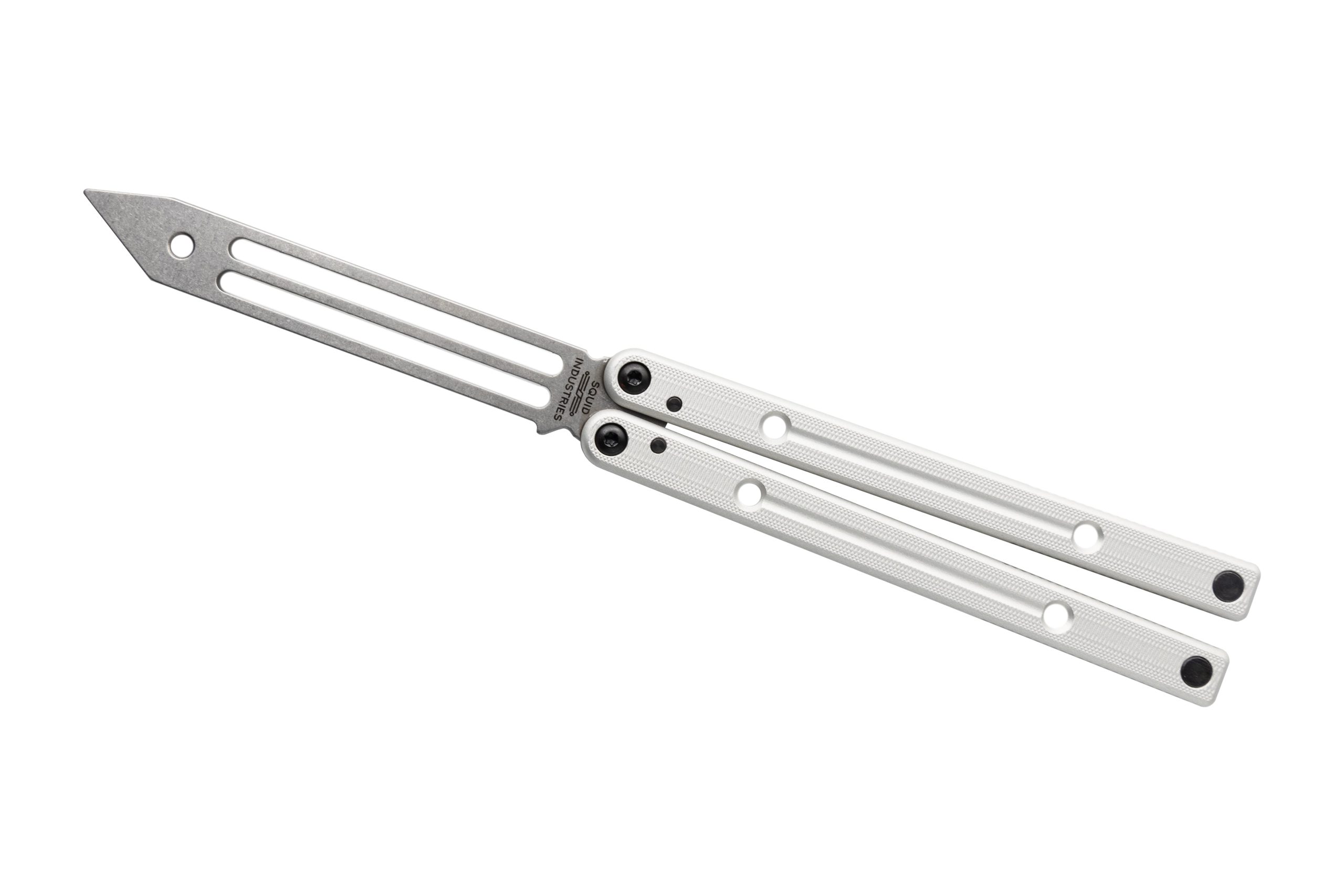
The Squidtrainer V4 is the step up to consider if the Squiddy-B's plastic construction and very low weight do not suit you. Its channel handles are machined from 6061 aluminum, with a textured surface and handle jimping for grip. The unsharpened blade is heat-treated 410 stainless steel, and steel weights at the handle ends help tune its balance.
The Squidtrainer V4 replaces the Squidtrainer V2 previously covered here. Its bushing pivot system is an important change, and the manufacturer lists it at 4.4 ounces.
At a higher price than the plastic Squiddy-B, it makes sense for someone specifically seeking a metal trainer with adjustable hardware.
Compare the Current Picks
These specifications describe the versions covered above. We use current manufacturer weights where retailer tables differ. Check the linked listing for the current price and availability.
| Model | Type | Weight | Build and pivots | Best fit |
|---|---|---|---|---|
| Kershaw Lucha 5150 | Live blade | 5.9 oz | Steel handles; ball bearings | Substantial live-blade value |
| REVO Nexus 154CM | Live blade | 4.7 oz (maker) | Aluminum handles; ceramic bearings | Lighter live blade; latchless |
| Squid Industries Squiddy-B | Plastic trainer | 2.6 oz | Acetal handles; bronze washers | Quiet lightweight practice |
| Squidtrainer V4 | Metal trainer | 4.4 oz | Aluminum handles; bushings | More substantial metal trainer |
Kershaw Lucha 5150
- Type
- Live blade
- Weight
- 5.9 oz
- Build and pivots
- Steel handles; ball bearings
- Best fit
- Substantial live-blade value
REVO Nexus 154CM
- Type
- Live blade
- Weight
- 4.7 oz (maker)
- Build and pivots
- Aluminum handles; ceramic bearings
- Best fit
- Lighter live blade; latchless
Squid Industries Squiddy-B
- Type
- Plastic trainer
- Weight
- 2.6 oz
- Build and pivots
- Acetal handles; bronze washers
- Best fit
- Quiet lightweight practice
Squidtrainer V4
- Type
- Metal trainer
- Weight
- 4.4 oz
- Build and pivots
- Aluminum handles; bushings
- Best fit
- More substantial metal trainer
How to Choose a Balisong
Live blade or trainer?
A balisong and a butterfly knife are the same basic design: two handles pivot around the blade and enclose it when folded. A live blade has a sharpened edge for cutting; a trainer replaces it with an unsharpened blade or a shaped plastic part.
Weight and balance matter as much as the silhouette. A 2.6-ounce plastic Squiddy-B feels very different from a steel-handled Lucha. Neither light nor heavy is automatically better; choose a weight you find comfortable rather than assuming the most expensive knife will suit you best. For more practice-focused options, see our butterfly knife trainer guide.
Construction, pivots and handle play
Use this anatomy diagram when comparing specifications:
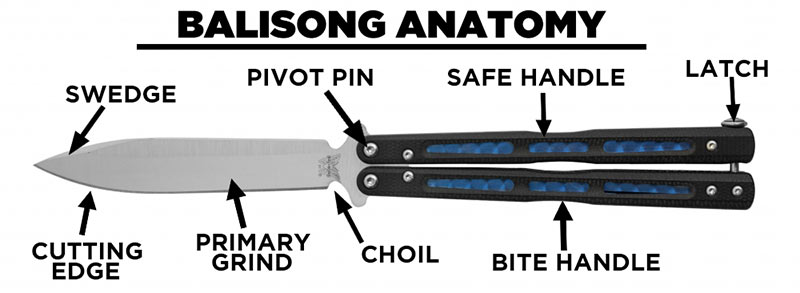
- Channel construction: Each handle is formed around a channel, often machined from one piece. It can give a clean, rigid build with fewer separate handle parts.
- Sandwich construction: Two handle sides are joined with spacers.
- Handle play: Side-to-side movement at the pivots. Excessive play can allow blade contact with the handles; smooth rotation and appropriate clearances matter more than a claim of absolutely zero movement.
- Washers, bushings and bearings: Washers provide bearing surfaces around the pivots. Bushings add sleeves through the blade to control spacing; ball-bearing systems use rolling elements. The quality and adjustment of the whole assembly matter, so the pivot type alone does not guarantee a better balisong.
- Scales and liners: Scales are the outer handle material; liners form the structure underneath. The diagram shows black G10 scales over blue titanium liners.
Spend on the features you will use
For a budget balisong, prioritize sound construction, reliable pivots and replacement-hardware support before decorative finishes. Plastic trainers lower both weight and cost. Aluminum reduces weight in both live blades and trainers, while titanium commonly appears in more expensive models. Steel handles can offer good value but add weight, as the Lucha illustrates.
For cutting use, consider blade geometry, steel and a secure closed position as well as handling. Not every balisong has a latch: the Nexus illustrates why that detail matters when considering a live blade for carry. Our knife steel guide explains the tradeoffs behind the steel names.
Which balisong brands should you consider?
Choose the model before the logo. Kershaw is an established general knife maker with a recognizable live-blade option in the Lucha. REVO is a smaller Colorado maker offering the aluminum-handled Nexus. Squid Industries specializes in balisongs and offers both trainers and live blades, so check the product rather than assuming everything it makes is unsharpened. Across brands, look for clear specifications, replacement-hardware support and a model that matches how you intend to use it.
Before ordering or carrying a live blade, check the rules that apply where you live and intend to use it. Ownership and carry restrictions can differ. AKTI's state knife-law summaries are a starting point for U.S. readers, not a substitute for checking current local requirements. Do not assume a trainer is permitted everywhere simply because it has no sharpened edge.
