


A knife that looks clever in a photo can be awkward in your pocket. CRKT’s range makes that choice especially interesting: a short, chunky Squid, a pen-slim CEO and a roomier M16 can all appeal for very different reasons. The useful question is which shape and grip suit the work you actually do.
I would start with the Pilar III for general everyday use, then change direction if you want something smaller, slimmer or fixed. These choices put the cutting role and carry compromises ahead of collecting the most unusual design.
Key Considerations
Choose the format first. A compact handle, a longer edge and a sheath solve different problems.
- Grip and reach: The Pilar III offers a forward choil and nearly three inches of blade. The Squid is shorter; the M16 has a longer handle and blade. Pick the amount of grip and cutting edge you will use.
- Pocket shape: The CEO Flipper is long and narrow, while the steel-handled Squid is short but comparatively dense. Closed length, width and weight all affect how a knife sits in your clothing.
- Controls: These selected folders are manual, with either a thumb stud, thumb slot or flipper. Their frame and liner locks differ from the secondary-safety systems found on some older M16 models.
- Steel and care: The D2 Pilar III needs more attention to drying and corrosion protection than the stainless options. A familiar family name does not identify the steel: other Pilar and Squid configurations use different alloys.
- Sheath carry: The Minimalist Bowie stays open in a sheath rather than folding into a pocket. Its small size does not make its carry arrangement or three-finger grip equivalent to a larger folding knife.
Best CRKT Knives: Top Picks
- Best Overall: CRKT Pilar III
- Best Budget: CRKT Squid
- Best Slim Carry: CRKT CEO Flipper
- Larger Frame-Lock Option: CRKT M16
- Best Compact Fixed Blade: CRKT Minimalist Bowie
Best Overall: CRKT Pilar III
| PROS | CONS |
|
|
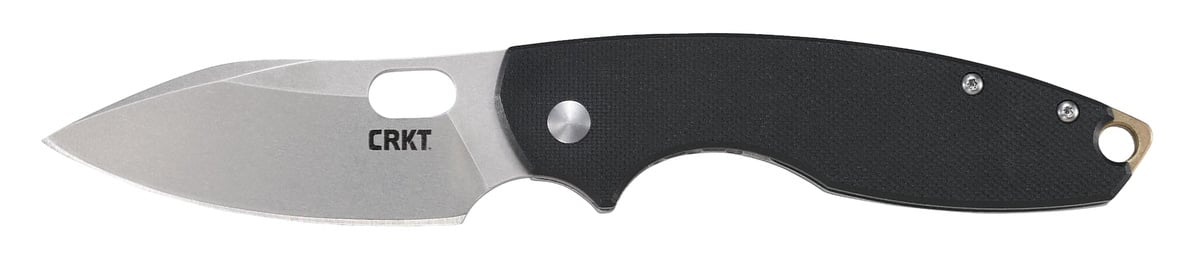
The Pilar III is my starting point for a general-purpose CRKT because it offers more working blade than the small Squid without the M16’s longer footprint. The selected D2 version pairs a G10 front scale with a stainless frame-lock side and a useful forward choil. It makes sense when grip and everyday utility matter more than the thinnest possible knife.
The original small Pilar earned praise from Seth Gunn in his earlier Pilar review for its comfortable grip, but he also noted a short cutting edge, substantial weight and frequent edge maintenance. The III is a different knife with a longer blade, different handle construction and, here, D2 steel. His experience gives context to the family’s appeal, not a test of this configuration.
I would choose the III for its grip and broader everyday usefulness. Its 0.15-inch blade stock and 3.80-ounce weight are still real compromises if your main concern is light carry or effortless food slicing. Keep the D2 clean and dry, especially after damp work. Compare the CEO Flipper for a much slimmer package or the Squid if you simply want a shorter knife.
Best Budget: CRKT Squid
| PROS | CONS |
|
|
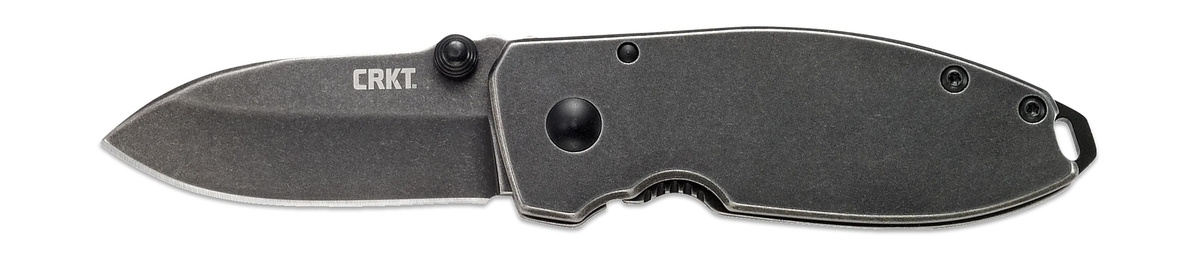
The Squid is the choice I would make for a simple, inexpensive pocket knife used mainly for small tasks. Its short blade and compact closed size make it easy to find a place for, and the thumb stud and frame lock keep the controls straightforward. The black stonewashed version here uses 8Cr13MoV and stainless steel handles.
Compact does not mean featherweight. At 3.50 ounces, the Squid is much heavier than the longer CEO Flipper, and its small handle leaves less room for your hand than the Pilar III. That can be a reasonable exchange for a short, solid-feeling package, but I would not choose it just to reduce pocket weight.
It suits packaging and other brief utility cuts better than long slicing strokes. I would spend more for the Pilar III when the extra blade and grip are useful, rather than because D2 automatically makes every task better. This is the manual thumb-stud Squid, not a different assisted, flipper or upgraded-steel version sharing the family name.
Best Slim Carry: CRKT CEO Flipper
| PROS | CONS |
|
|
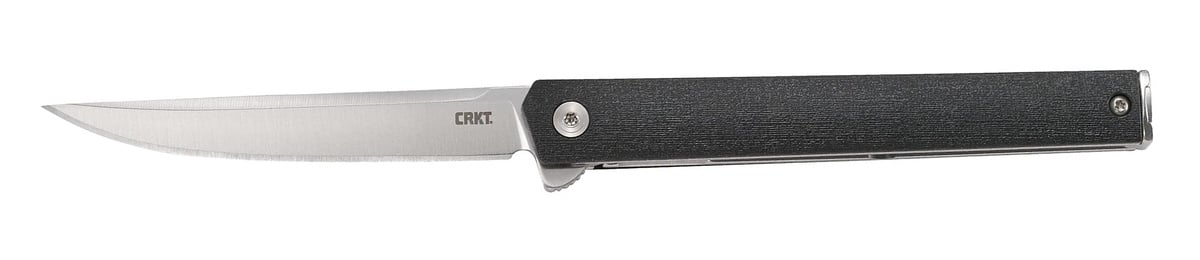
The CEO Flipper makes sense when a broad pocket knife feels out of place in your clothing. Its narrow reinforced-nylon handle and 1.90-ounce weight offer a different kind of compactness from the short Squid. There is still a 3.35-inch blade, so this is slim carry rather than a miniature knife.
This version uses an AUS-8 blade, a manual flipper and a liner lock. It is not the original thumb-stud CEO, and the opening action should not be described as assisted. The distinction is worth making because the two versions have different dimensions and controls despite the similar outline.
I would choose it for opening mail, packaging and other lighter everyday cuts where a narrow profile is welcome. A thin handle is less appealing when you want a full grip for repeated forceful cutting. For that job, compare the M16 or the choil-equipped Pilar III. The CEO’s advantage is fitting into your day without occupying much space, not doing every job a larger knife can do.
Larger Frame-Lock Option: CRKT M16
| PROS | CONS |
|
|
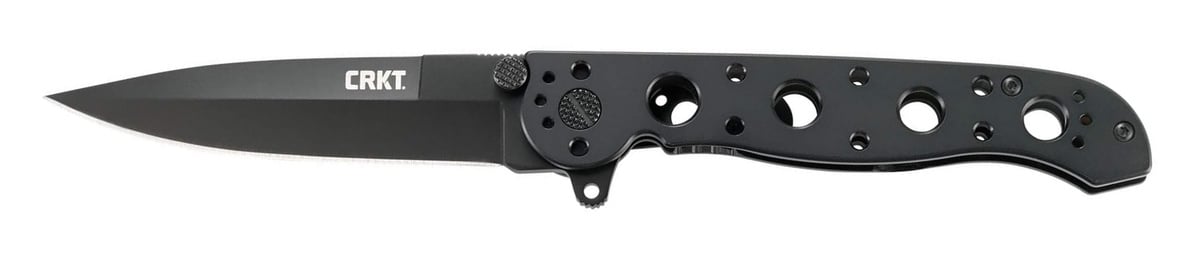
The M16 is worth comparing when the smaller CRKTs do not give you enough blade or handle. The selected 03KS version has a 3.55-inch spear-point blade, a stainless steel handle and a manual flipper. At 8.25 inches overall it is the larger working folder here, rather than the small utility option.
Be particular about the version. My earlier M16-10KZ review covered an older AUS-4 knife with a secondary AutoLAWKS safety, and I was disappointed by its edge holding, blade play and awkward release. The 03KS here instead uses 12C27 and a frame lock. Its different steel and lock are important distinctions when comparing the current model with that older review.
I would choose it for the roomier handle and longer edge, accepting the extra pocket length and smoother metal grip. The Pilar III is the better comparison if a forward choil and G10 front scale appeal more. Do not borrow lock, serration or rescue-tool features from another M16: the family contains substantially different knives.
Best Compact Fixed Blade: CRKT Minimalist Bowie
| PROS | CONS |
|
|
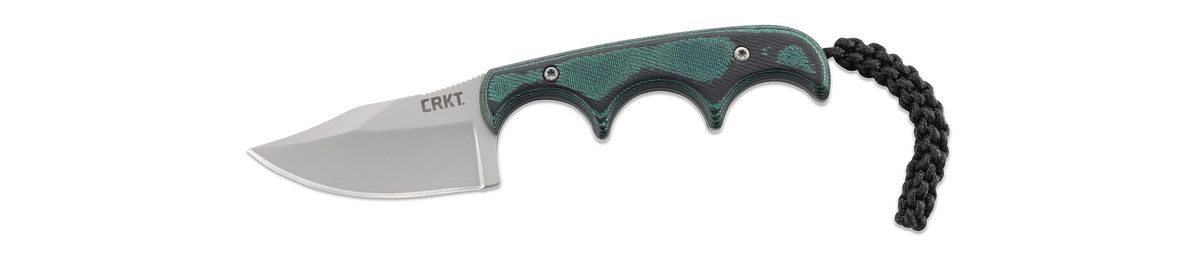
The Minimalist Bowie is the small fixed blade I would consider for compact utility use, not a replacement for a full-size camp knife. Its short blade and deeply scalloped Micarta handle make it a very different proposition from the folders. You trade a folding joint for a knife that needs a sheath whenever it is carried.
The green-handled model here uses 5Cr15MoV and includes a thermoplastic sheath. The handle is designed around a short three-finger grip, so check that arrangement before choosing it for prolonged cutting. It can make sense for brief chores when you want a small ready-to-use blade, but a longer handle is the better choice if you need more room for your hand.
Its 1.60-ounce weight is appealing. CRKT doesn't say whether the Minimalist's weight includes its sheath. Think about the sheath’s retention and where you will attach it as carefully as the blade itself. I would choose a larger knife for food preparation or extended outdoor work, and keep this one’s role modest.
Compare Our Picks
Scroll sideways on smaller screens to compare all the details.
| Knife | Blade / steel | Weight | Carry |
|---|---|---|---|
| CRKT Pilar III | 2.97 in / D2 | 3.80 oz | Pocket clip |
| CRKT Squid | 2.16 in / 8Cr13MoV | 3.50 oz | Pocket clip |
| CRKT CEO Flipper | 3.35 in / AUS 8 | 1.90 oz | Pocket clip |
| CRKT M16 | 3.55 in / 12C27 | 3.80 oz | Pocket clip |
| CRKT Minimalist Bowie | 2.13 in / 5Cr15MoV | 1.60 oz | Thermoplastic sheath |
How to Choose a CRKT Knife
Start with the grip you need
The Pilar III offers a forward choil and a more textured front scale. The Squid is shorter but gives you less handle. The M16 offers more length, while the CEO prioritizes a narrow profile. If you expect repeated firm cuts, do not let a tidy pocket outline outweigh having enough handle to hold.
Choose the opening and closing layout
The Squid uses a thumb stud and the Pilar III a thumb slot; the CEO and selected M16 are flippers. All four are manual folders. Our pocket knife lock guide explains how liner and frame locks release. Confirm the exact model’s controls rather than assuming every M16 has the same secondary safety.
Balance maintenance with the job
D2 in the selected Pilar III needs more corrosion care than the stainless steels here. The less expensive steels are still useful when the design suits your work and you are willing to touch up the edge. Clean and dry the knife after use, and choose an edge shape you can maintain with your sharpening equipment.
Give a fixed blade a separate carry plan
The Minimalist Bowie needs secure sheath retention and a comfortable attachment point. Its small handle is useful only if it fits your grip, and a short blade limits longer slices. If you want a knife that simply folds away after opening a parcel, one of the folders is the more straightforward format.
Why Trust Us
The choices compare everyday cutting roles, grip, carry and controls. Seth Gunn’s original Pilar review adds family context, while my older M16-10KZ review explains the importance of checking the specific steel and lock. The selected Pilar III and M16-03KS are different configurations.
Final Thoughts
I would start with the Pilar III for a general-purpose CRKT, the Squid for a shorter budget knife or the CEO Flipper for a slim, light pocket profile. Choose the M16 when the longer blade and handle are useful, and the Minimalist Bowie when you specifically want a compact fixed blade with a sheath. The best fit depends more on your grip and daily tasks than on which design looks most unusual. For other makers worth comparing, see my guide to the best knife brands.
Frequently Asked Questions
Which CRKT knife is best for everyday carry?
The Pilar III is my starting point for its useful blade length, forward choil and general-purpose format. The CEO Flipper suits a slimmer carry preference, while the Squid is a shorter, simpler budget option.
Is the Pilar III the same as the original Pilar?
No. The III is larger and has a different blade and handle layout. The D2 version selected here is also different from 8Cr13MoV and 12C27 Pilar III configurations. Check the exact version rather than relying on the family name.
Is the CEO Flipper assisted?
No. The selected CEO Flipper is a manual flipper with an IKBS pivot and a liner lock. It also differs from the original thumb-stud CEO.
Do all M16 knives have AutoLAWKS?
No. The selected M16-03KS uses a frame lock. Other M16 versions use different lock arrangements and materials, so check the specific model instead of transferring features across the family.
Can the Minimalist Bowie replace a camping knife?
It can cover small utility tasks, but its short blade and three-finger handle are limiting for longer slicing or sustained work. Choose it because you want a compact sheathed blade, not because small size makes it suitable for every outdoor job.
