


We independently evaluate all recommended products and services. Any products or services put forward appear in no particular order. If you click on links we provide, we may receive compensation.
A chef’s knife that skates across a tomato skin is frustrating. Buying another knife usually isn’t the answer; finding a sharpening routine you’ll actually use is.
For everyday cooking, I’d start with how much help you want holding the angle. Ceramic rods handle routine touch-ups, guided electric sharpeners offer a quicker routine for compatible 15° or 20° edges, and bench stones leave more control in your hands. These five kitchen knife sharpeners cover those different approaches, including a diamond plate and a waterstone for cooks who want to learn freehand sharpening.
Key Considerations
- Match the edge: Check your knife maker’s recommended angle and sharpening method. The angles below are per side. A fixed 20° guide won’t preserve a 15° bevel, and an asymmetric or single-bevel knife needs its own procedure.
- Touch-up or repair?: A slightly tired edge and a chipped blade are different jobs. Medium and fine ceramics are useful for maintenance; substantial damage calls for a coarser abrasive or a professional repair.
- Choose a routine: Leave room for the entire stroke of your longest knife. Also consider setup, cleanup and whether you’re willing to practice holding an angle. A compact tool that gets used beats a complicated setup that stays in a cupboard.
- Keep consumables in mind: Electric discs eventually wear, ceramic rods need cleaning, and a single diamond stone supplies only one abrasive grade. Buy the workflow you need, not simply the box with the most stages.
Kitchen Knife Sharpeners: Top Picks
- Best for Routine Touch-Ups: Spyderco Sharpmaker
- Best Compact 20° Electric Option: Work Sharp E2
- Best Diamond Bench Plate: DMT Dia-Sharp 8-Inch Fine
- Best Powered 15° Kitchen Option: Chef’sChoice 15XV
- Best Low-Prep Waterstone: Shapton Kuromaku 1000
Best for Routine Touch-Ups: Spyderco Sharpmaker
| PROS | CONS |
|
|
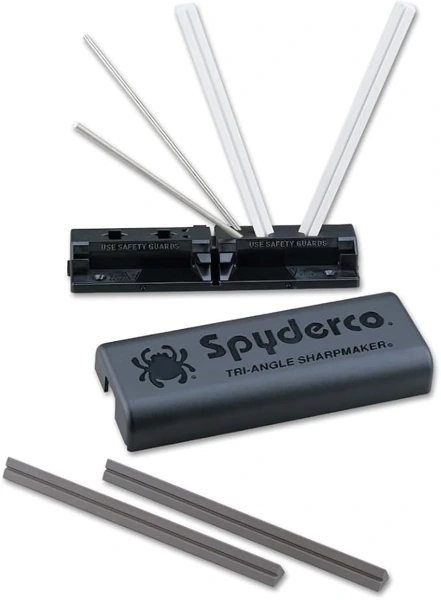
The Sharpmaker is my starting point for someone who wants to keep a reasonably sharp kitchen knife working well. Set the rods in the base, hold the blade vertically and follow Spyderco’s sequence. You aren’t balancing the knife at an estimated angle over a flat stone, but you do still control its alignment and pressure. The safety rods belong in place whenever you use it.
There’s useful experience behind this choice on KnifeInformer. In our knife sharpening systems guide, Travis Smola describes five years of Sharpmaker ownership and the convenience of setting it up in seconds. That supports its role as an accessible maintenance tool; it doesn’t turn the standard ceramic kit into a fast grinder for damaged edges.
The 204MF kit includes medium and fine triangular ceramic rods. Their flats work on straight edges, while the corners can work with serrations using the maker’s instructions. Keep strokes light and controlled, especially at a thin tip. The photo shows the assembled system with its case and spare rods. The kit packs away between sessions, which helps when kitchen storage is crowded.
I’d choose the Sharpmaker over the E2 when preserving a compatible 15° edge matters or when I want a manual option for occasional serrated-knife maintenance. Choose the DMT instead if you want a broad freehand surface. If the edge has large chips or needs a substantial angle change, budget for an appropriate coarser tool or a sharpening service rather than expecting the supplied rods to do everything.
Best Compact 20° Electric Option: Work Sharp E2
| PROS | CONS |
|
|
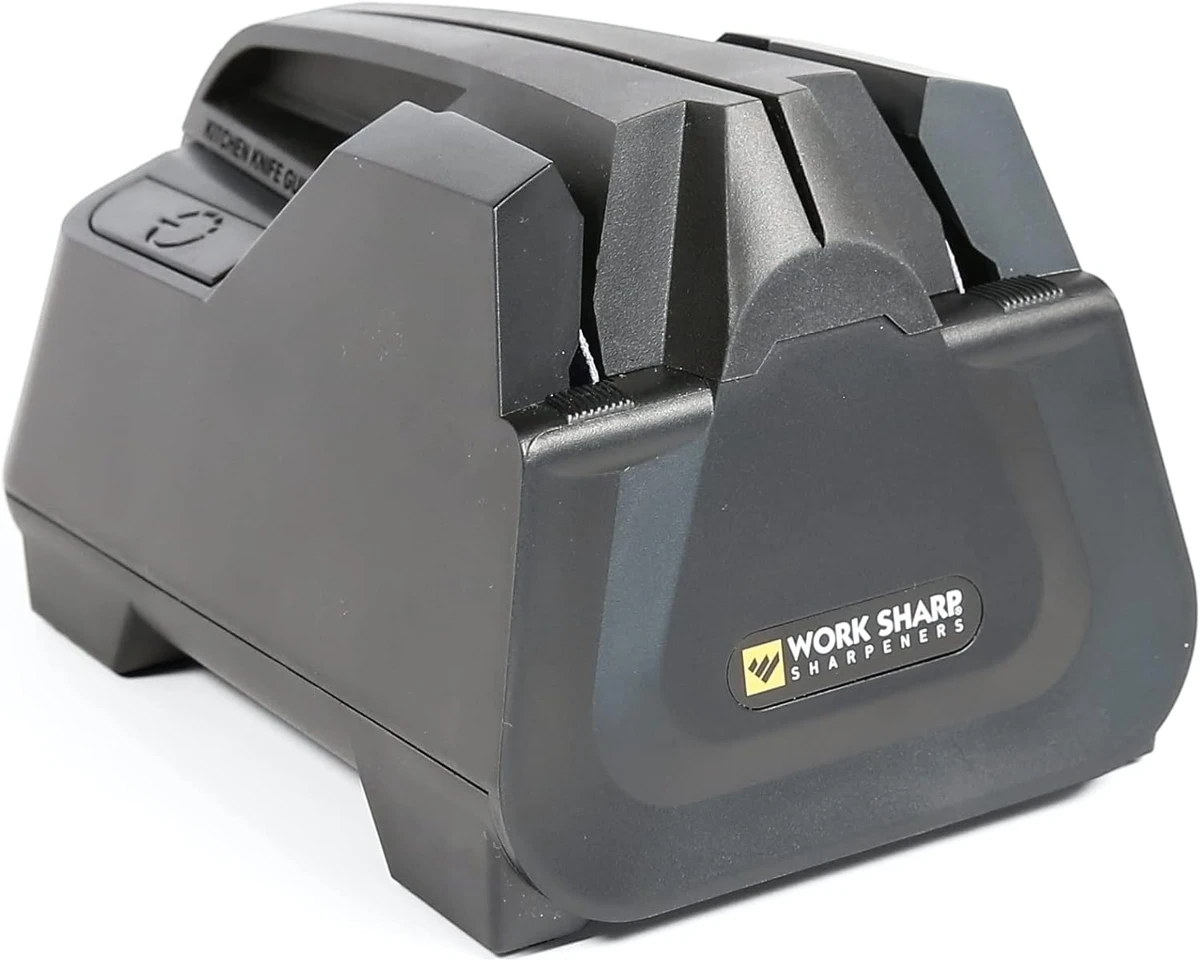
The E2 is for the cook who wants to get back to dinner without learning freehand sharpening first. Its motor drives flexible abrasive discs while the guides establish a 20° angle on each side. A separate ceramic honing wheel handles maintenance between sharpening sessions. There’s less to set up than a stone, and you don’t have to bring water to the counter.
That convenience comes with a specific edge geometry. I’d use the E2 for compatible ordinary kitchen knives, not buy it blindly for an expensive Japanese knife or an asymmetric edge. Check the knife’s instructions first. The E2’s own manual also matters: steady, controlled passes are more useful than pressing harder, and the ceramic honing slot has a different job from the powered sharpening slots.
The CPE2 uses replaceable P120 abrasive discs, so worn abrasives don’t automatically mean replacing the entire machine. Its ceramic wheel can also maintain serrations according to Work Sharp’s directions; that isn’t permission to run a bread knife through every slot. Treat scissors as a separate operation with the dedicated guide.
Compared with the Sharpmaker, the E2 is a compact powered route for a suitable 20° kitchen collection. The Chef’sChoice 15XV is the more relevant electric alternative for a compatible 15° collection. Neither detects your existing angle, and lingering in a powered slot can remove material you meant to keep. For specialty kitchen knives with geometry you haven’t identified, learn the appropriate stone technique or ask a competent sharpening service.
Best Diamond Bench Plate: DMT Dia-Sharp 8-Inch Fine
| PROS | CONS |
|
|
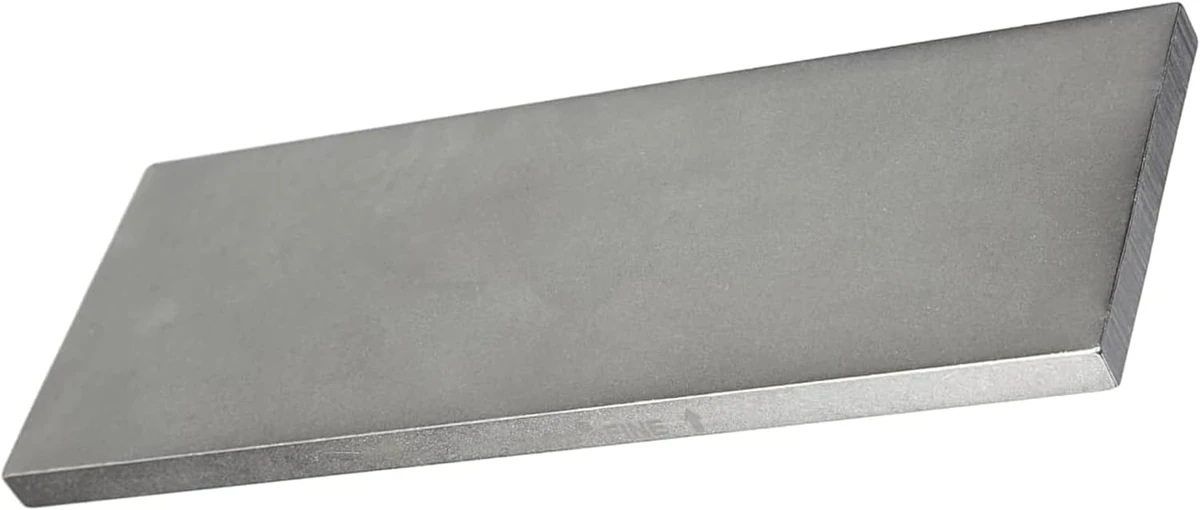
The D8F is a straightforward way into bench sharpening if you’d rather skip soaking a waterstone. Its continuous diamond surface measures 8 by 3 inches, giving a chef’s knife more working room than a pocket stone. DMT identifies the Fine abrasive as 25 micron or 600 mesh. Those are DMT’s specifications, not a promise that it behaves exactly like a waterstone carrying the same number.
The useful difference here is freedom. You can work at the angle the knife needs, rather than choosing between fixed slots. The tradeoff is that you have to maintain that angle yourself. An angle guide can help establish the position, but it doesn’t replace a controlled stroke, light pressure and attention to reaching the edge consistently.
DMT permits use dry or with water; no oil is needed. Clean and dry the plate after use, and keep its non-skid feet and your work surface free of swarf. The diamond plate doesn’t need the same flattening routine as a dishing waterstone, although it still needs sensible care and a stable setup.
I’d pick this over the Sharpmaker when I wanted a full-size surface and control over the bevel, with room to add other grits later. Compared with the Shapton, the DMT removes the waterstone-flattening routine and can work dry or with water. Its Fine face is aimed at general sharpening and slightly dull edges. Large chips or a highly refined finish call for another abrasive; this is one useful working surface, not a complete progression.
Best Powered 15° Kitchen Option: Chef’sChoice 15XV
| PROS | CONS |
|
|
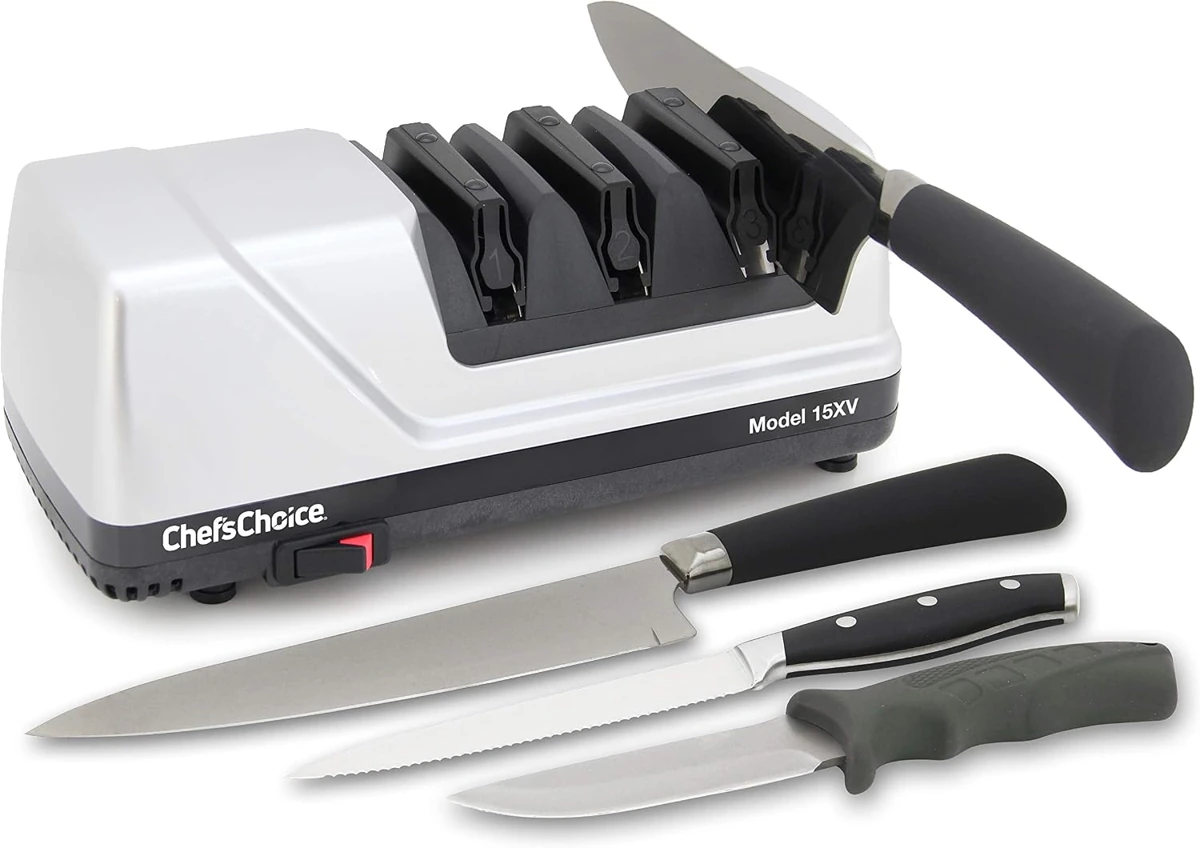
The 15XV fills a gap the E2 cannot: powered sharpening built around a 15° kitchen edge. Its first two stages use diamond abrasives, followed by flexible stropping and polishing discs in Stage 3. For a compatible chef’s knife, that gives you a defined sharpening and finishing sequence without changing belts or selecting a motor speed.
I’d choose it over the E2 when a suitable 15° edge is the priority. It does not detect the angle already on your knife. Running a 20° knife through the sharpening sequence establishes a different bevel and removes material in the process, so make that decision deliberately. Unusual single-bevel or asymmetric knives need their own procedure, not a routine borrowed from an ordinary double-bevel chef’s knife.
The stages have different jobs. A lightly tired edge may need the finishing procedure rather than another full sharpening cycle. Normal serrated maintenance uses Stage 3 under the maker’s instructions; that is not the same as restoring damaged scallops one at a time. Follow the manual on pressure and pulling technique, and keep the blade clean before sharpening.
The tradeoff is specialization. This model stays with its 15° system, while the E2 suits compatible 20° edges and a stone lets you control the bevel yourself. Don’t confuse the 15XV with Chef’sChoice’s AngleSelect 1520, which offers separate 15° and 20° routes. For a kitchen collection that actually suits the 15XV, the fixed sequence is the attraction.
Best Low-Prep Waterstone: Shapton Kuromaku 1000
| PROS | CONS |
|
|
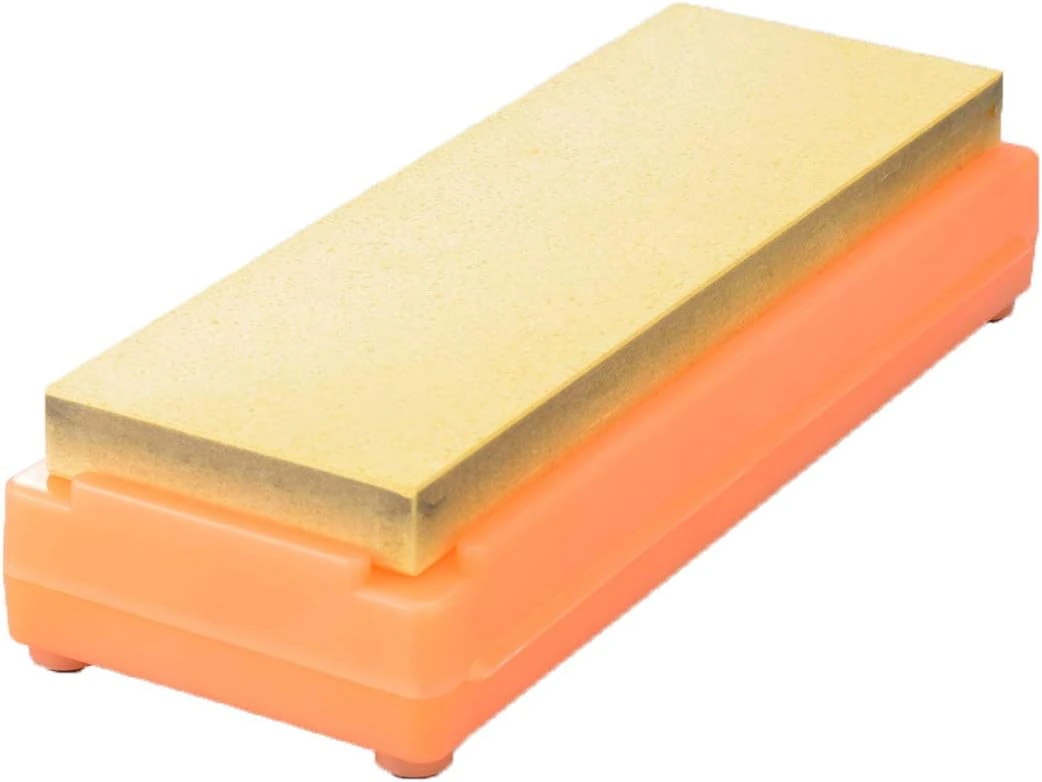
If you want to learn kitchen-knife sharpening on a waterstone, the orange Kuromaku 1000 is a useful medium stage to build around. Its 210-by-70-mm face gives a chef’s knife room for a controlled stroke, and the K0702 comes with a plastic case that doubles as a holder. There is no slot choosing the bevel for you: the angle remains your responsibility.
Shapton calls for a five-to-six-minute presoak before the first use. After that, ordinary sessions start with water on the surface rather than another soak. That makes the preparation fairly straightforward, although you still have to keep the surface wet as required, maintain flatness and allow the stone to dry naturally. Avoid prolonged soaking, hot water and detergents.
This is one medium stone, not a complete repair-to-polish kit. It suits normal edge sharpening better than major chip removal. Shapton recommends its 1000 with a 5000 for household use and points to its 1500 when choosing strictly one stone. I’d buy the 1000 as a working grade in a setup I could expand when a coarser or finer surface became useful.
Choose the DMT if you prefer a diamond plate that can work dry or with water and does not need waterstone flattening. Choose the Shapton if you specifically want a conventional waterstone workflow and are prepared to learn it. Neither purchase replaces consistent angle control, reaching the edge along the blade or removing the burr.
Compare Our Picks
Scroll sideways on smaller screens to compare all the details.
| Model | Best fit | Angle control | Abrasives | Main tradeoff |
|---|---|---|---|---|
| Spyderco Sharpmaker | Routine touch-ups | 15° or 20° per side | Medium/fine ceramic | Slow for heavy edge repair |
| Work Sharp E2 | Compact powered 20° route | 20° per side | P120 discs + fine ceramic | Fixed bevel angle |
| DMT Dia-Sharp 8-Inch Fine | Best Diamond Bench Plate | User-controlled | 25 micron / 600 mesh diamond | No guide; one Fine face |
| Chef’sChoice 15XV | Powered 15° kitchen route | 15° edge system | Diamond; flexible polishing/stropping | Doesn’t preserve a20° bevel |
| Shapton Kuromaku 1000 | Low-prep waterstone | User-controlled | Synthetic1000 waterstone | Freehand control; flattening |
How to Choose a Kitchen Knife Sharpener
Start with the knife that causes the problem
A tomato-slicing chef’s knife, a small paring knife and a scalloped bread knife don’t all contact an abrasive the same way. Check that the guide reaches the actual edge, that the heel or bolster won’t obstruct the stroke, and that there’s enough clearance for the full blade. With serrations, use the compatible surface and procedure specified for that sharpener. For a closer look at powered models, compare our best electric knife sharpeners.
Preserve a useful edge before changing it
If the existing bevel works well, there’s no automatic benefit to changing it. Use the maker’s angle guidance rather than a blanket rule about where a knife was made. A guide that misses the very edge may spend its first sessions removing metal from the shoulders. Heavy damage, unusual grinds and an uncertain bevel are good reasons to ask a competent sharpening service.
Spend on the part of the process you’ll use
For regular light maintenance, the Sharpmaker’s ceramics are a practical fit. Choose the E2 for a compatible 20° collection or the 15XV for a suitable 15° route when powered convenience matters. For freehand control, the DMT offers a diamond surface and the Shapton a medium waterstone. Buy an appropriate coarse abrasive or use a professional service when the problem is substantial damage, rather than expecting a maintenance tool to repair everything.
Keep sharpening away from meal preparation
Give the sharpener a stable, clear surface and follow its hand-protection instructions. Clean metal residue and abrasive dust away from food, wash and dry the blade afterward, and store the equipment dry. Powered equipment should be unplugged before the maintenance steps specified in its manual.
When the knife needs another approach
For cooks learning freehand sharpening, the best sharpening stones guide compares preparation and grit choices in more detail. A bread knife needs a different point of contact; see the best serrated knife sharpeners before running its teeth through a plain-edge slot.
Why Trust Us
My starting point is the kitchen routine: how often you sharpen, which angles your knives need and how much help you want holding the blade. The comparisons use each maker’s instructions for abrasives, blade fit and care. Travis Smola’s Sharpmaker ownership is attributed in its review; the other recommendations weigh the equipment’s specifications and practical tradeoffs.
Final Thoughts
For regular touch-ups, I’d start with the Sharpmaker. Choose the E2 for a compatible 20° collection or the 15XV when its 15° system fits your knives and a powered routine appeals. The DMT and Shapton put bevel control in your hands, with different abrasive and care routines. Start with the knife you need to sharpen and the technique you’re prepared to learn, then choose the tool.
Frequently Asked Questions
Will a honing steel sharpen a dull kitchen knife?
A traditional smooth honing steel primarily realigns an edge; it isn’t a substitute for removing metal to restore a genuinely dull bevel. Ceramic and diamond rods are abrasive, so the material matters.
How often should I sharpen?
Use cutting behavior rather than a rigid calendar. When a clean knife starts slipping on tomato skin or needs noticeably more effort through ordinary ingredients, assess the edge and your maintenance routine. Damage, poor technique and a worn cutting board can also affect the result. Don’t grind away steel just because a date has arrived.
Can these sharpen ceramic or single-bevel knives?
Don’t assume that they can. Ceramic blades and single-bevel or asymmetric kitchen knives need a method their maker supports. In particular, an ordinary two-sided guided routine may change the intended geometry. Use the knife maker’s procedure or an appropriate professional service.
Do I need a polished edge for cooking?
Not necessarily. A clean, properly apexed edge with the burr removed matters more than buying the finest available abrasive. Different finishes suit different cutting preferences; a useful working edge is a sensible goal before pursuing a highly polished finish.
