


Boker makes everything from modest work folders to German-made outdoor knives. That variety is part of the appeal, but it also makes a familiar name on the blade a poor shortcut to the right purchase. A slim Kwaiken Air and a rubber-handled Bronco solve very different problems.
For most everyday carry, I would start with the Kihon DC 2.0. Its straightforward blade, crossbar lock and reversible clip make a sensible combination without the price of Boker’s more elaborate designs. The other picks below offer a clear reason to move away from that starting point: a slimmer folder, a compact fixed blade, a larger outdoor knife or automatic opening.
Key Considerations
Before picking a favorite, narrow the choice to the work and carry setup you actually want.
- Pocket or sheath: The Kihon and Kwaiken fold into a pocket. The AK1 and Bronco need a sheath, which adds bulk beyond the knife itself. Decide how you will carry a fixed blade before choosing one.
- Useful cutting edge: The Kwaiken Air puts a long, narrow blade in a slim handle. The Bronco gives you a fuller outdoor grip. Neither shape is a universal upgrade over the Kihon’s general-purpose drop point.
- Steel and care: D2 and CPM 3V need more attention after wet use than VG-10 or RWL34. Dry the blade and keep the edge protected; a coating does not protect an exposed cutting edge.
- Opening and closing: The Kihon’s crossbar lock, Kwaiken’s flipper and Kalashnikov’s automatic button feel quite different in use. Automatic opening also brings carry restrictions and, for the linked Kalashnikov conversion, different warranty coverage.
- Exact version: Boker changes steel, handles, sizes and mechanisms within familiar families. The model code in each specification box identifies the configuration discussed here.
Best Boker Knives: Top Picks
- Best Everyday Value: Boker Kihon DC 2.0
- Best Slim Folder: Boker Kwaiken Air
- Best Outdoor Fixed Blade: Boker Bronco
- Best Compact Fixed Blade: Boker AK1
- Best Budget Automatic: Boker Kalashnikov
Best Everyday Value: Boker Kihon DC 2.0
| PROS | CONS |
|
|
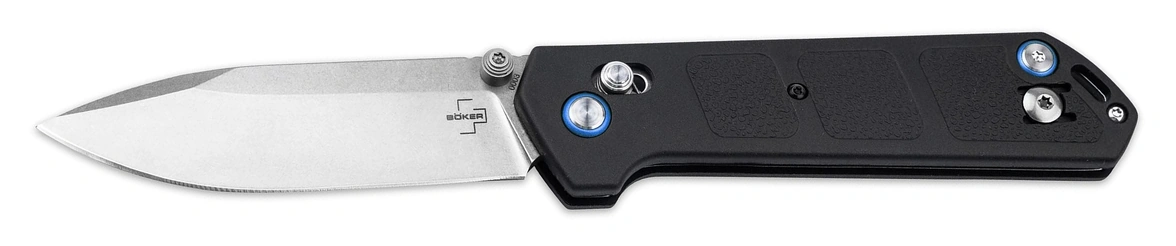
The Kihon is the Boker I would look at first for ordinary pocket-knife jobs. Its drop-point blade gives you a useful tip for opening packaging and enough belly for general utility cuts. There is no unusual blade shape or expensive handle treatment to work around.
This is the DC 2.0, with black glass-fiber-reinforced nylon scales, blue accents and a D2 blade. Thumb studs open it manually, while the crossbar releases the blade without requiring a fingertip against a liner lock. The wire clip can move to either side for tip-up carry. Those details make it a more accommodating everyday starting point than the right-hand-only Kwaiken Air.
At 3.17 ounces, it also avoids the weight penalty of many metal-handled folders. I would still choose the Kwaiken if a slender handle and flipper opening mattered more than price. For a reasonably priced utility knife, though, the Kihon’s simpler package makes more sense. Just wipe the D2 blade dry after damp work rather than treating it like a low-maintenance stainless steel.
Best Slim Folder: Boker Kwaiken Air

| PROS | CONS |
|
|
The Kwaiken Air’s appeal is its shape. The blade and handle follow the same narrow line, giving you substantial cutting length without the broad profile of a larger work folder. I would choose it for someone who wants a light, understated knife for daily utility rather than a handful of thick handle.
The version here is the full-size 01BO343: translucent jade G10, a black VG-10 blade and a liner lock. It opens with a flipper on bearings. At 2.89 ounces, it is lighter than the Kihon despite having a longer blade. VG-10 also makes this an easier choice for occasional damp work than the D2 folders, although it still benefits from cleaning and drying.
The tradeoff is room for your hand. A narrow handle can be pleasant in the pocket but offers less purchase than a fuller shape when gloves or demanding cuts enter the picture. Its clip is also fixed to right-hand tip-up carry. If those compromises suit you, the Air has a clear identity; paying more buys a particular slim design, not an across-the-board improvement over the Kihon.
Best Outdoor Fixed Blade: Boker Bronco
| PROS | CONS |
|
|
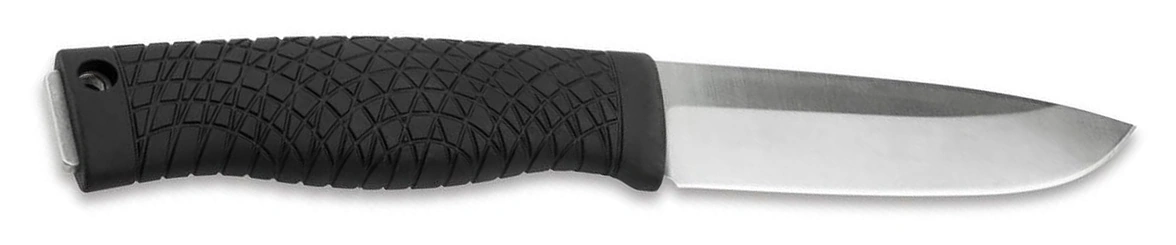
For outdoor use, I would take the Bronco over one of Boker’s more elaborate folding designs. Its 4.45-inch blade is large enough for wood preparation and camp utility without moving into the size of a dedicated chopper. The full tang runs through a textured TPE handle, giving you a fuller grip than the slim folders in this guide.
CPM 3V is the meaningful upgrade here. Its toughness is useful when cutting around wood and knots, where a thin pocket-folder tip is the wrong tool to push hard. That does not make the Bronco a substitute for a saw or hatchet. For sustained chopping or splitting larger wood, take the appropriate tool rather than asking one knife to do everything.
The included leather dangler sheath and firesteel make this a more complete outdoor package, but they also need a place on your belt or pack. Judge the complete belt setup rather than the 5.22-ounce specification alone. I would also be more careful about drying this knife and its sheath after a wet trip: 3V is not stainless, and putting a damp blade back into damp leather defeats much of that care. For a smaller fixed blade that is easier to accommodate day to day, consider the AK1 instead.
Best Compact Fixed Blade: Boker AK1
| PROS | CONS |
|
|
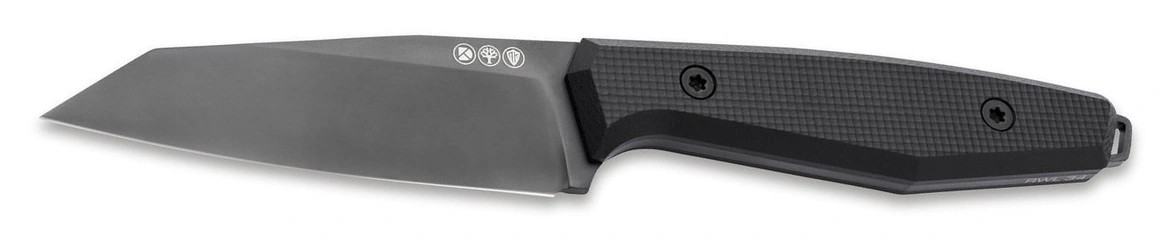
The AK1 is the fixed blade I would consider when the Bronco feels like too much knife to carry. Its 3.11-inch blade and 6.85-inch overall length put it closer to everyday utility territory, while the full-tang construction avoids a folder’s pivot and lock. The Allblack version here pairs a black PVD-coated RWL34 reverse-tanto blade with black G10 scales. Availability is patchier than the folders here; check the linked version before settling on the AK1.
A compact fixed blade still needs a convincing carry arrangement. In KnifeInformer’s original guide, Logan Smith described how the AK1’s pocket sheath helped it fit into his preference for folder-style carry. His example was the red Richlite version with a leather pocket sheath. This Allblack configuration comes with Kydex and a belt clip, so that earlier observation should not be mistaken for the same out-of-the-box setup.
That distinction is more important than a low weight figure. Before paying the AK1’s premium, decide where its sheath will sit, whether it interferes with other gear and whether you can draw and replace the knife comfortably. If you simply want something that disappears into a trouser pocket, the Kihon or Kwaiken is the easier answer. The AK1 earns its place when you specifically want a small fixed blade and have a practical way to carry it.
Best Budget Automatic: Boker Kalashnikov
| PROS | CONS |
|
|
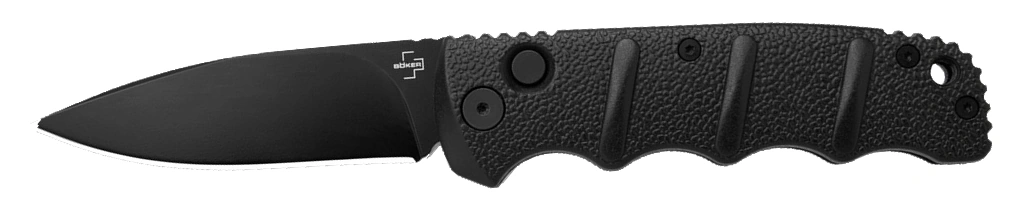
The Kalashnikov is worth a look if automatic opening is the feature you actually want. A push of the button opens the blade, while the aluminum handle gives this configuration a different feel from the Kihon’s GFN scales. I would choose it for that opening preference, rather than assuming an automatic is inherently a better cutting tool.
The linked model is the all-black 01BP0151 configuration sold by Blade HQ, with a plain D2 drop-point blade. The retailer gives this version a 3.25-inch blade, 7.50-inch overall length and 3.40-ounce weight. Its 0.52-inch handle thickness is a useful detail if you associate the Kalashnikov family with chunkier older versions.
There is one important buying distinction: this Blade HQ version is an automatic conversion. The conversion voids the factory warranty; Blade HQ instead covers the conversion and spring for one year. That is different from buying an ordinary factory-warranted folder. Check the automatic-knife rules where you intend to carry it, and keep the D2 blade dry after use. If you do not specifically want spring-powered opening, I would save the complication and choose the Kihon.
Compare Our Picks
Scroll sideways on smaller screens to compare all the details.
| Knife | Best for | Blade / steel | Carry setup |
|---|---|---|---|
| Boker Kihon DC 2.0 | Everyday value | 3.22 in / D2 | Reversible tip-up clip |
| Boker Kwaiken Air | Slim folder | 3.54 in / VG-10 | Right-hand tip-up clip |
| Boker Bronco | Outdoor fixed blade | 4.45 in / CPM 3V | Leather dangler sheath |
| Boker AK1 | Compact fixed blade | 3.11 in / RWL34 | Kydex sheath / belt clip |
| Boker Kalashnikov | Budget automatic | 3.25 in / D2 | Right-hand tip-up clip |
How to Choose a Boker Knife
Start with the job, then choose the mechanism
For packaging, cord and everyday utility, start with the Kihon. Choose the Kwaiken Air for its narrower profile and flipper opening, or the Kalashnikov if automatic opening is a deliberate preference. For outdoor woodwork and a fuller grip, the Bronco makes more sense. The AK1 fills the gap for someone who wants fixed-blade construction in a smaller package.
Look beyond the steel name
Steel matters, but it does not tell you how a knife fits your hand or carries. The Bronco’s 3V favors toughness; the Kwaiken’s VG-10 and AK1’s RWL34 offer a different balance of corrosion resistance and maintenance. A well-chosen shape and carry setup are more useful than paying for a steel you do not need. Our knife steel guide explains those tradeoffs in more detail.
Check where and how it is made
A Boker logo does not mean every knife comes from Solingen. The Bronco and AK1 here are German-made, while the selected Plus folders come from Asian production. Judge the exact knife by its construction, fit, design and price rather than transferring a country-of-origin claim across the entire brand.
Treat the sheath as part of the purchase
A fixed blade that is inconvenient to wear tends to stay at home. The Bronco’s leather dangler and AK1’s Kydex belt setup suit different amounts of knife and different carry preferences. If you are comparing larger outdoor tools beyond Boker, our survival knife guide is a useful next stop. Don’t choose between the fixed blades on weight alone; the figures don’t specify whether their sheaths are included.
Why Trust Us
The recommendations compare cutting shape, carry and construction using current specifications and KnifeInformer’s earlier coverage. Logan Smith’s AK1 observations concern his red Richlite knife with its leather pocket sheath; the Allblack version here comes with Kydex.
Final Thoughts
The Kihon DC 2.0 is my starting point for everyday value. Move to the Kwaiken Air for a slimmer folder, the AK1 for compact fixed-blade carry or the Bronco for a fuller outdoor knife. The Kalashnikov belongs on the shortlist when automatic opening matters enough to accept its carry and conversion-warranty tradeoffs. Pick the format you will use comfortably, then check the exact model code before buying. For other makers worth comparing, see my guide to the best knife brands.
Frequently Asked Questions
Are Boker knives made in Germany?
Some are, including the Bronco and AK1 selected here. Boker’s wider range also includes knives made elsewhere. The Kihon DC 2.0 and Kwaiken Air configurations here are Chinese-made, while the selected Kalashnikov is made in Taiwan. Check the individual model rather than assuming the brand name establishes its origin.
Which Boker knife is best for everyday carry?
I would start with the Kihon DC 2.0 for value, its general-purpose blade and reversible clip. The Kwaiken Air is the more specialized choice if a slim handle, lighter weight and flipper opening are worth the higher price to you.
Is the Boker Bronco stainless?
No. The selected Bronco uses CPM 3V, which is chosen for toughness rather than stainless-level corrosion resistance. Clean and dry the blade after use, and do not store it wet in its leather sheath.
Does every Kalashnikov have the same warranty?
Do not assume so. The Blade HQ automatic conversion linked here voids the factory warranty and instead has the retailer’s one-year coverage on the conversion and spring. Other configurations or sellers may have different terms.
What is the difference between the AK1 and the Bronco?
The AK1 is a compact fixed blade for smaller utility jobs and easier daily accommodation. The Bronco has a longer blade, a fuller TPE grip and a leather dangler setup for outdoor use. Choosing between them is largely a question of the work you need to do and the sheath you are prepared to carry.
