


We independently evaluate all recommended products and services. Any products or services put forward appear in no particular order. If you click on links we provide, we may receive compensation.

Maintenance Guide
Good knife care is mostly simple: clean the knife before grime hardens, dry it completely, protect the right surfaces, and sharpen only when the edge actually needs it. The tricky part is that a folding pocket knife, a kitchen knife, a carbon-steel chef knife, a hunting knife, and a stored collector piece should not all be treated the same way.
This knife care and maintenance guide helps you choose the right next step for the knife in front of you. It covers pocket knives and everyday carry folders, kitchen knives, outdoor and fixed blades, food-contact care, rust prevention, sharpening, storage, and the point where normal maintenance should stop and a maker or repair service should take over.
Enable JavaScript to run the knife care helper, or use the schedules and checklists below.
In this guide
Knife care basics for any knife
Most knives need the same foundation: remove debris, wash only when appropriate, dry completely, protect reactive steel, store safely, and sharpen based on performance. The mistake is turning that simple routine into a one-size-fits-all ritual. Kitchen knives need food-safe habits. Folding knives need pivot and lock awareness. Outdoor knives need corrosion and sheath awareness. Collector knives need preservation more than frequent sharpening.
| Problem | Best first move | Avoid |
|---|---|---|
| Routine fingerprints or dust | Wipe with a clean microfiber cloth and inspect the edge, handle, and storage area. | Adding oil before the knife is clean. |
| Food, fruit acid, meat, or kitchen residue | Hand wash, rinse, and dry immediately. Use food-safe products where food contact matters. | Dishwasher cycles, sink soaking, or leaving acids on carbon steel. |
| Tape, cardboard dust, sap, or residue | Clean the affected area with a compatible cleaner, then dry before oiling or storing. | Flooding a pivot with solvent or dragging grit into the action. |
| Rain, sweat, humidity, salt, or early spotting | Dry fully, let hidden moisture evaporate, inspect again, and use a thin protective layer when appropriate. | Harsh abrasives on coated, etched, Damascus, or patina finishes. |
| Blade play, unreliable lockup, cracked handle, broken blade, or stripped screws | Stop using the knife and pursue inspection, warranty support, or qualified repair. | Trying to sharpen, oil, or tighten an unsafe knife back into service. |
Pocket knife care and maintenance
Pocket knives collect lint, dust, tape residue, sweat, and pocket grime. Start dry: brush or swab loose debris from the pivot, lock area, liners, and clip before adding oil. If the action feels dry after cleaning, use one small drop of pivot oil, open and close the knife to distribute it, and wipe away excess. Too much oil attracts the grime you just removed.
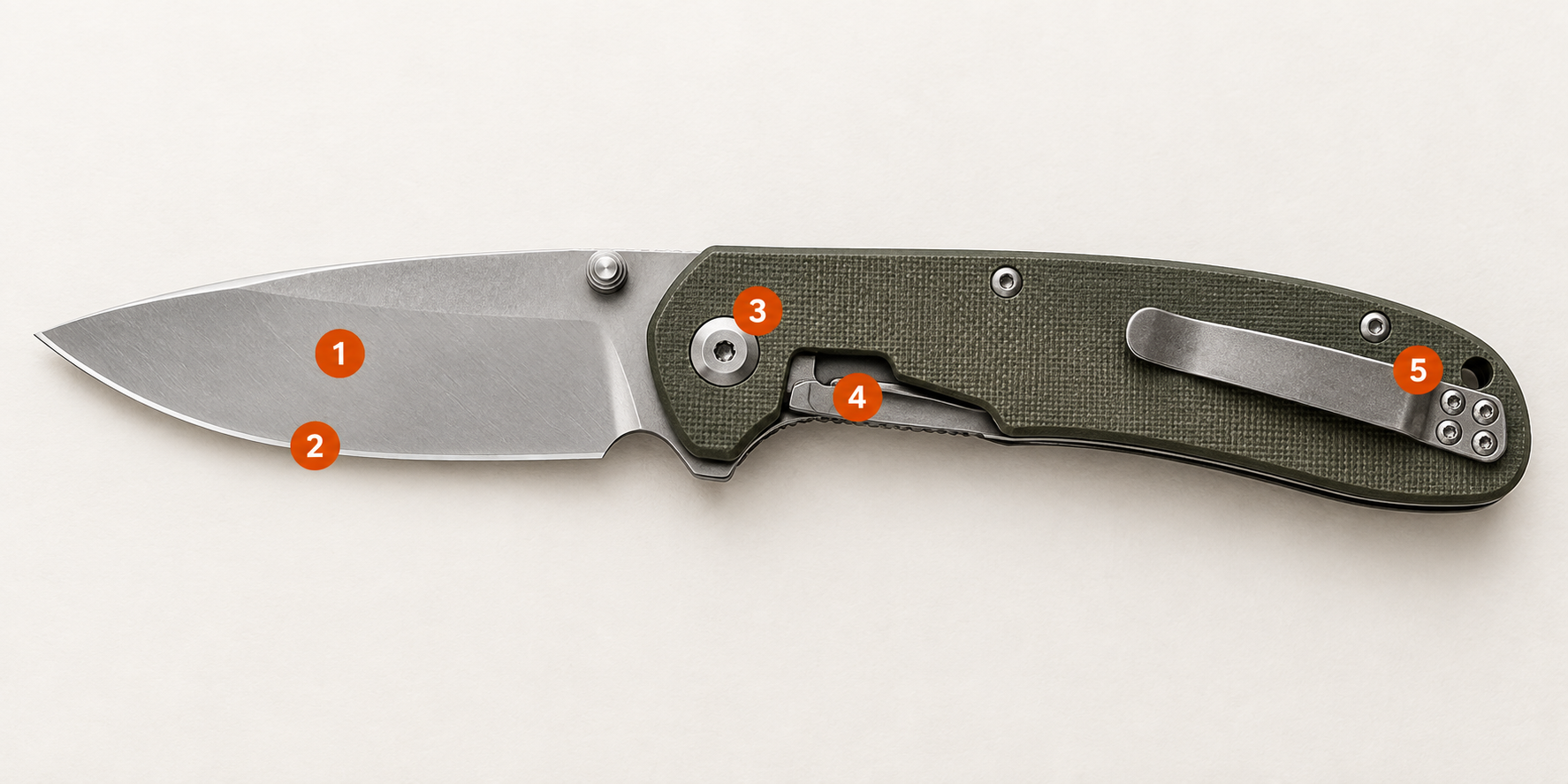
Check lockup and blade play before routine carry. A tiny amount of side-to-side movement on some knives may be a pivot adjustment issue, but vertical blade play, lock slip, stripped screws, cracked handles, bent blades, and deep pitting are not routine maintenance. Automatic and OTF knives should follow manufacturer guidance rather than guesswork.
Kitchen knife care and maintenance
Kitchen knife care is less about pivot oil and more about washing, drying, edge preservation, and safe storage. Hand wash kitchen knives with warm water and mild dish soap, then dry them completely before storing. Do not leave them soaking in the sink, and do not run quality kitchen knives through the dishwasher. The heat, detergent, impact, and moisture can damage edges, handles, and finishes.
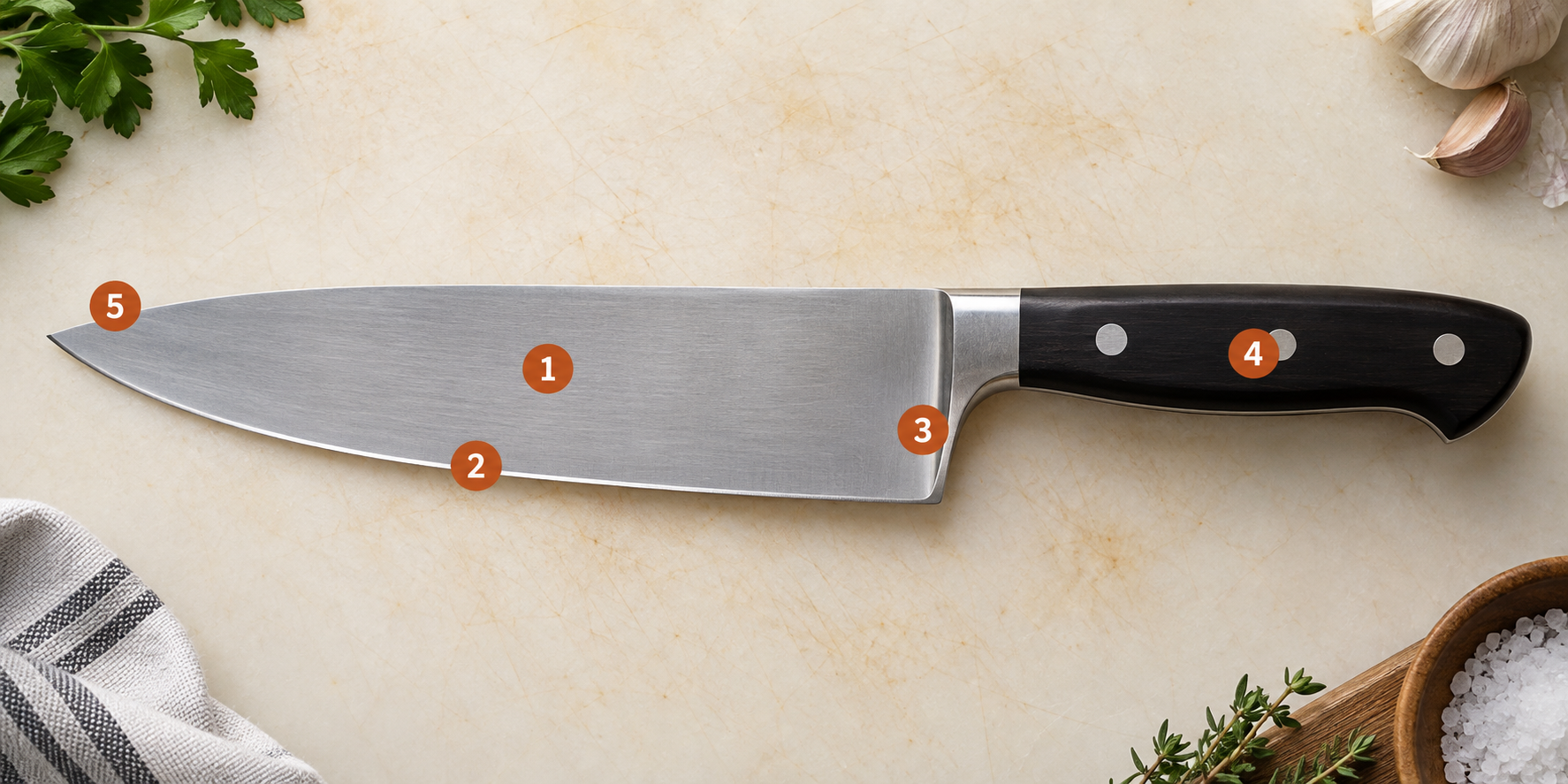
Carbon-steel kitchen knives need faster drying after acidic foods like citrus, tomato, onion, and fruit. Patina is normal on carbon steel; active red rust is not. For food-contact blade surfaces, food-grade mineral oil is the safer default when a light protective film is needed. It is not automatically the best pivot lubricant for folding knives, and general tool oils are not automatically food-safe.
Use a cutting board that is kind to edges, such as wood or suitable plastic. Do not scrape the board with the cutting edge; use the spine of the knife or a bench scraper instead.
Sharpening, honing, and stropping
Sharpening removes steel to create a new edge. Honing realigns a kitchen edge that is tired but not truly dull. Stropping refines an edge and can bring back bite before sharpening is needed. That distinction matters because unnecessary sharpening shortens blade life and can make edge geometry worse.
For kitchen knives, hone when the edge feels tired but still has an apex. Sharpen when the knife slips, crushes food, or no longer responds to honing. For pocket knives and outdoor knives, strop first when the edge is intact. Sharpen by condition, not by calendar. High-vanadium powder steels often respond better to diamond or CBN abrasives than basic stones.
Rust prevention and storage
Rust prevention starts with drying. Wipe blades after sweat, rain, salt air, fishing use, food acids, or humid carry. Let hidden moisture evaporate before the knife goes back into a pocket, drawer, roll, block, or sheath. Use a thin protective layer only when it fits the steel, finish, and food-contact needs.
For storage, keep knives dry, separated, and protected from edge impacts. Kitchen knives should not rattle loose in a drawer. Folding knives should be stored clean and closed. Fixed blades should not be left long-term in damp leather sheaths. Collection pieces benefit from stable humidity, clean handling, and periodic inspection more than constant oiling.
Maintenance schedule by use case
| Use case | Clean | Oil / protect | Edge work |
|---|---|---|---|
| Kitchen knife | Hand wash and dry after each use. | Use food-grade mineral oil on carbon-steel food-contact blade surfaces when needed. | Hone when tired; sharpen when dull. |
| Light EDC folder | Brush lint and wipe down when dirty; inspect weekly or monthly. | Use one small pivot-oil drop only when clean and dry. | Strop as needed; sharpen by edge condition. |
| Worksite, boxes, tape, cardboard | Clean adhesive and dust after heavy sessions. | Oil lightly after cleaning if the pivot feels dry. | Strop often; sharpen when stropping no longer helps. |
| Fishing, sweat, humidity, salt air | Clean and dry after every exposure. | Use a thin protective layer against corrosion, matched to the steel and food-contact needs. | Inspect for chips and rust before sharpening. |
| Outdoor/fixed blade | Clean field grime, sap, food, and moisture after use. | Avoid damp sheath storage; protect reactive steel lightly. | Strop or sharpen after real use, not on a calendar. |
| Collection or storage | Handle with clean hands and inspect periodically. | Favor dry storage, silica gel, and stable humidity. | Avoid unnecessary sharpening on collectible knives. |
Tools and products to consider
Knife Informer may earn a commission from qualifying Amazon purchases. These are use-case recommendations, not claims about current Amazon ratings, stock, or pricing. Check the current listing, seller, label directions, and compatibility with your knife before buying.
Basic cleaning kit
Start here for fingerprints, lint, dust, residue, and everyday grime.
Microfiber cloths, soft brushes, and swabs @ Amazon
Avoid if: you are tempted to scrub a coated, etched, Damascus, patina, wood, bone, or horn surface aggressively.
Food-contact care
For carbon-steel kitchen blades and food-contact surfaces, food-grade mineral oil is usually the safer default than general tool oil.
Howard Cutting Board Oil / food-grade mineral oil @ Amazon
Avoid if: the product label does not clearly support food-contact use.
Folding-knife pivot oil
Use one small drop after cleaning and drying. Too much oil attracts lint and grit.
KPL Original Knife Oil @ Amazon
Avoid if: the knife may touch food and the oil is not labeled food-safe.
Sharpening, honing, and stropping
Use a honing rod for tired kitchen edges, a strop for intact pocket-knife edges, and controlled sharpening when the edge is truly dull.
Honing rods, guided sharpeners, diamond stones, and strops @ Amazon
Avoid if: you are using a powered grinder casually or a cheap carbide pull-through on a quality knife.
Rust and storage
For sweat, humidity, salt air, carbon steel, and long-term storage, use a thin protective film and keep the knife dry.
KPL Knife Shield, Tuf-Cloth, silica gel, and dry storage supplies @ Amazon
Avoid if: the knife contacts food and the protectant is not labeled for that use.
Hardware checks
Good Torx drivers matter on folding knives. Cheap bits can strip small body, clip, and pivot screws quickly.
Wiha or iFixit precision Torx drivers @ Amazon
Avoid if: the knife is pinned, under warranty, automatic/OTF, or you are unsure how the pivot and lock are assembled.
Common knife maintenance mistakes
- Putting quality kitchen knives or pocket knives in the dishwasher.
- Leaving kitchen knives soaking in the sink.
- Adding lubricant to grit, adhesive, pocket lint, or food residue before cleaning.
- Using too much pivot oil and turning the action into a lint trap.
- Sharpening on a calendar instead of by edge condition.
- Using cheap carbide pull-through sharpeners casually on quality knives.
- Using red or permanent threadlocker on routine pivot or body screws.
- Storing fixed blades long-term in damp leather sheaths.
- Assuming routine cleaning fixes unsafe lockup, severe blade play, stripped screws, pitting, or failed automatic action.
Related Knife Informer guides
- Use the Knife Finder if maintenance problems are making you rethink what you carry.
- Compare dedicated edge tools in our guide to the best pocket knife sharpeners.
- For more controlled edge work, see the best knife sharpening systems.
- For edge technique, read how to get your knives razor sharp.
- Use the Knife Steel Guide to understand corrosion resistance, wear resistance, and sharpening tradeoffs.
- See our best kitchen knives, best EDC knives, and best pocket knives if you want lower-maintenance options.
- Review pocket knife lock types before treating lock movement as a simple maintenance issue.
FAQ
What is the best way to maintain a knife?
Clean it after dirty or food-contact use, dry it completely, protect reactive steel when needed, store it safely, and sharpen only when the edge condition calls for it. The exact routine depends on whether it is a kitchen knife, pocket knife, outdoor knife, or stored collector piece.
How often should I oil a knife?
Oil only when the knife needs it. Folding knife pivots may need one small drop after cleaning and drying. Carbon-steel food-contact blade surfaces may need a very thin film of food-grade mineral oil. Stored knives should be inspected periodically instead of oiled by default.
How often should I sharpen a knife?
Sharpen when the edge stops cutting cleanly or no longer improves with honing or stropping. Do not sharpen simply because a calendar says so.
Can kitchen knives go in the dishwasher?
No. Quality kitchen knives should be hand washed and dried immediately. Dishwashers can damage edges, handles, finishes, and carbon steel.
What is the difference between honing and sharpening?
Honing realigns a tired kitchen edge. Sharpening removes steel to create a new edge. Stropping refines an edge and can delay sharpening when the edge is still intact.
How do I prevent rust on a knife?
Dry the knife after sweat, rain, salt, humidity, food acids, or washing. Store it dry, avoid damp sheath storage, and use a thin protective layer when the steel, finish, and food-contact needs call for it.
Should I disassemble a pocket knife for maintenance?
Only if the manufacturer allows it, the warranty risk is acceptable, and you have the exact tools and knowledge. Pinned knives, automatic knives, OTF knives, and unfamiliar locks are better handled externally or through maker service.
